The annals of Formula 1 history are replete with tales of legendary drivers, groundbreaking engineering, and constructors that have etched their names into motorsport immortality. Names like Schumacher, Senna, Prost, Moss, and Fangio dominate the driver’s pantheon, while modern titans like Hamilton and Verstappen continue to push the boundaries of human and machine capability. On the automotive side, iconic machines such as the Brabham fan-car, the six-wheeled Tyrrell P34, and the improbable Brawn GP champion have all captured the imagination. Major constructors like Ferrari, McLaren, and Williams are household names, synonymous with racing pedigree. However, beneath these towering figures lie countless fascinating narratives that have shaped the sport. One such pivotal, yet perhaps less universally celebrated, chapter is the story of Dan Gurney’s All American Racers (AAR) Eagle MK I, the singular American-built car to achieve victory in a Formula 1 Grand Prix.
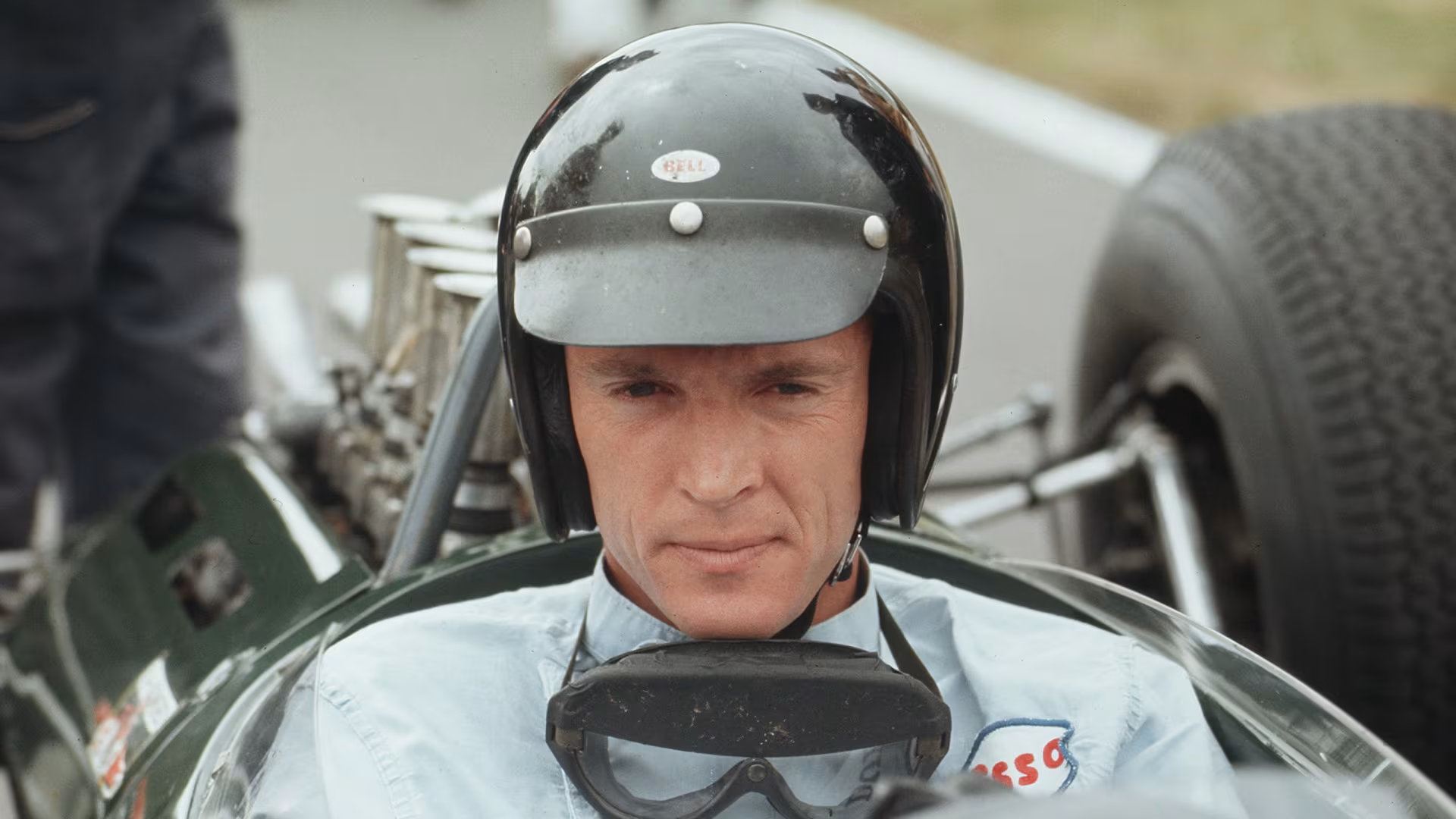
This remarkable achievement is not the sole reason for the AAR Eagle MK I’s enduring legacy. Beyond its historic win, the car is widely regarded as one of the most aesthetically striking machines ever to grace a Formula 1 grid. Adding to its unique provenance, it was piloted to victory by the very man who spearheaded its development: Dan Gurney. This extraordinary feat of a driver winning in a car of his own design and construction is a rare occurrence in motorsport, shared only by a select few legends such as Jack Brabham and Bruce McLaren. Gurney, a driver renowned for his versatility and speed across a wide spectrum of motorsport disciplines, stands as one of America’s most distinguished racing figures. His Formula 1 career, while marked by only four victories – one in 1962 with Porsche, two in 1964 with Brabham, and the historic win with his own AAR Eagle – is only a part of his monumental impact. His legacy extends significantly further, including a class victory at the 1964 24 Hours of Le Mans aboard the Shelby Cobra Daytona, alongside fellow American Bob Bondurant, and an overall win at the same prestigious endurance race in 1967 in the Ford GT40 MK IV, with A.J. Foyt as his co-driver.
The Genesis of All American Racers
The narrative of the AAR Eagle MK I is inextricably linked to the entrepreneurial spirit and ambition of Dan Gurney. Following extensive discussions with his long-time friend and formidable racing rival, Carroll Shelby, Gurney co-founded All American Racers (AAR) in 1964. This venture was born from a shared vision to create a potent American force in international motorsport. Recognizing the global epicentre of Formula 1 development and competition, the team later established a significant presence in the United Kingdom, operating under the name Anglo American Racers, ingeniously retaining the AAR acronym. While the American arm of AAR focused on success in sports car and Champ Car racing, including the iconic Indianapolis 500, the British division was tasked with the formidable challenge of competing at the pinnacle of motorsport: Formula 1.
Engineering a Legend: The Eagle T1G
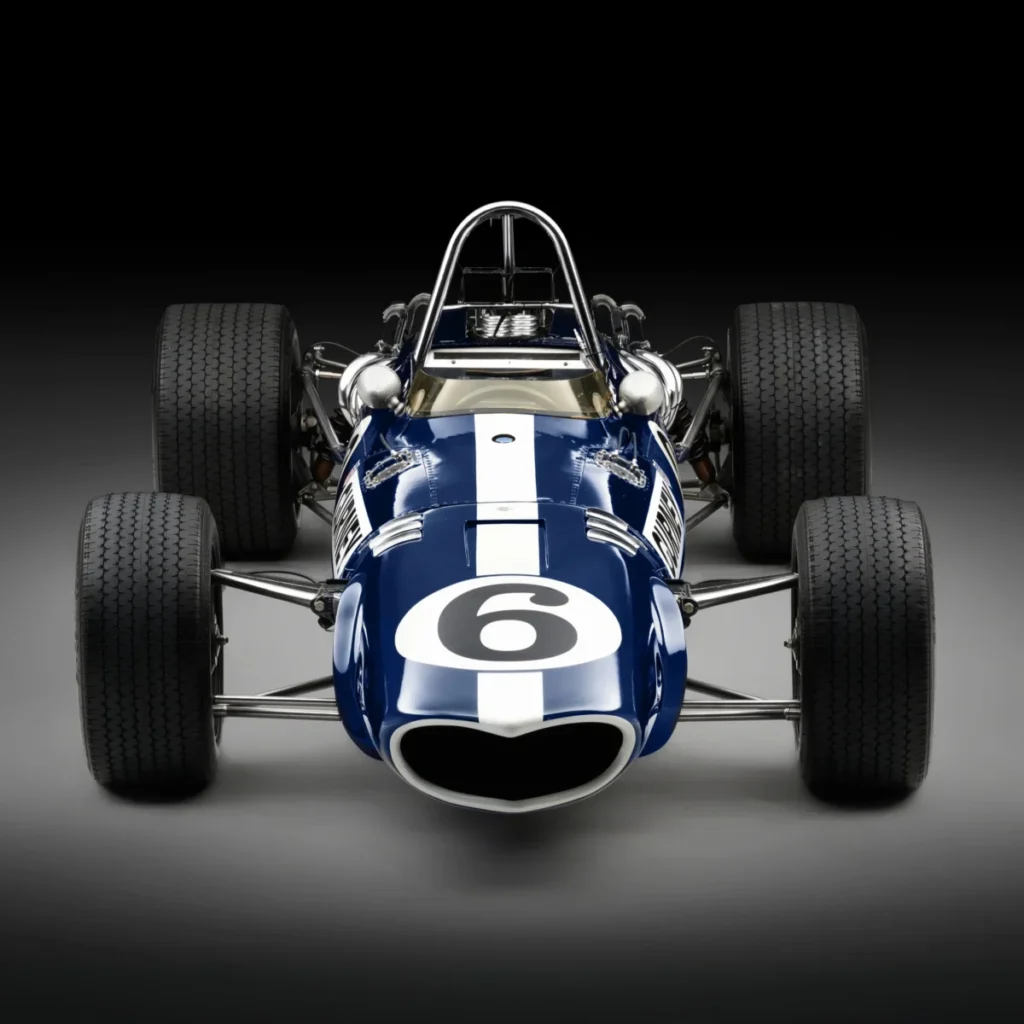
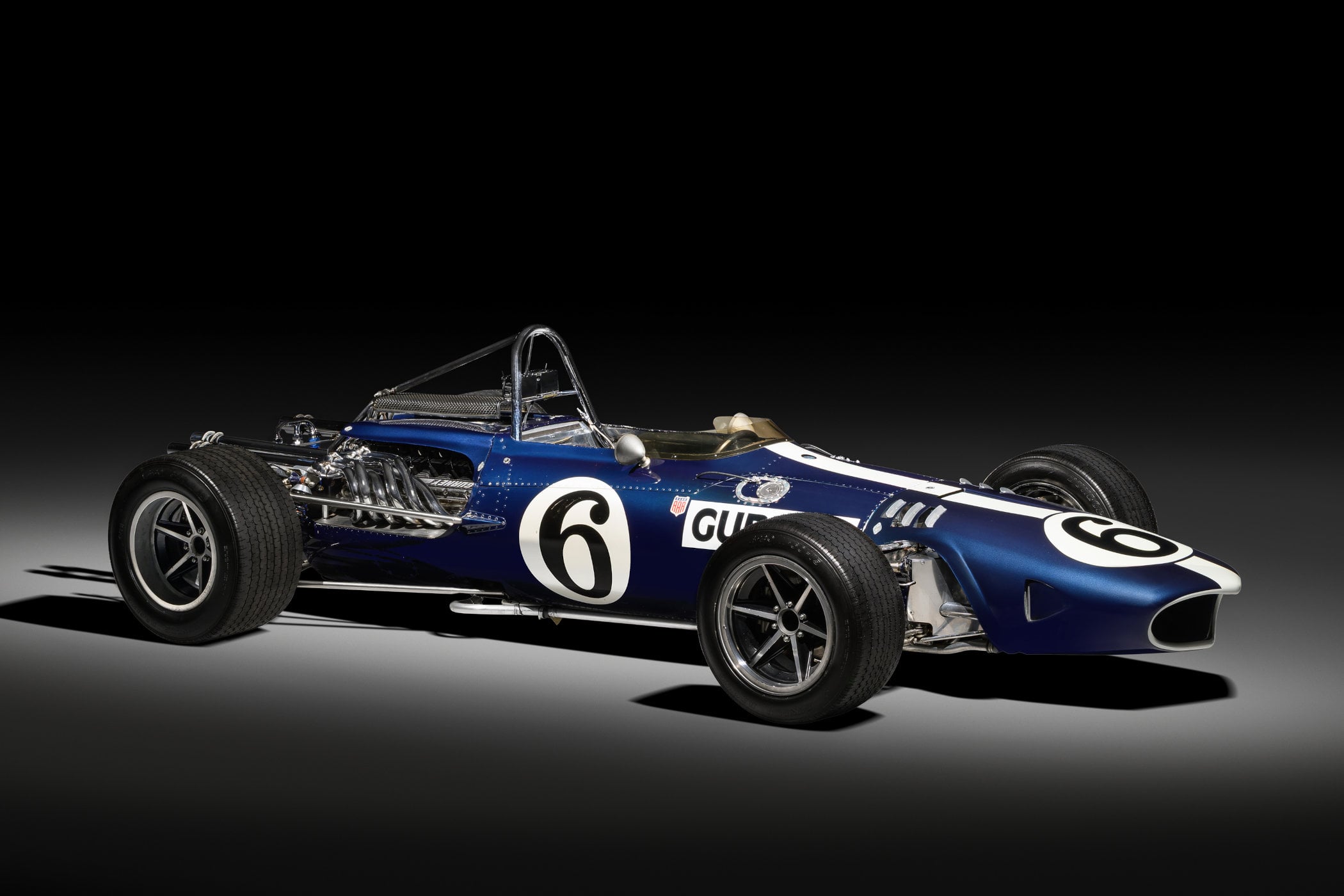
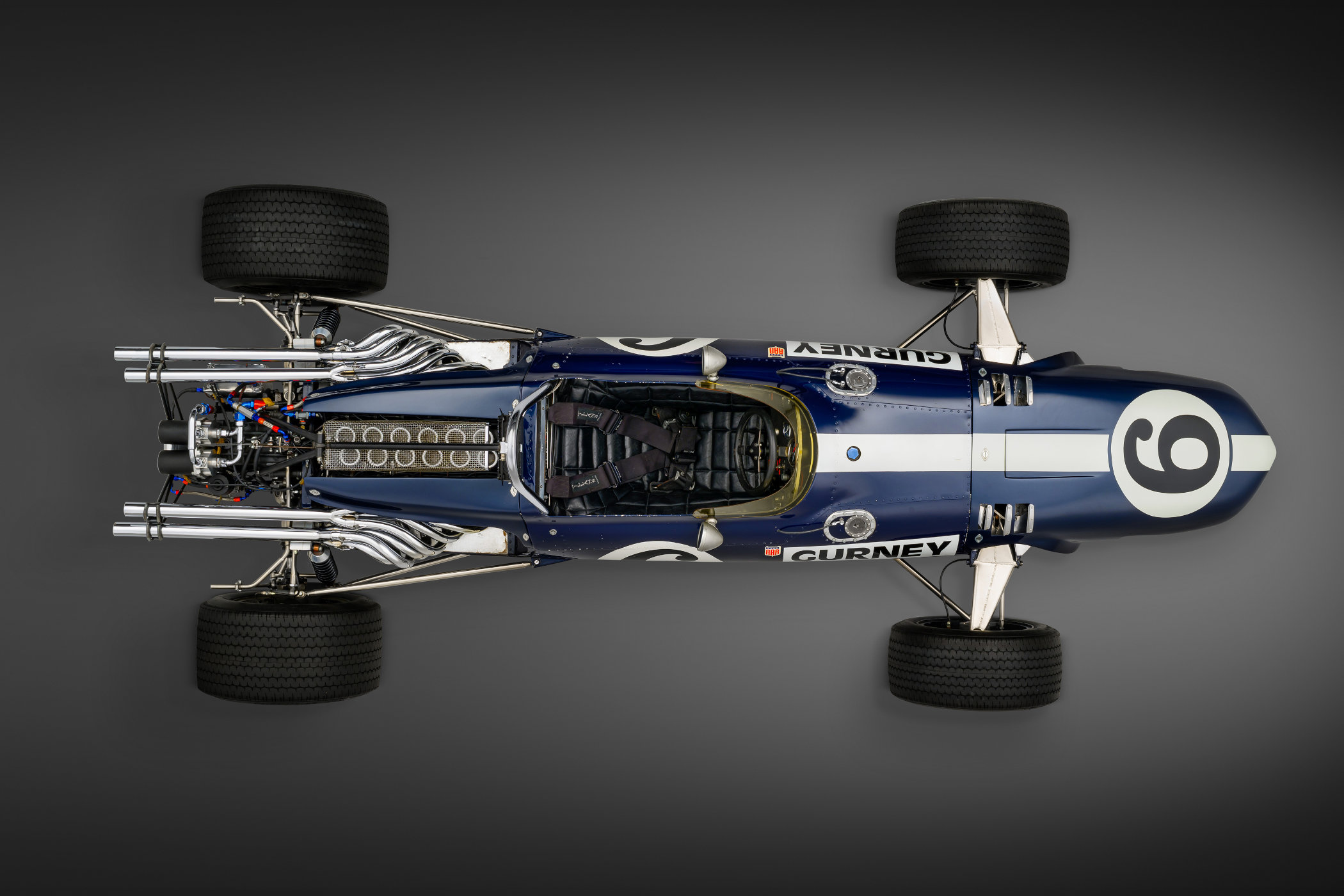
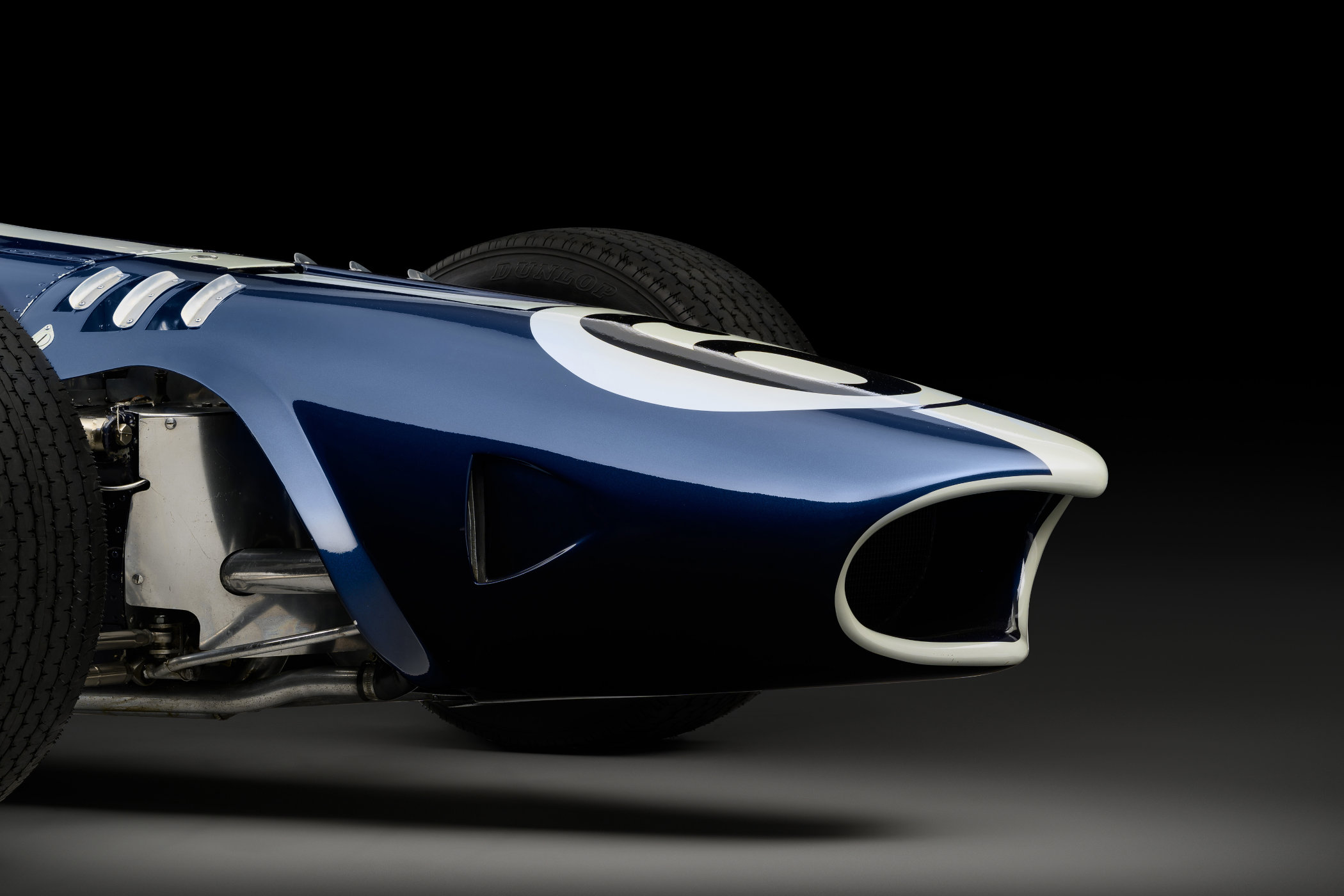
The blueprint for the Formula 1 car emerged from the development of the Eagle T1G racing car, conceived for the 1966 Indianapolis 500. This chassis, designed by the accomplished racing engineer Len Terry, who had previously contributed to the groundbreaking 1965 Indy 500-winning Lotus 38, formed the basis for the Formula 1 challenger. The Eagle MK I, also known as the Eagle T1G, was a marvel of contemporary engineering. Its chassis was a full-length monocoque constructed from a blend of aluminum, titanium, and magnesium, featuring a distinctive cigar-like profile characteristic of racing cars from that era. The bodywork was painted in a striking Imperial blue, accented with white roundels and a prominent white stripe running the length of the car – a deliberate inversion of the traditional American racing colors of white with blue stripes. Its nose possessed a unique, pointed, beak-like shape, granting it a memorable and distinguished appearance among the diverse field of Grand Prix cars of the period.
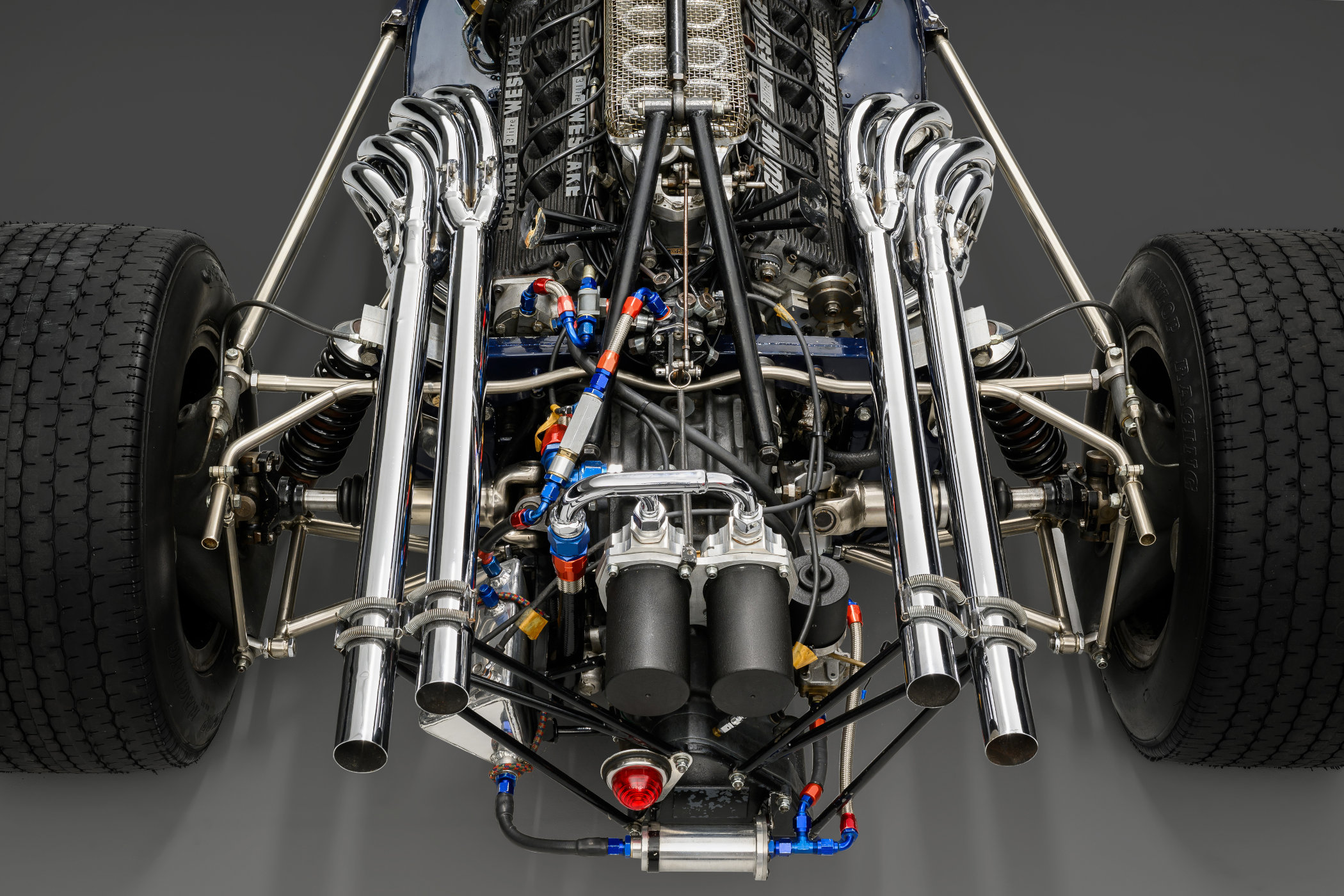
In its initial configuration, the Eagle MK I was powered by a 2.7-liter inline-four-cylinder engine sourced from Coventry Climax. However, the car was engineered from the outset to accommodate a more potent 3.0-liter V12 engine developed by Weslake. The proximity of the AAR workshop to Harry Weslake’s engine manufacturing facility facilitated a close collaboration in the creation of this V12, which was specifically designed to harness the full potential of the Eagle Mk I. A delay in the development of the V12, however, necessitated the team’s initial reliance on the Coventry Climax engine. Complementing the power unit, the Formula 1 Eagles employed a Hewland DG300 five-speed manual transmission. Subtle adjustments to the suspension geometry were also implemented to better adapt the cars to the demands of European racing circuits.
A Challenging Debut and a Historic Victory
The AAR Eagle MK I made its official Formula 1 debut at the 1966 Belgian Grand Prix, the second race of the season, with Dan Gurney at the helm. Despite the limitations of the inline-four engine, the car demonstrated promising performance. Gurney secured respectable finishes, including fifth place in France, seventh in Germany, and another fifth in Mexico, showcasing the chassis’s inherent potential.
Midway through the 1966 season, the eagerly anticipated Weslake V12 engine was ready to be unleashed. However, despite a significant power increase of over 100 horsepower, the V12 did not immediately translate into overwhelming success for the remainder of that season. The team’s fortunes began to shift dramatically in the following year, 1967.
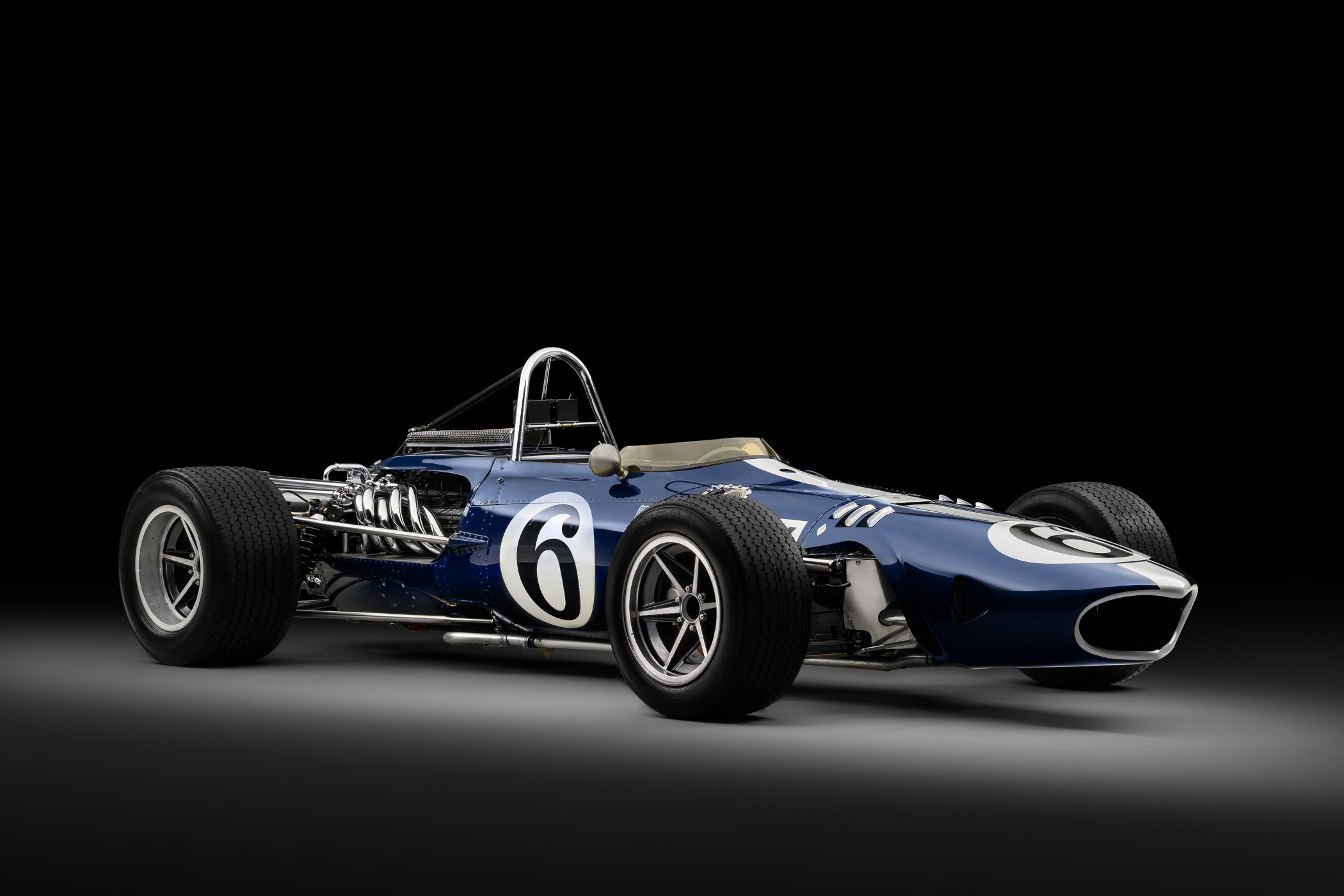
The 1967 Belgian Grand Prix at Spa-Francorchamps became the stage for a truly historic moment. Gurney qualified the Eagle second on the grid, directly behind the formidable Jim Clark, who led for a substantial portion of the early race. Mechanical issues plagued Clark’s challenge, allowing Jackie Stewart to take the lead. However, the AAR Eagle MK I proved to be exceptionally fast on the demanding Ardennes circuit. Gurney was not only challenging for the lead but was also setting blistering pace, shattering the average speed record for a Grand Prix race and setting a new lap record for the Spa-Francorchamps circuit. With only eight laps remaining, Gurney executed a decisive overtake on Stewart, clinching a momentous victory. This triumph was not merely a win; it was a landmark achievement, marking the first and only time a car built by an American constructor has won a Formula 1 Grand Prix.
The AAR Eagle MK I: Beyond the Win
The significance of the 1967 Belgian Grand Prix victory cannot be overstated. It solidified the AAR Eagle MK I’s place in motorsport history. The car that achieved this historic win, chassis number 003, was one of only four MK I chassis built. This particular car was driven not only by Gurney but also by other esteemed drivers such as Richie Ginther and Ludovico Scarfiotti during its competitive tenure. While it was this specific chassis that achieved the historic victory, other MK I variants also contributed to the team’s efforts. For instance, a later iteration, fitted with the Weslake V12, secured a third-place finish in the 1967 Canadian Grand Prix, further underscoring the car’s competitive prowess and its importance in the evolution of Formula 1 constructors.
A Legacy of American Ingenuity and Racing Prowess
The success of the Eagle chassis extended far beyond Formula 1. In the United States, AAR achieved considerable acclaim and numerous victories. The Eagle chassis proved exceptionally successful in American open-wheel racing, amassing 51 wins in various series. Notably, Bobby Unser secured the Indianapolis 500 in 1968 and 1975, and Gordon Johncock triumphed in 1973, all behind the wheel of Eagle cars. The AAR team continued to compete in American racing series well into the late 1990s, a testament to their enduring engineering capabilities and competitive spirit.
The Formula 1 chapter for AAR, however, was more condensed. The 1968 season marked the final full-time campaign for the AAR team in Formula 1. Gurney competed in nine of the twelve races that year, but struggled to score points with the AAR Eagle. A strategic switch to the Ford V8-powered McLaren M7A for the final three races of the season yielded a more positive outcome, including a fourth-place finish at the United States Grand Prix at Watkins Glen. Gurney opted out of Formula 1 in 1969, but made a brief return in 1970, competing in three races for the Bruce McLaren Motor Racing Team.
The AAR Eagle MK I Heads to Auction
The remarkable 1967 AAR Eagle MK I Gurney-Weslake V12, a car that represents a pivotal moment in American motorsport history and the sole victor of a Formula 1 Grand Prix built on American soil, is now being offered for sale. RM Sotheby’s is facilitating the acquisition through a sealed-bid auction, which is scheduled to run from Wednesday, September 23rd, to Wednesday, September 30th. The estimated value for this automotive icon ranges between USD 7,000,000 and USD 9,000,000. Acquiring such a vehicle represents a substantial financial undertaking, but it offers a direct connection to a unique and celebrated chapter in Formula 1’s rich and storied past. While contemporary American automotive involvement in Formula 1, exemplified by teams like Haas and potentially Cadillac in the future, continues to evolve, the AAR Eagle MK I stands as a singular testament to American engineering and racing ambition. Its enduring beauty and historic significance remain unparalleled, solidifying its status as a true automotive legend.
For those interested in the intricacies of this historic sale and the remarkable history of the AAR Eagle MK I, further details can be found on the RM Sotheby’s website. The enduring legacy of Dan Gurney and his groundbreaking creation continues to inspire awe and admiration within the motorsport community and beyond. The sale of this car is not merely a transaction; it is an opportunity to own a tangible piece of racing history, a symbol of ingenuity, perseverance, and the unwavering pursuit of excellence on the world’s most demanding circuits.