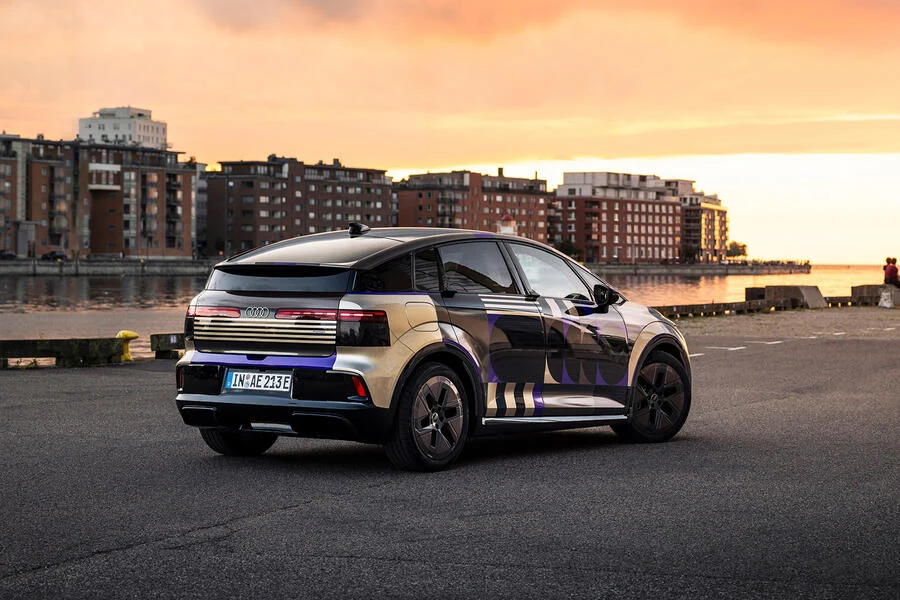
In a surprising turn for the 2020s automotive landscape, the Audi A2 is poised for a significant revival, not as a direct throwback, but as a reimagining for the electric vehicle (EV) era. This return sees the compact hatchback, a vehicle that garnered a cult following for its uncompromising engineering and innovative design, re-enter the market with a focus on aerodynamic efficiency and sustainable technology. The original A2, launched in 1999, was a pioneer, utilizing an advanced aluminum spaceframe construction and radical aerodynamic principles to achieve remarkable interior spaciousness and fuel efficiency for its class. However, its advanced engineering came at a cost, and despite its brilliance, it failed to achieve widespread commercial success or profitability for Audi during its production run from 1999 to 2005.
The modern iteration, dubbed the A2 E-tron, represents Audi’s strategic response to the burgeoning demand for compact, efficient electric vehicles. Rather than attempting to replicate the past, Audi’s approach to this retro revival is distinctly forward-looking. The genesis of the A2 E-tron lies in Audi’s objective to develop an electric vehicle smaller than its current Q4 E-tron model, with a paramount focus on aerodynamic optimization. The goal was to maximize range from a relatively modest battery pack, a crucial factor in making EVs more accessible and practical for a broader consumer base. Through extensive aerodynamic simulations and design refinement, engineers discovered that a hatchback shape optimized for minimal air resistance naturally converged on a form factor strikingly reminiscent of the original A2.
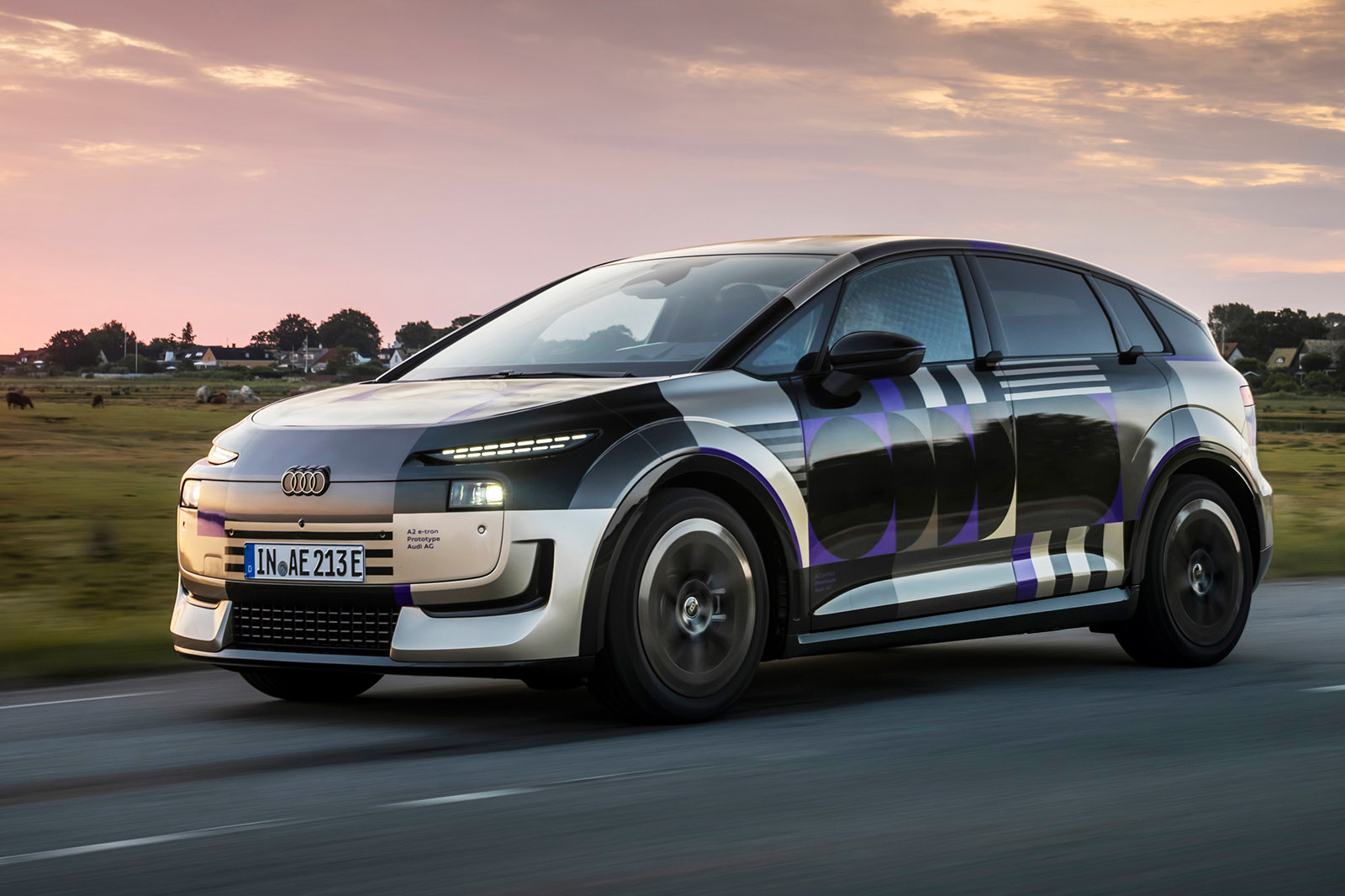
This aerodynamic imperative dictated a design characterized by a short, bluff front end that smoothly transitions into a monolithic, flowing body. This design minimizes unnecessary air displacement and turbulence, crucial for reducing drag. The overall silhouette adopts a teardrop-like profile, cleverly truncated at the rear to maintain practicality and cargo space. The distinctive split rear window, a hallmark of the original A2’s aerodynamic focus, is also reportedly set to make a return, further enhancing rearward visibility and contributing to the vehicle’s slippery form.
However, the A2 E-tron will not replicate the radical, unprofitable innovation of its predecessor. Audi has learned from the past, understanding that groundbreaking engineering must be balanced with business viability. The new A2 E-tron is being positioned as a more accessible, mass-market proposition, designed to indirectly fill the void left by the recently discontinued A1 and Q2 models. Consequently, it will leverage the well-established Volkswagen Group MEB platform, the same scalable architecture that underpins popular EVs like the Volkswagen ID 3 and Cupra Born. This shared platform ensures access to a mature ecosystem of electric powertrain components and manufacturing processes, contributing to cost efficiencies and faster development cycles.
The MEB platform has undergone continuous development, and the latest iteration brings significant advancements. A key upgrade for the A2 E-tron will be the adoption of lithium-iron-phosphate (LFP) battery chemistry for its mid-range battery option. This contrasts with the nickel-manganese-cobalt (NMC) chemistry prevalent in many current EVs. LFP batteries are known for their greater thermal stability, longer cycle life, and importantly, their ability to be regularly charged to 100% without significant degradation. This feature addresses a common user concern with EVs, offering greater flexibility and confidence in daily usage.
Further enhancing the A2 E-tron’s efficiency is the integration of the new "APP350" electric motor. This motor represents a leap forward in efficiency through meticulous engineering. Thinner internal materials reduce mass, while a more refined lubrication system, featuring thinner oil and a separate oil pan, minimizes parasitic drag. By preventing the gears from constantly churning through a deep oil bath, the APP350 motor conserves energy, translating directly into extended driving range.
A New Contender in the Premium Compact EV Segment
The Audi A2 E-tron is effectively Audi’s answer to the burgeoning segment of premium-oriented compact electric hatchbacks. While specific dimensions are yet to be officially released, industry analysis suggests it will compete directly with vehicles of a similar size to the Volkswagen ID 3. This strategic positioning places the A2 E-tron in a competitive arena against established and emerging rivals. Its key competitors are expected to include the Renault Megane E-Tech Electric, the Volvo EX30, and the Mini Countryman E, as well as its sibling vehicle, the Cupra Born. The absence of direct electric equivalents for the BMW 1 Series and Mercedes-Benz A-Class from their respective manufacturers further solidifies the A2 E-tron’s potential to carve out a significant niche.
Under the Camouflage: A Glimpse of the Interior
While official details remain scarce, initial observations of camouflaged prototypes offer a promising insight into the A2 E-tron’s interior design and material choices. Unlike its platform sibling, the Volkswagen ID 3, the A2 E-tron appears to draw heavily from Audi’s established interior design language, signaling a more premium feel. Spy shots and glimpses under camouflage sheets suggest a layout that aligns with more recent Audi models, such as the Q3. This includes the adoption of digital displays for instrumentation and infotainment, a familiar steering wheel design, and a control stalk array that evokes a retro-modern aesthetic, reminiscent of some 1980s Citroën models.
This continuity with Audi’s current interior philosophy is largely a positive development, promising intuitive operation and a sense of solid build quality. However, it also marks a departure from the tactile, button-rich interiors that Audi was once renowned for. The trend towards fewer physical controls and larger, more integrated screen bezels, described as being as thick as those on a first-generation iPad, may not appeal to all purists.
Audi has incorporated a prominent use of knitted-look fabric on the door tops and dashboard, a material that has also been featured in recent Mini models. This textile offers a pleasant touch and contributes to a modern, sustainable aesthetic. While the interior appears predominantly black and somewhat austere, a characteristic often associated with Audi’s design ethos, it raises questions about whether it will sufficiently differentiate itself and feel demonstrably more upmarket than some of its more direct rivals, such as the Renault Megane E-Tech Electric.
Historical Context and Market Performance of the Original A2
The original Audi A2, produced from 1999 to 2005, was a bold experiment in automotive design and engineering. Conceived as a premium compact car, it challenged conventional notions of what a small vehicle could be. Its most distinctive feature was its construction: a complex aluminum spaceframe, known as Audi Space Frame (ASF) technology, which was then largely reserved for larger, more expensive models like the A8. This lightweight yet incredibly strong structure allowed for exceptional crash safety and significantly reduced the vehicle’s overall weight, contributing to its impressive fuel economy.
The A2 offered a surprisingly spacious and versatile interior, a testament to its clever packaging and the inherent benefits of the ASF construction. It was available with a range of efficient engines, including a groundbreaking 1.2-liter TDI diesel engine that achieved an astonishing official fuel consumption of 72.4 mpg (3.26 liters/100km), making it one of the most fuel-efficient cars of its time. This particular variant, the A2 1.2 TDI, even featured a unique "economy" mode and a robotic manual gearbox to maximize its efficiency.
Despite its technological prowess and critical acclaim for its design and engineering, the Audi A2 struggled to find a significant market foothold. Its premium pricing, a consequence of the expensive aluminum construction and advanced technology, placed it in direct competition with larger, more established vehicles from other manufacturers. Consumers, accustomed to more traditional steel construction and a perceived higher value proposition in larger cars, were hesitant to embrace the A2’s unique offering. The cost of repairs for aluminum bodywork also presented a potential barrier for some buyers. Consequently, sales figures remained modest throughout its lifespan, and Audi ultimately discontinued the model in 2005 without a direct successor, leaving a void in its compact car lineup.
The EV Transition: A Second Chance for a Visionary Concept
The resurgence of the A2 concept in an electric form is, therefore, a testament to the enduring appeal of its original design philosophy: maximizing efficiency and space within a compact footprint. The automotive industry’s rapid transition to electrification provides Audi with an opportunity to revisit the core strengths of the A2 and apply them to the unique demands of electric mobility.
The inherent efficiency benefits of electric powertrains align perfectly with the A2’s original focus on fuel economy. By leveraging advanced aerodynamic principles and lightweight construction (though likely not a full aluminum spaceframe due to cost constraints for a mass-market EV), Audi can create an electric vehicle that offers competitive range and performance. The MEB platform provides a solid foundation, allowing Audi to concentrate its efforts on refining the aerodynamics, interior packaging, and the premium Audi experience.
Analysis of Implications and Market Impact
The introduction of the Audi A2 E-tron has several significant implications for the automotive market and for Audi’s brand positioning:
-
Electrification of the Premium Compact Segment: The A2 E-tron is poised to be a strong contender in a segment that is rapidly expanding. By offering a distinctively Audi take on the compact EV, it can attract customers seeking a blend of premium quality, advanced technology, and efficient electric performance. This will likely intensify competition with rivals like the Volvo EX30 and potentially spur other manufacturers to introduce similar offerings.
-
Brand Reinforcement: The revival of the A2 nameplate taps into Audi’s heritage and can serve to reinforce its image as an innovative and forward-thinking brand. It allows Audi to connect with enthusiasts who appreciated the original A2’s unique qualities while also appealing to a new generation of EV buyers.
-
Technological Advancement: The focus on aerodynamic efficiency and the integration of advanced battery and motor technologies highlight Audi’s commitment to pushing the boundaries of EV performance. The adoption of LFP battery chemistry, in particular, signals a strategic move towards more cost-effective and user-friendly battery solutions.
-
Strategic Product Planning: The A2 E-tron’s role as an indirect replacement for the A1 and Q2 suggests a strategic realignment of Audi’s compact offerings, with a clear focus on electrification. This move aligns with global trends and regulatory pressures pushing for a faster transition away from internal combustion engines.
-
Potential for Cult Status: Given the original A2’s cult following and the A2 E-tron’s unique design and focus on efficiency, it is plausible that the new model could also cultivate a dedicated fanbase, further solidifying its position as a distinctive and desirable electric vehicle.
The Audi A2 E-tron represents more than just a retro revival; it is a strategic evolution, blending the pioneering spirit of its predecessor with the cutting-edge technology of the electric era. Its success will hinge on Audi’s ability to balance innovation with affordability and to deliver a premium experience that resonates with modern consumers. As the automotive landscape continues its rapid transformation, the return of the A2 signifies an exciting chapter for both Audi and the future of compact electric mobility.