The modern automated warehouse, a symphony of efficiency and precision, stands as a testament to the seamless integration of mechanical engineering and advanced software algorithms, particularly where sophisticated fleets of autonomous robots coordinate complex tasks. While the public eye often focuses on the dazzling software orchestrating these operations, the true workhorses underpinning this revolution are the electromechanical systems, chief among them the often-understated, yet indispensable, fractional-horsepower gearmotor. These compact powerhouses are the critical components enabling everything from the agile movements of robotic material handlers to the precise indexing of conveyor belts and the robust safety mechanisms at loading docks.
The Evolution of Warehousing: A Chronological Shift to Automation
For centuries, warehousing was largely a manual endeavor, relying heavily on human labor for sorting, storing, and retrieving goods. The mid-20th century saw the introduction of rudimentary mechanization, such as forklifts and basic conveyor systems, which began to improve efficiency. However, the true paradigm shift commenced in the late 20th and early 21st centuries, propelled by the relentless growth of global trade and the explosion of e-commerce. The demands for faster fulfillment, higher throughput, and reduced operational costs necessitated a radical rethinking of warehouse design and operation.
This era witnessed the rapid adoption of automation technologies, transforming warehouses from mere storage facilities into dynamic, intelligent distribution hubs. Automated Guided Vehicles (AGVs) and, more recently, Autonomous Mobile Robots (AMRs) began to replace traditional forklifts and manual carts, navigating complex environments with increasing autonomy. Automated Storage and Retrieval Systems (AS/RS) emerged, allowing for high-density storage and rapid access to inventory. These advancements were not merely about replacing human labor; they were about achieving unprecedented levels of precision, consistency, and scalability that manual processes could not match. At the heart of virtually every moving part within these sophisticated systems, from the smallest robotic component to the largest conveyor line, lies a gearmotor, providing the precise, controlled motion required for seamless operation. Industry events like MODEX and ProMat serve as crucial showcases for these evolving technologies, where the pervasive reliance on electromechanical systems, particularly gearmotors, is consistently evident.
Gearmotors: The Indispensable Drivers of Warehouse Efficiency
The functional diversity of gearmotors in warehousing is vast, reflecting their adaptability to various applications demanding specific torque, speed, and precision characteristics.
-
Robotics for Material Handling: The backbone of many automated warehouses, robotics systems for moving product racks or pallets are heavily reliant on gearmotors. These include the motors responsible for traversing factory floors, executing precise turns, and, in many advanced systems, lifting transported items using mechanisms such as jack screws. Fractional-horsepower gearmotors are particularly suited here due to their compact size, high torque density at low speeds, and energy efficiency, which are crucial for battery-powered mobile robots. The gearing mechanism allows a smaller motor to generate significant torque, essential for moving heavy loads while maintaining precise control over speed and position. Different gear types—helical, planetary, and worm gears—are selected based on the specific application’s requirements for efficiency, backlash, and load capacity.
-
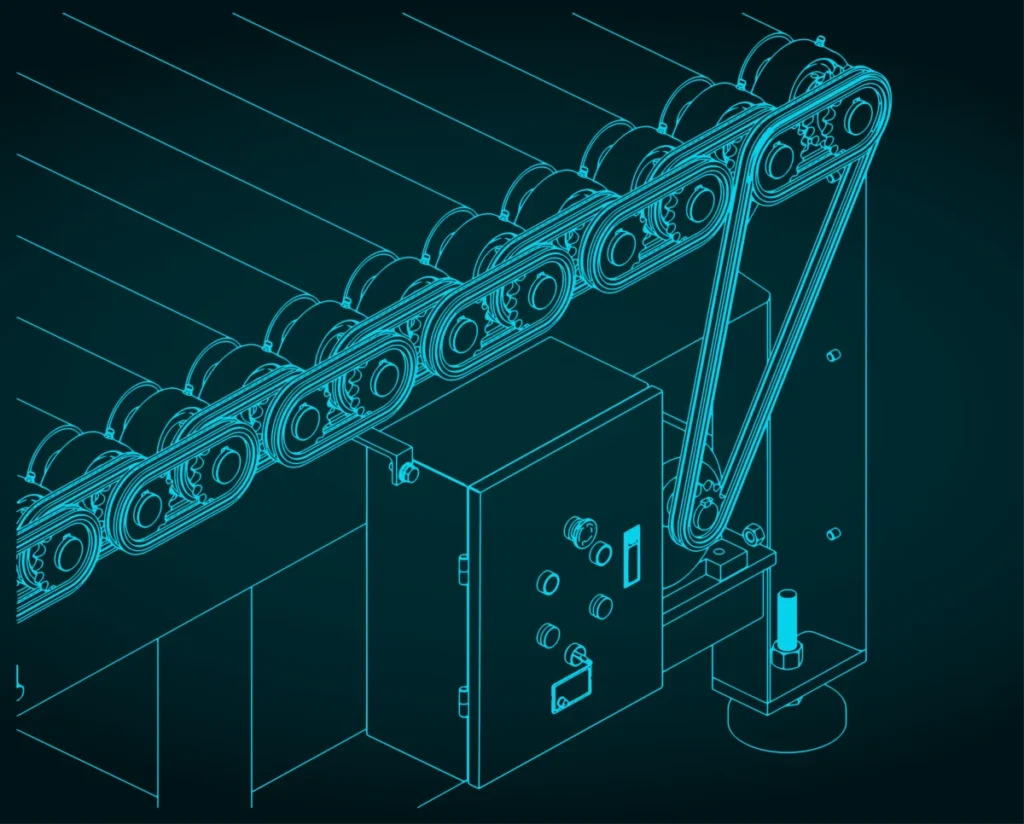
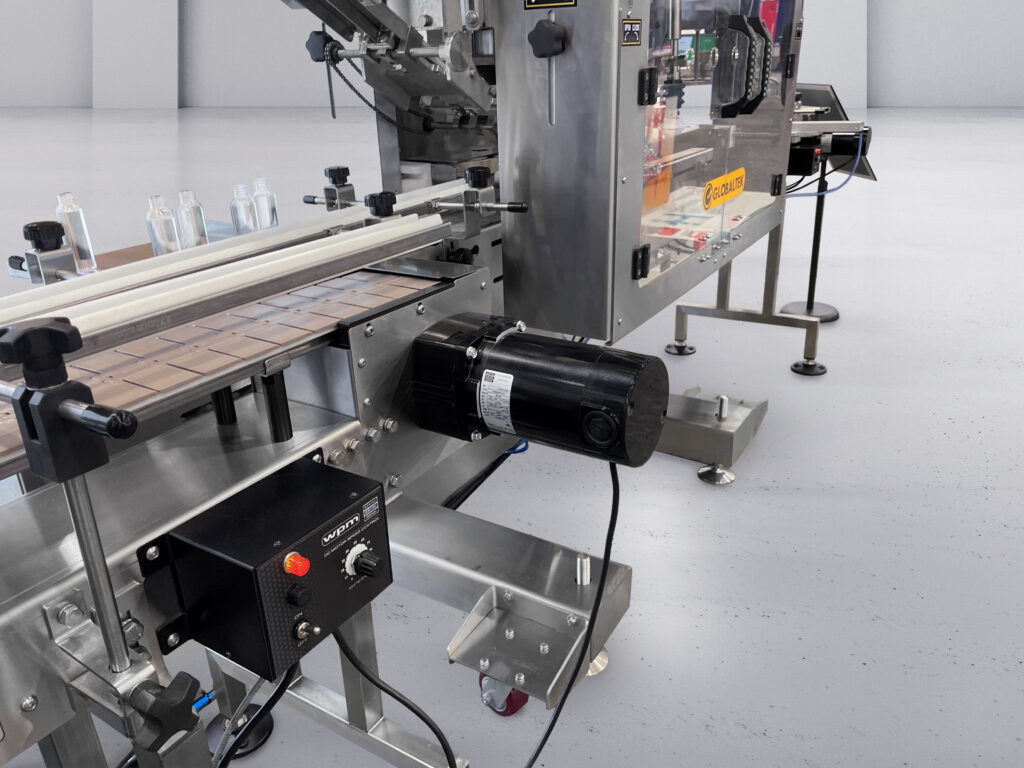
Conveyor Systems: From high-speed sortation systems to flexible accumulation lines, gearmotors are the primary power source for warehouse conveyors. Accordion-style conveyors and flexible powered conveyors, characterized by their scissor-leg material-handling systems and powered rollers connected by round belts, depend on gearmotors to transport goods efficiently. These conveyors often move items through sprawling facilities or interface directly with flatbed shipping trucks at loading docks, dramatically accelerating loading and unloading processes. Modern designs frequently segment these conveyors into "zones," where each section is independently powered and controlled by its own gearmotor, allowing goods to move along a section at a time, preventing collisions and optimizing flow. The ability of gearmotors to provide consistent, reliable motion under varying loads is paramount in maintaining the throughput of these critical systems.
-
Loading Dock Safety Mechanisms: Beyond material transport, gearmotors play a vital role in enhancing safety at critical junctures. At loading docks, gearmotors power locking restraints—motorized, claw-type devices that engage with hardware on trucks. These systems are designed to prevent drivers from inadvertently pulling away while personnel, whether on foot or operating forklifts, are still traversing the area where the truck interfaces with the loading dock. This application highlights the need for robust, reliable gearmotors capable of delivering high holding torque and precise positioning to ensure maximum safety and prevent potentially catastrophic accidents.

-
Motorized Caster Wheels and Heavy-Duty Material Handling: For moving exceptionally heavy workpieces that are impractical or unsafe to handle manually, motorized caster wheels, driven by gearmotors, are increasingly prevalent. These wheels are integrated into specialized carts, trollies, and dollies, providing powered assistance for transporting large equipment subsystems or bulky items within assembly lines or manufacturing environments. The ergonomic benefits are substantial, reducing strain on workers and mitigating the risk of injury, while simultaneously improving the efficiency of material flow for oversized components.
-
Vertical Lifts and Ergonomic Workpiece Positioners: Gearmotors are also integral to various lifting applications within the warehouse. This includes man lifts, often equipped with "crow’s-nest" buckets, which allow operators to safely reach elevated areas for maintenance or inventory management. Similarly, ergonomic workpiece lifts feature motorized Z-axis platforms or end-effectors, such as pneumatic suction-cup arrays, enabling operators to safely raise and lower items to optimal working heights. These systems require precise, controlled vertical motion, a task perfectly suited to the consistent torque and positional accuracy provided by gearmotors.
The Technological Backbone: Control Systems and Seamless Integration
The operational effectiveness of these gearmotor-driven systems is intrinsically linked to their control mechanisms, which range from basic standalone units to highly integrated, intelligent networks. Most dock restraints, for instance, are self-contained, activated by a simple on-off switch and featuring a readily accessible emergency-stop button for immediate safety intervention. Similarly, many lift trucks operate as self-contained units, with warehouse personnel directly controlling their movement and steering. For these applications, a basic current-limit control often suffices, where motor torque is directly proportional to current, enabling straightforward commands for acceleration, speed holding, and directional changes (forward/reverse).
However, the trend in modern warehousing leans heavily towards sophisticated, integrated control systems. While some fractional-horsepower gearmotor suppliers offer simple speed controls for basic functions, it is increasingly common for gearmotors to be paired with controls specifically designed by the Original Equipment Manufacturer (OEM). This approach offers several strategic advantages. From a capital-equipment standpoint, it provides OEMs greater flexibility and cost efficiency to design their own control boards or outsource their production to custom specifications. Crucially, it allows for seamless integration of individual gearmotor controls into broader, global control-system functions, such as Warehouse Management Systems (WMS) or Warehouse Execution Systems (WES). Instead of managing disparate control boards for each component, OEMs can consolidate functions onto a single, comprehensive board, streamlining system architecture, enhancing communication, and improving overall operational coherence.
A prime example of this advanced integration is found in flexible powered conveyors, particularly those utilizing centralized controls to coordinate separate command zones. A long conveyor of this design might feature a motor and interconnected controls every five feet or so—sometimes employing compact, flat pancake motors with flat drives. Sensors strategically placed within each zone detect the presence of boxes or workpieces, activating the zone’s motor to carry items through. Once a zone is cleared, its motor automatically deactivates, and the next zone powers on in a sequential "domino effect," ensuring efficient, collision-free movement and optimizing energy consumption by only powering active segments.
Procurement and Supply Chain Dynamics: Ensuring Operational Continuity
The procurement process for gearmotors in automated warehousing is a critical aspect of system design and deployment. Typically, OEM design engineers, often supported by purchasing managers, are the primary interfaces with suppliers. They are responsible for meticulously sizing and specifying components like gearmotors for standard lifts, conveyors, and other essential equipment, based on detailed engineering requirements and performance criteria.
While OEMs handle the initial design and component selection, distributors and system integrators play a crucial role in tailoring these solutions to specific operational settings and interfacing directly with plant engineers. This collaborative ecosystem ensures that theoretical designs are practically implemented to meet real-world demands. The reliability and availability of gearmotors are paramount, and supply chain resilience has become a significant concern. In instances where specific gearmotor models from certain manufacturers become unexpectedly unavailable—a challenge highlighted by recent global supply chain disruptions—purchasing managers often spearhead the urgent search for new, qualified suppliers. This necessitates rigorous vetting to ensure new components meet the finalized engineering specifications and maintain the system’s overall performance and safety standards. Establishing strong, long-term partnerships with reputable manufacturers, such as Bodine Electric Co., as highlighted by Terry Auchstetter, is therefore crucial for mitigating risks and ensuring continuous operational excellence.
Supporting Data and Market Insights: Fueling the Automation Boom
The global warehouse automation market is experiencing exponential growth, driven by a confluence of factors including labor shortages, the burgeoning demand for faster and more accurate order fulfillment, stringent safety regulations, and the sustained expansion of e-commerce. According to various industry reports, the global warehouse automation market, valued at approximately $20-25 billion in 2022, is projected to exceed $50 billion by 2028, growing at a Compound Annual Growth Rate (CAGR) of over 14%. Within this landscape, the gearmotor market segment plays a foundational role. The demand for industrial gearmotors, specifically, is also on a robust upward trajectory, with projections indicating a market size reaching over $30 billion by the end of the decade.
Exhibitions like MODEX and ProMat are not merely trade shows but vital barometers of industry trends and innovation. They consistently showcase the latest advancements in automation, where gearmotor-driven solutions are front and center, demonstrating continuous improvements in efficiency, compactness, and intelligence. The sheer volume and variety of equipment displayed at these events underscore the critical, ubiquitous role of gearmotors across all facets of modern material handling.
Industry Perspectives and Broader Implications
Industry experts widely acknowledge the increasing complexity and reliability demands placed on gearmotors in automated environments. "The relentless drive for higher throughput and greater operational uptime means that every component, especially gearmotors, must offer unparalleled reliability and precision," states an inferred industry analyst specializing in logistics automation. "Manufacturers are now focused on developing more energy-efficient designs, integrating smart sensors for predictive maintenance, and ensuring seamless communication within a broader Industry 4.0 framework."
The shift towards more intelligent and connected gearmotor solutions is a key trend. This includes the development of motors with integrated electronics, capable of providing real-time performance data, self-diagnostics, and remote monitoring capabilities. This evolution is vital for maximizing uptime, optimizing maintenance schedules, and extending the operational lifespan of warehouse equipment.
The broader implications of this gearmotor-driven automation extend far beyond the warehouse floor. Economically, increased productivity and reduced operational costs contribute to more competitive supply chains, benefiting consumers through faster delivery and potentially lower prices. However, this transformation also entails a significant shift in the labor market, moving from roles focused on manual handling to those requiring skilled technicians, robotic operators, and software engineers who manage and maintain these sophisticated automated systems. This necessitates ongoing investment in workforce training and development.
Furthermore, the focus on energy efficiency in modern gearmotors contributes to more sustainable operations, aligning with global efforts to reduce carbon footprints. As warehouses become "smarter," the integration of gearmotors with artificial intelligence and machine learning algorithms promises even greater optimization, allowing systems to dynamically adapt to changing demands, anticipate failures, and execute tasks with unprecedented autonomy and efficiency.
Conclusion
In the intricate, high-stakes world of automated warehousing, gearmotors remain the unheralded champions. From propelling autonomous robots across vast floors and ensuring the smooth flow of goods on complex conveyor systems, to safeguarding personnel at busy loading docks and facilitating ergonomic material handling, their role is foundational and indispensable. As the demands on global supply chains continue to escalate, driven by e-commerce and a relentless pursuit of efficiency, the evolution of intelligent, robust, and energy-efficient gearmotors will continue to shape the future of warehousing, reinforcing their critical position as the unseen powerhouse driving the modern logistics revolution. The insights shared by experts like Terry Auchstetter of Bodine Electric Co. underscore the continuous innovation and critical importance of these electromechanical marvels, ensuring that the wheels of commerce keep turning, smoothly and safely.