The landscape of the accessible luxury watch market is in constant flux, with brands striving to balance heritage with innovation, and value with perceived prestige. In this dynamic environment, Christopher Ward has emerged as a particularly compelling case study. Their C63 Sealander, first introduced in 2021, was envisioned as a versatile, everyday timepiece, a contemporary counterpoint to the brand’s established C60 Trident dive watch. It aimed to offer a straightforward, unpretentious mechanical watch experience, a deliberate departure from vintage-inspired aesthetics and a return to the brand’s core ethos of delivering significant horological value.

At its 2021 launch, the three-hand automatic C63 Sealander debuted with a price tag of $695, while the GMT variant started at $950 on a strap. These price points were not merely about affordability; they represented a statement of Christopher Ward’s commitment to offering substantial Swiss-made mechanical watchmaking for the money. This initial iteration was praised for its simplicity, ease of integration into any lifestyle, and inherent versatility.
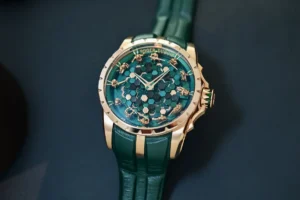
However, the intervening years have witnessed a remarkable transformation within Christopher Ward. The brand’s trajectory shifted dramatically with the introduction of the groundbreaking Bel Canto in 2022, a chiming complication watch that redefined perceptions of the company’s capabilities and ambition. This was swiftly followed by the release of The Twelve in 2023, a collection that elevated the quality and design of their core offerings. The subsequent unveiling of The Twelve X showcased their in-house movement development and finishing prowess, while the Loco further cemented their reputation for innovative and avant-garde independent watchmaking. Christopher Ward was no longer just about value; it was actively redefining what value meant in the realm of high-concept, independent horology.

Consequently, the brand that launched the original C63 Sealander in 2021 is a vastly different entity from the one introducing its successor in 2026. Christopher Ward has experienced significant growth in size, customer base, brand awareness, and, crucially, its reputation. The new Sealander collection is a direct reflection of this evolution, a fact underscored by its revised pricing. The three-hand automatic now starts at $1,150 on a strap, and the GMT model begins at $1,395. This substantial increase necessitates a closer examination of what has been enhanced and why.
A Refined Formula: Incremental Evolution, Significant Impact

While the fundamental design philosophy of the Sealander remains recognizable, virtually every aspect of the watch has undergone a meticulous refinement. The cases have been reproportioned, the dials and hands have been meticulously re-engineered, and the bracelets now feature one of the most intuitive tool-free sizing systems encountered in the industry. The cumulative effect of these changes positions the new Sealander collection as a leading contender, if not the outright best, among Swiss-made mechanical watches priced under $2,000, particularly for those prioritizing exceptional value. However, this elevated execution comes at a cost: a subtle reduction in the overt quirkiness that characterized its predecessor.
Conceptual Shift: The Sealander as a Distinct Identity

A significant conceptual shift is the disentanglement of the Sealander line from the broader Trident family. While the most obvious visual cue is the absence of the signature trident counterweight on the seconds hand, this change is more profound. It elevates the Sealander to an independent collection, a status further solidified by the prominent "Sealander" logo now gracing the dials. This strategic move allows both the Sealander and Trident lines to develop independently, fostering distinct identities and catering to their respective audiences. It also allows the Sealander’s cleaner, more universally appealing character to shine through on its own merits. While some enthusiasts may miss the trident, this dissociation is a logical step for a brand seeking to broaden its appeal and establish a more distinct brand architecture.
Case Design: Enhanced Definition and Subtle Sophistication

At first glance, the cases retain the signature "Light-catcher" design, renowned for its ability to play with light and create a sense of depth and dynamism. However, a closer inspection reveals entirely new proportions and refined details. A key visual alteration is the extension of the midcase beyond the bezel, which accentuates the wide, polished chamfer that encircles the bezel. This chamfer now catches light more effectively, imbuing the case with a stronger, more defined aesthetic without deviating from the established visual language.
The three-hand models have notably shed their crown guards, further distancing them from the Trident’s dive-watch heritage and reinforcing the Sealander’s more versatile positioning. In contrast, the GMT models retain their crown guards, lending them a slightly sportier demeanor. The GMT bezel itself has been updated, with a modern index featuring lines instead of dots, and a more angular, assertive typeface. The crowns have also been subtly tapered, a small but impactful detail that contributes to a more refined overall appearance. These revisions, while not radical, collectively result in a cleaner, more resolved, and sophisticated case construction.

Dials and Hands: A Symphony of Refined Details
The dials of the new Sealander collection follow the same trajectory of subtle yet significant improvement. While superficially similar to the previous generation, nearly every element has been re-evaluated and enhanced. Date windows now feature applied frames, adding a touch of depth and visual interest. The numerals on the outer track have been repositioned, swapping places with the adjacent hour markers, and the dial surfaces are now finished with a lustrous lacquer, providing a glossy sheen.

The GMT models have undergone a more substantial dial redesign. The numerals and dots on the outer track have been entirely omitted, allowing the hour markers to extend further towards the edge of the dial. This simplification, coupled with a reduction in contrasting colors on previous GMT bezels, results in a cleaner, albeit more conservative, aesthetic.
The applied hour markers themselves are a testament to Christopher Ward’s elevated finishing capabilities. They are now elegantly tapered towards the center of the dial and feature a remarkable chamfering technique that cuts through not only the metal but also the lume fill. This is an uncommon execution, even under magnification, and speaks volumes about the brand’s attention to detail. A loupe is highly recommended to appreciate the exceptional crispness of these dials. The polishing on the applied markers is immaculate, the lacquered surfaces are uniform and flawless, and the printing is razor-sharp. Even the intricate twin-flag logo, composed of five tiny vertically brushed pieces, presents an impressive spectacle up close.

The hands have also been refined. The minute hand, previously a straight sword design, now subtly curves inward towards its tip. This, along with the tapered crowns and hour markers, contributes to an overall sense of elegance. While the previous generation’s hands extended slightly past the center pinion, the new hands now terminate at the pinion. This is a less distinctive choice, perhaps, but it undeniably enhances the dial’s cleanliness. Furthermore, the older hands featured a polished center stripe against a brushed surface, a treatment that could sometimes appear less precise. The new hands are faceted and entirely polished, offering a more cohesive and refined aesthetic, even if it means a slight reduction in overt distinctiveness for the sake of superior execution.
Christopher Ward is offering the new Sealander with five dial color options at launch: white, black, sky blue, pistachio green, and pink. The lacquered white dial, paired with black printing, blackened metal appliques, and matching hands, presents an aggressive yet thoroughly modern appearance. The sky blue option is a soft, pale hue, pleasant but perhaps lacking the classic depth of a navy or cobalt. A commendable detail is the matching date disc to the dial color, a touch that enhances the visual harmony. The pistachio green, aptly named, is a pale, creamy shade that also benefits from a color-matched date disc. While green dials are generally appealing, this particular shade might not resonate with all tastes, and its GMT hand lacks sufficient contrast, giving the impression of a less decisive design choice. The blue, green, and pink colorways feel more like trendy, seasonal offerings rather than core, enduring options, and one might find themselves tiring of them over time, unlike the more classic black and white. The gloss-black GMT, on the other hand, is precisely what one would expect: a deep black dial with polished silver indices and hands, accented by a vibrant orange GMT hand, drawing clear inspiration from the iconic Explorer II. While distinct enough to avoid being a direct homage, the influence is palpable, and the gloss black finish undeniably contributes to a supremely clean aesthetic.

The iLink System: A Revolution in Bracelet Adjustment
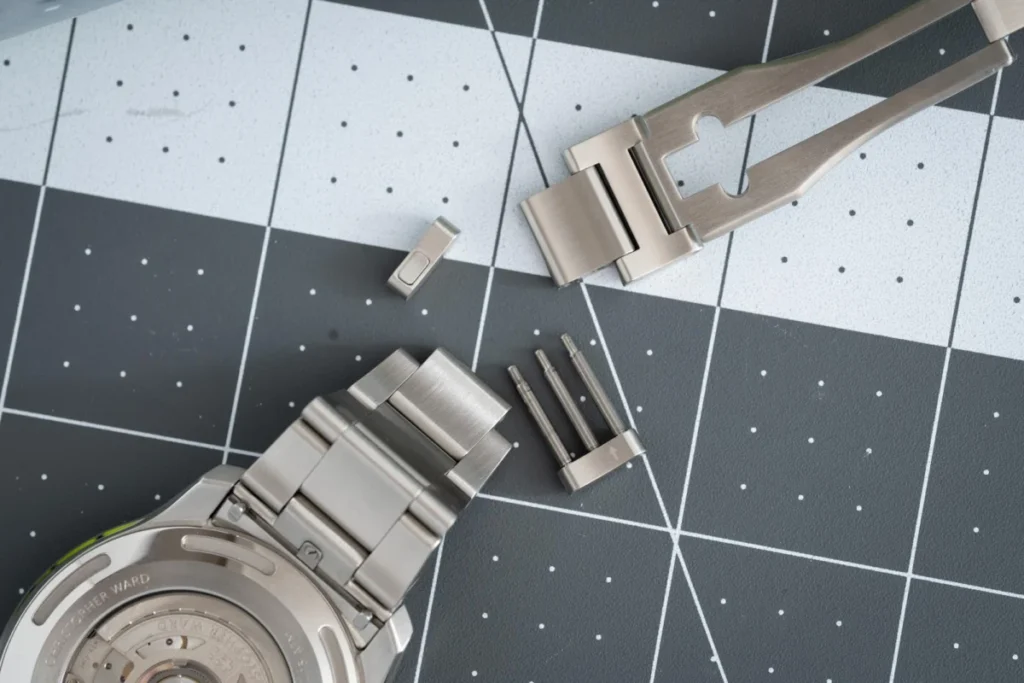
Perhaps the most immediately impactful improvement is not visible on the dial or case, but rather in the functionality of the bracelets. Christopher Ward’s new iLink system, featured on both of their bracelet options, is a game-changer. While not the sole brand to offer tool-free adjustment, its implementation is arguably the finest encountered. The system utilizes easily identifiable buttons on removable links. A simple press of the button releases a cap, allowing the link to be extracted from the opposite side. Reassembly is just as straightforward, involving snapping the bracelet back together. This process takes mere seconds and requires no specialized tools, tiny screws, pins, or collars that are easily lost. It eliminates the need for a watchmaker’s assistance and significantly reduces the risk of scratching the bracelet. The iLink system is so intuitive that it is accessible to anyone, regardless of their experience with watch maintenance, setting a new benchmark for user-friendly bracelet adjustment.

The Sealander collection offers a choice of five strap and bracelet configurations. The Bader bracelet is a fully brushed, three-link design that evokes a classic sporty Oyster aesthetic. Its fold-over clasp incorporates a micro-adjustment system providing approximately 5.5mm of range. For a dressier option, the five-link Consort bracelet features a mix of brushed and polished surfaces. Its shorter links enhance flexibility, and a hidden butterfly clasp maintains a clean appearance. The links adjacent to the clasp can expand to offer roughly 4mm of additional room. Crucially, the iLink system is seamlessly integrated into both bracelet types, making the often-tedious task of bracelet sizing an unexpectedly enjoyable experience.
Movements: Enhanced Power and Proven Reliability

The Sealander collection is divided into two primary movement configurations: three-hand automatics and GMT models. The three-hand variants are available in 36mm and 39mm case sizes, while the GMT models offer a choice of 36mm, 39mm, and 42mm.
The three-hand automatics are powered by the new Sellita SW200-2 Power Plus movement, boasting an impressive 65-hour power reserve. These movements are lightly decorated and fitted with custom rotors. The extended power reserve represents a significant practical improvement for a watch intended for regular rotation, ensuring it remains functional for longer periods when not worn.

The GMT models continue to utilize the Sellita SW330-2 caliber, a caller GMT movement where the 24-hour hand is independently adjustable. This caliber, used in the previous generation, remains a robust and reliable choice, offering a 56-hour power reserve.
Wearability: A Spectrum of Sizes and Proportions

With five dial colors, three case sizes, two movement options, and five strap or bracelet choices, the new Sealander collection offers considerable personalization. The review examined four watches, encompassing both movements, all three case sizes, and four of the available colors.
The 36mm automatic, measuring 42mm lug-to-lug and 11mm thick with a 20mm lug width, embodies a classic, sporty Explorer-like feel. This combination of dimensions feels compact and solid, neither small nor an attempt at a vintage replica. The Light-catcher case design effectively mitigates the perceived thickness, making the watch appear slimmer on the wrist.

The 39mm automatic measures 39mm by 45mm by 11.1mm. For a 6.75-inch wrist, the 36mm to 39mm range is ideal, with both automatics wearing exceptionally well. The 39mm model presents a larger presence but remains an effortlessly wearable everyday watch.
The introduction of the GMT bezel significantly alters the visual balance. The fixed 24-hour bezel reduces the dial opening, impacting the watch’s perceived size and wearability. The 39mm GMT measures 39mm by 44.7mm by 11.6mm, with 20mm lugs. Its footprint is nearly identical to the 39mm automatic, though it feels slightly more substantial due to its increased thickness and crown guards. Curiously, on the wrist, it appears smaller than the 39mm automatic, presenting as a sturdy, slightly muscular timepiece that is quite appealing.

The 42mm GMT is the largest of the group, measuring 42mm by 48.3mm by 11.7mm, with 22mm lugs. The wider lugs accentuate its size, and it is undeniably a substantial watch. Despite initial reservations, this proved to be the reviewer’s personal favorite. The bezel visually compresses the watch, balancing its larger dimensions with a dial opening of only 34mm. The bracelet tapers dramatically from 22mm at the lugs to 16.5mm at the clasp, reducing both its visual weight and perceived heft. While not a small watch, its proportions work remarkably well, even on a 6.75-inch wrist. The reviewer’s preference for the 42mm GMT, particularly with the black dial, highlights how well-executed proportions can overcome preconceived notions about size.
Conclusion: The Pinnacle of Purposeful Restraint

The new Christopher Ward Sealander collection represents a compelling synthesis of refined design and exceptional execution. While perhaps less overtly quirky than its predecessor, these watches embody a new standard of accessible luxury, offering a “damn good watch” experience without unnecessary complexity. They are versatile, everyday timepieces that excel in their core function without specializing in any one area. The focus is squarely on quality of life and meticulous execution, making them the ideal choice for days when indecision strikes.
Christopher Ward has succeeded in creating watches that are inherently likable. Their lack of overtly memorable or potentially offensive elements makes them universally appealing. This is not a strategy aimed at cultivating a cult following; that niche is occupied by models like the Bel Canto and Loco. Instead, the Sealander is designed for clarity and broad market appeal. This strategic pivot is entirely understandable given Christopher Ward’s remarkable growth over the past five years. The brand now needs to cater to a wider audience, including those who simply desire a well-made, reliable watch. The removal of elements such as the trident counterweight, elongated hands, and some contrasting color palettes, coupled with the softening of design through tapering, has resulted in a more aesthetically pleasing and accessible timepiece.

What is particularly commendable is that this refinement has not come at the expense of quality. On the contrary, the overall quality has been elevated, particularly in the dial finishing. The iLink system, though an internal feature, is genuinely impressive. The exterior execution rivals watches costing twice as much, potentially even more, posing a credible challenge to established brands like Longines.
However, the price increase is a significant factor. The Sealander is no longer the budget-friendly Swiss-made watch it once was. While still reasonably priced for its features and quality, it has undeniably moved upmarket to meet a new customer demographic. The era of Christopher Ward offering Swiss-made mechanical watches under $1,000 appears to be a chapter in the brand’s history.

Christopher Ward continues to represent exceptional value, but its primary market has shifted. It is now firmly positioned as an accessible-luxury brand, a tier that the brand’s younger collectors would have aspired to reach. While it is worth acknowledging the departure of more entry-level models like the C5 Malverns and pilot watches, there is comfort in knowing that the sub-$1,000 segment is now more robust than ever with compelling alternative brands. It is arguably more beneficial for Christopher Ward to now contend with the Swiss luxury brands that once overlooked them, a testament to their remarkable journey and evolving standing in the horological world.