The realm of metal additive manufacturing (AM), particularly laser powder bed fusion (LPBF), has dramatically evolved beyond its initial prototyping applications. In the defense sector, LPBF is now recognized as a critical strategic capability, essential for sustaining aging and complex military platforms that require low-volume, geometrically intricate spare parts. Traditional supply chains frequently struggle to meet these demands due to obsolete tooling, disappearing suppliers, and fragile, extended logistics networks. The ability to print mission-critical metal components near the point of need offers a compelling solution, yet a significant hurdle remains: ensuring the trustworthiness of field-produced parts without the necessity of returning them to central laboratories for exhaustive inspection and testing.
Addressing this pivotal challenge, the European Defence Fund (EDF) sponsored the DISCMAM (Digital Supply Chain for On-Site Maintenance by Additive Manufacturing) project. This initiative was specifically designed to bridge the gap in on-site adoption of AM for defense maintenance. Instead of attempting to replicate the complex, resource-intensive testing protocols of central laboratories in a field environment, DISCMAM pioneers a paradigm shift by replacing conventional physical testing with a robust digital qualification process.
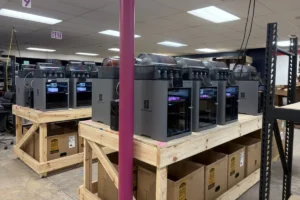
A cornerstone of the DISCMAM project’s workstream has been the development of digital quality control for LPBF. This involves the integration of in-situ monitoring techniques and the creation of rapid-response digital twins, which collectively provide real-time quality assurance. By combining functional acceptance criteria, AI-powered defect detection, and sophisticated statistical modeling, DISCMAM can classify printed parts into graded acceptance levels immediately after production. This innovative approach is now being integrated into Fieldmade’s deployable NOMAD03 microfactory, a significant step towards practical, on-site AM implementation.
Digital Evidence Takes Precedence Over Traditional Physical Testing
The fundamental objective of the DISCMAM project is not to entirely eliminate physical testing, but rather to transition from conventional, time-consuming, and often destructive physical tests to a more efficient and reliable digital qualification framework. Traditionally, methods such as tensile testing, micrographic porosity analysis, and comprehensive metrology have been employed to assess the quality of 3D printed parts. These processes are not only expensive and slow but can also be destructive, rendering the tested part unusable. DISCMAM circumvents these limitations by leveraging the digital footprint generated during the entire build process. This is achieved by meticulously collecting in-situ data from every layer as it is printed.

The success of this digital qualification approach hinges on three critical elements:
-
Operationally Meaningful Acceptance Levels: The project recognizes that not all parts and missions require the same level of assurance. A rigid, one-size-fits-all pass/fail standard based on strict Original Equipment Manufacturer (OEM) specifications is often impractical in deployed scenarios. Therefore, DISCMAM advocates for a tiered system that reflects the expected service life of the component and the mitigation strategies employed during its use. Crucially, this framework moves away from measuring absolute material characteristics in the field – a feat often impossible – and instead relies on relative quality intelligence to build confidence in the part’s fitness for purpose.
-
Correlated In-Situ Metrics: A sophisticated monitoring system is essential to detect and quantify events occurring during the printing process. These events, such as streaking, spatter, pinning, and warpage, have been statistically linked to critical defects like porosity, dimensional deviations, and compromised surface properties. The ability to accurately measure and interpret these in-situ metrics is fundamental to the digital qualification process.
-
Rapid-Response Digital Twin: The third vital component is a fast-acting digital twin. This digital representation of the printed part takes the correlated in-situ metrics and the process parameters as inputs. Its primary function is to generate an evidence-based classification of the part’s quality in near real-time, immediately following the completion of the build.

The DISCMAM project has successfully developed and validated all three of these elements using defense-relevant components on an industrial LPBF platform. The Danish Technological Institute (DTI), in collaboration with Euler3D and Fieldmade, has designed and piloted a digital AM supply chain specifically tailored for on-site maintenance. Their efforts have focused on two aluminum use cases provided by the Belgian Ministry of Defence (MoD). Both components were manufactured using LPBF with AlSi10Mg powder on a Nikon SLM Solutions 280 machine at DTI’s facilities.
Use Case Demonstrations: Critical Components for Aging Platforms
The first use case involved the 3D printing of a compressor cover for a Mercedes Unimog heavy truck. This specific component, part of the U1350L air compressor system, is designed to enclose and seal a pressurized volume. Its functionality relies on a gasketed downskin face, which is susceptible to failure through gasket leakage or mechanical cracking. The geometric complexity and the requirement for a robust seal made this an ideal candidate to showcase the capabilities of AM and the DISCMAM quality assurance framework.
The second use case addressed a critical component within the same Unimog vehicle’s fuel system: the fuel filter housing. This part is responsible for holding filters under slight vacuum upstream of the fuel pump. Imperfect sealing faces or compromised threaded interfaces in this component can lead to vacuum leaks, while structural failures can arise from mishandling or vibrations during operation. These parts exemplify the typical challenges faced in defense AM: intricate geometries, vital surfaces and interfaces, and well-understood failure modes directly related to porosity, dimensional accuracy, and surface texture.
Tiered Acceptance Levels: Balancing Urgency and Functionality
To translate the technical and operational requirements of these critical use case parts into a practical qualification system, DISCMAM established a set of functional acceptance criteria for LPBF aluminum spares. This framework defines four distinct acceptance levels, catering to varying degrees of urgency and operational necessity:

- Level 1: Permanent Replacement: Parts designated for this level meet the highest quality standards and are considered equivalent to new OEM parts, suitable for long-term, permanent integration into the platform.
- Level 2: Temporary Replacement: Components in this category meet a defined set of criteria that allow for their use as temporary replacements, offering a reliable solution while a permanent part is sourced or manufactured.
- Level 3: Emergency Use: This level is reserved for parts that can be used in urgent, mission-critical situations where operational readiness is paramount, even if they possess minor deviations that do not compromise immediate functionality for a limited duration.
- Level 4: Scrap: Parts that do not meet the minimum acceptable quality standards for any functional use are classified as scrap.
Quantitative ranges were proposed for each level and each use case, although the underlying approach is adaptable to any printed part. These ranges included specifications for hardness and ultimate tensile strength (UTS) bands, acceptable roughness limits for both functional and non-functional downskin surfaces, and thread torque windows.
A persistent challenge for both Ministries of Defence (MoDs) and OEMs is the identification of absolute thresholds due to a lack of comprehensive legacy data. Instead of relying on un-verifiable absolute boundaries, the DISCMAM framework employs relative digital evidence to build operational confidence. A crucial aspect of this system is that any digital intelligence indicating poor quality or process anomalies serves as an immediate disqualifier, even for Level 3 emergency use. This is because a deviation in the production process fundamentally compromises the integrity of the manufacturing outcome.
These graded acceptance levels form the bedrock of DISCMAM’s LPBF quality assurance strategy. The in-situ monitoring system and the digital twin are not merely designed to flag "defects." Instead, they provide an indication of the likely acceptance level a part will fall into, thereby guiding decisions on how, and for how long, it can be safely deployed.
Transforming Defect Maps into Actionable Quality Insights
During LPBF builds, Euler3D’s sophisticated system captures layer-by-layer images of the powder bed and the exposed surface. Utilizing a combination of classical image processing techniques and advanced deep neural networks, this system quantifies key defect modes. These include streaking (often caused by recoater damage), spatter accumulation, pinning, warpage or obstructions, smoke events, and localized powder loss. This capability was rigorously deployed and validated at DTI on a Nikon SLM Solutions 280 machine during the production of the Unimog compressor cover and fuel filter housing.

For each printed part, detailed defect frequency plots were generated, illustrating the distribution of defects across the build height. Furthermore, spatial heatmaps revealed where defects were concentrated across the build plate. Integrated metrics, such as total streaking occurrences, spatter counts, and total defect area, were also calculated. These in-situ data were then directly compared with high-resolution computed tomography (CT) scans to measure porosity and geometric deviation (root mean square error and total deviation against the CAD model). Additionally, downskin roughness measurements and Profilometry-based Indentation Plastometry (PIP) were performed, alongside hardness testing to assess local mechanical properties.
The correlations observed were compelling and statistically significant. Higher instances of streaking and spatter detected by Euler3D were consistently associated with increased porosity and defect counts identified via CT scans in functionally critical regions. This confirmed that recoater-induced disturbances are a reliable proxy for lack of fusion and the presence of pores. Specimens exhibiting dense streaking signatures, deliberately induced by damaging recoater lips, also showed elevated geometric deviations when compared to their CAD models. Downskin roughness was found to be strongly influenced by streaking patterns, with continuous linear disturbances translating into extended height variations, while localized pinning contributed to sharp surface protrusions.
From a mechanical perspective, samples achieving relative densities at or above approximately 99.9%, a result of optimized energy density and gas flow during printing, exhibited higher yield strength, UTS, and hardness. Conversely, parts with slightly lower densities and higher in-situ defect activity demonstrated reduced mechanical performance. Collectively, these findings provided robust evidence that Euler3D’s defect maps serve as reliable early indicators of the porosity, geometry, and surface conditions that ultimately dictate functional acceptance.
DISCMAM then encapsulated these established correlations into a fast-response digital twin designed for LPBF quality classification. This culminated in a digital go/no-go framework, illustrated in Figure 3. For each build, one or more test coupons were printed alongside the target part under identical conditions. Euler3D and DTI meticulously collected defect metrics for these coupons and compared them against a reference population of "known good" parts – those that had already been validated through extensive CT scanning and mechanical testing.

New parts were then compared to these reference parts. The distance from their relative distribution was used to assign them to one of the four functional acceptance levels previously agreed upon with the Belgian MoD: Level 1 (permanent replacement), Level 2 (temporary replacement), Level 3 (emergency use), or Level 4 (scrap). Concurrently, layer-by-layer status indicators were implemented to flag "potential" or "critical" layers, enabling focused review and intervention if necessary.
In trials conducted at DTI, including builds of the Unimog compressor cover with accompanying coupons, this framework consistently ranked the coupons within the permanent acceptance region when processed under DISCMAM’s optimized parameters. This allowed the main part to be classified as Level 1 without requiring additional CT scanning, while still retaining CT as a valuable validation option. In this manner, Euler3D’s in-situ defect detection, coupled with its proven correlation to porosity and geometric deviation, effectively closes the loop. It replaces conventional physical inspection with irrefutable digital evidence, transforming raw defect maps into a practical, data-driven tool for ranking parts into four distinct acceptance levels. This empowers faster and more confident decision-making regarding the deployment of field-printed metal spares.
Demonstrating the Solution: The AM Village Workshop in Albacete
To accelerate knowledge transfer and provide a tangible demonstration of the DISCMAM solution, the consortium organized a joint workshop at the AM Village 2026 in Albacete, Spain, in March. This event, hosted by the Spanish Air Force and orchestrated by the European Defence Agency (EDA), brought together a diverse array of industry, academic, and defense stakeholders, including representatives from Ministries of Defence and Maintenance and Logistic units from various military forces.
During the workshop, DISCMAM partners – DTI, Fieldmade, and Lortek – showcased the critical importance of quality assurance for on-site, deployed AM operations. Participants witnessed firsthand how essential it is to move beyond visual inspection, which is incapable of identifying internal quality flaws. They were able to identify a defective part using rapid, digital quality assurance methodologies seamlessly integrated within Fieldmade’s Nomad03 containerized solution. This impactful demonstration garnered significant recognition, with Fieldmade AS receiving the "Best Performance" award at the event. This award underscored the value of DISCMAM’s digital solutions in enabling high-quality on-site spare parts manufacturing within portable and containerized environments.

Attendees observed live LPBF builds, monitored by Euler3D’s system, and witnessed how the digital twin classifies parts into the four defined acceptance levels immediately after production. This provided a practical understanding of the system’s capabilities. Participants had valuable opportunities to discuss how this framework could be integrated into their own qualification schemes, existing standards, and operational procedures. By grounding these discussions in concrete use cases and real test data, the DISCMAM consortium aims to transition from abstract promises to readily adoptable and practical solutions for the defense sector.
Broader Implications for Defense Logistics and Readiness
The DISCMAM project’s success signifies a potential paradigm shift in how defense forces manage their spare parts inventory and maintenance operations. The ability to print complex metal parts on-demand, near the point of need, directly addresses the vulnerabilities of traditional, globalized supply chains. This reduces lead times from months to hours, mitigates risks associated with long-distance transportation and potential disruptions, and significantly enhances operational readiness.
For aging platforms, which often rely on obsolete parts with dwindling supply, AM offers a lifeline. The DISCMAM digital qualification framework provides the crucial assurance needed to deploy these field-printed parts with confidence, ensuring that operational effectiveness is not compromised by the manufacturing method. This technology can also lead to substantial cost savings by reducing the need for large, static inventories of spare parts, as well as the associated warehousing and maintenance costs.
The development of tiered acceptance levels is particularly relevant for military operations, where flexibility and rapid response are often paramount. By classifying parts based on their intended use and service life, DISCMAM allows for a more pragmatic approach to maintenance, prioritizing critical missions while still ensuring safety and reliability. The project’s focus on digital evidence over traditional physical testing streamlines the entire process, making AM a more accessible and scalable solution for the defense industry. As this technology matures and gains wider adoption, it promises to revolutionize military logistics, enhance operational autonomy, and ultimately, bolster national security.