The saga of the Jeep Wagoneer, a nameplate synonymous with American automotive aspiration and rugged luxury, concludes its extensive exploration today, marking the final installment of a series that commenced in February. While the foundational SJ Wagoneer, a true icon and arguably the progenitor of the luxury SUV segment, enjoyed a remarkable production run from 1963 to 1991, its legacy has been a complex tapestry of reinvention and reinterpretation. This final chapter delves into the post-1980s iterations of the Wagoneer, examining their market reception, pricing strategies, and the persistent challenge Jeep faced in either replicating the original’s success or effectively leveraging the potent Wagoneer brand equity across diverse platforms. The overarching narrative suggests a consistent underestimation of the enduring loyalty its original owners held for the SJ, juxtaposed with an overestimation of the Wagoneer moniker’s inherent draw when applied to vehicles that diverged significantly from its established identity.
The XJ Era: Diluting the Wagoneer Identity
The first significant attempt to revitalize the Wagoneer name occurred in 1984 with the introduction of the Wagoneer and Wagoneer Limited trims based on the all-new XJ Cherokee platform. This strategic move, launched concurrently with the revolutionary XJ Cherokee, aimed to capitalize on the Wagoneer’s prestige while offering a more contemporary and compact package. The Wagoneer Limited, in particular, was positioned not alongside the XJ Cherokee lineup but as a more accessible, albeit still premium, alternative to the larger, outgoing SJ Grand Wagoneer.
American Motors Corporation (AMC), then the steward of the Jeep brand, harbored ambitions for the XJ Wagoneer to eventually supersede the aging SJ model within a few years. However, this vision came with a significant price premium. The XJ Wagoneer Limited, a more opulent version of the robust Cherokee, was priced at $18,186 in 1985, a considerable sum that, when adjusted for inflation, equates to approximately $57,566 in today’s currency. This pricing strategy placed it in direct competition with established luxury brands and higher-tier offerings from European manufacturers, such as Buick and Volvo’s turbocharged wagons, a segment where the Wagoneer name, despite its heritage, struggled to gain traction.
By 1989, the market had spoken, and the XJ Wagoneer and Wagoneer Limited proved to be an unappealing proposition for consumers. Their elevated cost relative to the standard Cherokee, coupled with a perceived dilution of the Wagoneer’s core identity, led to their discontinuation. This period saw the SJ Grand Wagoneer soldiering on, its sales dwindling as the automotive landscape evolved towards more modern and refined sport utility vehicles. Yet, Chrysler, having acquired AMC in 1987, was unwilling to relinquish the valuable cachet associated with the Wagoneer name.
The ZJ Grand Wagoneer: A Fleeting Return to Grandeur
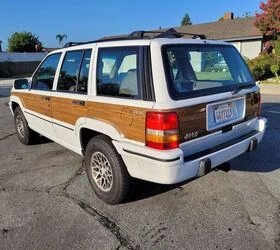
In 1993, Chrysler orchestrated a more direct attempt to resurrect the spirit of the Grand Wagoneer with the introduction of a ZJ Grand Cherokee-based Grand Wagoneer. Marketed as a distinct model rather than a trim level, this new iteration commanded a significant price tag of $29,966 (approximately $70,176 adjusted for inflation). This positioned it above key competitors, including the equally luxurious Ford Explorer Limited and Eddie Bauer editions, further challenging its market viability.
The ZJ Grand Wagoneer, despite its premium aspirations, proved to be a short-lived endeavor, existing for only a single model year. Its high cost, coupled with the significant success of the standard Grand Cherokee – a vehicle that redefined the mainstream SUV market – meant that many buyers opted for the Limited trim of the Grand Cherokee, which offered comparable luxury and features at a substantially lower price point, often distinguished only by the Grand Wagoneer’s distinctive, albeit somewhat dated, woodgrain exterior trim.
The Long Hiatus and the WS Revival
Following the ZJ’s brief appearance, the Wagoneer nameplate entered a nearly three-decade dormancy. This period witnessed significant shifts in automotive ownership and industry consolidation, with Chrysler transitioning through ownership by Daimler, Cerberus, and eventually becoming part of Fiat Chrysler Automobiles (FCA) before its integration into the global Stellantis conglomerate. Throughout this time, whispers of a revived Wagoneer persisted, with multiple proposed timelines and concept vehicles teasing its eventual return.
The long-promised, and frequently delayed, resurrection of the Wagoneer finally materialized in 2022 with the introduction of the WS platform SUV. Available in both standard and extended-wheelbase (L) configurations, and offered as either the Wagoneer or the more opulent Grand Wagoneer, this new generation was designed to compete at the apex of the large, luxury SUV market. Pricing reflected this ambition, with base Wagoneers starting at a substantial $58,995 ($70,075 adjusted), and the top-tier Series III trim reaching $74,460 ($88,444 adjusted). The Grand Wagoneer commenced its pricing strategy over $10,000 higher, at $87,000 ($103,339 adjusted), and could ascend to $110,000 ($130,659 adjusted) in its Series III configuration.
Market Performance of the WS Wagoneer and Grand Wagoneer
The initial market reception for the WS Wagoneer and Grand Wagoneer, while significant in absolute terms, did not immediately replicate the intended market disruption. In its debut year of 2022, the combined sales of all WS variants (Wagoneer, Grand Wagoneer, and their L counterparts) reached 22,646 units. This placed it as a new entrant in a segment populated by established players.
The subsequent year, 2023, saw a considerable uptick in demand, with sales nearly doubling to 43,252 units. This growth continued into 2024, with sales reaching 56,818 units. This sales trajectory places the Wagoneer models in a competitive position, drawing parallels with the Cadillac Escalade, a long-standing benchmark in the luxury SUV segment. The Escalade recorded sales of 41,672 units in 2024 and 57,041 in 2025, indicating that the Wagoneer is carving out a discernible niche for itself.
However, a notable shift occurred with the 2025 model year refresh. Stellantis streamlined the lineup, consolidating all variants under the Grand Wagoneer moniker and implementing a reduction in standard equipment. This strategic move was aimed at enhancing the model’s competitiveness in a challenging market. Despite this consolidation and the inherent popularity of the standard Wagoneer over the Grand Wagoneer in previous iterations, the WS platform SUV has not consistently achieved the market penetration anticipated by its ambitious launch. Sales figures for 2025, following the refresh, dipped to 46,023 units, though current monthly sales projections for 2026 suggest a potential for the revised Grand Wagoneer to achieve its best sales year to date, holding steady around 5,000 units per month.
The absence of a full-size Ram SUV, a product long anticipated by industry observers and crucial for the Stellantis portfolio, remains a notable gap in the market, particularly given the success of the Wagoneer in this segment.
The Wagoneer S: Electrifying Ambitions and Market Realities
Adding another layer of complexity to the Wagoneer narrative, 2025 also saw the introduction of the Wagoneer S. This compact, all-electric SUV, built upon the flexible STLA small platform, represented an ambitious expansion of the Wagoneer brand into a sub-brand within Jeep. The Wagoneer S entered the market with a Launch Edition priced at $71,995, quickly followed by a more accessible Limited trim at $66,995. This strategy of launching two distinct Wagoneer models concurrently echoes the market’s initial reaction to the 1984 XJ Wagoneer, signaling potential challenges in market segmentation and consumer perception.
The initial sales performance of the Wagoneer S has been underwhelming. In its extended first year, spanning from summer 2024 through the end of 2025, it sold 11,270 units. The first quarter of 2026 saw a precipitous decline to just 175 units sold. This sharp drop coincided with the expiration of a federal tax credit for electric vehicles, a factor that significantly impacted its affordability and appeal. Consequently, the Wagoneer S has been effectively canceled, with indications of a future return. This underscores the volatile nature of the EV market and the challenges of launching premium electric vehicles in a segment still grappling with adoption rates and economic incentives.
A Historical Perspective on Wagoneer Sales
To fully appreciate the market dynamics, a look at historical sales figures for previous Wagoneer iterations is illuminating. The 1984 XJ Wagoneer’s debut year showed promise, with 24,731 units sold. However, this momentum quickly dissipated. Sales fell to 13,501 in 1985, then to 12,672 in 1986, and 12,289 in 1987. By 1988, only 9,138 were sold, and in 1989, the final year for the XJ Wagoneer, just 6,537 found buyers. These figures represent a small fraction of the 2,195,678 Jeep Cherokees sold in America between 1984 and 2001, highlighting the XJ Wagoneer’s niche and ultimately unsuccessful positioning.
The ZJ Grand Wagoneer’s brief tenure in 1993 saw sales of 6,378 units. This performance pales in comparison to the groundbreaking success of the standard Grand Cherokee, which sold an astounding 190,935 units in its inaugural year. Many of these were the highly popular Limited trims, which offered a nearly identical luxury experience to the Grand Wagoneer at a considerably more attractive price point, making the wood-paneled exclusivity of the Grand Wagoneer a costly indulgence.
Conclusion: The Enduring Allure and Evolving Identity
The Wagoneer nameplate, despite its checkered past and fluctuating market fortunes, appears to be firmly entrenched within Jeep’s product strategy. From its origins as a pioneering luxury SUV to its subsequent reincarnations and modern iterations, the Wagoneer has consistently aimed for a premium positioning. While the brand has struggled to consistently replicate the unwavering appeal of the original SJ Wagoneer, the sustained presence of various Wagoneer models in the lineup suggests a belief in its enduring mystique and its ability to capture a segment of the luxury SUV market. The journey of the Wagoneer is a testament to brand resilience, strategic adaptation, and the perennial challenge of balancing heritage with evolving consumer expectations and market realities. The name may endure, holding a distinctive corner of the automotive landscape, much like it did in the 1960s, but its path forward will undoubtedly continue to be shaped by its ability to forge a compelling identity that resonates with contemporary buyers.