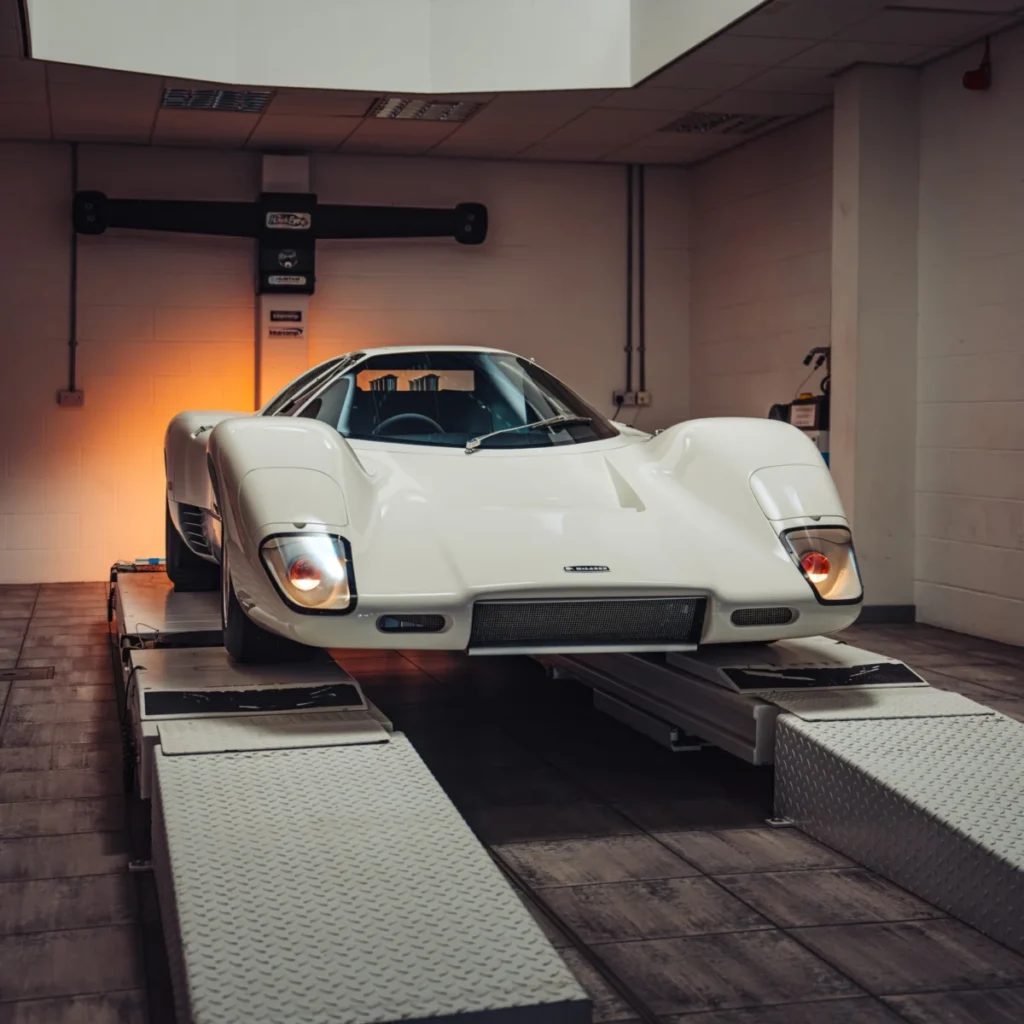
For many automotive enthusiasts, the McLaren F1 stands as the undisputed king of road-legal supercars, the marque’s definitive foray into production vehicles. However, this perception overlooks a crucial, albeit truncated, chapter in McLaren’s history: the M6 GT. While the F1 indeed marked McLaren’s first production road car, its spiritual predecessor, the M6 GT, was conceived by the legendary Bruce McLaren himself as a road-legal iteration of his potent Can-Am racers. Now, more than half a century after its inception and subsequent shelving, McLaren Special Operations (MSO) has meticulously restored one of the three elusive M6 GT prototypes, breathing new life into Bruce McLaren’s pioneering vision.
A Legacy Forged in Racing: The Genesis of McLaren
The story of the McLaren M6 GT is inextricably linked to the remarkable life and career of its creator, Bruce McLaren. A New Zealander with an innate passion for automobiles and an unparalleled talent behind the wheel, Bruce McLaren left an indelible mark on the world of motorsport and automotive engineering. His early career was marked by a deep involvement with Formula 1, where he achieved the rare distinction of building and racing his own car to victory – a feat accomplished by only a handful of drivers in the sport’s history, including Jack Brabham and Dan Gurney.
McLaren’s automotive journey began at a remarkably young age. By his teenage years, he had already restored a 1929 Austin 7 Ulster with his father and was actively participating in local racing events. His talent was recognized through the prestigious Driver to Europe scholarship program, which facilitated his move to the United Kingdom in 1958. It was through a recommendation from fellow racing luminary Jack Brabham that McLaren secured a seat with the Cooper Car Company, leading to his first Grand Prix win.
Despite his success in Formula 1 with Cooper, McLaren harbored a greater ambition: to create his own racing machines. At the close of the 1961 Formula 1 season, he embarked on this new path, founding Bruce McLaren Motor Racing in 1963. Initially, the team campaigned modified Coopers before debuting their own purpose-built Formula 1 car, the M2B, in 1966, with Bruce McLaren himself at the helm. While the team’s first Grand Prix victory didn’t arrive until two years later, McLaren soon established itself as a formidable force in motorsport. Tragically, Bruce McLaren’s own life was cut short on June 2nd, 1970, when he was fatally injured during a testing session of a McLaren M8D Can-Am car. He never witnessed the full extent of the empire he had built.
The Can-Am Era: A Crucible of Innovation
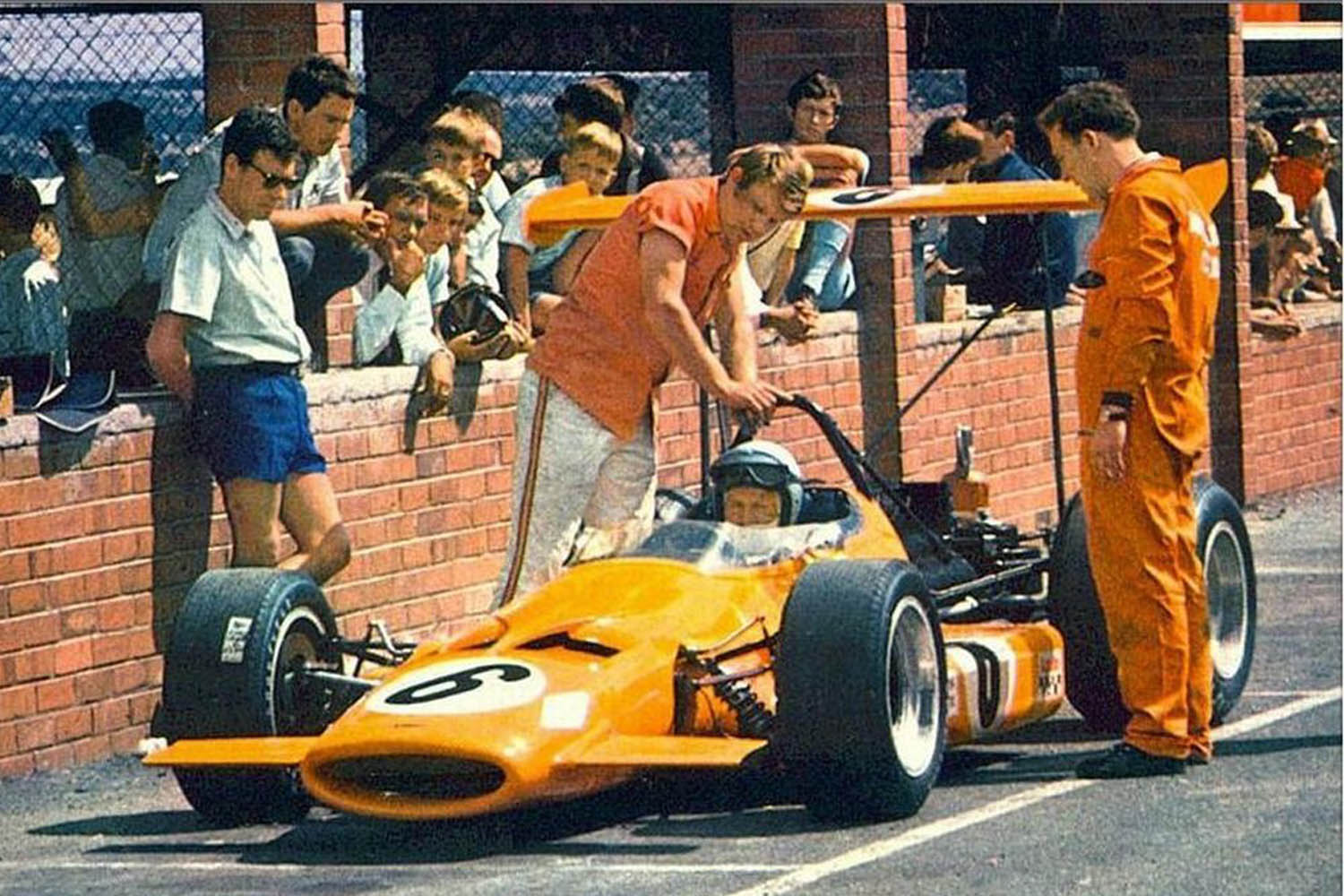
During the mid-to-late 1960s, McLaren achieved remarkable dominance in the Canadian-American Challenge Cup, or Can-Am, a series renowned for its unrestrained approach to racing. This era of "unlimited" sports car racing, as it was often described, fostered the development of some of the most extreme and technologically advanced racing machines ever conceived. The series, which commenced in 1966, quickly became a battleground for manufacturers pushing the boundaries of engine power and aerodynamic innovation.

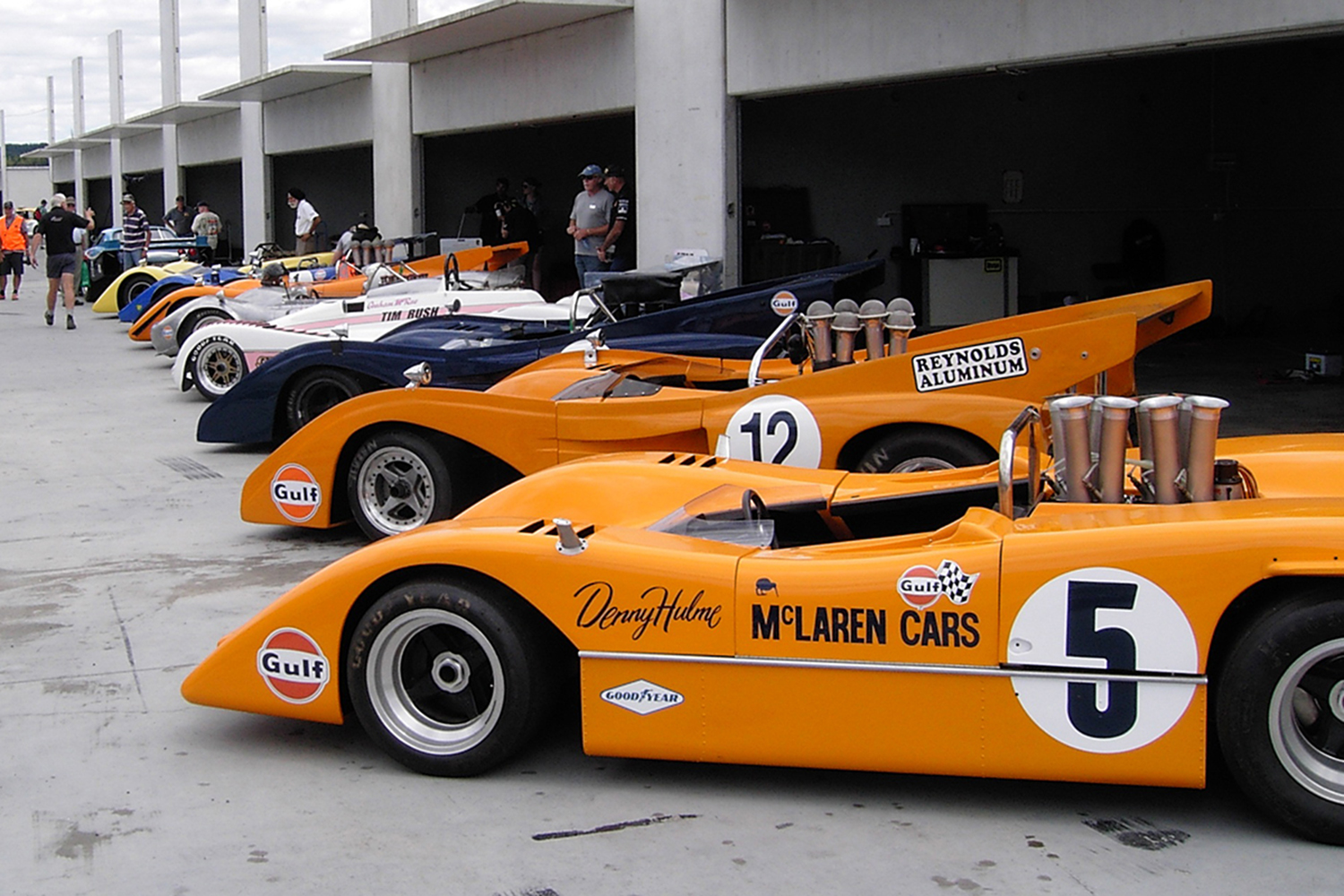
Bruce McLaren and his team were at the forefront of this technological arms race. After initial success with the McLaren M1B, powered by potent Chevrolet V8 engines, the team introduced the significantly improved M6A in 1967. Partnering with fellow New Zealander Denny Hulme, McLaren achieved near-total dominance, winning all but one race and securing the top two positions in the championship. This success was built on a foundation of lightweight construction, powerful V8 engines, and innovative chassis design.
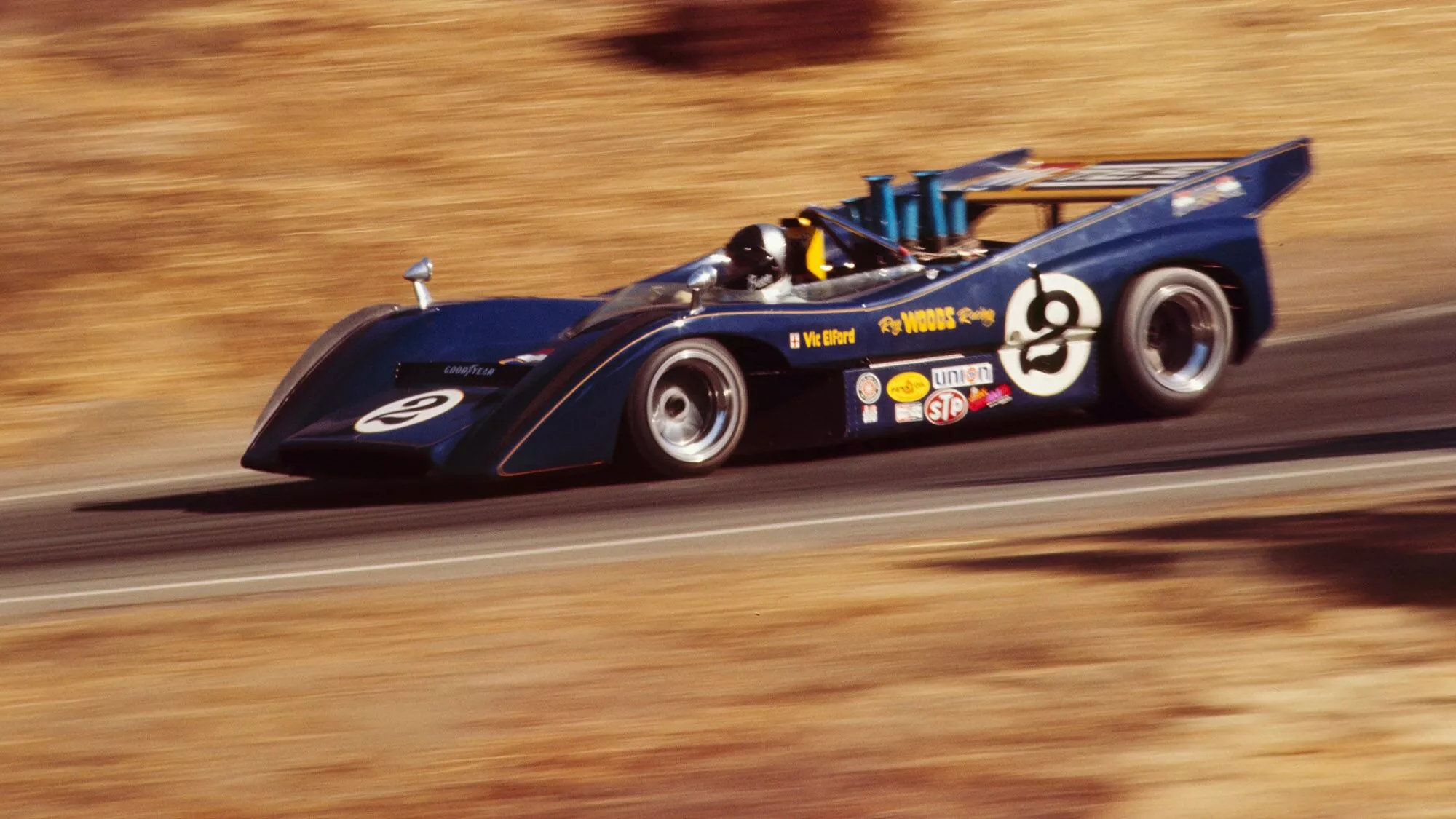
The escalating competition saw marques like Chaparral, Shadow, Porsche, and Ferrari challenging McLaren’s supremacy. The pursuit of outright speed led to increasingly radical designs, with some Can-Am cars reportedly exceeding the performance of their Formula 1 counterparts. By the series’ final season in its original format in 1973, McLaren had amassed an impressive five consecutive titles and an astounding 43 race victories, a testament to Bruce McLaren’s engineering prowess and the team’s relentless pursuit of performance.
The M6 GT: A Road Car Dream Born from Racing Success
It was amidst this Can-Am dominance that Bruce McLaren began to envision a road-going version of his highly successful M6A racer. The M6 GT project was conceived with a dual purpose: to offer a street-legal McLaren for discerning enthusiasts and, crucially, to homologate the M6A for endurance racing, particularly the 24 Hours of Le Mans. The original plan involved constructing 25 units of the M6 GT, a number deemed sufficient to meet homologation requirements at the time.
However, fate intervened. A significant regulation change in 1968, which doubled the required production numbers for homologation, rendered the original plan unfeasible. Compounding this setback was the tragic death of Bruce McLaren in 1970, shortly after the completion of the first three M6 GT prototypes. With the project’s visionary gone and the homologation hurdles insurmountable, the M6 GT program was ultimately shelved.
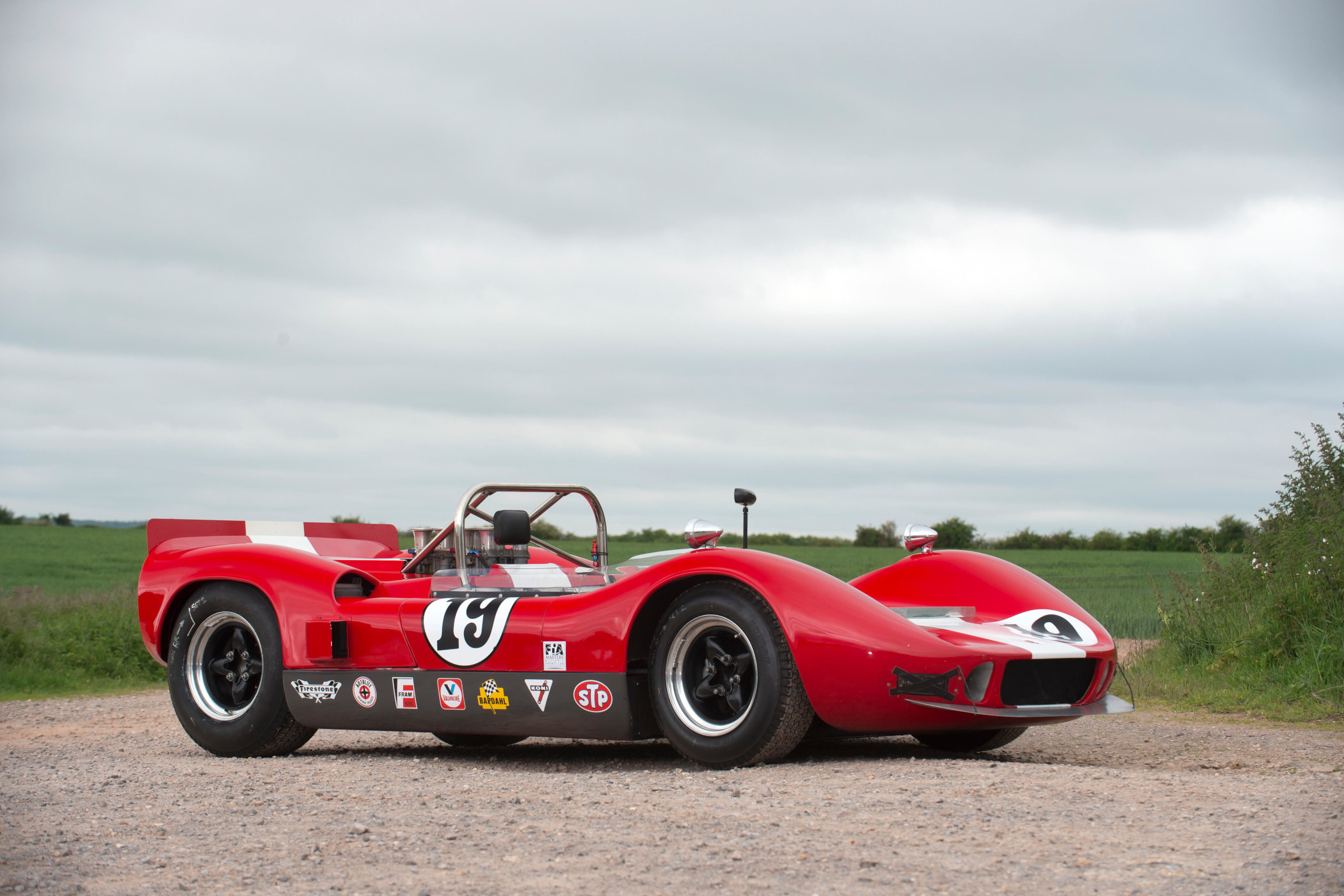
Despite its commercial unviability, one of the three M6 GT prototypes was modified for road use, fitted with a license plate, and driven by Bruce McLaren himself. This singular car served as a tangible demonstration of his ambition to bridge the gap between the racetrack and the public road. Powered by a Chevrolet V8 engine, it was an exceptionally fast machine for its era, capable of exhilarating performance figures that would have rivaled and even surpassed many contemporary production cars.
The McLaren F1: Fulfilling the Road Car Legacy
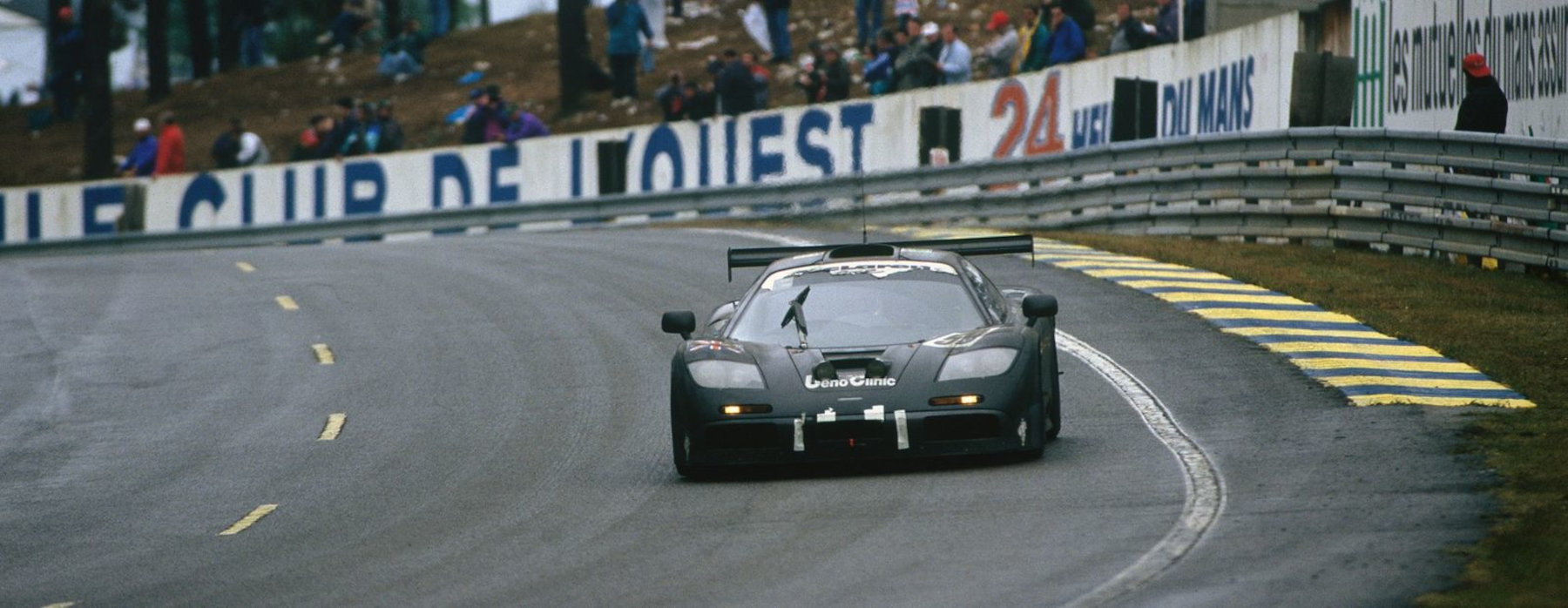
While the M6 GT never entered mass production, Bruce McLaren’s dream of a road-going McLaren lived on. Decades later, under the leadership of Ron Dennis and with the visionary design of Gordon Murray and Peter Stevens, McLaren Automotive would finally realize this aspiration with the introduction of the legendary McLaren F1 in 1992. The F1, a masterpiece of engineering and design, went on to become one of the most iconic and fastest production cars in history. In a poignant full circle, the McLaren F1 GTR secured a remarkable victory at the 1995 24 Hours of Le Mans, echoing the very homologation intent behind the M6 GT project.
McLaren Special Operations: The Meticulous Restoration of a Lost Gem
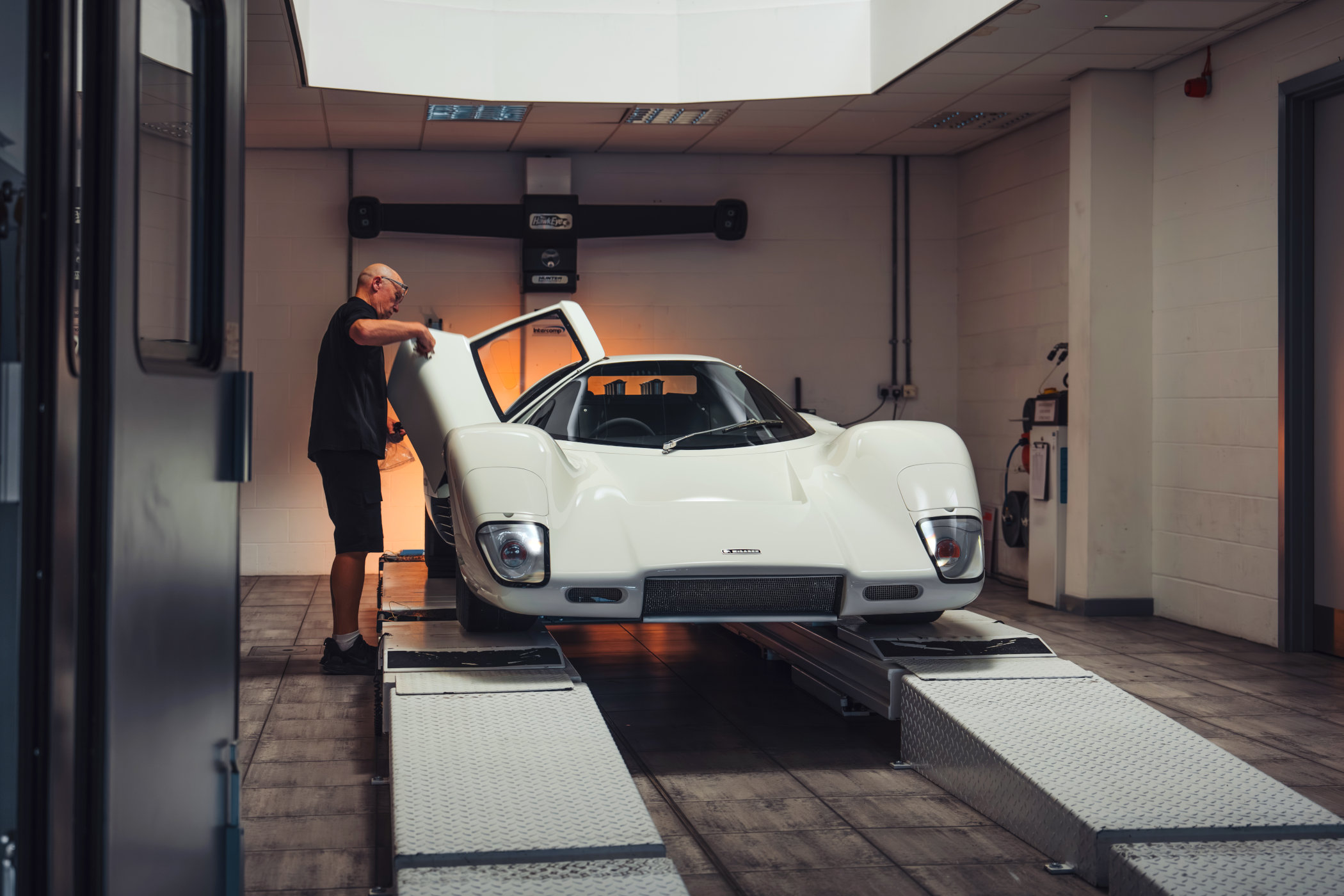
The story of the M6 GT remained largely a footnote in McLaren’s illustrious history until the recent intervention of McLaren Special Operations (MSO). MSO, the marque’s bespoke division dedicated to unique commissions, restorations, and personalization projects, has undertaken the monumental task of fully restoring one of the three original M6 GT prototypes. This endeavor represents not just a technical feat of engineering and craftsmanship but also a profound act of homage to the company’s founder and his unfulfilled vision.
The MSO restoration project involved a painstaking, "nut-and-bolt" approach, prioritizing the use of authentic parts and meticulously recreating components based on original blueprints and molds. The M6 GT, a direct development of the M6A race car, was a challenging conversion from track to road. Even with less stringent safety and emissions regulations compared to today, transforming a purebred racer into a road-legal vehicle required significant engineering acumen.
The restored M6 GT is powered by a Chevrolet-sourced 5.7-liter V8 engine, producing an estimated 370 brake horsepower. While this output was less than its full-blown racing counterparts, the car’s incredibly low weight of approximately 800 kilograms (1,760 pounds) ensured breathtaking performance. Contemporary accounts suggest a 0-100 km/h (0-62 mph) sprint of just over 4 seconds, with 160 km/h (100 mph) achieved in a mere 8 seconds. Its top speed was estimated at an astonishing 290 km/h (180 mph), which, had it entered production, would have cemented its status as the fastest production car of its time.
Design and Technical Nuances of the M6 GT
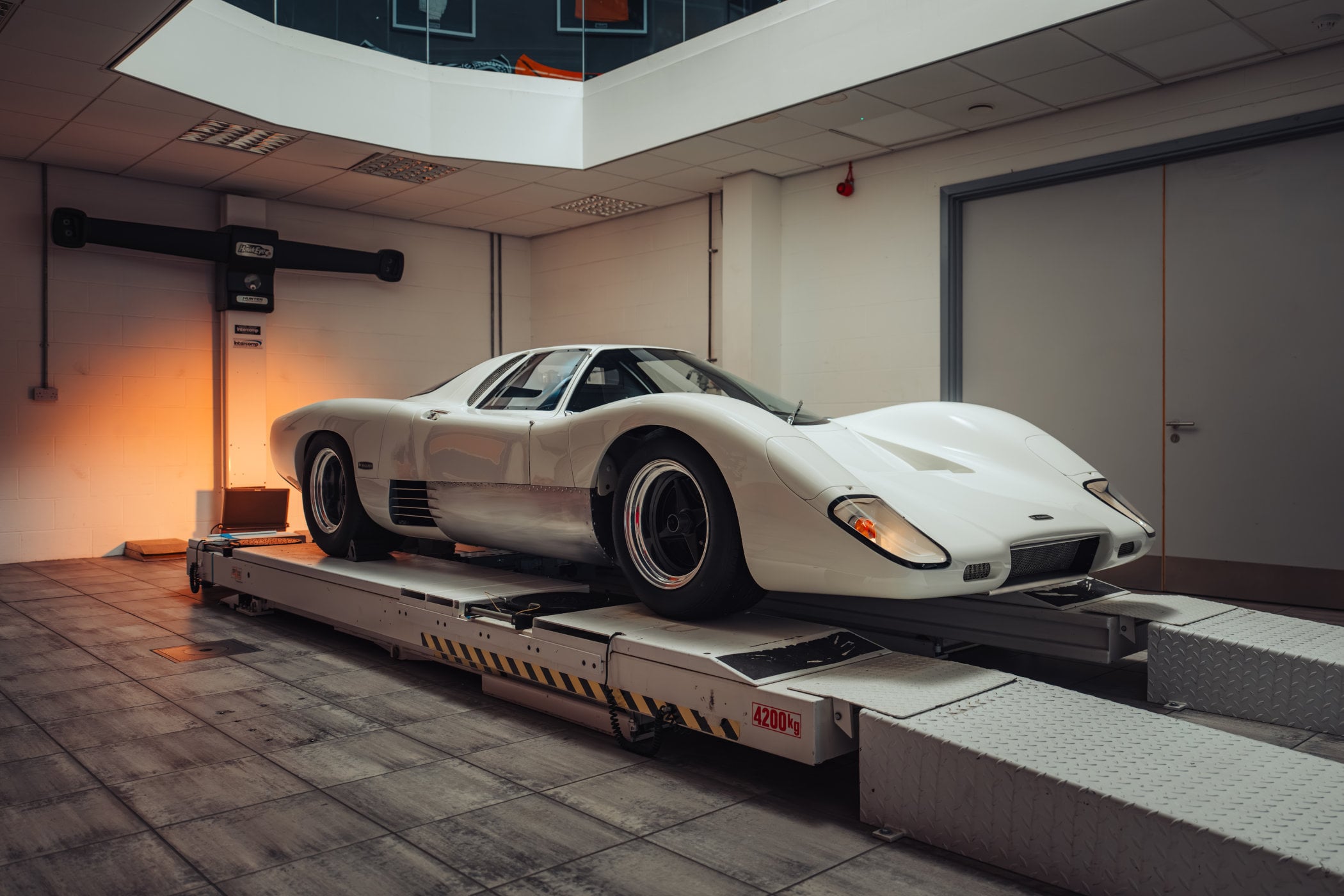
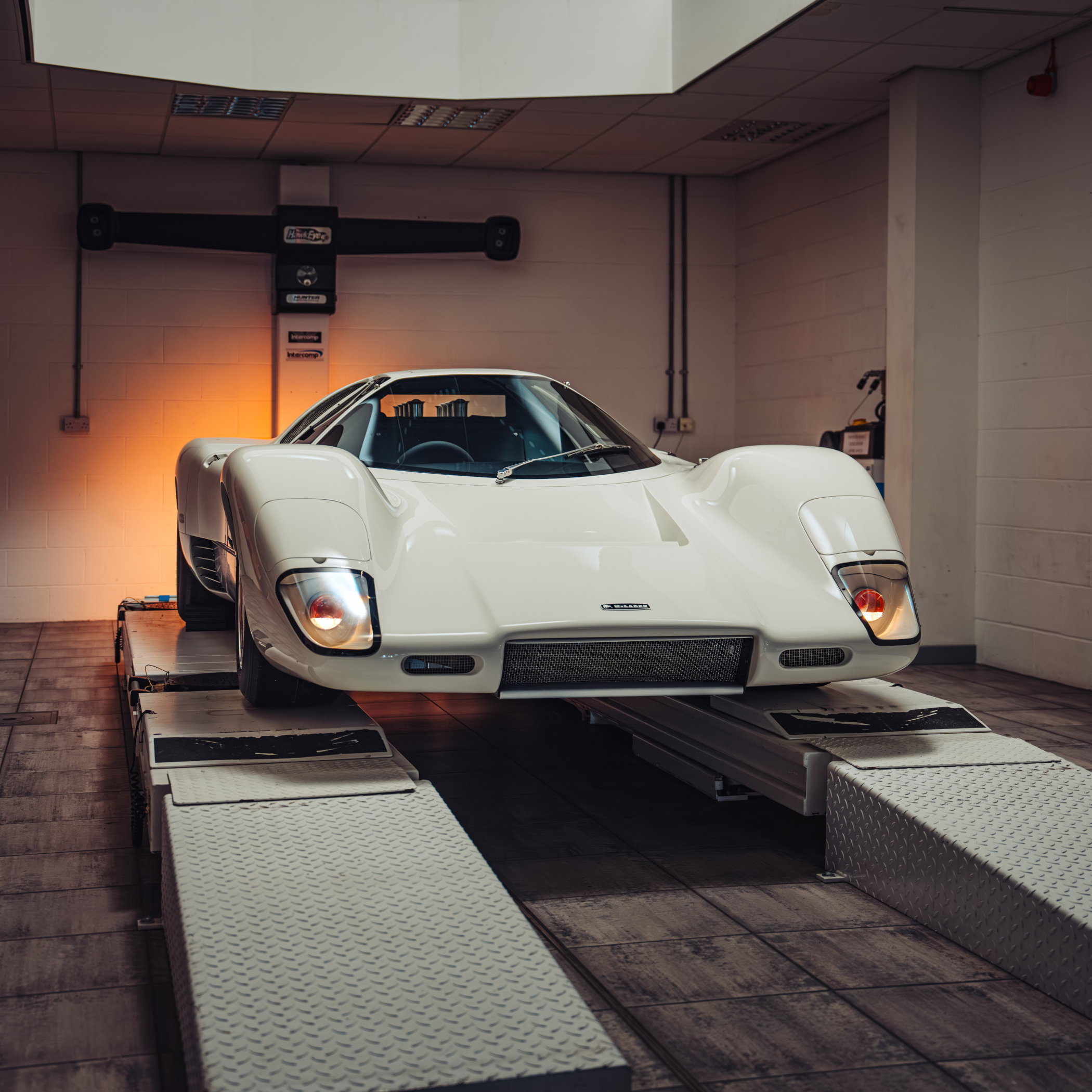
In terms of its aesthetic, the MSO-restored M6 GT closely mirrors the aggressive lines of the M6A race cars, with the crucial addition of a fixed roof. The design features a characteristic low-slung nose, typical of racing cars of that era, incorporating pop-up headlights positioned above glass-covered units. A distinctive wrap-around windshield enhances visibility, while prominent air intakes along the sides were essential for feeding the potent V8 engine.
The front and rear clamshell sections of the M6 GT are constructed from lightweight fiberglass, a material choice that contributed significantly to its low overall weight. A particularly noteworthy design element, and one that foreshadowed the iconic McLaren F1, are the butterfly doors. These upward-opening doors not only added a dramatic flair but also facilitated easier entry and egress from the low-slung cockpit.
The chassis utilized for the restoration is an original component from a McLaren M6A race car. MSO’s in-depth examination of the original prototypes revealed subtle modifications made by McLaren between the initial three builds. The restoration team’s commitment to authenticity meant that even the smallest components, when not available, were painstakingly recreated to match the original specifications as closely as possible.
A Tribute Revealed at Goodwood
The meticulously restored MSO M6 GT was unveiled to the public at the prestigious Goodwood Festival of Speed, a fitting venue for the celebration of automotive history and performance. Finished in "Colnbrook white," a color named after the location of Bruce McLaren Motor Racing’s first workshop in London, England, the car stands as a vivid testament to the founder’s enduring legacy. The MSO M6 GT is more than just a restored vehicle; it is a tangible realization of a dream deferred, a poignant answer to the "what if" that has lingered for over half a century. It is highly probable that Bruce McLaren himself would have been immensely proud of this resurrected piece of his automotive ambition.
The restoration by McLaren Special Operations not only preserves a vital piece of the company’s heritage but also offers a compelling glimpse into the ambitious thinking that characterized Bruce McLaren’s pioneering spirit. It underscores the deep-rooted connection between McLaren’s racing endeavors and its eventual success in the hypercar market, showcasing how early visions, even those initially thwarted by circumstance, can ultimately shape the future of automotive innovation. The MSO M6 GT stands as a powerful symbol of McLaren’s past, present, and future, a rolling testament to the enduring power of vision and dedication.