Modern warehousing, once a labor-intensive backend operation, has transformed into a sophisticated, high-tech nerve center of global commerce, largely propelled by the relentless surge of e-commerce and the imperative for unprecedented efficiency. At the heart of this intricate ecosystem, often unseen but fundamentally critical, are fractional-horsepower gearmotors – the electromechanical workhorses that power everything from autonomous robots to complex conveyor systems and vital safety mechanisms. These unassuming components are the unsung heroes enabling the precision, speed, and reliability demanded by today’s automated logistics.
The Dawn of Automated Warehousing: A Paradigm Shift
The evolution of warehousing has been nothing short of revolutionary. Historically reliant on manual labor and basic material handling equipment, the sector began its significant shift towards automation in the late 20th century. However, the true acceleration commenced with the exponential growth of e-commerce in the 2000s and intensified over the past decade. The demand for faster delivery times, increased throughput, and the ability to handle a vast diversity of products, often with highly variable order profiles, pushed traditional manual operations to their breaking point.
This paradigm shift was further compounded by a persistent global labor shortage in logistics and warehousing. Companies faced mounting pressure to reduce operational costs, enhance worker safety, and optimize inventory management. The answer lay in intelligent automation, moving beyond simple mechanization to integrated systems capable of making autonomous decisions and coordinating complex tasks. This transition ushered in the era of smart warehouses, characterized by autonomous mobile robots (AMRs), automated guided vehicles (AGVs), sophisticated conveyor networks, automated storage and retrieval systems (AS/RS), and advanced software for warehouse management and execution.
Market data underscores this transformation. According to various industry reports, the global warehouse automation market, valued at approximately $20-25 billion in 2022, is projected to grow at a compound annual growth rate (CAGR) of 15-20% over the next five to seven years, potentially reaching $60-80 billion by 2030. This growth is directly tied to the proliferation of electromechanical systems, where gearmotors play a foundational role. Events like MODEX and ProMat, leading trade shows for manufacturing and supply chain professionals, consistently highlight the reliance of cutting-edge warehouse equipment on these robust components. Attendees at these exhibitions observe firsthand the ubiquitous nature of gearmotors in powering the next generation of logistics technology.
Gearmotors: The Electromechanical Heartbeat of Intralogistics
A gearmotor is an integral unit comprising an electric motor and a gearbox (or gear reducer), designed to deliver high torque at low speeds. While an electric motor alone provides high rotational speed and low torque, the gearbox reduces the output speed while simultaneously multiplying the torque. This characteristic makes gearmotors ideally suited for applications requiring controlled, powerful motion, which is precisely what warehouse automation demands.
In warehousing, fractional-horsepower gearmotors, typically operating below one horsepower, are particularly prevalent. This is due to their compact size, energy efficiency, and ability to handle the varied load requirements of many material handling tasks. These units are engineered for continuous duty, durability, and precise control, essential attributes in environments where machinery operates around the clock. The type of gearmotor—whether AC, DC, or brushless DC (BLDC)—is often chosen based on the specific application’s requirements for speed control, efficiency, and maintenance. BLDC gearmotors, for instance, are increasingly favored for their higher efficiency, longer lifespan, and quieter operation, particularly in battery-powered AGVs and AMRs where energy conservation is paramount.
Diverse Applications Across the Warehouse Ecosystem

The versatility of gearmotors is evident in their widespread integration across virtually every aspect of a modern automated warehouse:
-
Autonomous Mobile Robots (AMRs) and Automated Guided Vehicles (AGVs): These intelligent machines are the backbone of flexible automation, transporting product racks, pallets, and individual items across vast factory floors. Gearmotors are critical for their multi-faceted movements. They provide the motive power for traversing the floor, dictating acceleration, speed, and stopping. Specialized gearmotors enable precise turning in place, allowing robots to navigate tight aisles and complex layouts with agility. Furthermore, in robots designed for lifting or manipulating items—such as those employing jack screws or scissor lifts—additional gearmotors provide the vertical actuation, ensuring stable and controlled elevation and lowering of goods. The precision offered by these gearmotors is crucial for safe and efficient operation alongside human workers and other automated systems.
-
Conveyor Systems: The Arteries of Material Flow: Conveyors are the circulatory system of a warehouse, moving goods between different zones, workstations, and loading docks. Gearmotors are indispensable here, powering various types of conveyors, including:
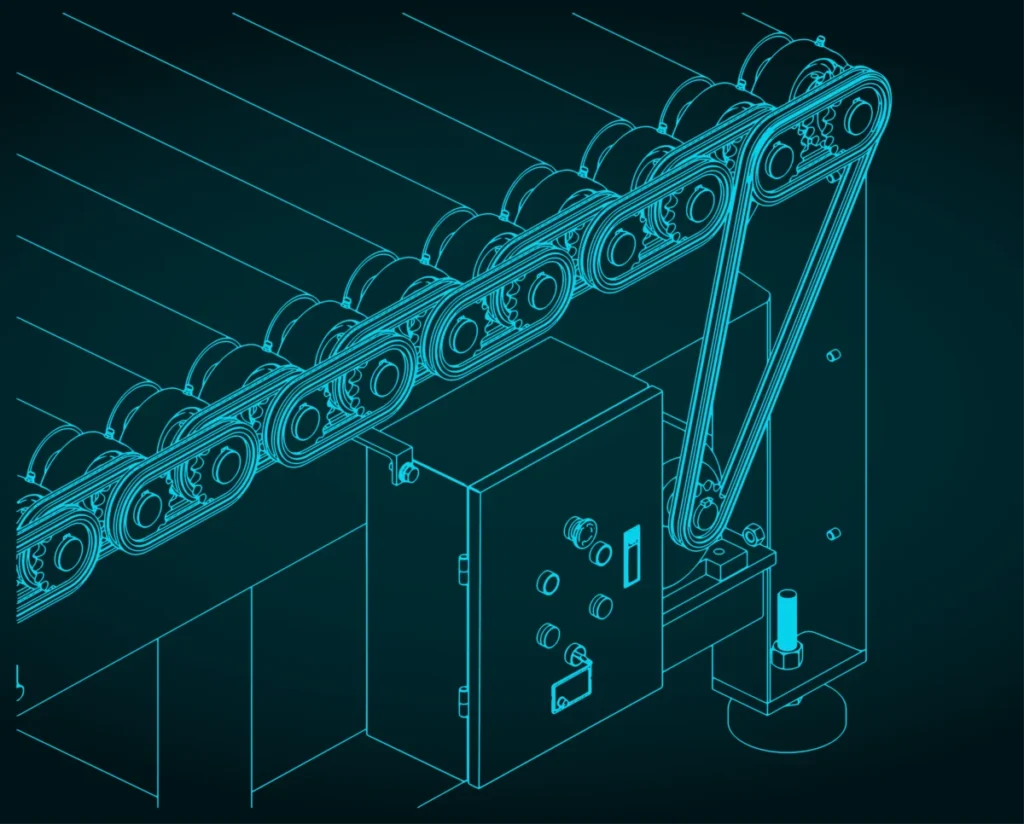
- Accordion-style and flexible powered conveyors: These modular systems, often featuring scissor-leg structures and powered rollers linked by round belts, are designed for adaptability. Gearmotors drive the rollers, allowing goods to move smoothly through facilities or to interface efficiently with flatbed shipping trucks for accelerated loading and unloading.
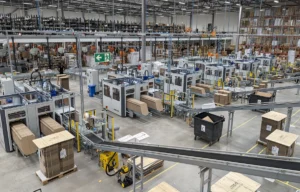
- Zoned Conveyor Systems: A significant advancement in conveyor technology involves breaking long conveyor lines into independent zones. Each zone is equipped with its own motor and interconnected controls, often utilizing flat pancake motors with integrated drives. Proximity switches or sensors detect the presence of items within a zone. Once an item enters, the zone’s motor activates to carry it through. When the item clears the zone, the motor deactivates, and the next zone in line powers on, creating a seamless, domino-effect flow that optimizes energy consumption and prevents item collisions. This intelligent control relies heavily on the reliable and responsive performance of individual gearmotor units.
-
Loading Dock Safety and Efficiency: The loading dock is a high-traffic, high-risk area where human workers, forklifts, and heavy trucks converge. Gearmotors play a vital role in enhancing safety through motorized locking restraints. These "claw-type" dock constraints engage with specialized hardware on trucks, securely locking the vehicle in place. This prevents accidental "premature pull-aways" by drivers while personnel or forklifts are still actively traversing the area between the truck’s rear and the loading dock, significantly reducing the risk of severe accidents and improving operational integrity.
-
Ergonomic Lifts and Heavy-Duty Material Handling: For tasks involving extremely heavy or awkwardly shaped workpieces, gearmotors provide the necessary power for safe and ergonomic movement.
- Motorized Caster Wheels: These integrated gearmotor units are installed on heavy-duty carts, trollies, and dollies. They enable the effortless movement of massive components—such as large subassemblies for industrial machinery—that would otherwise be impossible or unsafe to move manually. This application significantly reduces worker strain and improves productivity in manufacturing support environments.
- Man Lifts and Ergonomic Workpiece Lifts: Equipment such as "crow’s nest" man lifts, which elevate operators to reach high storage locations, rely on gearmotors for their vertical and horizontal movements. Similarly, ergonomic workpiece lifts, often featuring motorized Z-axis platforms or pneumatic suction-cup arrays, allow operators to safely raise, lower, and position items, thereby preventing injuries and streamlining assembly processes.
Precision Control: From Standalone Simplicity to Integrated Intelligence
The operational effectiveness of gearmotors is inextricably linked to their control systems, which range from basic standalone units to highly integrated, intelligent networks.
-
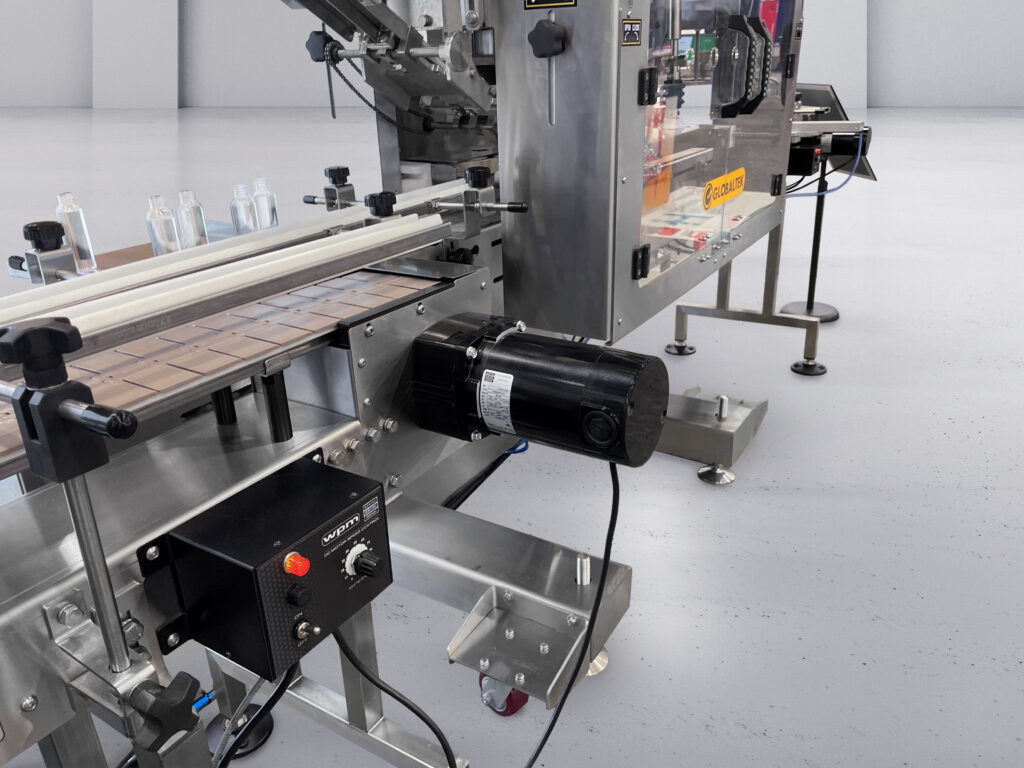
Standalone Controls: For applications like most dock restraints, simplicity is key. These systems typically operate via a straightforward on-off switch, often complemented by an easily accessible emergency-stop button. Similarly, many lift trucks, which are operated and steered by warehouse personnel, function as self-contained units. Their control systems often involve a simple current-limit control, where motor torque is directly proportional to the current, allowing operators to command acceleration, maintain speed, and change direction between forward and reverse. For such designs, some fractional-horsepower gearmotor suppliers offer basic speed controls with integrated on-off and speed-adjustment functions.
-
Integrated OEM Designs: The trend in advanced warehouse automation, however, leans heavily towards sophisticated, integrated control systems. Original Equipment Manufacturers (OEMs) rarely rely on disparate, off-the-shelf control boards for each component. Instead, it is far more common for OEMs to design their own control systems or outsource the production of custom printed circuit boards (PCBs) to their precise specifications. This approach allows for seamless integration of individual gearmotor controls into a global control architecture that orchestrates all system functions—from inventory tracking and task allocation to real-time machine diagnostics. By centralizing control logic, OEMs can achieve greater efficiency, better coordination between different subsystems, and enhanced data analytics capabilities. This integration often leverages industrial communication protocols like Ethernet/IP, PROFINET, or Modbus TCP, enabling real-time data exchange and centralized management.
The zoned conveyor systems are a prime example of this integrated intelligence. Each five-foot section, with its dedicated gearmotor, is part of a larger network. Switches and sensors feed data to a central or distributed control system, which then activates or deactivates individual motors based on item presence and upstream/downstream conditions. This level of granular control is vital for maximizing throughput, minimizing energy consumption, and preventing bottlenecks in high-volume material flow.
The Procurement Landscape: Sourcing Critical Components
The procurement of gearmotors for warehouse equipment is a strategic process, primarily driven by OEM design engineers and purchasing managers. These professionals, armed with detailed specifications from the design teams, interface directly with gearmotor suppliers to size, specify, and customize components for standard lifts, conveyors, and other automated equipment. The focus is on finding reliable, efficient, and cost-effective solutions that meet stringent performance and durability requirements.
While OEMs design the core systems, distributors and system integrators play a crucial role in tailoring these solutions to specific end-user settings. They often act as intermediaries, collaborating with plant engineers to integrate the equipment into existing warehouse infrastructure, optimize layouts, and provide ongoing support and maintenance.
The global supply chain disruptions experienced in recent years have highlighted the critical importance of robust sourcing strategies. When gearmotors from established manufacturers suddenly become unavailable, particularly after OEM designs are finalized and engineering specifications are set, purchasing managers often lead the urgent search for alternative suppliers. This scenario underscores the need for component manufacturers to offer diverse product lines, maintain resilient supply chains, and be agile in responding to market demands and unforeseen challenges. Manufacturers like Bodine Electric, for instance, are known for their ability to provide both standard and customized gearmotor solutions, catering to the specific needs of evolving warehouse automation applications, including those in automated guided vehicles (AGVs) that require custom BLDC gearmotors for optimal performance.
Industry Perspectives and Future Outlook
Industry analysts and experts consistently emphasize that the future of warehousing will continue to be defined by deeper automation and increased intelligence. The reliance on electromechanical components, particularly gearmotors, is set to intensify. Manufacturers are innovating to produce gearmotors that are more compact, energy-efficient, and capable of integrating seamlessly with advanced digital control systems. This includes developments in predictive maintenance capabilities, where sensors embedded within gearmotors can monitor performance metrics and signal potential failures before they occur, minimizing downtime and optimizing maintenance schedules. The integration with IoT platforms for real-time data analysis and remote monitoring is also a growing trend.
From the perspective of component suppliers like Bodine Electric, the focus remains on understanding the evolving needs of OEMs and end-users. As Terry Auchstetter of Bodine Electric Co. has noted, the demands for reliability, customization, and long-term support are paramount. The ability to provide robust, high-performance gearmotors that can withstand the rigorous demands of continuous operation in diverse warehouse environments is key to success.
The broader implications of this automation extend beyond mere efficiency. It addresses critical labor shortages, improves worker safety by automating dangerous or repetitive tasks, and enhances the overall sustainability of logistics operations through optimized energy consumption and reduced waste. As warehouses become smarter and more interconnected, the foundational role of the humble gearmotor will only grow in importance, continuing to power the silent, efficient revolution of global supply chains.
The journey of warehouse automation is ongoing, marked by continuous innovation in robotics, AI, and material handling. Yet, beneath the sleek exteriors and sophisticated software, the steady, reliable power provided by gearmotors remains the essential driving force, ensuring that the gears of modern commerce turn smoothly and efficiently.