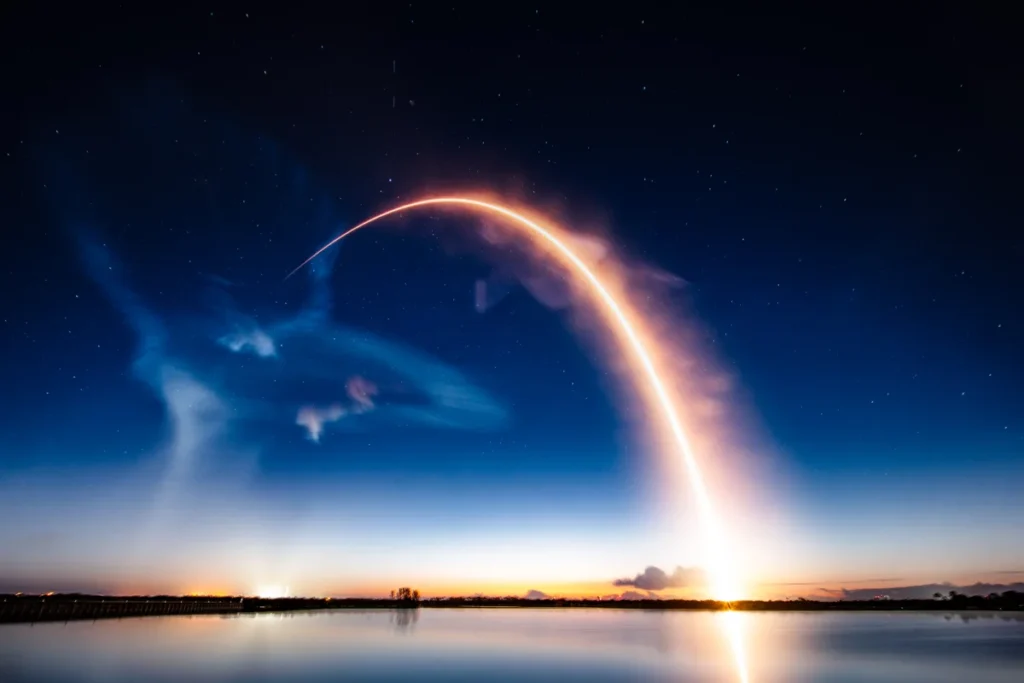
The burgeoning demand for space access is encountering a significant hurdle: a growing shortage of readily available launch vehicles, a critical concern for both government agencies and commercial entities aiming to deploy spacecraft. This issue was a central theme at the Glenn Space Technology Symposium held in Ohio on Wednesday, where industry leaders and program managers convened to discuss the evolving landscape of spaceflight. The consensus among panelists pointed not to an absolute scarcity of rockets themselves, but rather to a complex web of factors hindering the ability to secure a launch slot, leading to significant delays and impacting the pace of space exploration and utilization.
Understanding the Launch Conundrum
At the heart of the problem lies a confluence of operational challenges and strategic shifts within the launch industry. SpaceX, a dominant force in commercial launch, is reorienting its Falcon 9 workhorse operations as it prioritizes the development and initial commercial flights of its ambitious Starship-Super Heavy system. This transition, while promising for future large-scale missions, inevitably reduces the availability of its highly reliable Falcon 9 for existing customers.
Simultaneously, other key players are experiencing their own setbacks. Blue Origin, a company with significant aspirations in the heavy-lift sector, has temporarily halted launches of its New Glenn rocket following an incident in May where one of its rockets experienced an anomaly on the launch pad. Similarly, United Launch Alliance (ULA), a long-standing provider of reliable launch services for national security and civil missions, saw its new Vulcan Centaur rocket grounded in February due to an issue with a solid rocket booster. These disruptions, occurring within a short timeframe, collectively tighten the launch manifest and exacerbate the availability issue.
The Scale of the Satellite Surge
The urgency of the situation is underscored by the sheer volume of satellites slated for deployment. Robert Perez-Alemany, program manager and Space Development Agency (SDA) liaison at the Defense Innovation Unit, articulated the scale of the challenge: "We have thousands of satellites scheduled for launch by 2030. The problem is we don’t have enough launch vehicles to launch these satellites." The SDA itself is a prime example of this demand, having initiated the launch of operational satellites for its Proliferated Warfighter Space Architecture constellation last year. This constellation, designed to provide persistent global coverage, relies on a continuous cadence of launches.
The impact of this launch vehicle shortage extends beyond routine satellite deployments, significantly affecting planned on-orbit demonstrations. Perez-Alemany shared a personal anecdote illustrating the ripple effect: "I met with a tech company in Los Angeles the other day, briefing me on their next demo, which is important for us to validate their process. They told me the launch they were scheduled to do for December 2026 got moved to late October 2027. So that whole technology just got postponed a year." Such delays can have cascading consequences, impacting research timelines, investment cycles, and the ability of companies to bring innovative technologies to market.
Lunar Missions Facing Booking Hurdles
The strain on launch availability is also being felt by entities pursuing ambitious lunar exploration goals. Companies developing landers for NASA’s Commercial Lunar Payload Services (CLPS) initiative, designed to deliver scientific instruments and technology demonstrations to the lunar surface, are experiencing significant booking challenges. Trent Martin, an executive at Intuitive Machines, a company slated to launch its third lunar lander early next year, expressed the difficulties firsthand. "I’m telling people, ‘I have money to buy rockets right now. Can you sell me a rocket?’ And sometimes I’m running into trouble with that, and so that has been a big challenge," Martin stated. The CLPS program, initiated in 2018, aims to foster a robust lunar economy by leveraging commercial capabilities for lunar delivery. The success of this ambitious program hinges on reliable and predictable launch access, which is currently under pressure.
Seeking a Collaborative Approach to Procurement
The gravity of the launch vehicle availability issue has prompted discussions about how NASA and other government entities might proactively address the situation. Ray Allensworth, vice president of spacecraft at Firefly Aerospace, whose company has its second lunar lander mission scheduled for 2027, suggested a more direct involvement from the space agency. "NASA will need to start getting more involved in launch vehicle procurement," she advocated. "We’re kind of entering into an unknown territory, when the markets are changing on what launch vehicle configurations are available when, and exactly at the time that the rate of missions is significantly increasing. So, I think having NASA come in and help be a partner to procure and help support manifest pairing is something that could be hugely beneficial."
This call for increased NASA involvement reflects a potential shift from a purely market-driven approach to a more strategic partnership. By actively participating in procurement and manifest planning, NASA could help ensure that critical scientific and exploration missions are not stalled due to launch capacity constraints. This could involve longer-term commitments, flexible contracting mechanisms, and potentially even direct investment in launch infrastructure or capacity.
Launch Providers Acknowledge the Bottleneck
The perspective from the launch provider side corroborates the concerns raised by customers. Andy Bunker, vice president of government operations and business strategy at Rocket Lab, a company targeting late this year or early next for the inaugural flight of its medium-lift Neutron rocket, acknowledged the widespread nature of the problem. "There’s definitely a launch bottleneck," Bunker stated. Rocket Lab, known for its successful Electron small-lift vehicle, is expanding its capabilities to meet the growing demand for heavier payloads.
Bunker suggested that one avenue for alleviating the pressure could be the increased utilization of existing launch sites beyond the primary hubs of Cape Canaveral, Florida, and Vandenberg Space Force Base, California. He cited Rocket Lab’s experience launching its Electron rockets from the Mid-Atlantic Regional Spaceport in Wallops, Virginia, as an example of how diversifying launch locations can contribute to greater efficiency.
Policy Initiatives and Market Adaptation
In an effort to address the growing need for launch capacity, the Trump administration announced an updated National Space Transportation Policy last month. A White House memo accompanying the update outlined an ambitious goal: "By 2030, our space transportation ranges must grow to support more than 1,000 launches and reentries every year." This policy directive signals a governmental recognition of the critical infrastructure and capacity needed to support the burgeoning space economy.
From the industry’s perspective, there is an expectation that the market will eventually self-correct. Jacki Cortese, vice president of civil space at Blue Origin, expressed optimism during the symposium. "Whatever is happening in the launch industry I think is temporary," she said, anticipating that as new vehicles enter service or existing ones resume operations, the current shortage will be alleviated. The development and maturation of new launch systems, along with the potential for increased flight rates from established providers, are seen as key factors in resolving the current bottleneck.
Broader Implications for the Space Economy
The launch vehicle shortage has far-reaching implications for the entire space ecosystem. It impacts the pace of scientific discovery, the deployment of critical infrastructure like satellite constellations for communication and Earth observation, and the development of new commercial ventures in areas such as space tourism and in-space manufacturing. Delays can lead to increased costs, missed market opportunities, and a potential slowdown in the innovation cycle.
The current situation highlights the intricate interdependence of various segments within the space industry. The success of satellite manufacturers, payload developers, and ambitious exploration programs is inextricably linked to the reliable and affordable access to space provided by launch vehicle operators. As the global space economy continues its rapid expansion, the challenge of ensuring sufficient launch capacity will remain a paramount concern, requiring continued collaboration between industry, government, and research institutions to foster a sustainable and dynamic future for spaceflight. The ongoing development of new launch technologies, coupled with strategic policy interventions and improved operational efficiencies, will be crucial in navigating this critical juncture and unlocking the full potential of human endeavors in space.