On Earth, helium-3 commands a staggering $30,000 per gram, a price driven by its extreme rarity. This precious isotope, a byproduct of nuclear fusion, is vital for advanced technologies like quantum computing and holds immense promise as a clean fuel for future fusion reactors. Yet, on the Moon, a celestial body bathed in billions of years of solar wind, lies an apparently inexhaustible supply of this coveted element, embedded within its dusty regolith. This cosmic abundance has ignited a modern-day gold rush, prompting a burgeoning cohort of private companies to set their sights on lunar operations and usher in a new era of extraterrestrial resource extraction.
These pioneering enterprises are currently in the crucial preliminary stages, meticulously planning missions to pinpoint the most concentrated helium-3 deposits on the lunar surface. Beyond mere location, their initial endeavors will focus on quantifying the exact richness of these reserves and developing the most efficient and cost-effective extraction methodologies. The sheer expense of establishing and maintaining operations on the Moon necessitates a rigorous understanding of these factors before any large-scale mining can commence. The harsh lunar environment, characterized by extreme temperature fluctuations, abrasive dust, and the unforgiving two-week lunar night, presents a formidable set of engineering challenges that these companies must demonstrably overcome.
Despite these unique extraterrestrial hurdles, industry leaders draw parallels to terrestrial mining operations. Chris Salvino, CEO of Arizona-based Lunar Helium-3 Mining, articulated this sentiment, stating, "There’s a lot of lessons learned from the 1840s gold rush, mining in general, that totally applies to what we are trying to do here. It’s just a different environment." This perspective underscores a belief that established principles of resource exploration and extraction can be adapted to the lunar frontier.
The allure of helium-3 extends beyond its current market value, resting heavily on projected future demand. Interlune, a Seattle-based space resources company, has already secured significant contracts, amassing $500 million in commitments to supply helium-3 for quantum computer cooling. These agreements include major players such as the U.S. Department of Energy, Bluefors of Helsinki, and Maybell Quantum in Denver. Similarly, Black Moon Energy, headquartered in Houston, has also reported $500 million in helium-3 contracts, intending to supply both the DOE and companies developing fusion reactors. These substantial pre-orders signal a strong market signal and a growing confidence in the viability of lunar helium-3 extraction.
Proponents of lunar helium-3 mining envision this endeavor as the foundational pillar for a robust and self-sustaining lunar economy. Salvino further emphasized this vision: "We strongly believe the only primary reason to be going back to the moon and the only value proposition is probably to extract helium-3. There are no other resources that would have enough value by themselves to become their own economy." This assertion highlights the perceived singular importance of helium-3 as the catalyst for sustained human presence and economic activity beyond Earth.
Buried Treasure: Locating and Understanding Lunar Helium-3
While samples returned by the Apollo missions provided definitive proof of helium-3’s presence on the Moon, the precise locations and concentrations of these deposits remain a subject of intense scientific and commercial inquiry. Jeffrey Max, CEO of Magna Petra, a lunar mining startup based in Durango, Colorado, notes that estimates for helium-3 concentrations in the lunar regolith vary widely, ranging from parts per billion to parts per million.
The prevailing scientific hypothesis, and one widely adopted by prospective miners, identifies ilmenite – a titanium-iron oxide mineral – as a primary reservoir for helium-3. Ilmenite possesses the unique ability to absorb helium-3, as well as helium-4 (the more common isotope), hydrogen, and other gases carried by the solar wind over eons. According to Christopher Dreyer, a professor specializing in space resources at the Colorado School of Mines, helium-3 can exist within the ilmenite’s crystal structure, extractable through heating, or adhere to its surface, removable by mechanical agitation.
To navigate the complexities of predicting lunar helium-3 distribution, Magna Petra has developed a sophisticated digital twin of the Moon. This advanced model leverages artificial intelligence to simulate four billion years of solar wind deposition, integrating data from meteorite impact histories, helium-3 concentrations found in Apollo samples, mapping data from NASA’s Lunar Reconnaissance Orbiter, and even insights gleaned from AI-driven interviews with leading scientists. This multi-faceted approach aims to create a comprehensive and predictive understanding of helium-3 reserves.
While the ilmenite hypothesis is widely accepted, Magna Petra, under Max’s leadership, is also exploring alternative theories. Max acknowledges that factors beyond mineralogy, such as the thermal migration of helium-3 to cooler lunar regions driven by solar radiation, could influence its concentration and distribution. This open-minded approach reflects the inherent uncertainties of lunar resource prospecting. Magna Petra’s strategic roadmap includes deploying a rover to the lunar surface in 2028. This mission will be tasked with measuring gas plumes released from the regolith, allowing for empirical validation of their AI-driven model. Following this, a sample return mission is planned to further refine their extraction concepts.
Black Moon Energy is pursuing a similar timeline, targeting 2029 for the deployment of its own reconnaissance rover. David Warden, co-founder and CEO of Black Moon Energy, explained that the company has compiled its own "reservoir map" of the lunar surface. This map, analogous to those used in terrestrial oil and gas exploration, incorporates predictions of helium-3 concentrations derived from historical regolith samples, lunar satellite imagery, surface temperature data, and mineralogical analyses.
Innovative Mining Methods for an Alien Landscape
The practicalities of physically extracting helium-3 from the lunar regolith are as diverse as the companies pursuing it. Concepts range from large-scale excavation and processing to more delicate surface-level collection. Each proposed method must contend with the pervasive and highly abrasive nature of lunar dust, which possesses properties likened to jagged glass and adheres tenaciously to all surfaces.
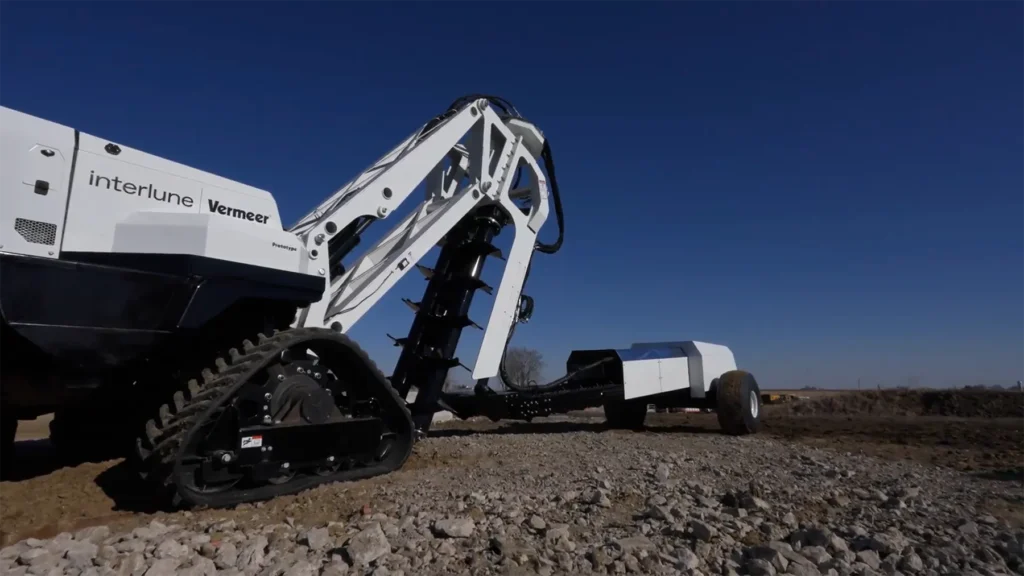
Interlune champions a high-volume approach, envisioning a mining machine capable of excavating three meters deep and processing 100 tons of regolith per hour. This process would involve separating larger rocks from finer sand before crushing the regolith to release the embedded helium-3 and other gases. The precise location of the sorting and extraction – whether at a central processing plant or in situ – remains under consideration, according to Rob Meyerson, Interlune’s co-founder and CEO. In recognition of the technological challenges, Interlune received a $6.9 million NASA contract in May to develop a robotic device for scooping, sorting, and extracting gases from lunar soil. This instrument is slated for a 2028 Commercial Lunar Payload Services mission. Furthermore, Interlune has been actively developing lunar excavation techniques for NASA under a $150,000 contract, having successfully demonstrated a 100-ton-per-hour excavator prototype using simulated regolith last year.
Lunar Helium-3 Mining, under Salvino, proposes a concept akin to a giant, non-suctioning vacuum cleaner. Their rover would utilize a skirt to contain released gases as it traverses the surface, extracting helium-3 without physically ingesting the soil. The gas separation would occur onboard, with the helium-3 being compressed into a liquid for transport back to Earth. Salvino highlighted the extreme abrasiveness of lunar regolith, stating, "It will destroy equipment, so you can’t have a ton of moving parts like an Earth-based mining system." This constraint emphasizes the need for robust, simplified designs.
Black Moon Energy plans to disturb the top three meters of regolith to liberate the gases, subsequently returning the lunar soil to its original position. The separation of helium-3 from other gases would employ a combination of heating and cryogenic cooling techniques, drawing parallels to the refining processes used in the petroleum industry, as explained by Warden.
Magna Petra’s approach involves using an oscillating plow to disturb the regolith, releasing the loosely bound helium-3 and creating gas plumes. These plumes would then be collected via vacuum and subjected to super-cooling for separation. This method aims to minimize direct contact with the abrasive regolith while efficiently capturing the released gases.
Longevity and Sustainability: Overcoming Lunar Night and Repair Challenges
A significant operational hurdle for any sustained lunar activity is the prolonged two-week lunar night. During this period, temperatures plummet to approximately -130 degrees Celsius, rendering solar power generation impossible and posing severe risks to sensitive equipment. Motors can seize, circuit boards can fracture, and bonded materials can delaminate under such extreme thermal stress.
Luxembourg-based Maana Electric is developing a potential solution: a combustion chamber furnace designed to maintain critical temperatures for electronics, equipment, and habitats throughout the lunar night. Their innovative process involves dissolving lunar regolith using fluoride or chloride salts, followed by electrolysis to extract oxygen, silicon, and metals. These extracted metals, such as aluminum or magnesium, are then combined with oxides present in the regolith to initiate a self-sustaining exothermic reaction, generating heat.
Jarrett Dillenburger, a regolith processing researcher at the European Space Resources Innovation Center, which supports some of Maana Electric’s research, underscored the severity of this challenge: "As of right now, it’s very difficult to survive the lunar night. Most equipment is not designed for it, and most equipment that does survive, it’s by chance and not by design. It requires tackling a problem that on Earth we really don’t have to solve. Never on Earth does it get so cold that equipment is freezing in this way."
Beyond thermal challenges, the issue of equipment maintenance and repair in a remote, uncrewed environment presents another complex problem. Dreyer noted the prohibitive cost of transporting new equipment to the Moon, estimated at $500,000 to $1 million per kilogram. This economic reality makes repair a far more desirable option than replacement. "That equipment will fail, and what do you do then?" Dreyer questioned. "Very, very infrequently will people be present, so it’s probably robotic repair. On the moon. Which is another thing that’s never been done." The development of autonomous robotic repair capabilities on the lunar surface is a critical, yet unproven, technological frontier. Failure to establish effective repair protocols could render large, expensive equipment useless, forcing companies to abandon and replace entire systems at immense cost.
The Domino Effect: Building a Lunar Economy
Salvino of Lunar Helium-3 Mining believes that the operational demands of helium-3 extraction could catalyze a broader economic ecosystem on the Moon. He posits a domino effect where companies providing repair, logistics, and other essential services to helium miners would establish their own presence, thereby creating further demand for lunar resources. "If helium-3 is the tip of the spear and the lunar economy is built around that, then you’re going to need people with landers and rovers and repair capabilities," Salvino explained. "And at that point, you might be able to extract secondary resources and use them on the moon or elsewhere."
This vision suggests that the pursuit of helium-3 could extend beyond a singular resource grab, paving the way for in-situ resource utilization (ISRU) and the development of a diversified lunar economy. As lunar operations mature, the extraction of water ice, construction materials, and other valuable elements could become feasible, further solidifying the Moon’s role as a stepping stone for future space exploration and commercial ventures. The success of these initial helium-3 mining companies will undoubtedly be a critical indicator for the long-term viability and expansion of human economic activity beyond Earth.