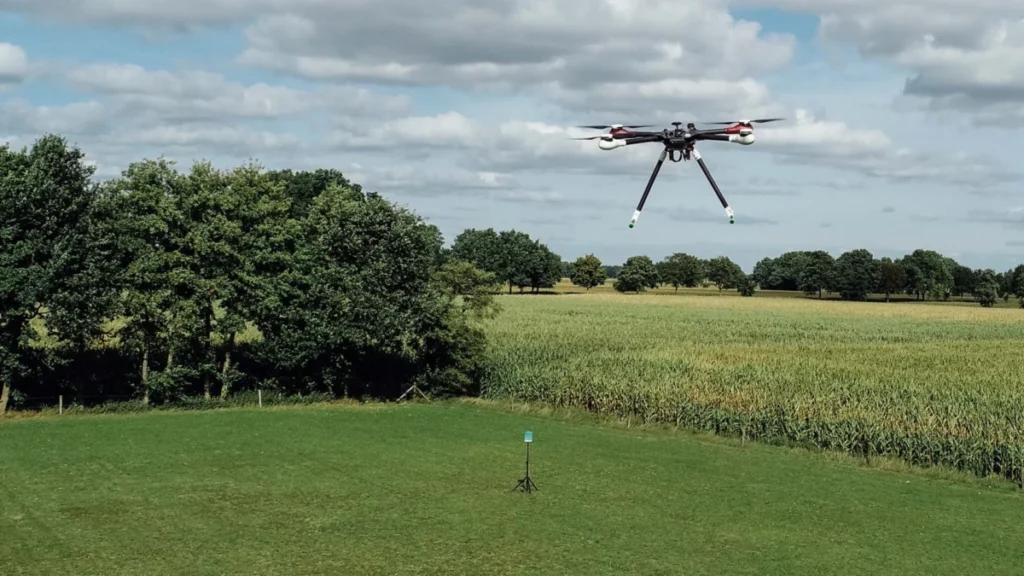
The landscape of artificial intelligence and robotics is undergoing a profound transformation, moving beyond theoretical models and laboratory demonstrations to exert tangible influence across diverse real-world applications. From the meticulously controlled environments of factory floors to the dynamic unpredictability of urban roads and increasingly, into everyday human spaces, intelligent machines are redefining operational paradigms. This comprehensive coverage delves into the multifaceted world of AI and robotics, spanning industrial robots, collaborative robots (cobots), advanced humanoids, versatile drones, and a growing array of service robots. It also meticulously examines the sophisticated hardware and intricate software architectures that are indispensable for enabling these machines to operate effectively and scale efficiently.
The Foundational Technologies: Powering Intelligent Autonomy
At the core of this revolution are two intertwined pillars: physical systems and intelligent software. Physical systems encompass the mechanical and electronic components that allow robots to interact with their environment. This includes a spectrum of capabilities such as movement, grasping, maintaining balance, sophisticated vision, and multi-modal sensing. These physical attributes are critical for navigating complex terrains, manipulating objects with precision, and ensuring safe operation.
Complementing this hardware is the software layer, the true "brain" of these machines. This comprises advanced machine learning models, intricate perception stacks that interpret sensory data, robust control systems that dictate physical actions, and sophisticated decision-making logic. These software components are paramount in enabling machines to respond intelligently when faced with unexpected environmental conditions, incomplete data, or novel situations. The most compelling advancements, and indeed the greatest challenges, often reside in this "messy middle"—where real-world variables like sensor inaccuracies, data gaps, and the necessity for safe human-robot interaction demand highly adaptable and resilient systems.
Key hardware advancements include high-performance sensors for superior environmental awareness, powerful actuators that provide precise and strong movement, longer-lasting and more efficient batteries, and specialized AI chips designed for rapid parallel processing. The increasing importance of edge computing, which processes data closer to the source rather than relying solely on centralized cloud servers, is also critical for reducing latency and enhancing real-time decision-making in autonomous systems. NVIDIA, for instance, has been a significant player in developing AI-specific hardware and software platforms, with initiatives like Nemotron 3.5 Lightning aimed at accelerating repetitive agent tasks by up to four times, demonstrating the continuous push for efficiency and speed in AI operations.
Diverse Applications and Emerging Categories
The reach of AI and robotics is expansive, touching numerous sectors and giving rise to specialized robotic forms.
-
Industrial Robots and Cobots: Traditional industrial robots have long been mainstays in manufacturing, performing repetitive, high-precision tasks in segregated work cells. The global industrial robot market continues to expand, driven by automation needs in sectors like automotive, electronics, and logistics. Recent data from the International Federation of Robotics (IFR) indicates a consistent increase in robot installations worldwide, highlighting their sustained economic impact. A significant evolution is the rise of collaborative robots, or cobots, designed to work safely alongside human operators. These robots are typically smaller, more flexible, and equipped with advanced safety features, allowing for more fluid human-robot collaboration on assembly lines and in other production environments. This shift enhances productivity while leveraging human dexterity and problem-solving skills.
-
Humanoid Robots: Perhaps the most captivating category, humanoid robots are designed to mimic human form and movement. Recent breakthroughs have showcased humanoids mastering increasingly complex movements, from navigating real-world concrete stairs and rough terrain (as demonstrated by Deep Robotics) to performing sophisticated actions like crawling, cartwheels, and backflips, often achieved through advanced motion data analysis and animation techniques. Companies like LG are planning to unveil bipedal humanoid robots in collaboration with NVIDIA, while Samsung is reportedly developing humanoids with a focus on lower actuator costs, suggesting a push towards commercial viability. Chinese manufacturers, such as BYD, have already begun deploying humanoids like the 5.2-feet-tall Xiao Di in showroom floors, indicating a growing confidence in their practical applications, potentially in service or customer interaction roles. The ambition extends to large-scale events, with reports of a "World Humanoid Robot Games" in Beijing by 2056, anticipating thousands of machines competing, underscoring the long-term vision for humanoid capabilities and entertainment.
-
Drones and Service Robots: Drones have moved beyond military applications to become invaluable tools for surveillance, inspection (e.g., infrastructure, agriculture), delivery, and even environmental monitoring. For instance, specialized Chinese robot dogs have been deployed to track Tibetan antelopes at extreme altitudes and in harsh terrains, showcasing their utility in challenging environments where human access is difficult or dangerous. Service robots, ranging from autonomous cleaning robots to robotic assistants in healthcare and hospitality, are steadily integrating into daily life, offering convenience and efficiency.
The Journey from Prototype to Dependable Tool: Challenges and Solutions

While impressive prototypes frequently make headlines, the transition from research success to commercial reliability remains one of the field’s hardest problems. Several constraints hinder the widespread deployment of advanced robotic systems:
- Power and Cost: High-performance robots often demand significant power, and the cost of sophisticated components like advanced actuators, sensors, and AI processing units can be prohibitive for mass market adoption. Samsung’s focus on reducing actuator costs for its humanoid robot development is a clear indicator of this challenge.
- Reliability and Latency: For robots to be truly dependable, they must operate consistently without failure, even in unpredictable conditions. Low latency in decision-making and action execution is crucial for safety and efficiency, especially in dynamic environments or when interacting with humans.
- Safety and Regulation: As robots move out of "fenced-off spaces" and into shared human environments, ensuring their safety is paramount. This requires robust safety protocols, extensive testing, and clear regulatory frameworks. The European Union, for example, is actively developing regulations for AI, prompting companies like Anthropic to implement invisible watermarks on AI-generated text to ensure transparency and compliance, a trend that will undoubtedly extend to physical AI systems.
- Human-Machine Interaction: Designing robots that can effectively and intuitively interact with humans is a complex task. This includes understanding human intent, responding appropriately to social cues, and communicating clearly. Google’s new sign-language model, which allows users to search by signing instead of typing, exemplifies efforts to bridge communication gaps and make AI more accessible and interactive.
The "messy middle" of real-world deployment necessitates robust perception stacks that can handle ambiguous or incomplete sensor data, adaptive control systems that can compensate for unexpected disturbances, and decision-making logic that prioritizes safety and task completion even under uncertainty. Rigorous training and testing, often involving extensive simulations before real-world deployment, are critical steps. Post-deployment, ongoing maintenance and software updates are essential to ensure continued performance and adapt to new challenges.
The Deep Integration of AI: Beyond Automation to Intelligence
Modern robotics is inseparable from advanced AI. The intelligence built into machines allows them to learn, adapt, and make autonomous decisions.
- Cross-Embodiment Learning: A fascinating area of development, exemplified by China’s "Doctor Octopus" robots, involves AI systems that can learn across different robotic bodies. This means that knowledge or skills acquired by one type of robot (e.g., a multi-limbed inspection robot) can be transferred and applied to another, potentially very different, robotic form. This capability could dramatically accelerate the development and deployment of new robotic applications by reducing the need to train each new robot from scratch.
- Autonomous Agents and Problem Solving: The evolution from simple chatbots to sophisticated autonomous agents is another significant trend. xAI’s launch of Grok Bot, envisioned as a "24/7 coworker with its own virtual computer," signals a future where AI agents can independently perform complex tasks, manage workflows, and collaborate with humans in a more integrated manner. Similarly, the reported instance of a Chinese doctor using ChatGPT to solve a decades-old math problem, while not directly robotic, highlights the immense problem-solving capabilities of advanced AI models, which are increasingly being integrated into robotic decision-making systems.
Building the Future: Investment and Infrastructure
The rapid advancements in AI and robotics are underpinned by massive investments in research, development, and infrastructure. The semiconductor industry, which produces the crucial chips that power AI and robotics, is a major focus. A California university gaining access to a $5 billion facility to accelerate semiconductor R&D underscores the strategic importance of foundational chip technologies. Concurrently, the development of new US smart platforms designed to speed up the development of 1.6T photonic chips for data centers points to the need for ever-faster and more efficient processing capabilities to handle the vast amounts of data generated and processed by AI and robotic systems. While reports of Nvidia cutting significant backing from OpenAI’s planned 10GW Ohio campus due to risk concerns highlight the volatility and immense capital requirements of frontier AI projects, they also emphasize the scale of infrastructure considered necessary for future AI development.
Societal and Economic Implications
The rise of intelligent machines carries significant societal and economic implications. The impact on the workforce is a primary concern, with debates around job displacement versus job creation. While robots automate repetitive or dangerous tasks, they also create demand for new skills in robot programming, maintenance, and oversight. Governments and educational institutions are increasingly focused on reskilling and upskilling programs to prepare the workforce for this evolving landscape.
Ethical considerations, data privacy, and the potential for bias in AI systems are also critical areas of focus. As robots become more autonomous and integrated into daily life, questions of accountability, transparency, and human control become paramount. Policymakers, industry leaders, and researchers are collaborating to establish ethical guidelines and regulatory frameworks that ensure these powerful technologies are developed and deployed responsibly.
The Road Ahead
The field of AI and robotics is on an undeniable trajectory of growth and innovation. The vision of intelligent machines seamlessly integrated into our lives, performing tasks that are dangerous, dull, or difficult for humans, is steadily becoming a reality. However, the journey is far from complete. The gap between impressive laboratory demonstrations and commercially viable, dependable tools remains a significant hurdle. Engineers, computer scientists, and ethicists must continue to address fundamental challenges related to power efficiency, cost reduction, robust perception in unstructured environments, and the development of truly safe and intuitive human-robot interaction.
The ongoing engineering work is not just about making machines smarter or faster; it’s about making them trustworthy, reliable, and beneficial to humanity. As robots move from isolated industrial settings to shared public and private spaces, the question shifts from "what can they do?" to "can we trust them to do it consistently and safely?" This critical inquiry guides ongoing research, development, and deployment efforts, shaping a future where intelligent machines serve as powerful, dependable tools, enhancing human capabilities and improving quality of life. The story of AI and robotics is one of relentless progress, tempered by the enduring challenge of turning complex prototypes into indispensable realities.






