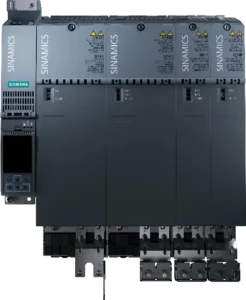
Consider a dominant form of machine control today – multicore industrial PCs or IPCs built around x86 and ARM system-on-chip processors. For discrete automation, these run deterministic control and a general-purpose OS on the same silicon. Machines advanced enough to justify such hardware include industrial networking via SERCOS III, EtherCAT, PROFINET, or EtherNet/IP to carry the deterministic traffic. Then cyclic control tasks are executed on cores under a real-time kernel, typically needing to hold jitter to within microseconds for the most advanced motion-control applications. Other non-deterministic functions run on cores that are left. This architecture has long served as the backbone of sophisticated factory automation, enabling precise coordination and complex algorithmic execution. However, as the demands of Industry 4.0 escalate, requiring unprecedented levels of data processing, real-time responsiveness, and distributed intelligence, the limitations of purely centralized IPC architectures are becoming increasingly apparent. This has catalyzed a significant paradigm shift towards edge computing, integrating computational power directly into the very components that generate data.
The Evolution of Industrial Control: A Chronology
The journey of industrial control has been one of continuous evolution, driven by the quest for greater efficiency, precision, and autonomy. In the mid-20th century, control systems relied heavily on electro-mechanical relays and discrete wiring, a labor-intensive and inflexible approach. The 1970s marked a revolution with the introduction of Programmable Logic Controllers (PLCs), which brought programmability and solid-state reliability to factory floors, replacing vast relay panels. As industries grew more complex, particularly in process control, Distributed Control Systems (DCS) emerged in the late 1970s and 1980s, offering modularity and redundancy across large plants.
The late 20th and early 21st centuries saw the ascendancy of Industrial PCs (IPCs), which leveraged the growing power of general-purpose computing. IPCs offered greater flexibility, computational horsepower, and the ability to integrate with enterprise IT systems, often running a real-time operating system (RTOS) alongside a standard OS. This era also witnessed the standardization and proliferation of industrial Ethernet protocols like EtherCAT, PROFINET, and EtherNet/IP, enabling high-speed, deterministic communication across increasingly complex machine networks. These protocols typically operate at 100 Mbps or Gigabit speeds, supporting synchronization down to sub-microsecond levels, crucial for coordinating multi-axis motion.
However, the dawn of Industry 4.0 and the Industrial Internet of Things (IIoT) in the 2010s brought an exponential increase in data generation. Millions of sensors, actuators, and devices began to populate factory floors, creating vast streams of information. Centralized IPCs, while powerful, began to face challenges in processing this deluge of data in real-time, particularly when cloud-based analytics introduced latency. This bottleneck, coupled with concerns over bandwidth, data security, and the sheer volume of data requiring transmission, paved the way for edge computing. The concept, which involves bringing computation and data storage closer to the data sources, began to gain traction as a vital enabler for true real-time intelligence and autonomous operations.
Industrial PCs: The Foundation and its Limitations
On machines with traditional IPC architecture, data sources include components such as multi-axis servodrives, IO-Link primaries, and sensors sampling the physics of mechanical components interfacing with workpieces or other parts of the workcell. The data is timestamped to the distributed clock, allowing the edge platform to correlate information such as motor current, positioning error, torque, temperature, and vibration with the exact machine state associated with them. This precise temporal correlation is fundamental for diagnostics, quality control, and predictive maintenance.
Data filtering at the edge components ensures processing cores aren’t overloaded with extraneous communications. This helps boost the efficiency of communications, no matter the industrial protocol being used or its speeds. While this filtering mitigates some issues, the sheer volume of raw data generated by high-frequency sensors – often hundreds or thousands of data points per second per sensor – can still overwhelm even robust IPCs if extensive real-time analytics are required. The inherent latency introduced by even the fastest fieldbus networks, though measured in microseconds, can be critical in applications demanding instantaneous responses, such as collision avoidance or adaptive process control. This is where the true distributed intelligence of edge computing at the component level begins to show its distinct advantages.
The Rise of Edge-Enabled Industrial Drives: A Game Changer
Recent years have seen some motion-components suppliers offer new servo amplifiers for edge-computing functions and so-called cabinet-free arrangements. This trend represents a significant architectural shift. Drives are often the best-instrumented components on a machine. After all, they close control loops on current, velocity, position, and more at high-frequency intervals, typically operating at switching frequencies of 8-16 kHz, generating a wealth of precise operational data. They’re also a suitable location for the collection of phase current, rotor position, bus voltage, and winding temperature. Yet until recently, this rich trove of data often went unused, tossed between fieldbus cycles or only sampled at lower rates, representing a significant missed opportunity for deeper machine insights.
Now, certain drives with integrated logic eschew reliance on some central controller to process this data themselves. By embedding microcontrollers or System-on-Chips (SoCs) with sufficient processing power and memory directly into the drive, they can perform real-time analysis locally. The result is communications of machine status in microseconds, often reducing response times by orders of magnitude compared to sending data to a central controller for processing and then back to the drive. Specifics depend on the industrial-Ethernet protocol and the processing power, but the outcome is motion systems that can quickly act on data to prevent crashes, jams, and misfeeds while concurrently informing operational systems on machine status in near-realtime. This proactive capability dramatically enhances machine safety, uptime, and overall productivity.
Furthermore, a critical development has been the migration of safety functions to edge-computing arrangements. Functions like safe torque off (STO), safe stops (SS1/SS2), and various motion limits (SLS, SLP) can now run as certified safety functions directly on the drive. This allows drives to assume tasks traditionally handled by safety relays, contactors, and complex hardwired stop circuits, simplifying machine design, reducing wiring complexity, and often lowering costs. According to a report by MarketsandMarkets, the industrial edge computing market is projected to grow from USD 2.6 billion in 2022 to USD 7.2 billion by 2027, at a Compound Annual Growth Rate (CAGR) of 22.3%, with a significant portion attributed to intelligent devices like drives. This growth underscores the industry’s recognition of edge computing’s transformative potential.
Benefits of Distributed Edge Intelligence at the Component Level
The advantages of embedding edge computing capabilities directly into drives and other machine components are multifaceted and profound. Amplifiers that can execute logic and safety functions can, in some cases, be positioned directly on the machine, at a good distance from the main machine controller and any control cabinetry. Such drives do need ruggedized housings (IP rated, e.g., IP67 for dust and water ingress protection, if the equipment is subject to challenging environmental conditions) as well as specialized hybrid cabling that combines power and communication lines.
However, the benefits far outweigh these requirements:
- Reduced Wiring and Footprint: Eliminating the need for extensive control cabinet space and complex wiring simplifies machine design, reduces installation time, and lowers material costs. This also enables more compact machine designs.
- Enhanced Diagnostics and Monitoring: Local processing allows for more granular and immediate diagnostic feedback. If hardware is addressable via protocols like OPC UA, simplified machine monitoring becomes especially powerful, offering unprecedented transparency into machine health.
- Critical Real-time Response: Perhaps most significantly, local processing enables an extremely quick control response. This is vital for high-speed, high-precision applications where microsecond-level reactions can prevent costly errors, improve product quality, and ensure operator safety.
- Energy Efficiency: Regenerative energy functions can be managed more effectively at the drive level, capturing and reusing energy generated during deceleration, leading to potential energy savings.
- Data Security: Processing data at the edge reduces the amount of sensitive raw data transmitted over networks to the cloud, potentially enhancing cybersecurity by minimizing attack surfaces and complying with data residency regulations.
Industry experts, such as Dr. Juergen Brandes, former CEO of Siemens Digital Factory, have highlighted that "moving intelligence to the edge is not just an efficiency gain; it’s a fundamental shift towards truly autonomous and resilient industrial operations." Leading manufacturers like Rockwell Automation and Bosch Rexroth are actively developing and promoting drive-integrated edge solutions, observing significant improvements in machine uptime and operational flexibility for their customers.
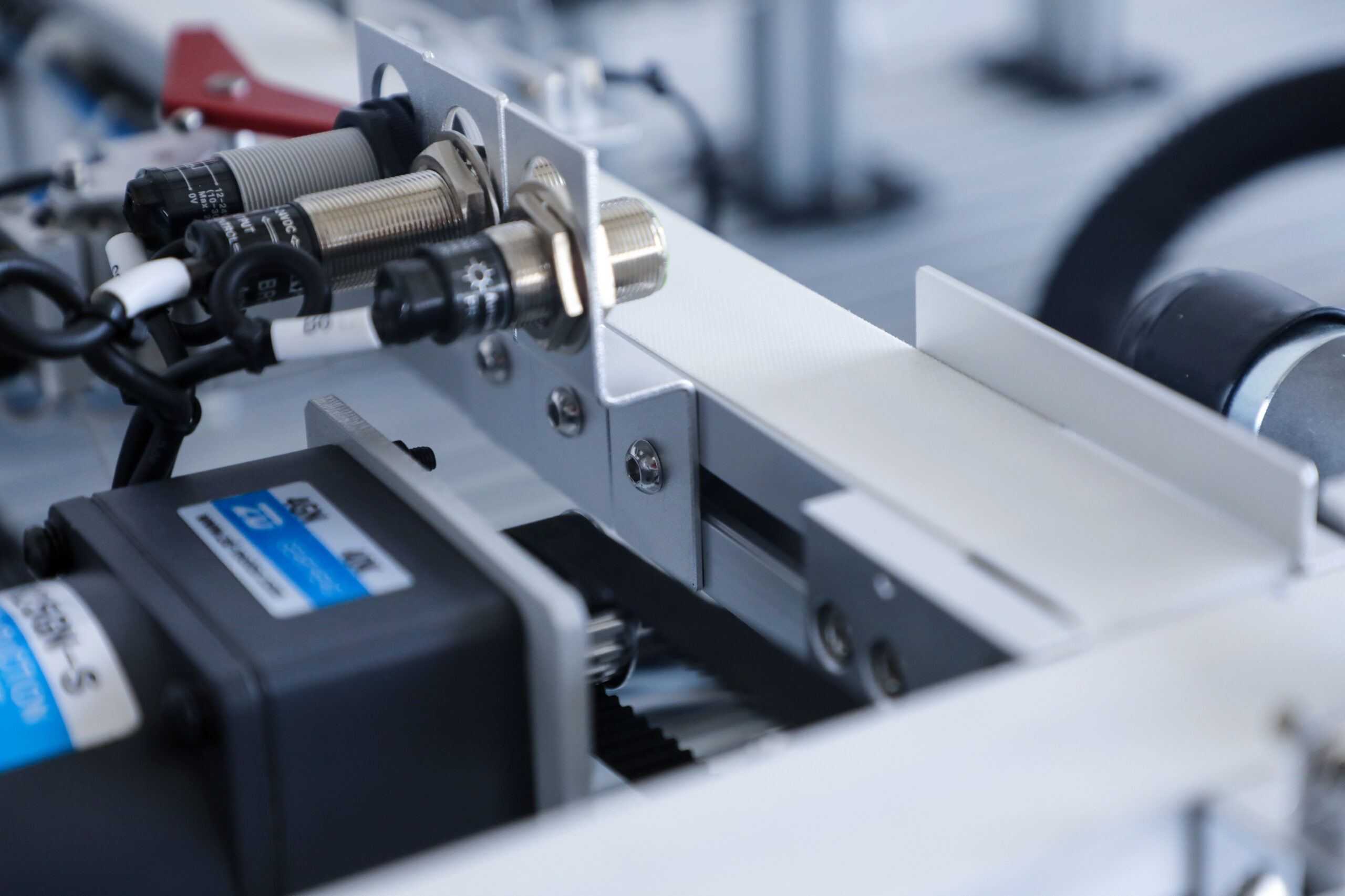
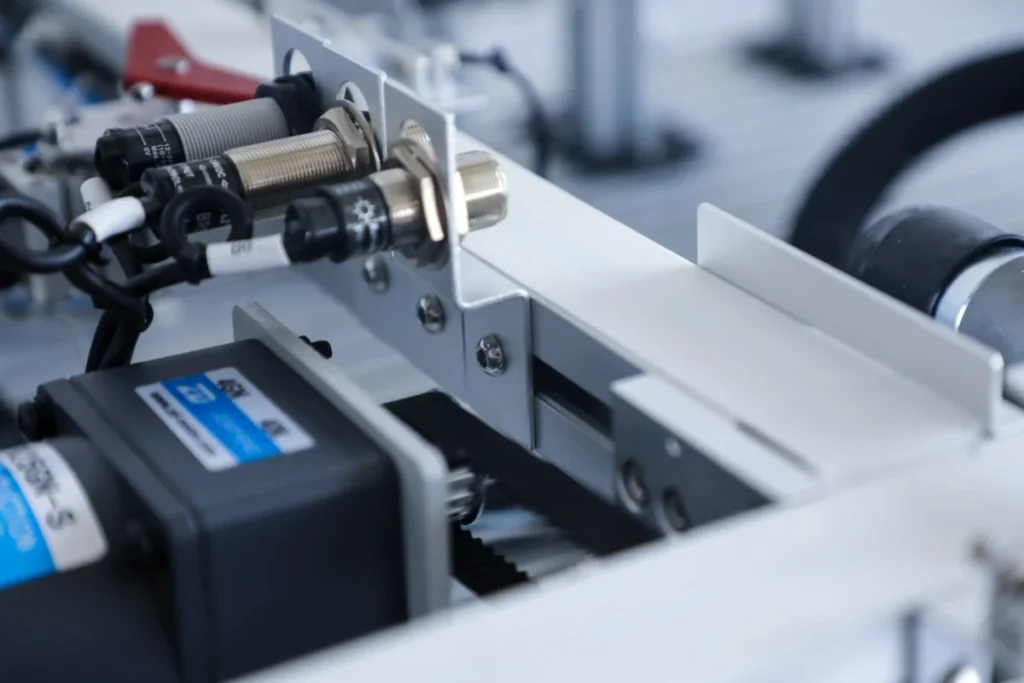
Edge Computing in Action: The Modern Industrial Conveyor
Consider one compelling application example for edge computing – that of an industrial conveyor. Though many conveyors today are relatively simple single-speed systems, many have evolved into networked systems tracked by sensors and encoders with servodrives and motors coordinated with complementary workcell functions to manipulate and inspect conveyed workpieces. The conveyor, once a mere transport mechanism, has become a smart, active participant in the production process.
A vast array of sensor subtypes track workpieces’ orientation, surface quality, weight, lot number, and more – all data that can enrich database records and enable comprehensive product traceability. For example, high-speed vision systems can inspect surface defects at hundreds of parts per minute, while RFID or barcode readers log product identity. Other sensors tasked with tracking machine-assembly conditions (such as belt tensions, bearing temperatures, and frame vibrations) populate machine-health records with critical data. With one fieldbus clock, all these conveyor events have timestamps accurate enough to reconstruct the plant condition for any event of interest, facilitating root cause analysis and continuous improvement.
For operations, such edge computing can impart sophisticated functions like zero-pressure accumulation, where products are conveyed without touching each other, preventing damage. It also enables dynamic gapping, merging, and diverting functions to optimize product flow and routing. Such edge computing also supports the seamless coordination of machine-tending tasks when multiple robotic arms interface with a single conveyor: Controls use workpiece positions and other information to command picking, sorting, labeling, or ejecting functions on the fly, adapting to real-time changes in product mix or operational priorities.
For condition monitoring of conveyors, edge computing leverages advanced analytics such as motor-torque signature analysis to identify issues like mistracking belt sections or accumulation pressures indicating a workpiece jam developing. In contrast, increases in motor-current draw can indicate seal or bearing wear – especially when accompanied by a mechanical component’s operating temperature slowly creeping upward. These subtle changes, detected and analyzed at the edge, can trigger early warnings, allowing maintenance teams to intervene before a catastrophic failure occurs, thereby minimizing unplanned downtime. A study by Accenture estimated that predictive maintenance enabled by IIoT, including edge computing, can reduce maintenance costs by 10-40% and increase asset uptime by 5-20%.
Crucially, edge computing also brings enhanced traceability to conveyor-based installations – especially important in facilities processing medical, pharmaceutical, and food products, where stringent regulatory requirements demand complete product journey records. The ability to timestamp and log every interaction and condition locally ensures data integrity and immediate access for auditing.
Democratizing Intelligence: Edge Computing for Simpler Machines
So far, we’ve emphasized advanced machine designs with fieldbuses and networked servocontrols. Of course, many single-axis and other classic machines still use relay contacts, limit and proximity switches, and 4-20 mA control loops, sans any deterministic Ethernet-based protocol. Here, smart edge devices play a crucial role in democratizing intelligence. These devices can terminate binary and analog signals with local interpretation in the form of debounce, scale, threshold, timestamp, and feature-extraction functions. That way, only pre-summarized data and immediately meaningful events are sent onward – which is especially helpful when that data is going to travel over modest Ethernet or wireless connections, where bandwidth is limited or unreliable.
Motion axes in such arrangements can include indexers based on pneumatic cylinders, VFD-driven conveyors, gearmotor-driven rollers, and various cam-actuated mechanisms. Controls for such axes may not employ closed-loop servocontrol but still generate signals worth monitoring – especially by edge I/O. Even simple limit, home, and proximity switches can yield valuable data about strokes, cycles, and dwells. For instance, an unusually long dwell time or a missed stroke count can inform monitoring systems to prompt the repair of worn components long before the machine actually jams, transforming simple on/off signals into predictive insights.
Likewise, current transducers can (via 4-20 mA output) inform simple motor-current signature analyses to detect issues described above, such as increased load or impending bearing failure. Accelerometers placed on or near couplings, gearboxes, and other mechanical components can detect when peak vibration values exceed a threshold, yielding early wear trending without requiring full spectral condition monitoring, which is often computationally intensive. Otherwise, Variable Frequency Drives (VFDs), via their speed reference and internal diagnostics, can directly serve as a data-generating edge device. Then the machine diagnostics these signals communicate travel with simple open-loop protocols to a higher-level system or the cloud for further analysis.
Commercially available hardware with these capabilities include certain manufacturers’ programmable edge controllers with built-in digital and analog I/O terminals and the ability to locally run code (e.g., in Python or IEC 61131-3 languages) and then publish data via MQTT/OPC UA to cloud platforms or SCADA systems. Yet other motion suppliers’ controllers wirelessly pair with sensor nodes or discrete or analog inputs that themselves are hardwired to the machine, offering flexible deployment options. These solutions effectively bridge the gap between legacy machinery and the demands of modern IIoT, extending the lifespan and enhancing the intelligence of existing assets.
Broader Implications and Future Outlook
The pervasive adoption of edge computing in industrial automation carries significant economic, operational, and technological implications. Economically, it promises substantial cost savings through reduced downtime, optimized energy consumption, and proactive maintenance, moving from reactive repairs to predictive interventions. This shift also enables new business models, such as "machine-as-a-service" or pay-per-use, where OEMs can offer enhanced service level agreements based on real-time performance data. Research from Grand View Research projects the global industrial edge computing market size to reach USD 22.1 billion by 2030, reflecting this expansive potential.
Operationally, edge computing delivers unprecedented levels of efficiency, flexibility, and safety. By providing immediate insights and control, it contributes directly to higher Overall Equipment Effectiveness (OEE). The ability to quickly adapt to changing production demands, reconfigure processes on the fly, and prevent hazardous situations elevates operational excellence. Companies are reporting up to a 20% increase in productivity and a 50% reduction in quality defects through the implementation of edge analytics.
Technologically, edge computing represents a convergence of Information Technology (IT) and Operational Technology (OT), blurring traditional boundaries. This integration necessitates robust cybersecurity measures to protect distributed intelligent assets from sophisticated threats. Furthermore, it accelerates the adoption of advanced analytics, Artificial Intelligence (AI), and Machine Learning (ML) models directly at the point of data generation, enabling truly intelligent and self-optimizing machines. The ongoing development of hardware with specialized AI accelerators at the edge will further enhance these capabilities. Industry leaders universally foresee continued decentralization of intelligence, with an increasing number of devices gaining computational and decision-making power. This evolution also creates an imperative for workforce upskilling, requiring engineers and technicians to master new competencies in data analytics, network security, and AI/ML application.
In conclusion, edge computing is fundamentally reshaping industrial automation. From enhancing the capabilities of advanced IPCs and revolutionizing servo drives to breathing new life into simpler, legacy machines, it is enabling a future where industrial processes are more responsive, efficient, and intelligent than ever before. This transformative technology is not merely an incremental improvement but a foundational shift towards a more autonomous, resilient, and data-driven industrial landscape.