The conventional understanding of the universe’s large-scale structure, a concept rarely contemplated in daily life, posits a cosmos that is largely uniform and isotropic—meaning it looks the same in every direction. However, groundbreaking new research, recently published by a team of international astrophysicists, suggests a potentially revolutionary departure from this long-held assumption: the universe could be intrinsically asymmetric or lopsided. This finding, derived from an exhaustive analysis of cosmological data, presents a formidable challenge to the prevailing "standard cosmological model," compelling scientists to reconsider the fundamental principles governing the dynamics and evolution of the cosmos.
The Cosmic Blueprint: Isotropic and Homogeneous?
At the heart of modern cosmology lies the standard cosmological model, often referred to as the Lambda-CDM model. This framework, which has been remarkably successful in explaining a vast array of astronomical observations, rests on several key pillars. Foremost among these is the "Cosmological Principle," a foundational assumption stating that the universe, when averaged on sufficiently large scales, is both homogeneous (meaning it has the same properties at every point) and isotropic (meaning it looks the same in every direction from any point). This principle drastically simplifies the complex equations of Albert Einstein’s theory of General Relativity, allowing cosmologists to model the universe’s expansion and evolution with a high degree of accuracy. The Friedmann–Lemaître–Robertson–Walker (FLRW) metric, a solution to Einstein’s field equations under the assumption of homogeneity and isotropy, forms the mathematical backbone of the Lambda-CDM model, providing a framework for describing a universe that is expanding, and potentially curved, but otherwise uniform.
The Lambda-CDM model itself postulates a universe composed of approximately 5% ordinary baryonic matter (the stuff of stars, planets, and us), about 27% mysterious dark matter (which interacts gravitationally but not electromagnetically), and roughly 68% enigmatic dark energy (represented by the cosmological constant, Lambda, driving the accelerated expansion of the universe). This model emerged as the consensus view in the late 1990s and early 2000s, largely due to observations of Type Ia supernovae indicating accelerating expansion and precise measurements of the cosmic microwave background (CMB) radiation.
The Relic Glow: Understanding the Cosmic Microwave Background
A cornerstone of the Lambda-CDM model’s observational support is the Cosmic Microwave Background (CMB). Discovered accidentally in 1964 by Arno Penzias and Robert Wilson, the CMB is the faint afterglow of the Big Bang—radiation left over from a time when the universe was only about 380,000 years old. Before this epoch, the universe was a superheated, opaque plasma of protons, electrons, and photons. As it expanded and cooled, electrons and protons combined to form neutral hydrogen atoms, making the universe transparent and allowing photons to travel freely. These photons, stretched and cooled by billions of years of cosmic expansion, are what we observe today as the CMB, pervading the entire sky.
The CMB is incredibly uniform, with temperature variations across the sky amounting to only about one part in a hundred thousand. These minute fluctuations are crucial, representing the primordial seeds from which all the large-scale structures we observe today—galaxies, galaxy clusters, and superclusters—eventually grew. Cosmologists have meticulously mapped these fluctuations using instruments like the COBE, WMAP, and Planck satellites, providing invaluable data that strongly supports the Lambda-CDM model.
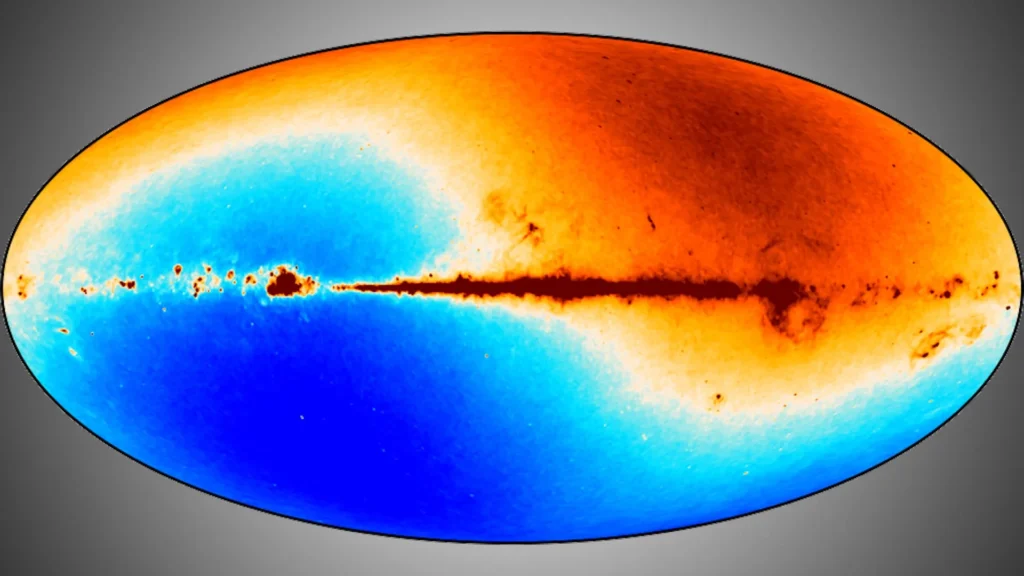
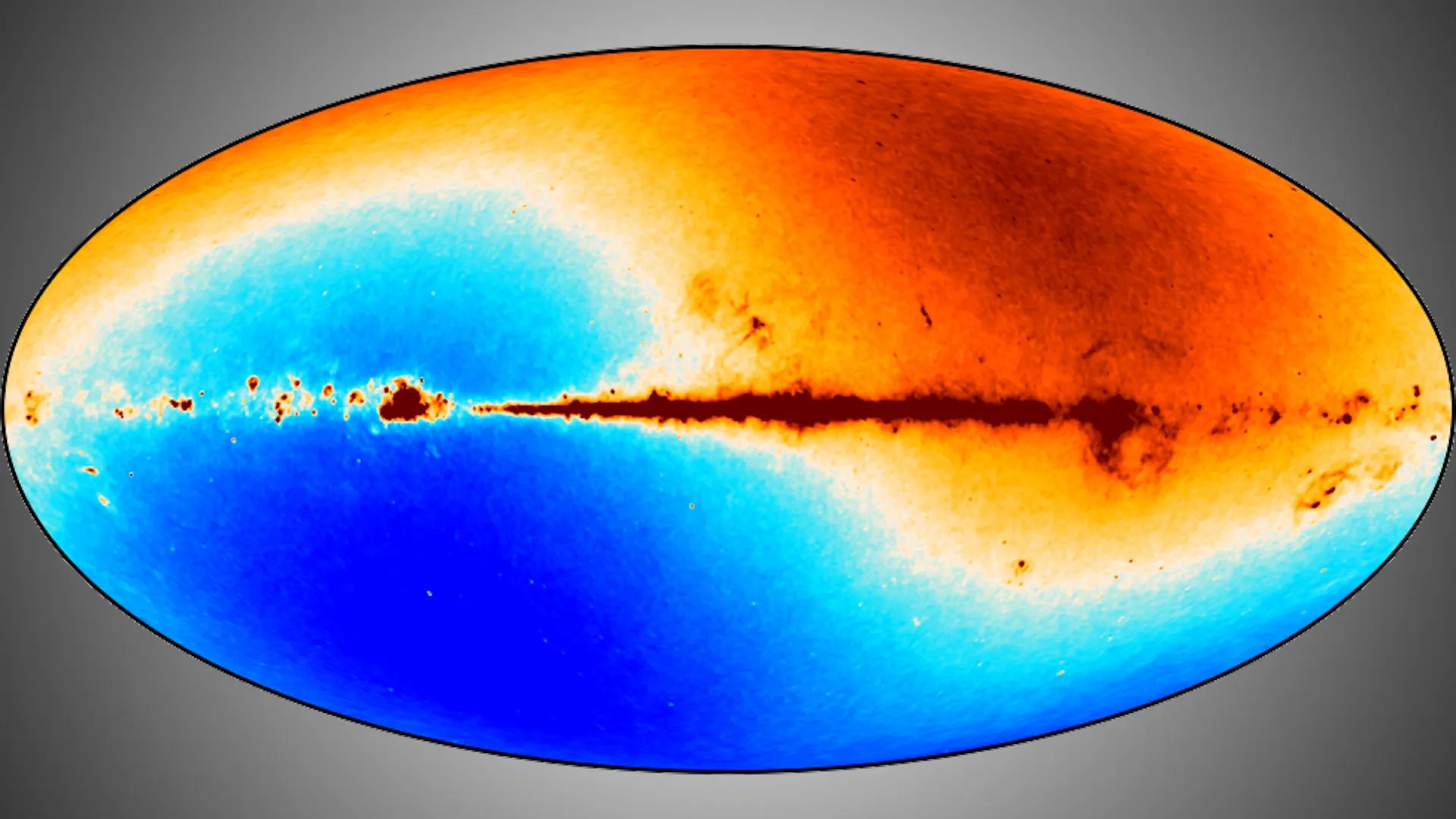
However, a fundamental observation within the CMB itself is the CMB dipole anisotropy. This refers to the largest temperature difference observed in the CMB, where one side of the sky appears slightly hotter (by about one part in a thousand) and the opposite side slightly cooler. This specific anisotropy is widely understood to be a consequence of our own motion—the Solar System, our galaxy (the Milky Way), and our local group of galaxies are all moving relative to the CMB’s rest frame. This "kinematic dipole" is an expected phenomenon, a Doppler shift effect, and as such, it does not, on its own, challenge the fundamental assumptions of the Lambda-CDM model or the FLRW description. It simply tells us about our peculiar velocity through the cosmic medium.
Cracks in the Foundation: Cosmological Tensions Emerge
Despite the remarkable success of the Lambda-CDM model, several "tensions" or disagreements between different cosmological datasets have emerged over the past two decades, hinting at potential incompleteness or flaws in our current understanding. These tensions represent discrepancies where measurements of fundamental cosmological parameters from early-universe probes (like the CMB) do not align with measurements from late-universe observations (like distant supernovae or local galaxy surveys).
The most prominent of these, and one that has garnered significant attention in the astronomical community, is the Hubble Tension. Named after Edwin Hubble, who in 1929 famously established that the universe is expanding, this tension concerns the precise value of the Hubble Constant (H₀), which quantifies the universe’s current expansion rate. Measurements of H₀ derived from observations of the early universe, primarily from the Planck satellite’s mapping of the CMB, consistently yield a value around 67.4 kilometers per second per megaparsec (km/s/Mpc). In contrast, measurements from the "local" or "late" universe, utilizing Type Ia supernovae as "standard candles" (calibrated by Cepheid variables observed by telescopes like the Hubble Space Telescope and Gaia satellite), converge on a significantly higher value, typically around 73-74 km/s/Mpc. This approximately 8-10% discrepancy is statistically significant, exceeding the combined uncertainties of the measurements.
The Hubble Tension began to manifest clearly in the early 2000s with data from the WMAP satellite and became even more pronounced with the higher precision of the Planck mission. It suggests either a systematic error in one or both sets of measurements (which scientists have rigorously tried to rule out) or, more intriguingly, that new physics beyond the Lambda-CDM model is required to reconcile the differing values. Possible explanations range from modifications to dark energy’s properties, new particles in the early universe, or even a revision of our understanding of gravity itself.
A Deeper Challenge: The Cosmic Dipole Anomaly
While the Hubble Tension has dominated many discussions, the cosmic dipole anomaly, the subject of the recent study, poses an even more fundamental challenge. Unlike the Hubble Tension, which concerns a specific parameter within the Lambda-CDM model, the cosmic dipole anomaly questions the very isotropy of the universe—a cornerstone of the FLRW metric and thus the entire standard model.
The issue arises when comparing the expected kinematic dipole from our motion relative to the CMB with the observed dipole in the distribution of matter across the sky. If the universe is truly isotropic on large scales, then our motion relative to the CMB should manifest consistently across all observable large-scale structures. This means that if we are moving in a particular direction, we should observe a corresponding dipole in the number counts or brightness of distant galaxies, quasars, and radio sources, reflecting the relativistic effects of our motion. This observed "matter dipole" should align in direction and be consistent in amplitude with the CMB kinematic dipole.
The Ellis-Baldwin Test: Probing Cosmic Symmetry
This precise consistency test was first proposed in 1984 by cosmologists George Ellis and John Baldwin. Known as the Ellis-Baldwin test, it posits that if the FLRW assumption of a symmetric universe is correct, the dipole anisotropy observed in the CMB due to our local motion must be directly reflected in a corresponding dipole in the distribution of distant astronomical sources. The critical requirement is that these sources must be truly distant. Nearby sources could exhibit spurious clustering effects, creating a "clustering dipole" that is not truly cosmological but rather a local inhomogeneity. Therefore, the test relies on vast catalogues of objects at cosmological distances, ensuring that any observed dipole is a reflection of the large-scale structure and our motion relative to it.
For decades, the observational data required to perform the Ellis-Baldwin test with sufficient precision was unavailable. However, recent advancements in telescope technology and survey methodologies, including large-scale galaxy surveys and deep radio and infrared observations, have finally provided the necessary catalogues. These include data from terrestrial radio telescopes, such as the NRAO VLA Sky Survey (NVSS), and space-based observatories like the Wide-field Infrared Survey Explorer (WISE) satellite, which observes at mid-infrared wavelengths.
The Verdict: A Lopsided Cosmos?
The outcome of applying the Ellis-Baldwin test, as detailed in the recent publication, is stark: the universe appears to fail the test. The variation in the distribution of distant matter does not match that predicted by the CMB kinematic dipole. Specifically, the observed matter dipole is often found to be significantly stronger than expected from our motion relative to the CMB, and in some analyses, even points in a slightly different direction.
This discord is particularly troubling because it has been observed across multiple independent datasets and different wavelengths of the electromagnetic spectrum. The fact that similar results are obtained with terrestrial radio telescopes and satellites observing at mid-infrared wavelengths lends considerable robustness to the finding, making it difficult to dismiss as a mere observational artifact or systematic error in a single experiment. Such consistency across diverse observational platforms suggests a genuine underlying physical phenomenon.
The implication is profound: if the matter dipole does not align with the CMB dipole as predicted by the FLRW metric, it means that the assumption of large-scale isotropy, a cornerstone of the standard cosmological model, might be incorrect. This would imply that the universe is not the same in every direction, or at least that our local motion is not the sole cause of the observed dipole in matter distribution. Such an intrinsic anisotropy would necessitate a radical rethinking of the universe’s fundamental structure.
Community Reactions and Implications
The cosmic dipole anomaly, despite its fundamental nature, has received comparatively less attention than the Hubble Tension within the broader astronomical community. This might be partly due to the sheer difficulty of reconciling such a finding with existing theoretical frameworks. Unlike the Hubble Tension, which might be addressed by tweaking parameters or adding components to the Lambda-CDM model, a violation of isotropy effectively undermines the FLRW metric itself, demanding a complete overhaul of the foundational equations used to describe the cosmos. It implies "going back to square one" on a truly epic scale.
While there haven’t been "official responses" in the political sense, the scientific community is grappling with these accumulating tensions. Many researchers are cautiously exploring alternative cosmological models, including those that incorporate anisotropic or inhomogeneous features, or modified theories of gravity. However, developing such models that can simultaneously explain all other cosmological observations (like the CMB power spectrum, baryon acoustic oscillations, and supernova data) without introducing new inconsistencies is an immense theoretical challenge. The lack of an easy theoretical "patch" makes the cosmic dipole anomaly particularly stubborn and unsettling.
Beyond the Standard Model: A New Era of Discovery
The confluence of these cosmological tensions, particularly the cosmic dipole anomaly, suggests that humanity might be on the precipice of a new era of discovery in cosmology. The current decade promises an "avalanche of data" from a new generation of sophisticated observatories, which will provide unprecedented precision and scope in mapping the universe. Missions like the European Space Agency’s Euclid satellite, launched in 2023, are designed to map the 3D distribution of billions of galaxies over a third of the sky, providing crucial data on dark energy and the growth of cosmic structure. The SPHEREx (Spectro-Photometer for the History of the Universe, Epoch of Reionization, and Ices Explorer) mission will conduct the first all-sky near-infrared spectral survey, providing invaluable insights into the history of the universe.
Ground-based observatories like the Vera C. Rubin Observatory, with its massive Synoptic Survey Telescope, will create a dynamic map of the entire visible sky, detecting transient events and mapping the distribution of matter with unprecedented detail. The Square Kilometre Array (SKA), an international radio telescope project currently under construction in Australia and South Africa, will be the largest radio telescope in the world, capable of mapping the universe in exquisite detail and pushing the boundaries of our understanding of cosmic evolution.
These powerful new instruments will undoubtedly provide crucial new evidence, either confirming the robustness of the cosmic dipole anomaly and other tensions or revealing subtle systematic errors that were previously undetectable. Furthermore, the burgeoning field of artificial intelligence, particularly machine learning, is poised to play a transformative role. AI algorithms are already being deployed to analyze vast datasets, identify subtle patterns, and even assist in the formulation of new theoretical models, potentially accelerating the process of constructing a new cosmological framework if the Lambda-CDM model proves insufficient.
Conclusion: Redefining Our Cosmic Reality
The potential asymmetry of the universe, as indicated by the failure of the Ellis-Baldwin test, represents a truly monumental challenge to our understanding of the cosmos. If confirmed, it would necessitate a radical re-evaluation of the foundational principles of cosmology, moving beyond the maximally symmetric FLRW description that has served as the bedrock for decades. Such a paradigm shift would have profound implications for fundamental physics, potentially leading to new theories of gravity, a deeper understanding of dark energy and dark matter, and ultimately, a redefined perception of our place within a universe far more complex and intriguing than previously imagined. The coming years, armed with next-generation observatories and advanced analytical tools, promise to be a thrilling period of discovery, potentially rewriting the cosmic narrative as we know it.