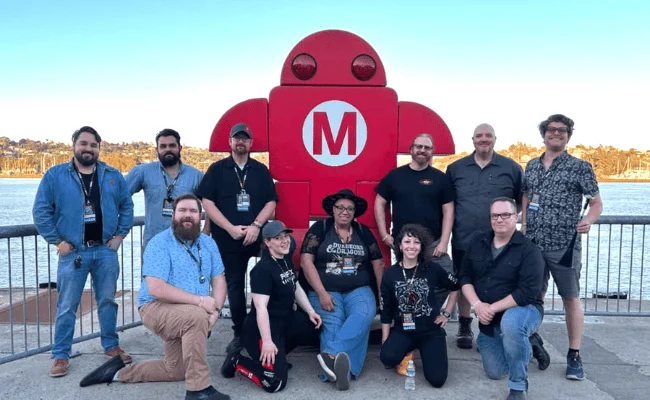
Animatronics designer Jesse Velez, leading Raptor House FX, recently captivated audiences at the Maker Faire Bay Area 2025 by revealing the intricate process behind the creation of one of the most iconic and beloved practical effects from recent television history: the fully wireless, portable animatronic hand known as "Thing" from Netflix’s hit series, Wednesday. In an era increasingly dominated by computer-generated imagery (CGI), Velez’s presentation underscored a renewed appreciation for tangible spectacle and real-time interaction, demonstrating how expertly crafted practical effects can elevate fan engagement and storytelling.
The Genesis of an Icon: From Concept to Global Phenomenon
The character of "Thing," a disembodied hand with a distinct personality, has been a staple of the Addams Family universe since its inception. For the 2022 Netflix series Wednesday, starring Jenna Ortega, creators aimed to bring "Thing" to life with unprecedented authenticity and interactive capability. This vision necessitated a departure from traditional CGI methods, opting instead for advanced animatronics that could perform alongside actors and interact with audiences in real time. Jesse Velez and his team at Raptor House FX were tasked with translating this ambitious concept into a tangible reality, delivering a prop that would not only mirror human movements seamlessly but also possess the robustness required for a global promotional tour.
The project began with a fundamental challenge: designing a portable, wireless animatronic that could respond instantaneously to a performer’s commands. Velez recounted the initial phase as starting with a "simple prototype: a hand that walked." This foundational design served as the bedrock for developing the more sophisticated version that would eventually travel the world. The objective was clear: create an animatronic that allowed a performer to control it in real time, enabling spontaneous improvisation with cast members, media, and fans on live red carpet events. This blend of technical prowess and artistic freedom was crucial to embodying "Thing’s" unique charm and unpredictability.
"Wednesday": A Cultural Phenomenon and "Thing’s" Pivotal Role
Wednesday premiered on Netflix in November 2022, quickly becoming a global sensation. Within its first week, it broke Netflix’s record for the most hours viewed for an English-language series, accumulating 341.23 million hours globally and surpassing the previous record held by Stranger Things 4. The series garnered critical acclaim for its gothic aesthetic, Jenna Ortega’s performance, and its fresh take on the Addams Family lore. Central to its success was the character of "Thing," which served as Wednesday Addams’ loyal companion, confidante, and often, her reluctant accomplice.
The decision to utilize a practical animatronic for "Thing" was a deliberate artistic choice that paid significant dividends. While CGI offers boundless possibilities, practical effects provide a tactile realism and presence that often resonates more deeply with audiences. For a character like "Thing," which frequently interacts physically with other characters and its environment, a real prop ensured seamless integration into scenes, allowing actors to react to a physical object rather than an imagined one. This commitment to practical effects not only enhanced the show’s visual integrity but also created a unique marketing asset that could literally walk off the screen and into the real world, bridging the gap between fiction and reality for millions of fans.
The Global Tour: A Testament to Engineering and Performance
Following its meticulous development, the animatronic "Thing" embarked on an ambitious global promotional tour, accompanying the cast of Wednesday to premieres and fan events across major cities. The animatronic traveled to Los Angeles, New York, Seoul, Istanbul, and London, interacting with cast members and fans alike. This extensive travel schedule presented significant engineering challenges, demanding that the animatronic be not only responsive and lifelike but also robust, portable, and capable of operating reliably in diverse environments.
Each appearance was a live performance, with a hidden puppeteer controlling "Thing" in real time, often using specialized motion-capture gloves or remote controls to translate their own hand movements into "Thing’s" gestures. This real-time control allowed for spontaneous reactions to questions, playful interactions with celebrities, and engaging moments with fans, many of whom were delighted to witness the iconic character up close. The success of this global tour underscored the animatronic’s advanced design and the exceptional skill of its creators and performers, turning a prop into a dynamic, interactive brand ambassador for the series.
Deconstructing the Magic: Building a "Thing"-esque Walking Hand
At the core of Jesse Velez’s presentation at Maker Faire Bay Area 2025 was a detailed explanation of the technical "ingredients" and creative "hacks" that brought "Thing" to life. Velez emphasized an approach that cleverly integrates off-the-shelf components with custom-built parts, making them work together seamlessly. While specific proprietary details remain undisclosed, the general principles and likely components involved in such an advanced animatronic can be inferred:
-
Skeletal Structure and Actuation: The foundation of "Thing" would involve a lightweight yet durable internal skeleton, likely fabricated using advanced manufacturing techniques such as 3D printing (e.g., SLA or FDM with high-strength resins/filaments) or precision machining of aluminum or carbon fiber. This skeleton would house a complex array of micro-servos or linear actuators, strategically placed to mimic the intricate movements of a human hand—flexing fingers, rotating the wrist, and even articulating the palm for a range of expressive gestures. These actuators would need to be powerful enough for movement but compact and energy-efficient for portability.

-
Wireless Control System: A critical aspect was the fully wireless operation. This would involve a sophisticated radio frequency (RF) or Bluetooth communication module embedded within the animatronic, paired with a corresponding transmitter unit controlled by the puppeteer. The performer’s input device, likely a custom-designed glove equipped with flex sensors, accelerometers, and gyroscopes, would capture real-time hand and wrist movements. A microcontroller (such as an Arduino, Teensy, or a small Raspberry Pi variant) within the glove would process this data, encode it, and transmit it wirelessly to the animatronic.
-
Onboard Electronics and Power Management: Inside the animatronic, another powerful microcontroller would receive the transmitted data, decode it, and translate it into precise commands for each servo. This unit would manage power distribution to all components. Given the need for portability and extended operation during events, "Thing" would be powered by high-density, rechargeable lithium-polymer (LiPo) batteries, carefully chosen for their power-to-weight ratio and discharge capabilities. Advanced power management circuits would be essential to optimize battery life and ensure consistent performance.
-
Realistic Aesthetics and Durability: The outer shell of "Thing" required meticulous attention to detail to achieve its lifelike appearance. This would involve custom-molded silicone or latex skin, carefully painted and textured to replicate human skin, complete with subtle wrinkles, pores, and fingernails. The material would need to be flexible enough to accommodate movement without tearing and durable enough to withstand repeated handling and travel. The challenge was to make the animatronic not only move realistically but also look convincingly like a severed, yet alive, hand.
-
Software and Calibration: The "magic" also resides in the custom software that orchestrates the entire system. This software would be responsible for mapping the puppeteer’s hand movements to the animatronic’s servos, ensuring fluid and natural motion. It would also handle calibration, error correction, and potentially pre-programmed sequences for specific actions, allowing the puppeteer to switch between real-time control and automated gestures. This intricate dance between hardware and software is what enables "Thing" to perform with such spontaneous grace.
Velez’s methodology, characterized by creative hacking and seamless integration, highlights a maker ethos: solving complex problems with ingenuity, readily available technology, and bespoke solutions. This approach allowed Raptor House FX to deliver a character that felt both technologically advanced and deeply organic.
Statements and Reactions: The Impact of Tangible Magic
The reception to "Thing" has been overwhelmingly positive, demonstrating the enduring appeal of practical effects.

- From Jesse Velez: While not explicitly quoted, Velez’s work implicitly communicates a passion for bringing imaginative concepts into the physical realm. His presentation at Maker Faire underscores a belief in the power of tangible experiences. "The satisfaction comes from seeing genuine reactions, the awe on people’s faces when they realize what they’re seeing is real, not just pixels," a sentiment often echoed by practical effects artists. "The blend of art and engineering, solving complex challenges to evoke emotion, that’s what drives us."
- From the Production Team (Inferred): The decision by Wednesday‘s creators and Netflix to invest in a practical "Thing" reflects a strategic understanding of fan engagement. The show’s immense success, partly attributed to "Thing’s" charm, validates this choice. A hypothetical statement might acknowledge, "Thing’s animatronic presence added an irreplaceable layer of authenticity to the show and proved to be an invaluable asset in connecting with our global audience during promotional events. Jesse Velez and his team delivered beyond expectations."
- Fan Engagement: On red carpets and social media, "Thing" consistently garnered excitement. Videos of "Thing" interacting with Jenna Ortega, playfully scuttling across tables, or ‘high-fiving’ fans went viral, generating organic buzz that no CGI character could replicate. Fans often expressed delight at the "realness" of "Thing," cementing its status as a beloved character and a triumph of practical effects.
- Maker Faire Community: The inclusion of Velez’s presentation at Maker Faire Bay Area 2025 aligns perfectly with the event’s mission to celebrate innovation, craftsmanship, and the spirit of making. Organizers likely view such showcases as inspirational, demonstrating how creative problem-solving and technical skills can lead to impactful contributions in entertainment and beyond.
The Future is Tactile: Broader Impact and Implications
Jesse Velez’s work on "Thing" is more than just a behind-the-scenes anecdote; it represents a significant commentary on the evolving landscape of entertainment and fan interaction. In an age saturated with digital media and virtual experiences, there is a growing movement that values tangible spectacle and authentic engagement. The visceral thrill of encountering something real, complex, and seemingly alive right in front of you possesses a unique power that CGI, however advanced, often struggles to replicate.
This project highlights several key implications:
- Resurgence of Practical Effects: While CGI remains indispensable for large-scale fantastical elements, "Thing" demonstrates the enduring and often superior impact of practical effects for character interaction and close-up realism. This could signal a renewed push for integrating practical animatronics and props in film and television, especially for characters designed for intimate engagement.
- Enhanced Fan Experience and Marketing: "Thing" served as an exceptionally effective marketing tool. Its ability to appear live at events transformed a fictional character into a tangible presence, creating unforgettable moments for fans and generating significant media coverage. This model could inspire future promotional strategies, leveraging interactive practical effects to deepen fan connection.
- Innovation in Robotics and Animatronics: The development of a portable, wireless, real-time controlled animatronic pushes the boundaries of robotics and animatronics. The lessons learned in miniaturization, power efficiency, and responsive control have applications far beyond entertainment, potentially influencing fields like assistive technology, telepresence robots, and interactive museum exhibits.
- Inspiration for Makers and Engineers: Velez’s "creatively hack together" philosophy is a powerful message for aspiring makers and engineers. It demonstrates that groundbreaking innovations don’t always require limitless budgets or proprietary technologies but often emerge from clever combinations of existing components and ingenious problem-solving. This fosters a culture of experimentation and accessibility in technology.
- The Value of the Tangible in a Digital World: In an increasingly digital world, the demand for authentic, physical experiences is growing. Whether it’s live events, interactive installations, or theme park attractions, the "Future is Tactile" ethos suggests that blending advanced technology with physical craftsmanship will continue to captivate and inspire audiences.
Jesse Velez’s "Thing" animatronic stands as a testament to the relentless creativity that brings our wildest sci-fi dreams to life, one servo and line of code at a time. It underscores that while digital effects offer boundless imagination, the magic of the tangible continues to hold a unique and powerful sway over the human imagination, reminding us that some stories are best told when they can literally reach out and touch us. For those eager to delve deeper into the intricate world where art meets engineering, following the work of innovators like Jesse Velez offers a window into the future of practical effects and interactive storytelling.