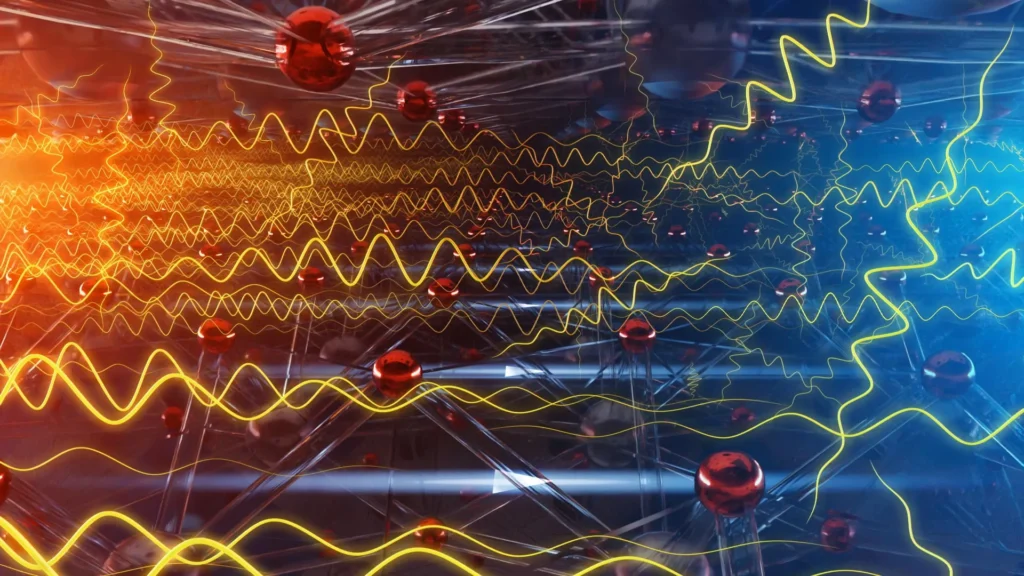
This groundbreaking discovery, published recently in the prestigious journal PRX Energy, outlines a novel method where applying an electric field to a specialized ceramic material drastically alters the behavior of phonons—the quantum packets of vibrational energy responsible for carrying heat through solids. The research revealed that when the atomic vibrations align with the direction of the applied electric field, known as the poling direction, these phonons persist for significantly longer durations than vibrations moving perpendicular to it. This directional bias results in a remarkable outcome: heat travels almost three times more efficiently along the electric field’s alignment than it does in other directions within the same material.
"Being able to control both how fast and in what manner heat flows could lead to devices that manage thermal energy far more efficiently than current technologies allow," stated Puspa Upreti, an ORNL postdoctoral research associate and a key contributor to the study, underscoring the profound implications of this anisotropic heat control.
The Pressing Need for Advanced Thermal Management
The ability to efficiently direct and dissipate heat is not merely an academic curiosity; it is a critical bottleneck in the advancement of a vast array of modern technologies. As electronic devices become increasingly powerful, compact, and integrated, the challenge of managing the heat they generate escalates. Processors in supercomputers, miniaturized sensors, high-power light-emitting diodes (LEDs), electric vehicle batteries, and advanced power electronics all face limitations imposed by their thermal load. Without effective cooling, performance degrades, reliability diminishes, and component lifetimes are drastically shortened.
Current thermal management solutions often rely on bulky fans, liquid cooling systems, or passive heat sinks, which add complexity, cost, and energy consumption. For instance, data centers globally consume vast amounts of electricity, with a significant portion dedicated to cooling their servers. Improving heat transfer efficiency directly translates into reduced energy waste, lower operational costs, and a smaller environmental footprint.
Beyond cooling, efficient heat transfer is paramount for technologies designed to convert heat into other forms of energy. Thermoelectric generators, which harness the Seebeck effect to convert waste heat directly into electricity, are limited by their material properties and the efficiency with which heat can be channeled through them. Similarly, cogeneration systems in industrial processes, designed to capture and reuse waste heat, could see substantial performance gains. The theoretical maximum efficiency of any heat engine is described by the Carnot cycle, an idealized model that meticulously regulates heat flow between hot and cold reservoirs. While perfect Carnot efficiency remains elusive, breakthroughs in controlling heat transfer bring practical devices closer to these theoretical limits.
The prevailing understanding of heat transport in many solid materials has largely assumed a relatively uniform, isotropic distribution of phonon scattering. While some materials exhibit natural thermal anisotropy due to their crystal structure, achieving a dynamic, electrically controllable directional bias in heat flow at such a high magnitude has been a significant challenge. This new research directly addresses these limitations by demonstrating a method to actively "steer" heat, overcoming obstacles that typically interfere with phonon movement and scattering, much like easing congestion on a busy highway to allow traffic to flow more freely in a preferred direction.
Unraveling Atomic Motions with Neutron Experiments
To precisely understand the underlying physical mechanisms responsible for this unprecedented control, the research team conducted a series of sophisticated experiments at the Spallation Neutron Source (SNS), a world-leading DOE Office of Science user facility operated by ORNL. The SNS provides intense beams of neutrons, which are uniquely suited for probing the atomic and magnetic structures and dynamics of materials.
Utilizing advanced inelastic neutron scattering techniques, the researchers were able to observe not only the precise positions of atoms within the ceramic crystal lattice but also their intricate vibrational motions—the phonons themselves. Neutrons, unlike X-rays or electrons, interact with the atomic nuclei and magnetic moments, allowing them to penetrate deep into materials without causing damage and to "see" light elements. This capability is critical for studying lattice vibrations, as the energy and momentum of the scattered neutrons directly reveal the energy and momentum of the phonons. This methodology builds upon foundational work recognized by the Nobel Prize in Physics, awarded to Clifford Shull and Bertram Brockhouse for their pioneering development of neutron scattering techniques for condensed matter research.
The meticulous measurements conducted at SNS provided compelling evidence: applying an electric field not only led to an increase in the speed at which phonons propagated through the material but, crucially, also significantly extended their lifetimes before they scattered. Phonon scattering events—where a phonon deviates from its path due to interactions with other phonons, defects, or boundaries—are the primary mechanism that impedes heat flow. By reducing these scattering events and extending phonon mean free paths, the material became dramatically more efficient at conducting heat in the favored direction.
The Material: Relaxor-Based Ferroelectrics
The material at the heart of this discovery is a specific class of ceramics known as relaxor-based ferroelectrics. These "smart materials" are characterized by their unique dielectric and piezoelectric properties, often exhibiting diffuse phase transitions and a high degree of structural and electronic flexibility. A key feature of ferroelectric materials is their ability to exhibit spontaneous electric polarization that can be reversed by an external electric field. In relaxor ferroelectrics, this polarization often occurs in localized, nanoscale regions rather than across the entire crystal.
When exposed to an external electric field—a process termed "poling"—the tiny, localized electric dipoles within these materials become aligned. This alignment of internal electric charges creates a highly ordered internal electric field environment. The research team hypothesized that this ordered environment would, in turn, reduce the disorder and anharmonicity within the crystal lattice that typically leads to phonon scattering. Their experimental results confirmed this hypothesis, demonstrating that the macroscopic alignment induced by the electric field directly translates into microscopic conditions that favor prolonged phonon travel.
The high-quality single crystals used in these pivotal experiments were meticulously grown and subsequently "poled" by Raffi Sahul at Amphenol Corporation, a global leader in interconnect products. This collaboration highlights the critical role of industrial partners in providing specialized materials and expertise essential for cutting-edge scientific investigations. The resulting materials, carefully prepared and treated, consistently demonstrated highly controllable and anisotropic heat transport properties, validating the team’s approach.
ORNL senior researcher Michael Manley spearheaded the inelastic neutron scattering experiments, working closely with ORNL senior R&D staff member Raphaël Hermann. Manley emphasized the unprecedented scale of the observed effect: "Earlier work on bulk ferroelectric materials achieved modest improvements in thermal conductivity, typically in the range of 5 percent to 10 percent. In stark contrast, our new measurements reveal an enhancement close to 300 percent—a nearly threefold increase. This dramatic improvement is mainly because the phonons are able to travel much longer distances before they stop or scatter, allowing thermal energy to propagate far more effectively."
A Threefold Increase Surprises Researchers
The magnitude of the discovery genuinely surprised the research team. While theoretical predictions and prior experiments had hinted at the possibility of modulating thermal conductivity in ferroelectrics, the observed threefold difference far exceeded initial expectations. This significant discrepancy between prediction and observation underscores the often-unforeseen nature of scientific breakthroughs.
The late Professor Joseph Heremans of Ohio State University played a crucial role in designing the thermal conductivity experiments and guided doctoral candidate Delaram Rashadfar through the intricate analysis of the data. His contributions were instrumental in establishing the robust experimental framework that allowed for the precise quantification of heat flow.
"While earlier work led us to expect only a modest effect, observing a threefold difference turned out to be a truly significant result," Rashadfar recounted, reflecting on the surprising findings. She added, "Professor Heremans always stressed the importance of trusting the data first and letting the theory follow. This philosophy was particularly relevant here, as the data unequivocally pointed to a much larger effect than anticipated." The combination of precise thermal conductivity measurements with the atomic-level insights from neutron scattering data provided a complete and compelling picture, directly linking the macroscopic increase in heat flow to the microscopic changes in atomic vibrations within the crystal lattice. This dual approach was critical in validating the discovery and establishing its scientific rigor.
Broader Impact and Future Implications
The ramifications of this breakthrough extend across numerous technological sectors, promising to reshape how we design and utilize systems that rely on thermal energy.
Revolutionizing Cooling Systems: The most immediate and apparent impact lies in advanced cooling technologies. Imagine solid-state electronic cooling systems with no moving parts, offering silent operation, enhanced reliability, and significantly smaller form factors than current fan-based or liquid-cooling solutions. This could lead to a new generation of high-performance computers, compact medical devices, and more efficient power electronics where heat dissipation is a primary concern. The ability to direct heat away from sensitive components along a preferred path could dramatically improve the performance and lifespan of microprocessors, GPUs, and other semiconductor devices, allowing for greater miniaturization and power density.
Enhancing Energy Conversion Devices: For thermoelectric devices, which convert temperature differences directly into electrical energy, this discovery could be transformative. By channeling heat more efficiently through the thermoelectric material, the temperature gradient across the device can be maximized, leading to substantial improvements in energy conversion efficiency. This could unlock greater potential for harvesting waste heat from industrial processes, vehicle exhaust, and other ubiquitous heat sources, contributing significantly to sustainable energy solutions. Similarly, devices designed for solid-state refrigeration, which use the Peltier effect to pump heat, could become far more efficient and widespread.
Advanced Electronics and Beyond: The ability to precisely control heat flow could also enable the development of "thermal diodes" or "thermal transistors"—devices that allow heat to flow preferentially in one direction or modulate its flow, analogous to how electronic diodes and transistors control electric current. Such components could form the basis of entirely new thermal circuits, offering unprecedented control over energy distribution within complex systems. This opens avenues for smarter thermal management at the chip level, dynamic thermal routing in integrated circuits, and advanced sensors that leverage anisotropic heat conduction.
Economic and Environmental Benefits: On a larger scale, widespread adoption of technologies based on this principle could yield significant economic and environmental benefits. Reduced energy consumption in cooling systems would translate into lower electricity bills for businesses and consumers, and a decrease in the overall carbon footprint associated with energy generation. More efficient energy conversion technologies would minimize waste heat, improving resource utilization and contributing to global sustainability goals. The market potential for these new thermal management solutions is immense, fostering innovation and creating new industries.
Future Research and Development: While the initial findings are exceptionally promising, further research is essential. Scientists will focus on optimizing the material composition and electric field parameters to maximize the effect and explore its limits. Scaling up the production of these specialized ceramics and integrating them into functional prototypes will be critical steps toward commercialization. Additionally, exploring other material systems that exhibit similar phonon-electric field interactions could uncover even broader applications and deeper fundamental insights into the physics of thermal transport. The successful multi-institutional collaboration between ORNL, The Ohio State University, and Amphenol Corporation serves as an excellent model for translating fundamental scientific discoveries into tangible technological advancements.
The research was generously supported by the DOE Basic Energy Sciences program, a vital initiative that funds fundamental research to lay the groundwork for new energy technologies, along with additional contributing partners. This discovery represents a significant leap forward in our understanding and control of heat, promising a future where thermal energy is managed with unprecedented precision and efficiency.






