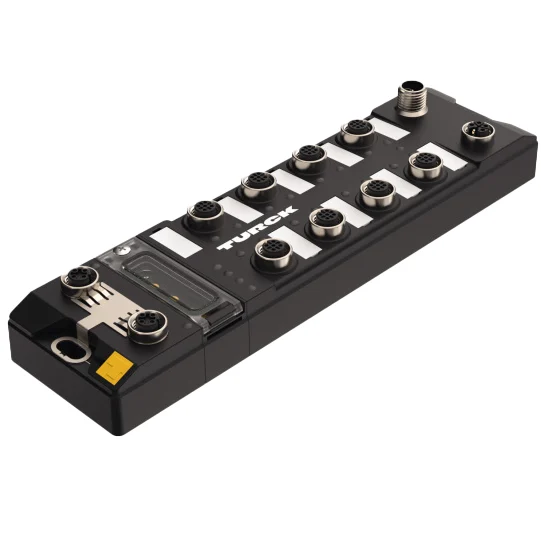
TURCK, a global leader in industrial automation, has unveiled a significant innovation with the preview of its TBEN-LLH-4RMC, a compact, multiprotocol Ethernet I/O module specifically engineered for the precise control and seamless integration of conveyor roller motors. This groundbreaking module is poised to transform material handling and intralogistics applications, offering a robust solution for enhancing efficiency and operational flexibility within modern industrial environments. The TBEN-LLH-4RMC is scheduled for its official launch in the U.S. market in the second quarter of 2026, marking a pivotal moment for decentralized automation.
The TBEN-LLH-4RMC is meticulously designed to meet the rigorous demands of contemporary conveyor systems prevalent in intralogistics, packaging, and manufacturing sectors. These environments increasingly require not only precise motor control but also unparalleled system flexibility and exceptional durability to withstand harsh industrial conditions. By integrating onboard logic, comprehensive I/O functions, and a rugged housing, the module is engineered to support sophisticated field-level control, thereby reducing the traditional reliance on centralized Programmable Logic Controllers (PLCs) and significantly simplifying complex wiring architectures. This strategic approach is set to empower manufacturers and system integrators to achieve substantial reductions in both installation time and ongoing maintenance requirements, translating directly into operational cost savings and improved system uptime.
Technical Deep Dive: The Core of Decentralized Control
At its heart, the TBEN-LLH-4RMC embodies the principles of modern industrial automation: distributed intelligence and robust connectivity. As a multiprotocol Ethernet I/O module, it offers unparalleled versatility, capable of communicating over various industrial Ethernet protocols such as EtherNet/IP, PROFINET, and Modbus TCP/IP. This multiprotocol capability is critical for integrators working in diverse industrial ecosystems, allowing for seamless integration into existing control architectures without the need for protocol converters or complex gateway solutions. This flexibility not only reduces system complexity but also future-proofs installations against evolving industry standards.
The inclusion of "onboard logic" is a standout feature, distinguishing the TBEN-LLH-4RMC from simpler I/O blocks. This embedded intelligence allows the module to execute local control sequences, manage individual roller motor operations, and perform diagnostic functions independently, without constant communication back to a central PLC. For conveyor systems, this means individual zones or segments can operate autonomously, reacting faster to local conditions such as blockages or changes in product flow. This localized processing capability significantly reduces network traffic, improves system responsiveness, and enhances overall reliability, particularly in large-scale installations where latency can be a critical factor.
Furthermore, the comprehensive I/O functions integrated within the module mean it can directly connect to various sensors and actuators commonly found in conveyor applications. This direct connectivity eliminates the need for separate I/O devices for each roller, streamlining the wiring process and consolidating control points. The "rugged housing" ensures that the module can withstand the challenging environments typical of material handling operations. This typically implies high ingress protection ratings (e.g., IP67/IP69K), resistance to shock, vibration, and extreme temperatures, ensuring long-term reliability and performance even in dusty, wet, or mechanically demanding settings.
The Evolution of Industrial Automation and I/O Technologies

The introduction of the TBEN-LLH-4RMC is a testament to the ongoing evolution of industrial automation, a journey that has progressed from rudimentary discrete I/O to sophisticated industrial Ethernet networks. Early industrial control systems relied heavily on discrete wiring for every sensor and actuator, leading to enormous bundles of cables, complex troubleshooting, and limited scalability. The advent of fieldbus technologies such as PROFIBUS and DeviceNet marked a significant leap, allowing multiple devices to communicate over a single cable, thus reducing wiring complexity.
However, the true revolution arrived with industrial Ethernet. Leveraging the speed, bandwidth, and ubiquity of standard Ethernet, industrial variants were developed to meet the real-time, deterministic, and robust requirements of factory floors. Industrial Ethernet protocols now form the backbone of modern automation, enabling seamless data exchange between PLCs, HMIs, drives, and increasingly, intelligent I/O modules like the TBEN-LLH-4RMC. This shift has been crucial in facilitating the transition towards Industry 4.0 and the Industrial Internet of Things (IIoT), where vast amounts of data are collected, processed, and analyzed to optimize operations.
Decentralized automation, championed by modules such as TURCK’s latest offering, represents the next logical step in this evolution. Rather than centralizing all intelligence in a single, powerful PLC, processing power and control logic are distributed closer to the field devices. This architecture offers numerous advantages: increased modularity, easier system expansion, reduced single points of failure, and faster response times for localized events. For conveyor systems, this means that each motor or zone can become a smart, semi-autonomous entity, contributing to a more resilient and adaptable overall system.
Addressing Critical Challenges in Material Handling and Intralogistics
The material handling and intralogistics sectors are currently experiencing unprecedented growth, driven primarily by the explosion of e-commerce, increasing consumer expectations for rapid delivery, and a global push towards greater automation to combat labor shortages and enhance productivity. Modern warehouses and distribution centers are complex ecosystems, often featuring miles of conveyors moving thousands of items per hour. The efficiency and reliability of these conveyor systems are paramount to operational success.
Traditional centralized PLC architectures, while effective, often present significant challenges in these dynamic environments:
- Complex Wiring: Each motor and sensor requires extensive cabling back to a central control cabinet, leading to high installation costs and intricate wiring diagrams.
- Installation Time: The sheer volume of wiring and configuration can extend project timelines, delaying system commissioning.
- Maintenance Complexity: Troubleshooting issues in a densely wired system can be time-consuming and difficult, leading to prolonged downtime.
- Lack of Flexibility: Modifying or expanding a centralized system often requires significant re-engineering and rewiring, hindering adaptability to changing business needs.
The TBEN-LLH-4RMC directly addresses these pain points. By providing a field-level option for controlling conveyor roller motors, it enables a plug-and-play approach to system design. Less wiring translates to faster installation and easier maintenance. The decentralized logic means that if one module or section experiences an issue, it can be isolated without affecting the entire system, thereby improving overall system resilience and reducing potential for widespread disruptions. This modularity also facilitates easier scaling and reconfiguration of conveyor lines, a critical capability in environments where layouts and product flows frequently change.
TURCK’s Legacy and Strategic Vision

TURCK, with its extensive history spanning over five decades, has established itself as a leading global manufacturer of sensors, industrial fieldbus, Ethernet, and connectivity solutions, as well as interface technology. Known for its robust and reliable products designed for demanding industrial applications, TURCK has consistently been at the forefront of industrial automation innovation. The TBEN-LLH-4RMC aligns perfectly with the company’s strategic vision to provide intelligent, interconnected solutions that drive the digital transformation of manufacturing and logistics.
This module represents a natural evolution of TURCK’s expertise in industrial connectivity and I/O. The company has a strong reputation for developing durable components that perform reliably in harsh environments, a heritage clearly reflected in the rugged design of the TBEN-LLH-4RMC. The development timeline for such a sophisticated product implies significant research and development investment, driven by a deep understanding of market needs and emerging technological trends. By focusing on specific applications like conveyor roller motors, TURCK demonstrates its commitment to delivering highly specialized, high-value solutions that solve real-world industrial challenges. The Q2 2026 U.S. launch signifies a careful market entry strategy, ensuring the product meets local regulatory and operational requirements.
Market Impact and Broader Implications
The introduction of the TBEN-LLH-4RMC is anticipated to have a profound impact on the material handling and intralogistics markets, contributing significantly to the broader adoption of Industry 4.0 principles.
- Enhanced Operational Efficiency: By simplifying wiring and enabling localized control, the module drastically reduces commissioning times and streamlines operational workflows. This allows businesses to bring new conveyor lines online faster and adjust existing ones with greater agility.
- Significant Cost Reduction: The direct economic benefits are substantial. Reduced cabling translates to lower material costs and labor expenses during installation. Easier troubleshooting and modular replacement minimize downtime, preventing costly production halts. Furthermore, optimized motor control through onboard logic can potentially lead to energy savings, especially in systems with variable speeds or intermittent operation.
- Unparalleled Flexibility and Scalability: The modular design of the TBEN-LLH-4RMC makes conveyor systems inherently more flexible. Companies can easily reconfigure their layouts, add or remove sections, or upgrade specific zones without disrupting the entire operation. This adaptability is crucial for businesses operating in fast-paced, ever-changing markets.
- Advanced Data and Diagnostics: With intelligence distributed to the field level, the module can collect more granular data directly from individual roller motors. This data can be used for advanced diagnostics, predictive maintenance algorithms, and performance monitoring. By understanding the health and efficiency of each motor, companies can proactively address potential failures, optimize maintenance schedules, and extend the lifespan of their equipment.
- Acceleration of Industry 4.0: The TBEN-LLH-4RMC embodies the spirit of Industry 4.0 by bringing intelligence to the edge. It facilitates the creation of "smart conveyors" that are interconnected, data-rich, and capable of autonomous decision-making. This contributes to the vision of fully integrated, highly automated smart factories and warehouses.
Industry analysts suggest that solutions like the TBEN-LLH-4RMC are critical enablers for the continued digital transformation across manufacturing and logistics. The global market for industrial automation components, including I/O modules, continues to grow steadily, driven by the imperative for increased productivity, efficiency, and competitiveness. The material handling equipment market, specifically, is projected to see robust growth, with automation solutions like intelligent conveyor systems being a primary catalyst. Experts in industrial automation believe that such decentralized, intelligent I/O modules will become standard in next-generation factory and warehouse designs, pushing the boundaries of what is possible in terms of automation and operational excellence. The focus on multiprotocol capabilities also ensures broad appeal across different industry segments, facilitating wider adoption.
In conclusion, TURCK’s preview of the TBEN-LLH-4RMC signifies more than just the launch of a new product; it represents a significant step forward in the evolution of industrial automation. By offering a compact, intelligent, and rugged Ethernet I/O module for conveyor roller motors, TURCK is providing a key enabler for advanced, efficient, and flexible material handling systems. As industries continue their journey towards greater automation and digitalization, solutions that simplify integration, reduce costs, and enhance operational intelligence will be paramount. The TBEN-LLH-4RMC is well-positioned to meet these demands, offering manufacturers and system integrators a powerful tool to build the smart, resilient, and highly productive industrial environments of tomorrow.