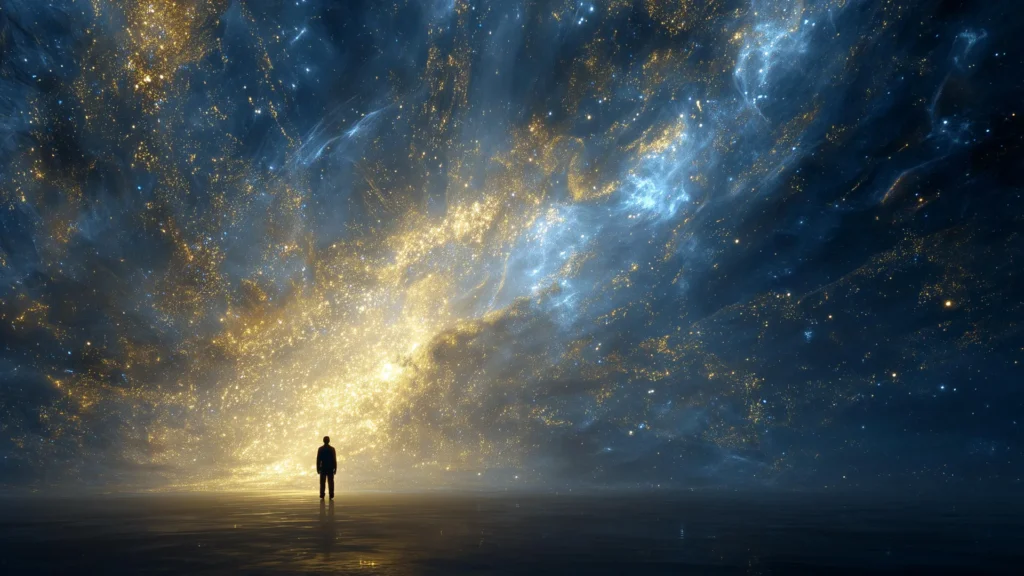
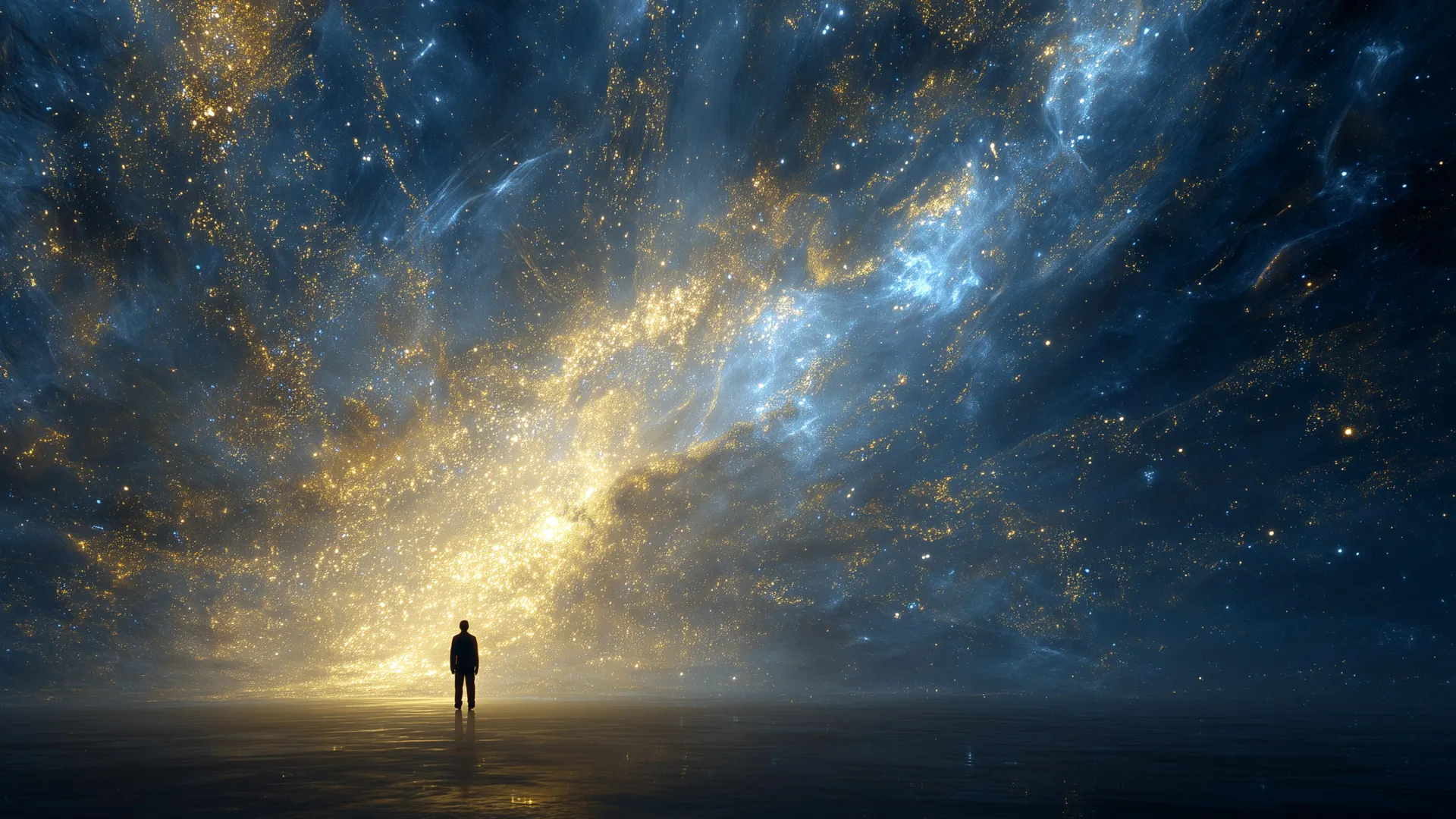
Few ideas in modern science have reshaped our understanding of reality more profoundly than space-time – the interwoven fabric of space and time at the heart of Albert Einstein’s theory of relativity. This conceptual cornerstone, which posits that space and time are not separate entities but rather components of a unified four-dimensional continuum, has provided an unprecedented framework for describing gravity and the universe at large. Yet, despite its empirical successes and widespread acceptance within the scientific community, the precise nature of space-time, and indeed what it means for it to "exist," remains a subject of intense philosophical and scientific debate, quietly shaping everything from theoretical physics to popular culture’s imagination of time travel.
The Genesis of a Unified Reality: From Newton to Einstein
The journey to our modern understanding of space-time began with a departure from classical Newtonian mechanics. For Isaac Newton, space was an absolute, immutable, three-dimensional stage upon which events unfolded, independent of those events. Time, too, was absolute, flowing uniformly and independently for everyone. This classical view held sway for centuries, providing a robust framework for understanding the mechanics of the universe.
However, the late 19th and early 20th centuries saw the emergence of perplexing problems, particularly concerning the behavior of light. Experiments, most famously the Michelson-Morley experiment, demonstrated that the speed of light in a vacuum appeared constant regardless of the observer’s motion. This contradicted classical expectations and paved the way for a revolutionary new perspective.
In 1905, Albert Einstein introduced his theory of Special Relativity, fundamentally altering our perception of space and time. He showed that measurements of space and time are relative to an observer’s motion. Two observers in relative motion would measure different durations for the same event (time dilation) and different lengths for the same object (length contraction). Crucially, these effects ensured that the speed of light remained constant for all inertial observers. While Einstein initially formulated his theory using separate concepts of space and time, it was his former mathematics professor, Hermann Minkowski, who, in 1908, synthesized these ideas into a single geometric entity: space-time. Minkowski famously declared, "Henceforth, space by itself, and time by itself, are doomed to fade away into mere shadows, and only a kind of union of the two will preserve an independent reality." This "Minkowski space-time" provided the mathematical language for Special Relativity, treating time as a fourth dimension analogous to the three spatial dimensions, albeit with a crucial difference in its mathematical signature.
A decade later, in 1915, Einstein extended his framework to include gravity with the General Theory of Relativity. In this monumental achievement, gravity was no longer seen as a force acting between masses but as a manifestation of the curvature of space-time itself. Massive objects, like planets and stars, warp the fabric of space-time around them, and other objects (including light) follow these curves. This elegant geometric description of gravity has been extraordinarily successful, explaining phenomena like the anomalous precession of Mercury’s orbit, the bending of starlight around the Sun (gravitational lensing), and more recently, the detection of gravitational waves – ripples in space-time caused by accelerating massive objects like black holes.
The "Fabric of Reality": Diverse Interpretations
Despite the empirical validation of Einstein’s equations, the precise ontological status of space-time remains contentious. It is frequently described as the "fabric of reality," a metaphor that captures its fundamental role. However, this metaphor itself opens the door to divergent interpretations:
-
The Block Universe: In some accounts, space-time is referred to as a fixed, four-dimensional "block universe" – a complete map of all events, past, present, and future, laid out eternally. This view, often associated with philosophical eternalism, suggests that all moments in time are equally real and exist simultaneously within this fixed structure. There is no true "flow" of time; instead, what we perceive as the passage of time is merely our conscious experience moving through this pre-existing block. Proponents argue that relativity’s treatment of time, where simultaneity is relative and past/present/future are observer-dependent, naturally leads to such a static, timeless universe. In this framework, an event that occurred billions of years ago in a distant galaxy is, in a fundamental sense, just as real as an event happening on Earth right now.
-
A Dynamic Field: In contrast, other interpretations view space-time not as a static block but as a dynamic field that bends, curves, and evolves in response to gravity and matter. This perspective emphasizes the interactive nature of space-time, where its geometry is influenced by the energy and momentum content within it, and in turn, dictates the motion of matter and energy. This view might align more closely with a "presentist" philosophical stance, where only the present moment is truly real, and the future is open. However, reconciling this dynamic view with the implications of relativity for time’s malleability presents its own set of challenges.
The distinction between these views is not merely academic. It underpins how physicists approach some of the deepest questions in cosmology and quantum gravity. For instance, the very beginning of the universe (the Big Bang) or the nature of singularities (like those in black holes) are interpreted differently depending on whether space-time is seen as an active participant in cosmic evolution or merely a passive stage.
The Linguistic Quagmire: When Language Goes on Holiday
A significant part of the confusion surrounding space-time, as highlighted by the original article, stems from the language we use to describe it. Austrian-British philosopher Ludwig Wittgenstein once warned that philosophical problems arise when "language goes on holiday," meaning when words are used outside their ordinary context without a clear redefinition of their meaning. Physics, particularly in its more conceptual and philosophical frontiers, provides a prime example.
Familiar words such as "time," "exist," "real," and "timeless" are repurposed in technical contexts without fully examining the semantic baggage they carry from everyday speech. In common parlance, "time" flows, "existence" implies enduring presence, and "timeless" often suggests something outside of time’s influence. However, within the framework of theoretical physics, these terms take on new, often counter-intuitive meanings, leading to widespread confusion.
Consider the word "timeless" in the context of eternalism. In this view, the universe itself does not endure or unfold in any real sense; there is no becoming, no change. All of eternity exists atemporally within the block. Here, "timeless" is used literally to mean outside of time’s progression. This clashes with the everyday understanding of "timeless" as something that persists through all time or is unaffected by time. The technical meaning implies a lack of temporal succession, whereas the colloquial meaning often implies endurance across temporal succession. This semantic drift creates a conceptual chasm.
Existence vs. Occurrence: The Elephant in the Room
The original article eloquently illustrates a core issue with the "block universe" concept: the structural difference between existence and occurrence. One is a mode of being, the other, of happening.
Imagine an elephant standing beside you. You would assert, "This elephant exists." It is a three-dimensional object that endures over time. Its existence implies a continuous presence. In contrast, imagine a purely three-dimensional elephant that flashes into the room for an instant – a cross-sectional moment in the life of an existing elephant, appearing and disappearing like a ghost. This "occurring elephant" doesn’t truly exist in the ordinary sense; it happens, it occurs.
An existing elephant generates a "world line" through space-time – a four-dimensional tube representing its path through space and time throughout its existence. The imaginary "occurring elephant" is merely one spacelike slice of that tube, a fleeting three-dimensional moment.
Now, apply this distinction to space-time itself. If the block universe posits that all events throughout eternity are equally "real" and "exist" within this four-dimensional structure, what does it mean for space-time itself to exist? Does space-time endure in the same sense as the "existing elephant"? Does it have its own series of "now" moments? Or is space-time – the manifold of all events that happen throughout eternity – merely something that occurs? Is it simply a descriptive framework for relating those events?
Eternalism, by treating all of space-time as an existing structure, muddies this crucial distinction. If time’s passage is an illusion, and all events are equally real within the block, then the entire block itself must "exist." But when does it exist? If it doesn’t unfold or change, does it exist timelessly? This question inadvertently layers another dimension of time onto something that was supposed to be timeless in the literal sense. To make sense of this, one might construct a hypothetical five-dimensional framework (three spatial, two temporal), where the second time axis allows the four-dimensional space-time to "exist" in the same way we perceive an elephant existing in our three spatial dimensions, with its events cataloged across four dimensions.
This theoretical exercise, while stepping outside established physics (which describes space-time through four dimensions only), reveals a deep problem: we lack a coherent way to discuss space-time’s existence without accidentally reintroducing time through an additional dimension not accounted for in the physics. It’s akin to trying to describe a song that exists all at once, without being performed, heard, or unfolding through time.
Empirical Successes and the Quest for Quantum Gravity
Despite these profound conceptual challenges, the mathematical framework of general relativity, built upon the concept of space-time, remains one of the most successful theories in physics. Its predictions have been verified with astonishing precision across a vast range of cosmic phenomena:
- Gravitational Lensing: The bending of light around massive objects, predicted by Einstein, has been observed countless times, from distant galaxies acting as cosmic telescopes to the recent imaging of black holes.
- Expansion of the Universe: General relativity provides the foundational equations for understanding the large-scale structure and evolution of the universe, leading to the Big Bang model and the discovery of cosmic acceleration.
- Gravitational Waves: The direct detection of gravitational waves in 2015 by LIGO (Laser Interferometer Gravitational-Wave Observatory) was a monumental confirmation of space-time’s dynamic, ripple-able nature. These waves, generated by cataclysmic cosmic events like the merger of black holes or neutron stars, are literally distortions in the fabric of space-time itself, traveling at the speed of light.
- GPS Satellites: Even everyday technology relies on space-time. The highly accurate timing required for GPS navigation must account for both special relativistic effects (due to the satellites’ high speed) and general relativistic effects (due to the weaker gravitational field at satellite altitude). Without these corrections, GPS systems would quickly accumulate errors of many kilometers per day.
However, the current understanding of space-time, as described by general relativity, is incomplete. It breaks down at extremely small scales and extremely high energies, where the effects of quantum mechanics become dominant. Reconciling general relativity with quantum theory – the two pillars of modern physics – is the paramount challenge in theoretical physics, known as the quest for a theory of quantum gravity.
This quest directly interrogates the nature of space-time. Does space-time remain continuous at quantum scales, or does it emerge from more fundamental, discrete structures? Theories like string theory, loop quantum gravity, and emergent gravity propose various answers, often suggesting that space-time itself is not fundamental but rather an emergent phenomenon, much like temperature emerges from the collective motion of atoms. These radical proposals, which treat space-time as potentially granular or even as the universe’s memory, highlight the ongoing philosophical and scientific wrestling match over reality’s deepest layers.
Space-Time in Popular Culture: From Physics to Fiction
The conceptual ambiguities of space-time profoundly influence how we imagine time in fiction and popular science. Filmmakers and writers often grapple with these ideas, sometimes inadvertently exposing the underlying philosophical tensions.
In films like James Cameron’s 1984 classic The Terminator, all events are treated as fixed. Time travel is possible, but the timeline cannot be changed; everything that happens, including attempts to alter the past, is already part of a pre-existing, immutable space-time block. This aligns with a deterministic, block universe model where the future is as fixed as the past.
Conversely, films like Marvel’s Avengers: Endgame (2019) portray time travel as a mechanism to alter past events and reshape the timeline, leading to the creation of alternate realities. This implicitly suggests a block universe that is not entirely fixed but can be manipulated or branched, implying a form of existence that is both laid out and subject to change. Such a scenario requires the four-dimensional timeline to exist in a dynamic way, akin to how our three-dimensional world exists and evolves.
Neither of these popular depictions, however, fully grapples with the profound philosophical implications of what kind of existence such a malleable or immutable space-time implies. They assume the past and future are "there" and ready to be traveled to, but rarely delve into the ontological status of this "there-ness" or how space-time differs from a mere descriptive map of events.
Broader Implications: Defining Our Reality
When physicists and philosophers of physics debate whether space-time "exists," they are often working within a framework that has quietly blurred the line between existence and occurrence. The result is a metaphysical model that, at best, lacks clarity, and at worst, obscures the very nature of reality.
It is crucial to emphasize that none of this philosophical debate endangers the mathematical validity of relativity or the empirical science that confirms it. Einstein’s equations still work, and their predictions continue to be verified. The challenge lies in interpreting those equations, especially when these interpretations shape how we talk about reality, how we approach the deeper, unsolved problems in physics (such as quantum gravity), and ultimately, what kind of world we believe we are living in.
Understanding space-time is more than a technical discussion for specialists. It is a fundamental inquiry into the nature of time, causality, reality, and our place within the cosmos. As we continue to probe the universe’s mysteries, a clearer, more consistent language for space-time will be essential to bridge the gap between mathematical descriptions and our intuitive understanding of existence, allowing us to move closer to a truly profound grasp of the fabric of reality itself.