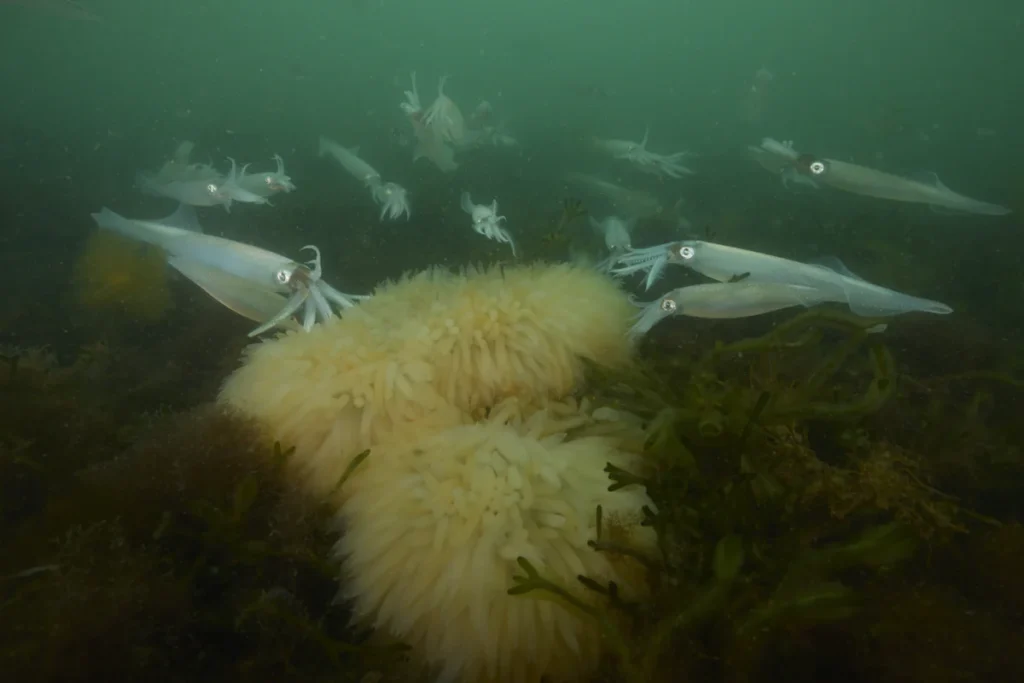
New England’s maritime lore has been steeped in tales of the deep for centuries, with the shadowy forms of cephalopods captivating imaginations long before scientific classification. From fishermen’s exaggerated accounts of monstrous tentacled creatures to the sensationalized reports of giant squid along North Atlantic coastlines in the 1800s, these enigmatic invertebrates have held a firm grip on the region’s collective consciousness. Today, attention turns to a less mythical but equally fascinating inhabitant: the longfin inshore squid (Doryteuthis pealeii), affectionately known as the "Boston squid." This species has long been a cornerstone of regional commercial fisheries, thriving in the emerald-green, nutrient-rich, and often turbid depths off the coast of Massachusetts, where visibility can be notoriously limited. Its critical role in both the ecosystem and the economy underscores a pressing need for deeper understanding, especially in the face of fluctuating populations and changing ocean conditions.
A Photographer’s Quest: Capturing the Elusive ‘Boston Squid’
For Keith Ellenbogen, the MIT Sea Grant resident artist and an internationally acclaimed underwater photographer, these challenging waters are his canvas. Known for his ability to bring hidden marine worlds into sharp focus, Ellenbogen has dedicated his career to revealing the extraordinary species and critical events unfolding just off New England’s shores. On even the clearest days, when underwater visibility might stretch to a mere 20 feet, the swift and camouflaged longfin inshore squid proved an elusive subject. For months, these torpedo-like creatures deftly evaded his lens, a testament to their inherent agility and mastery of their dim environment. His pursuit, however, was driven by a profound desire to document a pivotal moment in their brief, intense lives: their spawning aggregation.
Ellenbogen’s mission highlights the broader challenge of studying marine life in dynamic coastal environments. Unlike the crystal-clear tropical waters often associated with underwater photography, New England’s coastal zone is characterized by rich plankton blooms and sediment stirred by currents, resulting in limited light penetration and often murky conditions. This ecological richness, however, is precisely what supports a vibrant marine ecosystem, including the prolific longfin squid. To overcome these obstacles, Ellenbogen’s approach combined cutting-edge photography techniques with invaluable local knowledge, collaborating with a network of seasoned fishermen who possessed an intimate understanding of the squid’s seasonal movements and preferred habitats. This partnership was crucial, transforming a solitary artistic endeavor into a collaborative scientific quest to pinpoint concentrations of squid beneath the surface.
Economic Significance and Alarming Fluctuations
The longfin inshore squid holds significant economic importance for Massachusetts. In 2023, the state’s commercial fisheries landed an impressive 2.85 million pounds of longfin squid, equating to an estimated 6 million individual animals. This catch generated over $2.82 million in value, firmly placing the species among the top 10 commercially landed seafood species in Massachusetts. Its consistent presence in these ranks puts it alongside iconic regional catches such as the American lobster, Atlantic surf clam, and sea scallop, cementing its enduring significance in the state’s vibrant seafood industry. The demand for longfin squid extends beyond local markets, with a substantial portion destined for both domestic and international culinary uses, further solidifying its economic footprint.
However, the year 2024 brought a stark and sudden change. Preliminary reports indicate that landings plummeted to under 750,000 pounds – roughly a quarter of the previous year’s robust catch. This dramatic decline was corroborated by scientific surveys; the spring 2024 trawl survey, detailed in the Massachusetts Division of Marine Fisheries Annual Report, documented a historic low in longfin squid biomass, occurring just one year after a record high in 2023. Such extreme year-to-year variability, while concerning, is not entirely unprecedented for the species.
Understanding the Unpredictable: Biological Factors and Ocean Dynamics
While a significant drop in landings naturally triggers concerns about population health and sustainability, scientists emphasize that this doesn’t necessarily spell long-term trouble for the longfin inshore squid. The species is renowned for its large, often unpredictable fluctuations in abundance. This inherent variability stems from several key biological and environmental factors. Longfin squid have an exceptionally short lifespan, typically spanning only six to nine months. This "live fast, die young" strategy means that population numbers are highly sensitive to recruitment success each year, which in turn is heavily influenced by environmental conditions during their embryonic and larval stages.
Furthermore, these cephalopods are exquisitely sensitive to shifting ocean conditions. Factors such as water temperature, nutrient availability, prey abundance, and the presence of predators can profoundly impact their survival, growth, and reproductive success within a single generation. Warmer waters, for instance, can accelerate growth and metabolic rates but may also reduce oxygen levels or alter the distribution of their preferred prey. Changes in ocean currents can disperse paralarvae away from suitable nursery grounds or concentrate predators. These complex interactions make predicting longfin squid population dynamics a formidable challenge for fisheries scientists and managers alike.
Advancing Scientific Understanding and Collaborative Research
Recognizing the species’ economic importance and the enigmatic nature of its population dynamics, the National Oceanic and Atmospheric Administration (NOAA)’s Northeast Fisheries Science Center (NEFSC) has significantly expanded its squid research efforts over the past few years. Kimberly Hyde, a biological oceanographer with NEFSC, highlights the critical need for this intensified focus. Her research, centered on marine ecosystems and fisheries, aims to unravel the complex life history traits of these cephalopods. A key initiative is a two-year study specifically on longfin squid, designed to gain a deeper understanding of their life cycle, track their maturity, and assess their readiness to spawn. This research involves collecting biological samples to analyze growth rates, reproductive output, and environmental influences.
Beyond dedicated studies, NEFSC scientists are championing collaborative approaches, working closely with the fishing industry across the Northeast. These cooperative research programs are vital for collecting comprehensive data that would be impossible to gather through scientific surveys alone. Key initiatives include:
- The Longfin Squid Biological Sampling Program (SQUIBS): This program involves fishermen in collecting detailed biological samples (e.g., length, weight, sex, maturity stage) from their commercial catches, providing invaluable real-time data on population structure.
- Collaborative SQUid Size Monitoring (SQUISM): Focuses on collecting size distribution data from landings, offering insights into recruitment patterns and the overall health of different age classes within the population.
- The Squid-Squad: An innovative and highly interdisciplinary team comprising scientists, industry members, and fisheries managers. This collaborative platform fosters direct communication, shared knowledge, and a common goal to improve squid science and inform sustainable management practices. By bringing together diverse perspectives and expertise, the Squid-Squad aims to bridge the gap between scientific research and practical fisheries management, ensuring that decisions are based on the most robust and up-to-date information.
Despite these concerted efforts, much of this captivating cephalopod’s story remains hidden from plain sight, particularly its most intimate moments of reproduction.
The Spawning Spectacle: A Hidden World Revealed
Ellenbogen’s persistent quest culminated in a truly rare and profound encounter. After years of dedicated searching, he chartered a vessel and leveraged his network of local fishermen to finally locate significant concentrations of squid beneath the surface. Navigating the emerald-green, nutrient-rich coastal waters off Cape Cod, where visibility was typically limited, finding a cluster of eggs and the squid responsible for them, 30 to 40 feet below the surface, was a monumental challenge.
"As I descended through the emerald-green waters of Cape Cod, I couldn’t see anything at first," Ellenbogen vividly recalls. "I knew I was in the right area, but the seafloor seemed empty. Then I noticed a few faint shadows moving in the distance." The anticipation mounted as he carefully swam closer, the scene slowly, almost magically, revealing itself. "First came the squid, then the egg masses, and then hundreds more animals appearing out of the green water. Suddenly I found myself surrounded by squid flashing colors, courting, competing, and spawning," Ellenbogen recounted, clearly still awestruck by the memory. "It felt like being in a theater, watching a carefully choreographed performance unfold all around me."
Dozens of squid hovered with intense focus, forming a living circle, their arms and tentacles gently stretching toward the epicenter of this aquatic drama: a large, pale cluster of eggs firmly fixed to a bed of slipper shells and entwined with fingerlike seaweed. Thousands of gelatinous, translucent egg capsules swayed softly in the subtle currents, each a potential cradle for the next generation. Male and female pairs, breaking from the outer circle with an almost ceremonial precision, darted inward to execute the act of spawning. Their alien-like bodies pulsed and flickered with mesmerizing waves of color – flares of rust-red, golden yellow, iridescent pink, and flashes of lightning white. This brief, vibrant display represented the culmination of their short lives, a critical moment of biological coordination to ensure the survival of their species.
The Rapid Life Cycle of Doryteuthis pealeii
Longfin squid truly live fast and die young, exhibiting an incredible exponential growth rate throughout their lifespan of less than one year. Their journey begins within these gelatinous egg capsules, from which they emerge as planktonic hatchlings, known as paralarvae. These tiny creatures, barely 1.5 millimeters long, are already miniature, simplified versions of their adult forms, possessing fully formed chromatophore organs dense with pigment.
Still small but growing at an astonishing pace, juvenile squid feast on planktonic prey in the sunlit coastal surface waters. As they grow larger, they gradually migrate deeper into the water column, adopting a lifestyle closer to the seafloor. As natural-born ambush and pursuit predators, they quickly transition to hunting small crustaceans and other invertebrates, including smaller squid, utilizing powerful jet propulsion and their ten grasping arms and tentacles with remarkable efficiency. Their rapid development and voracious appetite make them a significant component of the marine food web.
Nearing adulthood, typically at a mantle length of just 8 centimeters, they undertake seasonal migrations offshore to overwinter in deeper, warmer waters along the continental shelf. At night, these mature squid form large schools, often grouped by body size, and move upward in the water column to feed. Growth remains rapid and is highly temperature-dependent, with males generally growing faster and achieving larger sizes than females, a common pattern in many cephalopod species.
A Symphony of Color and Communication
Like their octopus relatives, squid possess remarkable chromatophore organs – specialized pigmented cells controlled by a complex network of nerves and muscles within their central nervous system. The contraction or dilation of these sacs results in mesmerizing iridescence and rapid, dramatic shifts in color and pattern. This sophisticated color-changing ability serves multiple vital purposes, including camouflage against predators and prey, intricate courtship displays, and complex communication through what appears to be an ancient visual language.
Adding an extra layer of intrigue, squid themselves are effectively colorblind. Despite their vibrant displays, their eyes are not adapted to perceive hues as humans do. Instead, their vision is acutely specialized to detect contrast, brightness, movement, and even polarization of light, allowing them to interpret the subtle shifts in light patterns created by their chromatophores and the surrounding environment. This means their communication is based on patterns of light and dark, flicker rates, and polarized signals rather than a spectrum of colors.
Complex Reproductive Strategies
Longfin squid are prolific breeders, spawning year-round with distinct seasonal and geographic peaks. In New England waters, spawning aggregations are typically reported from May to August, coinciding with warmer water temperatures and increased productivity. The egg clusters, or "mops," like the one Ellenbogen photographed, serve as crucial hubs for reproductive activity. According to NOAA Fisheries, female squid lay fertilized egg capsules, each containing approximately 150 to 200 eggs, attaching these clusters securely to the ocean bottom. Females return repeatedly to deposit multiple clutches of eggs over several weeks, with a typical female laying a total of 3,000 to 6,000 eggs during her reproductive period.
Spawning typically occurs in seasonal pulses, closely tied to water temperature and other environmental conditions. These pulses can trigger the formation of large spawning aggregations, dense gatherings where individuals are in constant interaction. Within these crowded spawning grounds, the reproductive biology and behavior of longfin squid are remarkably complex. The NEFSC report highlights unique behaviors, such as the ability of females to store sperm from spawning events for later use. Intriguingly, eggs within the same capsule from a single female may be fertilized by sperm from multiple males from multiple spawning events, suggesting a sophisticated female control over paternity.
Competition among males is intense and plays out in fascinating ways. "Consort males," typically the larger and more dominant individuals, pair up with a single female during spawning. They swim closely alongside her, often guarding her with their arms and using their size to intimidate potential competitors. In contrast, "sneaker males," smaller and often unpaired squid, employ stealth and speed to slip past the consorts and position themselves near paired females, attempting to transfer spermatophores (sperm bundles) either into the female’s mantle cavity or into a specialized pouch located near her head.
This intricate competition is guided by a rich array of visual and chemical signals. Pheromones indicate reproductive readiness, while rapid color and pattern changes, strategic arm postures, and whole-body displays communicate intent and dominance. A seminal 1999 paper published by the Marine Biological Laboratory meticulously cataloged 34 distinct visual displays involving colors, brightness, spots, stripes, iridescence, and polarization signals, alongside 17 specific positions and movements used by squid on the spawning grounds. For example, squid flashing white serves as a clear signal to repel other squid, almost always observed when an individual is engaged in mate guarding, egg laying, or competitive confrontations. Even more captivating, female squid can display a dark patch on one side of their mantle, akin to a human blush, but in their case, it functions as a repellent to overzealous courting males. Despite the richness of these displays, the full grammar of squid communication remains an encrypted secret, even to the most curious scientists.
Broader Implications and the Future of Squid Science
Kimberly Hyde aptly summarizes the profound value of Ellenbogen’s work: "Keith’s rare glimpse of squid in their natural environment beautifully bridges art and science, reminding us that we still have much to learn." Indeed, for most people, squid are known primarily as a culinary delight or as shadowy figures from oceanic legends, the chameleons of the sea. Yet, each spring, beneath the often-turbid, cool waters off Cape Cod, millions of longfin squid gather in this remarkable reproductive event, a vibrant testament to the rich biodiversity and immense productivity of Massachusetts’ marine ecosystems.
The dramatic fluctuations in longfin squid populations, as seen between 2023 and 2024, underscore the urgent need for continued scientific inquiry and adaptive fisheries management. Climate change, with its concomitant shifts in ocean temperatures, pH levels, and current patterns, adds another layer of complexity to predicting the future of this short-lived, environmentally sensitive species. The collaborative research initiatives by NOAA NEFSC and their partners in the fishing industry are critical for building a robust scientific foundation to inform sustainable harvesting practices and ensure the long-term health of the stock. Understanding the triggers for spawning aggregations, the success of recruitment, and the impact of environmental variables on their life cycle is paramount.
MIT Sea Grant, a vital institution dedicated to fostering sustainable fisheries and promoting environmental education and stewardship of our coastal and ocean resources, plays a crucial role in these endeavors. As MIT Sea Grant’s resident artist, Keith Ellenbogen’s long-term project to document extraordinary species and ocean events like the squid spawning provides not just breathtaking imagery, but also invaluable visual data that complements scientific observations. By revealing these hidden moments that few have the opportunity to witness, his work serves as a powerful tool for public engagement and environmental advocacy. The longfin inshore squid, as one of our region’s most valuable marine resources, represents more than just a commercial commodity; it is a sentinel species, and its intricate life cycle, now partially unveiled through a blend of scientific rigor and artistic vision, offers profound insights into the delicate balance of New England’s dynamic marine world.