The allure of popular culture extends beyond the silver screen and the recording studio, often weaving its way into the everyday objects that accompany notable figures. For dedicated watch collectors, the thrill of spotting a familiar timepiece on the wrist of a celebrity or within a film can be a deeply satisfying experience. While iconic luxury watches like Rolex Submariners, Omega Speedmasters, and Patek Philippes frequently grace such productions, a particular resonance is found in identifying more accessible, everyday watches that hold a connection to cultural touchstones. This pursuit offers a tangible link to the past and a deeper appreciation for the personal choices of influential individuals. This article delves into the process of uncovering such a connection, focusing on the wristwatch worn by the late singer-songwriter Elliott Smith, a journey that highlights the rewarding nature of dedicated horological detective work.
The Enduring Mystery of an Icon’s Wristwear
Elliott Smith, a pivotal figure in the indie folk and pop music scene of the 1990s and early 2000s, remains an enigmatic and beloved artist. His career trajectory was significantly amplified by the inclusion of his poignant song, "Miss Misery," in the critically acclaimed 1997 film Good Will Hunting. This exposure not only garnered him an Academy Award nomination but also thrust him into a broader public consciousness. Smith’s untimely death in 2003, at the age of 34, left a void in the music world, with the circumstances of his passing—ruled a stabbing—remaining a subject of speculation, with no definitive conclusion drawn between suicide and homicide.
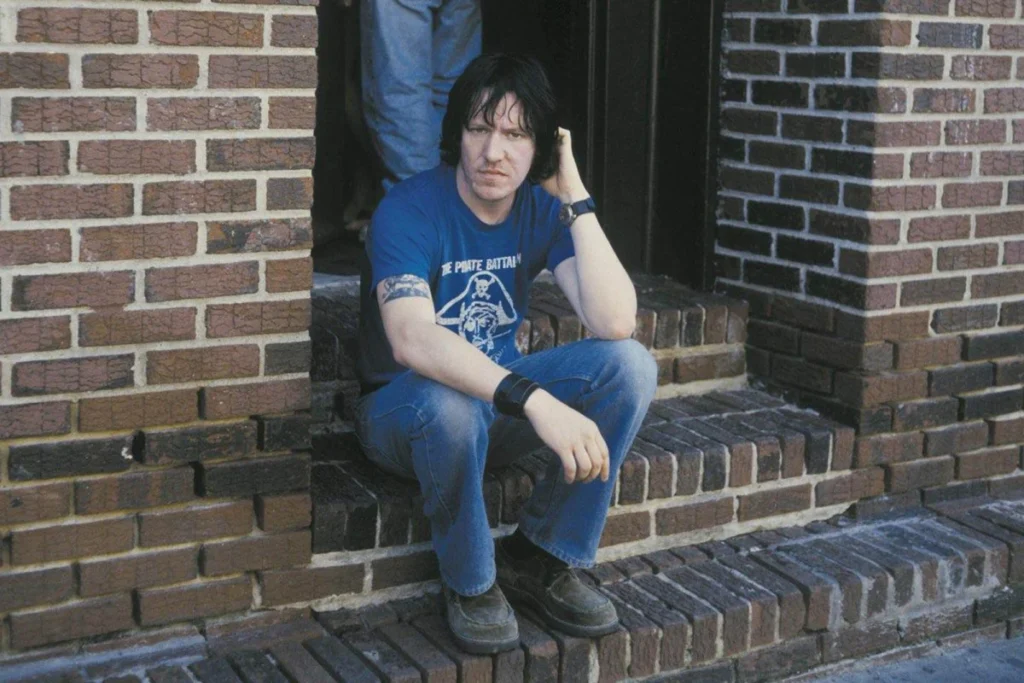
For years, fans and collectors have observed Smith’s public appearances, noting a consistent accessory: a distinctive double-banded leather cuff worn on his right wrist. However, the timepiece he may have worn alongside this signature item has largely escaped detailed investigation. This article aims to shed light on this overlooked aspect of his personal style by meticulously analyzing photographic evidence. The journey begins with a striking photograph taken by Renaud Monfourny, which served as the basis for the album art of Smith’s posthumously released From a Basement on the Hill. Captured outside his Brooklyn apartment building at 440 Bergen Street in 1997, this particular image, a side profile, offers a crucial glimpse of the watch in question.
Deconstructing the Visual Clues: A Step-by-Step Identification Process
The initial examination of the Monfourny photograph provides a foundation for inquiry. The watch case is clearly constructed of stainless steel, characterized by a brushed finish. This can be inferred from the way light reflects, or rather, subtly diffuses, off its surface, indicating a non-polished, matte texture. The strap appears to be either a deep blue or black, with its exact hue subject to the color grading and filters applied during the photographic process. While the initial impression might suggest a NATO-style fabric strap, the way the visible end is securely attached to the lower layer of the band strongly suggests a Velcro closure system. The dial itself remains largely obscured due to the distance, but a reasonable assumption, given the strap color, is that it too is either dark blue or black.

Armed with these preliminary observations, the next step involves a broader search for additional photographs of Elliott Smith wearing a wristwatch. This comparative analysis is crucial for corroborating initial findings and unearthing new details.
A photograph by Charlie Gross, dating back to the mid-1990s, offers further insights, though it does not significantly alter the initial assessment. However, it provides a more definitive confirmation that the band is indeed black and features leather appliqués near the lugs, where the strap connects to the watch case. This detail adds another layer of specificity to the evolving profile of the timepiece.
The pivotal moment in this investigative process arrived with the discovery of a third photograph, taken by Steve Appleford. This image offered an unprecedentedly clear view of the watch’s dial. Although the monochrome filtering applied by the photographer rendered the exact colors indecipherable, the layout was unmistakable. It presented a classic field watch aesthetic, characterized by bold numerals for all hour indices. An inner track displayed 24-hour markers, and a potential date window was visible at the 3 o’clock position. The dial also appeared to bear multiple lines of text: at least three on the lower half and a minimum of two on the upper. Further details revealed a polished bezel, a stark contrast to the brushed case, and a crown guard with distinct right-angled edges that protruded from the case. Crucially, a metal loop on the band, previously unseen, was now visible, reinforcing the earlier deduction of a multi-part strap.
Navigating the Digital Landscape: Tools and Techniques for Identification
With a comprehensive set of visual data, the next logical step involved leveraging digital tools to assist in the identification process. Google Lens, an image recognition technology, was employed to analyze the photographs. The initial searches yielded broad classifications, such as "military-inspired field watch," but lacked specific brand attribution. One attempt suggested the watch might be a Timex, and while some Timex models bore a resemblance, they invariably featured differing design elements, notably the presence of decorative screws on the crown guards, which were absent on Smith’s watch.
This inconclusive result prompted a shift in strategy. Recalling the widespread popularity of brands like Victorinox and Swiss Army during the 1990s, known for their durable, utilitarian, and often military-inspired timepieces, these brands became prime candidates. Their consistent use of leather and nylon straps, coupled with medium-to-larger case sizes, aligned well with the visual characteristics of Smith’s watch.

A deep dive into the online archives and digitized catalogs of these brands from the 1990s proved fruitful. By meticulously comparing the visual cues—the dial layout, the bezel type, the crown guard design, and the strap configuration—with the available models, the exact timepiece was eventually identified.
The Revelation: The Swiss Army Officers 3888
The watch in question is the Swiss Army Officers 3888. This model, introduced in the mid-to-late 1990s, represents a relatively standard and accessible offering from the brand. Its production coincided with the period when Elliott Smith was most actively performing and recording, making its presence on his wrist highly probable.
Upon closer examination of the 3888, it becomes evident that it meticulously checks all the boxes derived from the photographic analysis. While the specific example shown in the final discovered photograph features a two-piece nylon strap, further research and documentation indicate that the 3888 was also available with a single-pass Velcro strap, consistent with the initial observations from the Monfourny image. The 3888, though understated in its design and often overlooked in favor of more complex or branded timepieces, gains a unique significance through its association with Elliott Smith. The fact that he seemingly wore this unpretentious watch throughout a substantial portion of his career imbues it with a certain mystique, transforming it from a mere accessory into a quiet testament to his personal style and enduring presence.
The Profound Rewards of Watch Spotting
The practice of "watch spotting"—the identification of timepieces in popular culture—offers a multifaceted array of rewards for enthusiasts. Firstly, it represents a tangible measure of personal growth within the hobby. As with any passion, the pursuit of knowledge and the ability to discern details are inherently rewarding. The hours spent poring over images online, engaging with watch communities, and absorbing information culminate in the satisfying ability to recognize and identify timepieces in unexpected contexts. This skill transforms passive observation into an active, engaging pursuit.
Secondly, there is an inherent fulfillment in being the first to identify a watch that has previously gone unnoticed in a photograph, film, or other media. This act of "cracking the code" provides a unique sense of accomplishment and discovery, a private victory for the diligent observer.

Thirdly, the act of sharing these discoveries fosters a sense of community. By bringing overlooked watches to the attention of fellow collectors, it opens up opportunities for others to connect with horological history, potentially even acquire a piece once worn by a beloved public figure. This dissemination of knowledge enriches the collective understanding and appreciation of watches within the enthusiast sphere.
Finally, and perhaps most profoundly, watch spotting has the power to imbue otherwise unremarkable watches with a deeper meaning and identity. A simple, affordable watch, when linked to a notable individual, gains a narrative, a story that transcends its material value. The ability to point to an actor on a movie screen or reference a musician’s iconic image and declare, "I own that watch!"—even if it’s a basic digital Casio—offers a powerful and personal connection to the cultural landscape. This sentiment resonates deeply within the watch collecting community, highlighting the emotional and historical value that can be attached to timekeeping instruments.
The story of Elliott Smith’s Swiss Army 3888 serves as a compelling example of this phenomenon. While the artist is celebrated for his profound musical contributions, the subtle detail of his wristwatch adds another layer to his legacy. His music, his lyrical genius, and his enduring impact on popular culture are now subtly complemented by the knowledge of the accessible timepiece that accompanied him on his creative journey. Even over two decades after his passing, the music, the legacy, and this unassuming wristwatch continue to hold a significant place within both the annals of music history and the world of horology, proving that even the most humble of objects can carry extraordinary weight when touched by the lives of those who shape our cultural landscape.