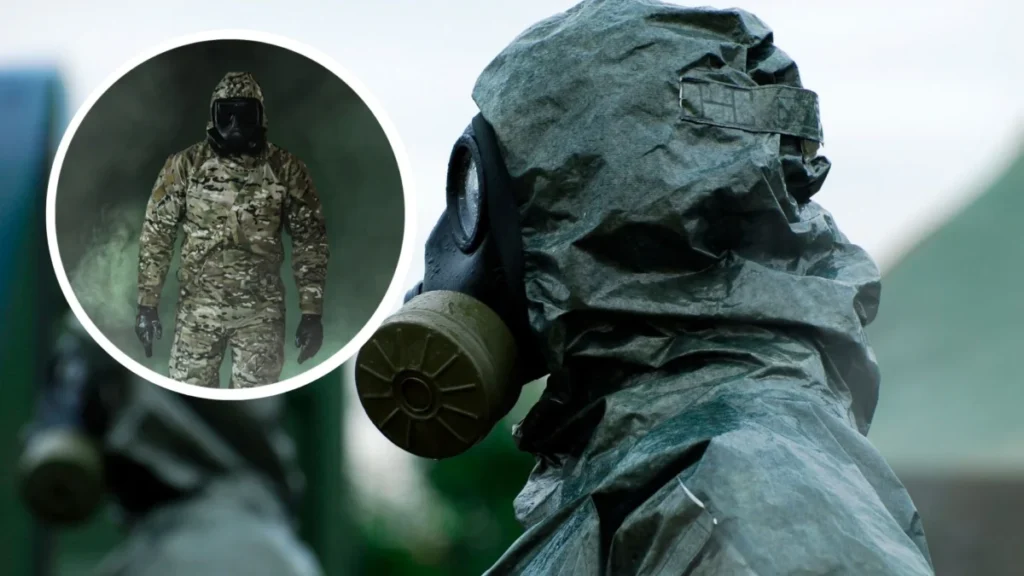
A Chicago-based advanced materials company, Numat Technologies, has been awarded an initial $23.67 million acquisition contract under the U.S. Department of Defense’s Accelerate the Procurement and Fielding of Innovative Technologies (APFIT) program. This significant award is poised to dramatically accelerate the deployment of next-generation chemical and biological (CB) protection suits for U.S. Special Operations Forces (SOF), a critical development in enhancing the safety and operational effectiveness of elite military personnel. The contract, executed in partnership with the Defense Threat Reduction Agency (DTRA), is specifically designed to expedite the transition of Numat’s groundbreaking technology from its developmental stages into immediate operational use, addressing a persistent challenge in defense acquisition.
The APFIT Program: Bridging the "Valley of Death" for Defense Innovation
The Accelerate the Procurement and Fielding of Innovative Technologies (APFIT) program represents a strategic initiative by the U.S. Department of Defense to streamline the acquisition process for promising defense technologies. Established to bridge what is often referred to as the "valley of death"—the funding gap between successful research and development and large-scale procurement—APFIT provides dedicated funding for mature innovations that are ready for immediate operational deployment. Since its inception, the program has proven instrumental in facilitating the rapid acquisition of advanced capabilities across various military branches, with total awards now exceeding an impressive $2 billion. This program underscores the Pentagon’s commitment to swiftly integrate cutting-edge solutions that enhance warfighter capabilities and maintain a technological edge against evolving global threats. For Numat Technologies, the APFIT award is not merely a contract but a validation of a decade-long commitment to developing and industrializing advanced materials for critical defense applications, ensuring that innovative solutions can transition from the laboratory bench to the battlefield with unprecedented speed.
Numat’s Metal-Organic Frameworks: A New Frontier in Protective Gear
At the heart of Numat Technologies’ innovative protective suits are Metal-Organic Frameworks (MOFs), a class of highly porous, crystalline materials that represent a significant leap forward in material science. Unlike conventional protective garments, which primarily function as passive barriers against hazardous substances, Numat’s MOF-enabled suits are engineered for active self-detoxification. These sophisticated materials are designed not just to block but to capture and chemically neutralize harmful chemical and biological agents upon contact. This active neutralization capability marks a paradigm shift from traditional impermeable suits, which often trap heat, restrict movement, and lead to physiological stress for the wearer.
The unique molecular structure of MOFs allows for an extraordinary surface area within a small volume, enabling them to adsorb and react with a wide range of toxins. Furthermore, Numat’s specific engineering of these MOFs enhances critical ergonomic factors, notably improving breathability and wearer mobility. This is a crucial advantage for Special Operations Forces, whose missions often demand sustained physical exertion in demanding environments. By reducing the physiological burden on the wearer, the MOF-enabled suits aim to provide enhanced protection without compromising comfort, agility, or operational effectiveness—factors that are paramount in high-stakes military operations. The ability of these materials to actively detoxify rather than merely impede offers a significant enhancement in sustained protection, mitigating the risks associated with prolonged exposure or breaches in traditional barrier-based systems.
Critical Capability for U.S. Special Operations Forces
The deployment of these advanced protective suits is particularly critical for U.S. Special Operations Forces (SOF). These elite units routinely operate in high-threat, unpredictable environments where the risk of encountering chemical and biological weapons or agents is a significant concern. Such threats can range from state-sponsored programs utilizing sophisticated agents to non-state actors employing improvised or repurposed biological toxins. Historical incidents, such as the sarin gas attack on the Tokyo subway in 1995 or the persistent threat of weaponized anthrax, underscore the continuing relevance and devastating potential of chemical and biological warfare.
For SOF personnel, who require maximum agility, stealth, and endurance, traditional heavy and cumbersome protective gear can severely impede mission success. The enhanced breathability and mobility offered by Numat’s MOF-enabled suits directly address these operational constraints, allowing operators to perform complex tasks, navigate challenging terrains, and sustain operations for longer durations with reduced risk of heat stress and fatigue. This technological advancement is not merely about personal protection; it is about maintaining operational tempo and ensuring that Special Operators can effectively respond to and mitigate chemical and biological threats without being hampered by their own protective equipment. The contract specifically targets these forces, recognizing their unique requirements and the high-stakes nature of their missions.
A Decade of Investment in American Innovation and Industrial Base
The contract award to Numat Technologies is a direct reflection of the company’s sustained, long-term investment in building a robust domestic industrial base for Metal-Organic Framework technology. As Numat CEO Ben Hernandez stated, “Over the past 10 years, Numat built the MOF industrial base for this moment, where we can activate an entire supply chain, from material design through high-volume system manufacturing, to protect the Warfighter.” This commitment to onshore manufacturing is a cornerstone of the U.S. government’s broader strategy to strengthen national security by ensuring resilient supply chains and reducing reliance on foreign sources for critical technologies.
Developing a domestic industrial base for a nascent and complex technology like MOFs presents significant challenges, requiring substantial investment in research, infrastructure, and skilled labor. Numat’s dedication has cultivated an entire ecosystem capable of designing, producing, and integrating MOFs into sophisticated, mission-critical systems. This encompasses everything from the fundamental material synthesis and characterization to the engineering of textile integration and large-scale manufacturing processes. The assurance that these finished, field-ready protective suits are "made completely in the United States" carries profound implications for supply chain security, quality control, and the creation of high-tech manufacturing jobs within the U.S. borders. It mitigates the risks associated with geopolitical instability, intellectual property theft, and potential disruptions in global supply chains, reinforcing the nation’s strategic autonomy in defense innovation.
A Collaborative Ecosystem for Advancing Defense Technology
Numat’s success and the subsequent APFIT award are not isolated achievements but rather the culmination of extensive collaboration with a broad spectrum of U.S. defense organizations. The company has forged long-standing partnerships with key entities such as the Defense Threat Reduction Agency (DTRA), which focuses on countering weapons of mass destruction; the Office of the Assistant Secretary of Defense for Industrial Base Policy, which aims to ensure the health and readiness of the defense industrial base; the Chemical, Biological, Radiological, and Nuclear Defense Program Executive Office (CBRN PEO), responsible for developing and acquiring CBRN defense capabilities; U.S. Special Operations Command (USSOCOM); the U.S. Army; and the U.S. Navy.
These multi-agency collaborations have been instrumental in advancing MOF technology through various stages, from initial laboratory research and proof-of-concept demonstrations to rigorous testing and the development of scalable manufacturing processes. Each partnership brought unique expertise and resources, enabling Numat to refine its technology to meet stringent military specifications and operational requirements. DTRA, for instance, likely played a crucial role in validating the efficacy of MOFs against specific chemical and biological threats, while USSOCOM provided direct input on the practical needs and constraints of Special Operations personnel. This comprehensive, integrated approach highlights a successful model for defense innovation, demonstrating how government agencies and private industry can synergistically drive the development and deployment of advanced capabilities critical for national security.
Broader Implications and the Future of MOF Technology
The significance of this APFIT award extends far beyond its immediate military application. It serves as a powerful validation of Metal-Organic Framework technology, signaling its maturity and readiness for widespread adoption across various sectors. As Numat Technologies itself has indicated, its MOF platform possesses substantial potential for applications in industrial, semiconductor, and energy sectors.
In the industrial realm, MOFs can revolutionize filtration systems, offering superior capabilities for gas separation, purification, and the removal of hazardous materials from air and water streams. Their exceptional selectivity and capacity make them ideal for capturing industrial pollutants, enhancing air quality, and improving the efficiency of chemical processes. In the semiconductor industry, MOFs could be critical for ultra-pure gas delivery and waste gas abatement, where even trace impurities can compromise sensitive manufacturing processes. For energy applications, MOFs hold immense promise in gas storage—particularly for hydrogen and natural gas—due to their high porosity and tunable pore sizes, which can significantly increase storage density and efficiency. They are also being explored for carbon capture technologies, offering a more energy-efficient alternative to conventional methods for mitigating greenhouse gas emissions.
The successful integration of MOFs into mission-critical defense systems, backed by a substantial government contract, is expected to accelerate research and investment in these civilian applications. It provides a strong proof-of-concept that can de-risk further commercialization efforts and attract additional capital for scaling up MOF production and deployment in diverse markets. This dual-use nature of advanced materials technology underscores the profound impact that defense innovation can have on broader technological progress and economic development, positioning MOFs as a transformative material for the 21st century.
Strengthening the Domestic Industrial Base and Accelerating Procurement
Ultimately, the APFIT award to Numat Technologies exemplifies the U.S. government’s overarching strategy to not only accelerate the procurement of innovative defense technologies but also to concurrently strengthen the domestic industrial base. In an increasingly complex global landscape, ensuring a resilient, secure, and self-sufficient supply chain for critical military capabilities is paramount. By investing in U.S.-based companies like Numat, the Department of Defense is fostering an ecosystem of innovation and manufacturing within the nation’s borders, reducing dependencies on foreign suppliers and mitigating potential vulnerabilities.
The program’s focus on rapidly transitioning emerging capabilities into operational service addresses a long-standing challenge in military acquisition—the often-protracted timeline from research to deployment. By streamlining this process, the APFIT program enables the U.S. military to quickly adapt to new threats and maintain its technological superiority. This particular contract ensures that U.S. Special Operations Forces will soon be equipped with state-of-the-art chemical and biological protection that is not only highly effective but also domestically manufactured, representing a strategic triumph for both warfighter safety and national industrial resilience. The move signifies a concerted effort to ensure that the U.S. remains at the forefront of defense technology, backed by a robust and innovative industrial foundation.






