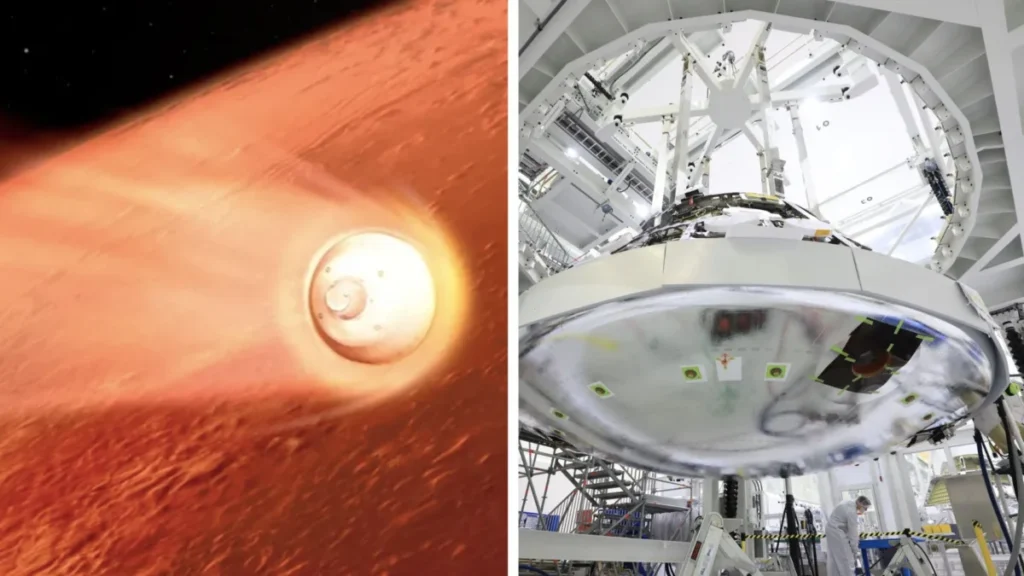
Researchers in the United States have achieved an unprecedented real-time examination of spacecraft heat shields under the most extreme heat conditions, providing critical insights into their degradation mechanisms. Utilizing advanced X-ray imaging techniques at the Advanced Light Source (ALS) combined with sophisticated AI-powered analysis, scientists have microscopically observed how these vital materials respond to temperatures mimicking atmospheric reentry. This groundbreaking work offers a transformative understanding of ablation, a process fundamental to protecting spacecraft and their crews during their fiery descent through planetary atmospheres.
The collaborative effort, spanning a decade between the ALS at Lawrence Berkeley National Laboratory and NASA, has been dedicated to studying superlight ablators—the specialized materials forming the protective layers of spacecraft heat shields. These materials are engineered to slowly burn away, or ablate, dissipating the intense heat generated by atmospheric friction. The recent advancements at the ALS have furnished an exceptionally detailed, dynamic picture of this previously obscured process, significantly refining the engineering models and design principles for heat shields used in critical space missions, including the ongoing Artemis lunar exploration program and future Mars missions.
Unveiling the Microscopic Dynamics of Ablation
"Directly observing how heat shield materials degrade during heating with this technique has been transformative for atmospheric entry research since it gives us unique insights and helps us visualize the internal structural changes that drive ablation as it occurs," stated Vishnu Oruganti, a former postdoctoral fellow at the University of Illinois Urbana-Champaign and now a researcher at NASA’s Johnson Space Center in Houston. Oruganti underscored the broad applicability of the technique, noting, "Nearly every major NASA ablative heat shield material has been studied with this technique at the Advanced Light Source, including those relevant to the Artemis and Mars entry missions."
The research team, comprising experts from the University of Illinois Urbana-Champaign and NASA, employed in situ X-ray micro-computed tomography (micro-CT) to delve into the structural evolution of superlight ablators. Micro-CT is a non-destructive imaging technique that uses X-rays to create cross-sectional images of an object, which can then be used to create virtual 3D models. The "in situ" aspect of this research is particularly critical, meaning observations were made while the materials were actively subjected to extreme conditions, rather than after the fact. This allowed scientists to witness the real-time, dynamic changes occurring within the materials.
In this study, researchers pushed the boundaries of the micro-CT technique further than ever before. Samples of two commercial ablators, SLA-220 and SLA-561V, were heated to an astonishing 1,652 degrees Fahrenheit (900 degrees Celsius). This temperature represents the upper threshold at which these materials begin their crucial decomposition process. Over multiple time points, the team captured micrometer-scale images, meticulously tracking the real-time multiphase chemical decomposition and changes in porosity. SLA-220 and SLA-561V, chosen for their distinct compositions and applications on different sections of spacecraft backshells, offered a compelling comparative study.
The Critical Role of Heat Shields in Space Exploration
The protection afforded by heat shields is paramount to the success and safety of any mission involving atmospheric entry, whether it’s a robotic probe landing on Mars or astronauts returning to Earth. During reentry, a spacecraft decelerates rapidly from orbital velocities—often exceeding 17,500 miles per hour (28,000 kilometers per hour)—as it plunges into a planet’s atmosphere. This immense friction generates extreme temperatures, sometimes reaching thousands of degrees Celsius, which could incinerate the spacecraft if not for its thermal protection system.
Ablative heat shields work by a process where the outer layer of the material heats up, chemically changes, and then vaporizes or chars, carrying away heat energy. This sacrificial process continuously exposes a cooler, inner layer, effectively insulating the spacecraft. The materials used, like superlight ablators, are designed to be lightweight yet incredibly robust, often incorporating complex matrices of polymers, resins, and fillers. Understanding the precise microscopic mechanisms of this ablation—how pores form, how the material’s structure changes, and how different components react to heat—is crucial for optimizing their performance.
Historically, the design of heat shields has relied heavily on computational models and post-test analysis. While invaluable, these methods have inherent limitations. Post-test analysis can only infer what happened during the heating process, often missing the dynamic, transient changes that occur at a microscopic level. Computational models, while sophisticated, require accurate input data and validation against real-world observations to ensure their fidelity. This is where the ALS research makes a monumental difference.
Distinct Degradation Pathways: Cork vs. Silicone Matrix
The AI-enhanced imaging capabilities developed for this research proved instrumental in revealing striking differences in how the two studied heat shield materials degrade. SLA-561V, for instance, incorporates cork—the same natural material found in wine bottle stoppers—as a structural filler. When subjected to intense heat, the organic components of the cork undergo chemical breakdown and volatilize, effectively disappearing. This process leaves behind open, empty pockets distributed throughout the material, which can affect its thermal performance and structural integrity.
In stark contrast, SLA-220, which lacks such organic fillers, relies on a rubber-like silicone matrix. When heated, this silicone matrix responds by forming a dense, branching network of interconnected channels. These structural transformations are critical because they dictate how heat is transferred through the material, how gases are vented, and ultimately, how effectively the heat shield protects the underlying spacecraft. The ability to visualize these distinct pathways in real-time provides unprecedented data for engineers to refine material compositions and structural designs.
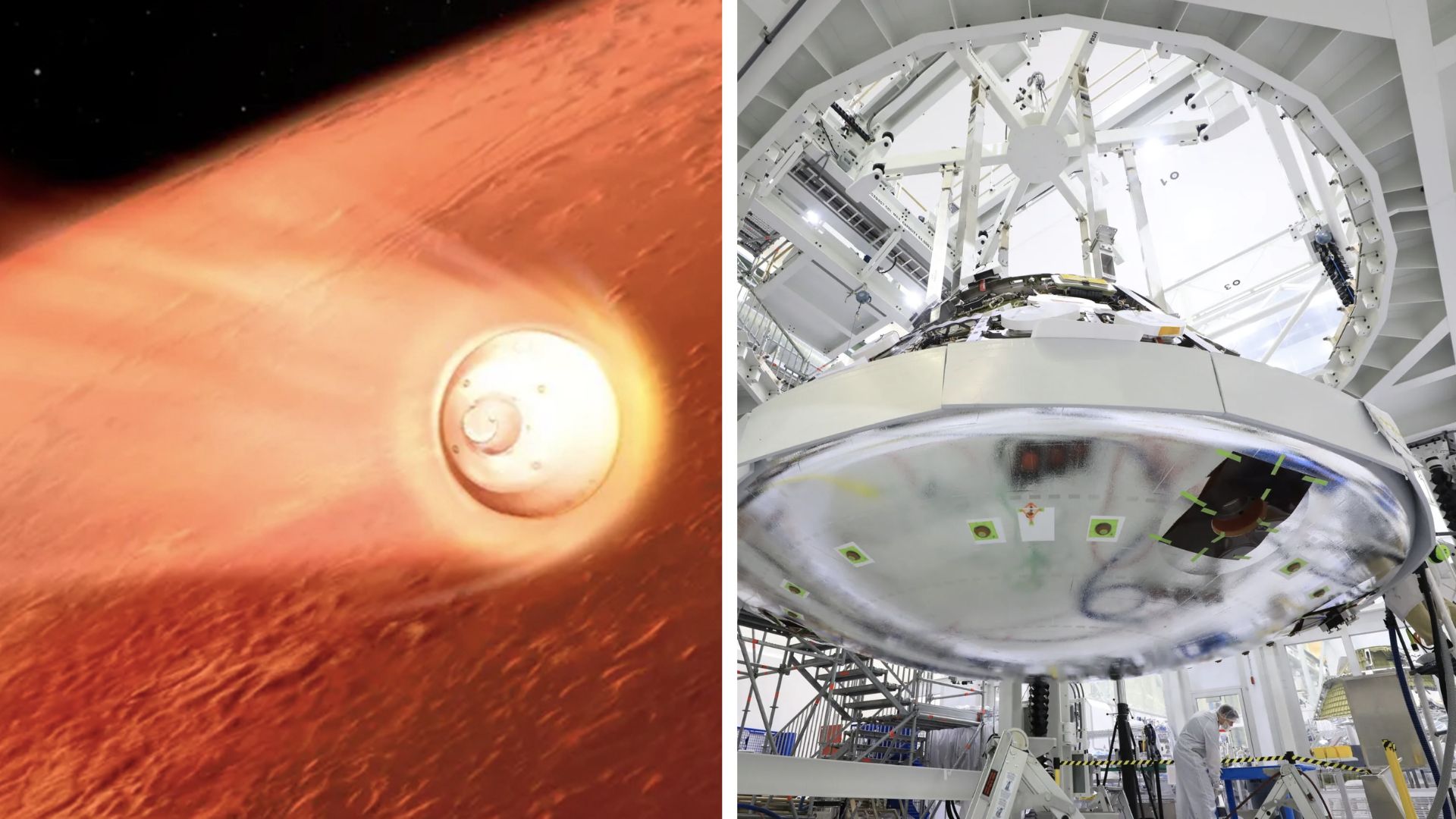
"We can perform 3D imaging of samples under different extreme conditions such as heat, cold, pressure, and tension, and we can watch the internal structure of materials evolve and give a deep look into internal structure in high detail as their properties change under these conditions," explained Liz Clark, an ALS scientist. She highlighted the perfect synergy between the research facility’s capabilities and NASA’s needs. "This collaboration has been a perfect application of this technique. After the first Artemis mission, where heat shields didn’t perform as NASA expected from computational methods, they used the ALS to examine materials from these shields to better understand how the internal structure evolves over time."
Implications for Future Missions and Enhanced Safety
The measurements derived from this micro-CT technique are invaluable for developing and validating predictive models of heat shield performance. By reducing the uncertainty in how these materials will behave under extreme conditions, engineers can design more reliable and safer thermal protection systems. This directly translates to improved mission planning, potentially reducing the margin of error and ultimately helping to ensure the safety and reliability of future crewed exploration missions.
The challenges encountered during the Artemis I mission, specifically regarding the performance of the Orion spacecraft’s heat shield upon reentry, underscored the critical need for this type of in-depth material science. While Artemis I successfully completed its uncrewed test flight around the Moon and back, post-flight analysis revealed unexpected ablation patterns on portions of the heat shield. This prompted NASA to intensify its research efforts into understanding the precise mechanisms of heat shield degradation, leading directly to the application of advanced techniques like those at the ALS.
The insights gained are not merely academic; they have direct, tangible applications. For instance, the findings could lead to the development of new, more resilient ablative materials, or optimized designs that better manage the thermal stresses of reentry. For missions like Artemis II, which will carry astronauts around the Moon, and subsequent crewed Mars missions, the reliability of the heat shield is a non-negotiable prerequisite for crew safety.
The Advanced Light Source: A Hub for Material Science Innovation
The Advanced Light Source at Berkeley Lab is a national user facility that provides scientists with extremely bright X-ray beams for a wide array of research, from materials science and biology to chemistry and environmental science. Its unique capabilities, including the ability to generate coherent X-rays that can penetrate dense materials and resolve features at the nanoscale, make it an ideal platform for studying dynamic processes like ablation. The ability to perform in situ experiments under simulated extreme environments is a hallmark of the ALS, allowing researchers to observe materials as they undergo changes in real-time, under conditions that are otherwise impossible to replicate or monitor with such precision.
The decade-long partnership between NASA and the ALS exemplifies how inter-agency and inter-institutional collaboration drives scientific and technological progress. NASA brings the complex engineering challenges and mission-critical requirements, while the ALS provides the cutting-edge tools and expertise in X-ray science. This synergy ensures that fundamental scientific discoveries are directly translated into practical solutions for some of the most demanding engineering problems in space exploration.
Looking Ahead: Optimizing Design and Exploring New Frontiers
The detailed understanding of how different ablator compositions—such as those containing cork versus a silicone matrix—respond to extreme heat provides a roadmap for material scientists. This knowledge can guide the development of hybrid materials that combine the best properties of existing ablators, or entirely new materials tailored for specific mission profiles. For example, a mission requiring a shallower reentry angle might necessitate a heat shield with different ablation characteristics compared to one designed for a steeper, faster descent.
Furthermore, the integration of AI-powered analysis with X-ray imaging represents a significant methodological leap. AI algorithms can process vast amounts of image data, identify subtle patterns, and quantify changes in material structure with a speed and accuracy that manual analysis cannot match. This accelerates the research cycle, allowing scientists to extract more meaningful insights from their experiments and iterate on designs more rapidly.
The long-term implications of this research extend beyond just heat shields. The techniques developed for real-time observation of material degradation under extreme conditions could be applied to a myriad of other engineering challenges, from designing high-temperature components for jet engines and nuclear reactors to developing more durable materials for industrial applications.
In conclusion, the ability of US scientists to peer inside spacecraft heat shields in real-time during extreme heat conditions marks a monumental stride in aerospace engineering and material science. By directly observing and quantifying the microscopic processes of ablation, researchers are not only validating and refining existing models but also paving the way for the creation of more robust, reliable, and ultimately safer thermal protection systems for future crewed and uncrewed missions to the Moon, Mars, and beyond. This breakthrough underscores the enduring power of scientific inquiry and interdisciplinary collaboration in pushing the boundaries of human exploration.