Published: September 11th, 2026
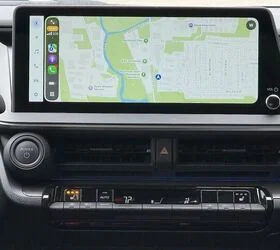
New car buyers are increasingly finding themselves locked in a battle of wills with their vehicle’s infotainment systems, a struggle that is now officially the single largest source of complaints for new vehicle owners. While advancements continue to refine nearly every other aspect of modern automotive engineering, the integrated digital interfaces are stagnating, becoming the weakest link in an otherwise improving automotive product. New data reveals that roughly a quarter of all grievances lodged by new car owners can be traced directly back to the multimedia stack, a stark indicator of widespread owner dissatisfaction.
This critical insight originates from J.D. Power, a renowned automotive research firm that conducts extensive surveys of tens of thousands of new car purchasers and lessees. The firm meticulously gathers data on owner-reported problems, aggregating this information to provide valuable feedback to the automotive manufacturers and component suppliers. The overarching message for consumers is clear: the once-heralded touchscreen has devolved into the primary source of frustration, and the companies responsible for these systems appear to have a vested financial interest in maintaining the status quo.
The Dominance of Digital Discontent
The headline figure is alarming: infotainment systems now account for a staggering 25 percent of all reported vehicle problems. This makes it the only category to have worsened year over year, a trend that has significant implications for consumer satisfaction and long-term brand loyalty. While the absolute number of multimedia-related issues per 100 vehicles (PP100) has remained relatively flat at 42.4 – a metric where a lower score signifies fewer problems – its disproportionate increase in the share of total complaints is a direct result of improvements in all other automotive domains. In essence, as climate controls, seating comfort, powertrain reliability, and driver assistance technologies have advanced, the infotainment screens have failed to keep pace, leading to an outsized portion of the blame falling squarely on their digital shoulders.
This distinction is crucial; while the systems haven’t necessarily become dramatically worse in isolation, their failure to evolve alongside the rest of the vehicle creates a perception of decline and amplifies owner frustration. When manufacturers achieve tangible progress in core functionalities, only to leave the software driving their infotainment systems stagnant, the screens inevitably become the focal point of discontent. Indeed, the five most frequently cited problems across the entire automotive spectrum are now exclusively related to multimedia systems.
The robustness of this data cannot be overstated. The most recent U.S. Multimedia Quality and Satisfaction Study, which forms the basis for these findings, draws upon the experiences of 78,514 new vehicle purchasers and lessees. These individuals were surveyed after 90 days of ownership, a critical timeframe that highlights the immediacy of the problems. These are not issues that manifest after years of wear and tear; owners are experiencing significant frustration within the first three months of their new vehicle’s life.
Connectivity Conundrums: The Smartphone’s Struggle
A deeper dive into the specific nature of owner complaints reveals a consistent and predictable pattern. The issues are not rooted in complex, esoteric technological failures. Instead, the most significant irritations stem from the fundamental and ubiquitous task of connecting a smartphone to a vehicle. J.D. Power’s long-term dependability studies consistently show that four of the top five industry-wide problems are directly linked to mobile phone integration.
For the third consecutive year, the most pervasive complaint across the entire automotive industry remains the unreliable connectivity of Android Auto and Apple CarPlay, registering a significant 8.9 PP100. This persistent issue is compounded by other common frustrations: built-in Bluetooth systems (5.5 PP100), wireless charging pads (5.1 PP100), and automaker-specific app connectivity (4.7 PP100). Collectively, these four issues alone account for 24.2 PP100, nearly half of all infotainment-related complaints. This highlights a fundamental irony: the most sophisticated digital displays in modern vehicles are faltering at the one task owners prioritize above all else – seamless and dependable communication with the smartphones they carry in their pockets.
It is not to say that all aspects of in-car technology are in decline. Notably, navigation-related problems have seen a reduction, with satisfaction scores for integrated navigation systems rising to an impressive 933 on a 1,000-point scale. However, this positive trend is overshadowed by the persistent troubles concentrated at the intersection of the vehicle and the smartphone.
The Premium Paradox: More Money, More Problems
A common assumption is that a higher price tag should correlate with a more refined and seamless user experience. However, J.D. Power’s data directly contradicts this notion. In the latest dependability study, premium vehicles experienced an 8 PP100 increase in problems, reaching a total of 217 PP100 – the highest figure since the study’s redesign. This has also widened the gap between premium and mass-market vehicles to 17 PP100. In fact, premium brands underperformed their mass-market counterparts in seven out of nine measured categories, with the most substantial disparity observed in features, controls, and displays.
This is particularly concerning given the aggressive push by luxury manufacturers to fill their cabins with expansive, edge-to-edge glass displays and passenger-side screens. This eagerness for digital immersion, it appears, is not translating into owner satisfaction. The overall long-term dependability of new vehicles has reached its highest recorded problem count since the 2022 redesign, averaging 204 PP100 across the industry, with technology performance being a primary driver of this decline.
Automakers frequently tout the potential for software to improve over time through over-the-air (OTA) updates, promising a continuously evolving and enhanced ownership experience. However, owner experiences often fall short of these lofty pronouncements. Among owners who received an OTA update, a mere 27 percent reported any improvement in their vehicle, while a significant 58 percent noticed no difference whatsoever. More troublingly, OTA updates have been associated with a nearly 14 percent increase in problems, contributing an additional 2.5 PP100 to the overall issue count.
Jason Norton, Director of Auto Benchmarking at J.D. Power, succinctly articulated the disconnect: "Software updates and new technologies should enhance the ownership experience over time, yet many vehicle owners cite ongoing mobile phone integration problems and little to no benefit after an update is performed." Norton’s perspective suggests that a greater emphasis on clear communication and comprehensive owner education could be part of the solution, though the underlying technical and design challenges remain.
The Allure of the Screen: Cost Over Convenience
The pervasive temptation to solve every design challenge with an additional display is now confronting hard evidence that owners are not necessarily seeking it. A separate J.D. Power technology study revealed that passenger-side display screens are among the most problematic technologies, generating 21.3 problems per 100 vehicles. Furthermore, utilization rates are surprisingly low: 35 percent of owners with a passenger screen reported never having touched it, while only 6 percent used it on every drive.
Beyond mere inconvenience, the proliferation of touch-sensitive screens introduces a significant safety dimension. Among owners who reported being distracted while driving, a concerning 46 percent attributed their distraction directly to the infotainment system or touchscreen. The very interfaces designed to simplify and enhance the driving experience are, by owners’ own accounts, actively diverting their attention from the road.
Earlier research by J.D. Power, as noted by Lisa Boor, Director of Customer Success, OEM Solutions, emphasized that "the goal isn’t simply fewer buttons, but also intuitive design." Data from that study indicated that a hybrid approach, combining touchscreen functionality with physical buttons, significantly enhances usability. The core issue, therefore, is not the mere existence of screens, but rather their pervasive replacement of established, functional controls that previously operated effectively as physical knobs and switches.
A compelling structural reason underlies the continued proliferation of screens, even in the face of mounting complaints. Screen-based controls are demonstrably cheaper to manufacture than their mechanical counterparts. This cost advantage remains a potent incentive for automakers, irrespective of survey data indicating owner dissatisfaction. As long as a large digital display incurs lower installation costs than a bank of physical buttons, manufacturers possess a clear financial rationale to persist with this design philosophy, regardless of the quality data it generates.
Looking Ahead: Realigning Incentives and Expectations
The broader technological landscape within the automotive industry reinforces this observation. Even as overall new-vehicle initial quality has improved, with reported problems decreasing from 192 to 175 PP100, infotainment stands as the solitary category to move in the opposite direction. When nine out of ten measured categories show improvement and only one deteriorates, this outlier is not attributable to random chance. Instead, it signals a divergence between the industry’s financial incentives and the actual preferences and experiences of its owners.
Implications for Consumers and Manufacturers
The persistent issues with infotainment systems carry significant implications for both consumers and manufacturers. For buyers, it underscores the importance of thorough pre-purchase evaluation. The infotainment system should be treated not as an afterthought but as a core component of the test drive.
Recommendations for Buyers:
- Prioritize Connectivity Testing: Before finalizing a purchase, pair your own smartphone to the vehicle and thoroughly test both Apple CarPlay and Android Auto throughout a representative drive. Connectivity issues are the most common failure point, so ensuring seamless integration is paramount.
- Evaluate Ergonomics and Usability: Actively try to adjust climate controls and answer calls while the vehicle is stationary. Assess whether the system is intuitive and responsive, or if it presents an unnecessary hurdle.
- Approach Digital Cockpits with Caution: Be particularly wary of cabins that have entirely replaced physical controls with glass interfaces. This trend is most pronounced in premium vehicles, which currently exhibit the widest disparities in features, controls, and display satisfaction.
- Manage Expectations for OTA Updates: Do not assume that over-the-air updates will retroactively resolve any infotainment frustrations. The majority of owners report no tangible benefit from these updates, and some even experience an increase in problems.
- Value Physical Controls: If a vehicle still offers tactile knobs and buttons for frequently used functions, recognize this as a valuable feature that enhances usability and reduces reliance on potentially distracting touchscreen menus, rather than a sign of cost-cutting.
For automotive manufacturers, the data presents a critical challenge. The current trajectory suggests a disconnect between design decisions driven by cost savings and the fundamental needs and expectations of their customers. A recalibration of priorities, emphasizing user experience and reliability over purely aesthetic or cost-driven digital interfaces, is essential. Failure to address these persistent infotainment woes could lead to declining customer satisfaction, increased warranty claims, and long-term damage to brand reputation. The industry faces a clear imperative: to bridge the gap between the promise of advanced technology and the reality of a frustrating user experience.