The scientific community’s understanding of high-temperature superconductors has been fundamentally shaken by a new study from the University of Warwick, which reveals that these materials possess a far more complex internal structure than previously assumed. For nearly four decades, physicists and materials scientists have operated under the belief that cuprate superconductors—materials capable of conducting electricity with zero resistance at relatively high temperatures—maintain a uniform crystal lattice throughout their interior. However, using state-of-the-art 3D imaging technology, researchers have discovered a "patchwork" of varying atomic arrangements and unexpectedly wide transition zones that could redefine the search for room-temperature superconductivity.
The research, led by Professor Mark Senn of the University of Warwick’s Department of Chemistry and published in the prestigious journal Physical Review Letters, suggests that the very boundaries between these atomic patches may be actively hindering the performance of the materials. This revelation not only challenges the theoretical models that have guided the field since the mid-1980s but also provides a potential roadmap for engineering more efficient superconducting materials for use in quantum computers, medical imaging, and next-generation energy grids.
The Evolution of High-Temperature Superconductivity
To understand the weight of this discovery, one must look back at the history of superconductivity. Discovered in 1911 by Heike Kamerlingh Onnes, superconductivity originally required cooling materials to temperatures near absolute zero (0 Kelvin or -273.15°C) using expensive liquid helium. For decades, the phenomenon was a curiosity of extreme cold, governed by the BCS theory (named for Bardeen, Cooper, and Schrieffer), which explained how electrons pair up to move through a lattice without friction.
The landscape changed dramatically in 1986 when Georg Bednorz and K. Alex Müller discovered superconductivity in a lanthanum-based cuprate material at 35 Kelvin. This breakthrough, which earned them the Nobel Prize in Physics just a year later, ushered in the era of "high-temperature" superconductors (HTS). Subsequent discoveries pushed these temperatures above the boiling point of liquid nitrogen (77 Kelvin), making the technology significantly more accessible and commercially viable.
Despite this progress, the exact mechanism that allows cuprates to exhibit superconductivity at these "high" temperatures has remained one of the greatest unsolved mysteries in physics. For 40 years, the consensus was that while these materials were chemically complex, their internal crystal structure was essentially a homogeneous stage upon which the drama of electron pairing occurred. The Warwick study effectively dismantles this stage, showing it to be a fractured and textured landscape.
Advanced 3D Imaging: The ESRF and the Power of Synchrotron Radiation
The breakthrough was made possible by the European Synchrotron Radiation Facility (ESRF) in Grenoble, France. The ESRF recently underwent a 150 million euro upgrade, transforming it into the Extremely Brilliant Source (EBS), the world’s first fourth-generation high-energy synchrotron. This facility produces X-ray beams that are 100 times brighter than previous sources and 10 trillion times brighter than a standard hospital X-ray.
The Warwick team utilized a technique known as scanning 3D X-ray diffraction. This method functions similarly to a medical CT scan but operates at the atomic scale. By rotating the crystal sample within the intense synchrotron beam and capturing the resulting diffraction patterns from thousands of angles, the researchers were able to reconstruct a three-dimensional map of the atomic positions deep within the bulk of the material.
"Previously, we were limited to looking at the surface of these materials or taking average measurements of the entire bulk," explained a researcher involved in the study. "The ESRF upgrade allowed us to peer inside the ‘black box’ of the crystal and see the local variations that were previously invisible."
Mapping the Atomic Patchwork: Beyond the Unit Cell
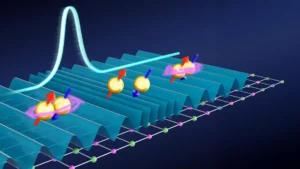
The primary subject of the investigation was a class of copper-oxide materials known as cuprates. In these crystals, atoms are typically expected to follow a repetitive, uniform grid. However, the 3D imaging revealed that the crystal is actually composed of different "domains"—regions where the atoms are arranged in slightly different patterns.
While the existence of domains in some materials is well-known, the Warwick study uncovered two startling features:
- Structural Heterogeneity: The material was not a single crystal in the structural sense, but a complex mosaic of two distinct atomic arrangements interleaved with one another.
- Abnormally Wide Boundaries: The most shocking finding involved the transition zones between these different regions. In standard crystallographic theory, the boundary between two domains is expected to be sharp, perhaps only one or two atoms wide. The Warwick team found that these boundaries were hundreds of times wider than predicted.
These wide transition zones are not merely passive lines on a map; they are substantial enough to possess their own physical properties. The researchers hypothesize that these regions act as "roadblocks" or interference zones for the electrons trying to move through the material, potentially explaining why some cuprates do not reach the theoretical maximums of conductivity that models predict.
Challenging the Theoretical Foundations of Cuprates
Professor Mark Senn emphasized that the discovery necessitates a major re-evaluation of existing physics. "For forty years, the working assumption has been that these materials are the same all the way through, and nearly all the theory is built on that picture," Senn stated. "We’ve shown it doesn’t hold. The crystal is fundamentally patchworked and textured, with unusually wide boundary regions that likely work against superconductivity rather than just sitting alongside it."
This "texture" implies that previous bulk measurements—experiments that looked at the material as a single, unified object—may have been misinterpreting the data. If the material is actually a collection of different structures with massive boundaries between them, then the electrical and magnetic signals recorded over the last four decades were actually an average of several different behaviors.
This discovery could explain the "performance gap" often seen in HTS research, where chemically identical samples produced in different labs exhibit slightly different superconducting properties. The difference likely lies in the hidden internal patchwork created during the crystal growth process.
Chronology of Superconductivity Breakthroughs
- 1911: Heike Kamerlingh Onnes discovers superconductivity in mercury at 4.2 K.
- 1957: The BCS Theory explains low-temperature superconductivity via Cooper pairs.
- 1986: Bednorz and Müller discover cuprate superconductors (La-Ba-Cu-O) at 35 K.
- 1987: Discovery of YBCO (Yttrium Barium Copper Oxide), the first material to superconduct above the liquid nitrogen barrier (77 K).
- 1990s-2010s: Discovery of iron-based superconductors and hydrogen-rich compounds under extreme pressure.
- 2020-2023: Theoretical and experimental debates continue over "room-temperature" claims in various materials.
- 2024: Warwick University uses ESRF 3D imaging to reveal the internal structural patchwork of cuprates, overturning the 40-year assumption of uniformity.
Impact on Future Technological Innovations
The implications of this discovery extend far beyond the laboratory. Superconductors are the backbone of several transformative technologies, and understanding their internal flaws is the first step toward perfecting them.
Quantum Computing
Superconducting qubits are a leading candidate for building scalable quantum computers. However, "noise" and decoherence remain significant hurdles. If the structural patchwork discovered by the Warwick team contributes to electronic noise, then mastering the crystal uniformity could lead to more stable qubits and more powerful quantum processors.
Energy Infrastructure
Modern power grids lose roughly 5% to 10% of their electricity to resistance during transmission. Superconducting cables could eliminate these losses entirely. By understanding how the "patchwork" boundaries interfere with current flow, engineers can develop better manufacturing processes to create "seamless" superconducting wires, making long-distance, zero-loss energy transport economically viable.
Medical Imaging (MRI)
MRI machines rely on powerful superconducting magnets cooled by liquid helium. Improved high-temperature superconductors would allow for smaller, cheaper, and more portable MRI devices that do not require complex cryogenic cooling systems, potentially bringing advanced diagnostics to remote or developing regions.
Fusion Energy
Next-generation fusion reactors, like those being developed by various private ventures and the international ITER project, require incredibly strong magnetic fields to confine plasma. High-temperature superconductors are essential for these magnets. The Warwick discovery suggests that by controlling the internal texture of these materials, scientists could create magnets that are both more powerful and more durable under the extreme conditions of a fusion reactor.
A New Era for Material Science Research
The study also highlights a shift in how materials are studied. The era of "average" measurements is giving way to an era of "local" precision. As imaging technology like the ESRF’s 3D X-ray diffraction becomes more widely used, scientists are likely to find that many materials once thought to be simple are, in fact, highly complex.
The Warwick team suspects that this hidden structural pattern is not unique to the cuprates they studied but is likely widespread across other classes of superconductors, including those that function under high pressure.
"This discovery gives us a new set of eyes," Professor Senn noted. "It means we can now look at how to ‘fix’ these materials at the atomic level. If we can learn to control these boundaries or eliminate the patchwork, we might finally unlock the full potential of high-temperature superconductors."
The research marks a turning point where the focus shifts from simply finding new chemical formulas for superconductors to refining the physical architecture of existing ones. By acknowledging the complexity of the "patchwork" crystal, the scientific community may finally find the key to the long-sought goal: a material that can conduct electricity without resistance at room temperature and pressure, a breakthrough that would trigger a new industrial revolution.