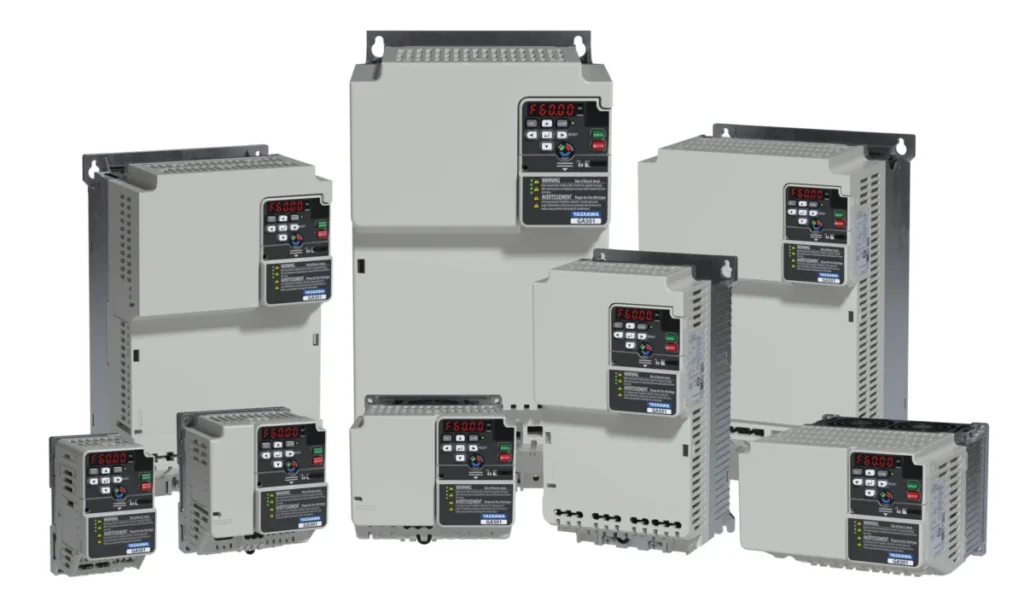
Yaskawa America, Inc.’s Drives & Motion Division has announced the immediate availability of its new GA501 industrial AC microdrive, a significant addition to its industrial AC drive lineup, now featuring embedded dual-port Ethernet capabilities. This strategic enhancement aims to streamline industrial automation applications by offering robust connectivity, simplifying system design, and reducing the need for auxiliary hardware. The GA501 is engineered to meet the evolving demands of modern manufacturing environments, emphasizing seamless integration, operational efficiency, and enhanced diagnostic capabilities.
A Leap Forward in Industrial Connectivity
The introduction of embedded dual-port Ethernet into the GA501 AC microdrive represents a pivotal advancement in industrial drive technology. Historically, integrating AC drives into complex automation systems often required external communication modules, adding to hardware costs, installation complexity, and potential points of failure. Yaskawa’s decision to embed this functionality directly addresses these challenges, aligning with the broader industry trend towards integrated, smart components that facilitate the Industrial Internet of Things (IIoT) and Industry 4.0 initiatives.
The GA501’s inherent support for multiple major industrial Ethernet protocols within a single unit underscores its versatility and forward-thinking design. This comprehensive protocol support includes EtherNet/IP, PROFINET, Modbus TCP/IP, EtherCAT, BACnet/IP, and MECHATROLINK-4. Such broad compatibility ensures that the drive can be seamlessly integrated into a wide array of existing and future automation architectures, irrespective of the dominant control system or network infrastructure deployed by a facility. The inclusion of dual-port Ethernet connections further enhances network flexibility, allowing for daisy-chaining of devices and reducing wiring complexity, which is crucial in dense industrial setups where space and installation time are at a premium.
The Evolution of Industrial Drives and Communication Protocols
The journey of industrial automation has been marked by a continuous quest for greater control, efficiency, and data accessibility. Early industrial drives were largely analog, offering basic speed and torque control. The advent of digital technology brought more precise control and programmability. However, the true revolution began with the integration of communication capabilities, first through serial protocols and then through various fieldbuses like Modbus RTU and DeviceNet. These fieldbuses allowed for networked control of devices, improving coordination and data exchange.
The late 20th and early 21st centuries saw the emergence of industrial Ethernet protocols, which leveraged the speed, bandwidth, and ubiquity of standard Ethernet technology while adapting it for the deterministic and robust requirements of industrial environments. Protocols like EtherNet/IP, PROFINET, and EtherCAT quickly gained traction due to their ability to handle large volumes of data at high speeds, critical for real-time control and sophisticated diagnostic applications. The shift from traditional fieldbuses to industrial Ethernet has been a defining trend, driven by the increasing complexity of manufacturing processes, the need for enterprise-wide data integration, and the rise of IIoT applications.

Yaskawa, a global leader in motion control, robotics, and drives, has consistently been at the forefront of these technological shifts. Its history dates back to 1915, with a foundational commitment to electric motor technology. Over the decades, Yaskawa has pioneered numerous innovations in AC drive technology, contributing significantly to advancements in energy efficiency, precision control, and reliability. The introduction of the GA501 with embedded Ethernet is a natural progression of this legacy, reflecting Yaskawa’s understanding of contemporary industrial demands and its vision for future automation. This product launch can be seen as a strategic response to the market’s increasing demand for ‘smarter’ components that can communicate effortlessly within complex digital ecosystems.
Technical Prowess and Installation Simplicity
Beyond its advanced connectivity, the GA501 is engineered with several features designed to enhance its utility and ease of deployment. The standard DIN rail mounting for models up to 7.5 HP is a practical consideration for system integrators, allowing for quick and secure installation within control cabinets, optimizing space utilization. Furthermore, the incorporation of spring-tension I/O terminals significantly reduces installation time compared to traditional screw terminals. This seemingly minor detail can translate into substantial labor cost savings, particularly in projects involving a large number of drives or frequent modifications. Such design choices underscore Yaskawa’s commitment to not only delivering high-performance technology but also optimizing the total cost of ownership for its customers.
The GA501’s flexibility is further highlighted by its ability to integrate seamlessly into IIoT systems. Users can select from six on-board network protocols via a simple DIP switch, eliminating the need for complex software reconfigurations or the installation of multiple communication cards. This "plug-and-play" capability simplifies commissioning and maintenance, allowing for quick adaptation to different network environments without extensive re-engineering. The drive is available in IP20/Open Type enclosures, making it suitable for integration into existing control panels, and supports motor operation up to 40 HP, covering a broad range of industrial applications from conveyors and pumps to fans and machine tools.
Empowering IIoT and Smart Manufacturing
The integration of embedded Ethernet within the GA501 is a critical enabler for the Industrial Internet of Things (IIoT). In an IIoT paradigm, every device, from sensors to actuators and drives, is a potential data point. The GA501, with its robust communication capabilities, transforms from a mere motor controller into an intelligent node within a larger connected system. This connectivity allows the drive to transmit operational data such as motor speed, current, voltage, temperature, and fault codes directly to higher-level control systems, manufacturing execution systems (MES), or cloud-based analytics platforms.
This direct data access unlocks significant opportunities for optimizing industrial processes. For instance, real-time monitoring of drive performance can enable predictive maintenance strategies, where potential equipment failures are identified and addressed before they lead to costly downtime. By analyzing trends in motor current or temperature, maintenance teams can schedule interventions proactively, minimizing unexpected interruptions and extending the lifespan of machinery. Moreover, performance data from multiple GA501 drives across a production line can be aggregated and analyzed to identify bottlenecks, optimize energy consumption, and improve overall equipment effectiveness (OEE). This level of data-driven insight is fundamental to achieving the promise of Industry 4.0 – highly efficient, agile, and self-optimizing factories.
A spokesperson for Yaskawa America, Inc.’s Drives & Motion Division, while not quoted directly in the initial announcement, would likely emphasize the GA501’s role in democratizing advanced connectivity. "Our goal with the GA501 was to strip away the complexity traditionally associated with industrial networking," an inferred statement might suggest. "By embedding multi-protocol Ethernet directly into the microdrive, we empower manufacturers of all sizes to leverage the benefits of IIoT and smart manufacturing without significant additional investment in communication gateways or complex system integrations. This drive is designed to be a foundational component for the next generation of connected factories, offering both robust performance and unparalleled ease of integration."

Enhanced User Experience and Reliability
Yaskawa has also prioritized user experience and long-term reliability in the GA501’s design. A standout feature is the ability to program the drive without applying power, utilizing the intuitive DriveWizard Mobile application. This capability significantly streamlines the commissioning process, allowing technicians to configure parameters offline, reducing the time spent on the factory floor and minimizing potential safety risks associated with powered equipment. Once powered, the GA501 provides clear visual feedback through an LED status ring and network status LEDs, offering immediate and unambiguous indications of the drive’s operational state and network health. This visual clarity aids in rapid troubleshooting and ensures operational transparency.
Reliability is a cornerstone of Yaskawa’s engineering philosophy, and the GA501 is built to withstand the rigorous demands of industrial environments. The robust construction and thoughtful component selection are intended to ensure consistent performance over extended operational periods, minimizing maintenance requirements and maximizing uptime. The combination of easy setup, clear diagnostics, and inherent reliability makes the GA501 an attractive solution for critical applications where uninterrupted operation is paramount.
Broader Impact and Market Implications
The launch of the GA501 with embedded Ethernet is poised to have several positive implications across the industrial automation landscape. For Original Equipment Manufacturers (OEMs), it simplifies their machine designs, potentially reducing bill of material costs by eliminating external communication cards and associated wiring. This also allows them to offer more advanced, connected machines to their customers without adding significant complexity to their own manufacturing processes. For System Integrators, the multi-protocol support and dual-port capabilities mean greater flexibility in deploying solutions across diverse customer sites and existing infrastructure, streamlining integration efforts. For End Users (manufacturers), the benefits are multifaceted: reduced installation time, simplified maintenance, enhanced diagnostics, and the ability to seamlessly integrate drives into their IIoT strategies, leading to improved operational efficiency, energy savings, and higher productivity.
The industrial AC drives market is projected to continue its growth trajectory, driven by increasing automation adoption, the push for energy efficiency, and the expansion of smart factory initiatives. Products like the GA501 are critical enablers in this evolution, providing the foundational connectivity required for intelligent control and data-driven decision-making. Yaskawa’s strategic move to embed advanced Ethernet capabilities into its microdrive lineup reinforces its position as an innovator and a key player in shaping the future of industrial automation. As industries worldwide continue their digital transformation journeys, the demand for compact, highly connected, and easy-to-integrate components like the GA501 will only intensify, making this a timely and impactful product release.
The GA501’s design reflects a deep understanding of current industry challenges and future trends. By providing a compact, versatile, and highly connected solution, Yaskawa is not just offering a new product but enabling a more efficient, intelligent, and interconnected industrial ecosystem. The drive’s ability to act as a smart node within IIoT architectures positions it as a vital component for companies striving to achieve the full potential of Industry 4.0, from optimized production lines to predictive maintenance and beyond. This release solidifies Yaskawa’s commitment to advancing industrial technology and supporting its customers in navigating the complexities of modern manufacturing.






