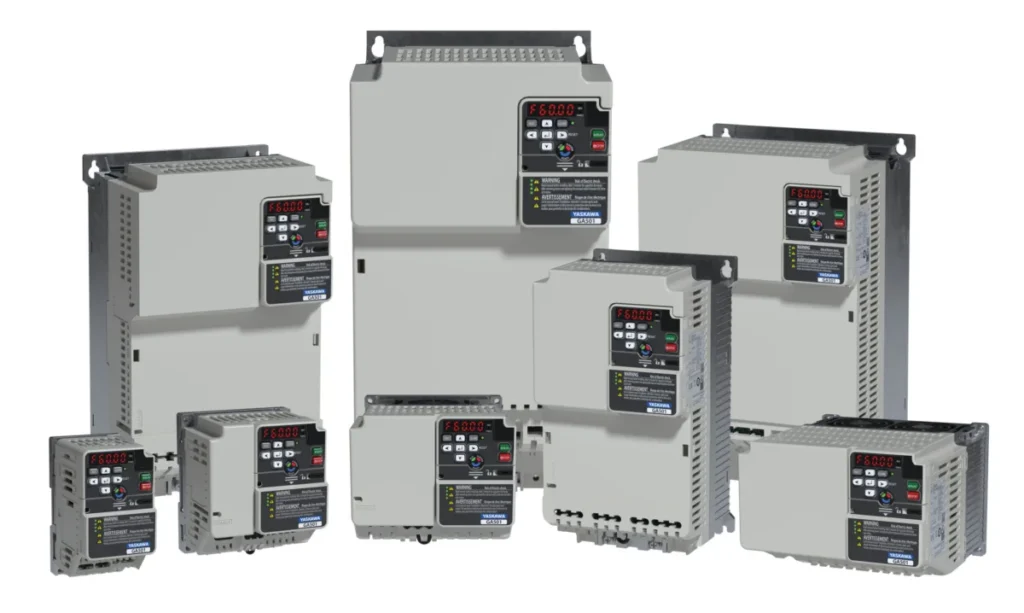
The Drives & Motion Division of Yaskawa America, Inc. has officially announced the launch of its GA501 industrial AC microdrive, a significant new addition to its extensive industrial AC drive portfolio, now featuring embedded dual-port Ethernet connectivity. This strategic introduction underscores Yaskawa’s commitment to advancing industrial automation by providing more integrated, efficient, and future-ready solutions for a diverse range of applications. The GA501, which is immediately available, is engineered to streamline industrial processes by reducing the need for auxiliary hardware, accelerating installation timelines, and simplifying overall system designs.
The advent of Industry 4.0 and the Industrial Internet of Things (IIoT) has profoundly reshaped the landscape of industrial automation, placing a premium on seamless connectivity, real-time data exchange, and integrated control systems. Traditional industrial setups often relied on complex networks of discrete components, requiring significant effort in wiring, configuration, and troubleshooting. Yaskawa’s GA501 directly addresses these challenges by embedding advanced Ethernet capabilities directly into the drive, a move that is poised to set new standards for microdrive performance and integration in the market. This integration is particularly crucial in an era where every component in a manufacturing line is expected to contribute to a larger, intelligent ecosystem.
The Evolution of Industrial Connectivity and Yaskawa’s Strategic Move
For decades, Yaskawa has stood at the forefront of motion control and drive technology, consistently delivering innovations that enhance productivity, efficiency, and reliability across various industries. The company’s heritage traces back to 1915, and it has since grown into a global leader in mechatronics, robotics, and industrial drives. Its contributions have been pivotal in shaping the modern industrial landscape, from pioneering AC servo drives to developing sophisticated robotics systems. The introduction of the GA501 with embedded Ethernet is a natural progression of this legacy, aligning with the industry’s inexorable shift towards hyper-connected and data-driven operations.
Historically, industrial communication involved various fieldbus protocols such as Modbus RTU, PROFIBUS, and DeviceNet, which, while robust for their time, often presented limitations in terms of speed, data capacity, and network architecture complexity. The transition to industrial Ethernet protocols has been a game-changer, offering higher bandwidth, greater flexibility, and the ability to leverage standard IT infrastructure for industrial applications. However, many drives still require external communication modules or gateways, adding to the bill of materials, panel space requirements, and commissioning effort. Yaskawa’s decision to embed dual-port Ethernet directly into the GA501 is a direct response to this need for simplification and integration, signaling a strategic intent to lead in the connected drive segment. This move reflects a broader industry trend where intelligence is increasingly distributed to the edge, making devices like microdrives integral components of smarter, more responsive systems.
Unpacking the GA501’s Core Innovation: Embedded Dual-Port Ethernet
The most prominent feature of the GA501 is its embedded dual-port Ethernet connectivity. This is not merely an incremental upgrade but a fundamental redesign aimed at enhancing operational efficiency and system versatility. The dual-port capability allows for daisy-chaining multiple drives within a network segment without the need for external Ethernet switches. This significantly reduces wiring complexity, material costs associated with additional networking hardware, and the physical footprint required in control cabinets. For system integrators and machine builders, this translates into faster machine assembly, simplified network topology, and reduced potential points of failure.
Beyond the physical simplification, the embedded nature of the Ethernet ports means that the drive is inherently ready for advanced network functions from the moment it is installed. This plug-and-play readiness eliminates the configuration hurdles often associated with external communication modules, allowing for quicker commissioning and deployment of industrial systems. The dual-port design also enhances network robustness by providing redundancy options or facilitating simpler linear topologies common in many industrial applications. In essence, the GA501 transforms the microdrive from a standalone motor controller into a fully integrated, intelligent node within a larger industrial network.
Versatile Protocol Support: Bridging Industrial Ecosystems

A critical differentiator for the GA501 is its comprehensive support for a wide array of major industrial Ethernet protocols, all within a single AC drive. Users can select from six on-board network protocols via a simple DIP switch, providing unparalleled flexibility in integrating the drive into existing or new industrial infrastructures. This multi-protocol capability is vital in a fragmented industrial landscape where different industries and regions often standardize on specific communication protocols. The supported protocols include:
- EtherNet/IP: Widely adopted in North America, EtherNet/IP (Ethernet Industrial Protocol) is an open industrial network standard developed by Rockwell Automation and managed by ODVA. It leverages standard Ethernet and TCP/IP, extending the common industrial protocol (CIP) to enable real-time control and information exchange between industrial devices. Its popularity ensures broad compatibility with existing control systems, particularly in discrete manufacturing.
- PROFINET: Predominant in Europe, particularly with Siemens PLCs, PROFINET is an industrial Ethernet standard for data communication in automation technology, providing real-time data exchange. Developed by PROFIBUS and PROFINET International (PI), it is known for its speed, deterministic behavior, and robustness, making it suitable for demanding factory automation applications.
- Modbus TCP/IP: An evolution of the classic Modbus serial protocol, Modbus TCP/IP is a simple, open, and widely supported protocol that uses TCP/IP over Ethernet. Its ubiquity and ease of implementation make it a popular choice for connecting a vast range of industrial devices, from PLCs to instrumentation, across various industries. The GA501’s support ensures compatibility with a broad legacy of industrial equipment.
- EtherCAT: Renowned for its exceptional speed and determinism, EtherCAT (Ethernet for Control Automation Technology) is an open, high-performance Ethernet-based fieldbus system. It processes data on the fly, allowing for very short cycle times and high synchronization accuracy, making it ideal for applications requiring precise motion control and synchronization, such as robotics and packaging machinery.
- BACnet/IP: Specifically designed for building automation and control networks, BACnet/IP (Building Automation and Control Network over IP) is an industry standard protocol (ASHRAE, ISO) used for communication between building automation devices. Its inclusion in the GA501 indicates Yaskawa’s foresight in addressing the growing demand for integration between industrial processes and building management systems, especially in smart factories or large industrial complexes where HVAC and energy management are critical.
- MECHATROLINK-4: Yaskawa’s own high-speed, real-time industrial Ethernet communication protocol, MECHATROLINK-4, offers advanced synchronization and control capabilities. Its inclusion ensures seamless integration with other Yaskawa products, such as servo drives and motion controllers, enabling high-performance, multi-axis synchronization and complex motion profiles critical for advanced manufacturing processes.
This extensive multi-protocol support eliminates the need for external gateways or protocol converters, simplifying inventory management, reducing engineering effort, and ensuring the GA501 can be deployed effectively in almost any industrial setting, regardless of the preferred control architecture. The ability to select the protocol via a DIP switch further streamlines setup, making the drive highly adaptable to various customer requirements and existing infrastructures.
Streamlined Installation and Design Efficiency
Beyond its advanced connectivity, the GA501 is engineered with practical considerations for ease of installation and maintenance. Standard DIN rail mounting for models up to 7.5 HP simplifies mechanical installation, allowing for quick and secure placement within control cabinets. DIN rail mounting is a ubiquitous standard in industrial control, enabling modular and organized panel layouts.
Furthermore, the integration of spring-tension I/O terminals marks a significant improvement over traditional screw terminals. Spring-tension terminals provide reliable, vibration-proof connections without the need for special tools or constant re-tightening. This not only speeds up the wiring process but also enhances the long-term reliability of connections in harsh industrial environments, where vibrations are common. The combination of DIN rail mounting and spring-tension terminals directly contributes to reduced installation time and simplified system design, translating into tangible cost savings and improved operational uptime for end-users.
A standout feature for ease of use is the ability to program the GA501 without applied power, utilizing Yaskawa’s DriveWizard Mobile application. This capability allows for pre-configuration of drives even before they are powered up on the factory floor, significantly reducing commissioning time. Engineers can configure parameters, set up network settings, and perform diagnostics using a mobile device, enhancing flexibility and efficiency during the setup phase. Once powered, the drive’s LED status ring and network status LEDs provide clear, immediate visual feedback on the drive’s operational status and network health, aiding in quick diagnostics and ensuring smooth operation. This focus on user experience highlights Yaskawa’s commitment to not only high-performance hardware but also intelligent software and user-friendly interfaces.
Robustness and Performance for Demanding Applications
The GA501 is built for reliable, long-term operation in challenging industrial environments. It is available with an IP20/Open Type enclosure rating. An IP20 rating signifies protection against solid objects larger than 12.5mm, but no protection against water ingress. An "Open Type" enclosure implies it is intended for installation within a protected enclosure, such as a control cabinet, which then provides the necessary environmental protection. This design choice allows for compact form factors and efficient heat dissipation when mounted within a suitable cabinet, making it versatile for various industrial settings.
The drive supports motor operation up to 40 HP, catering to a broad spectrum of industrial applications, from conveyor systems and pumps to fans and general machinery. Yaskawa’s reputation for robust and durable industrial products extends to the GA501, ensuring that the drive can withstand the rigors of continuous operation, contributing to reduced maintenance costs and extended equipment lifespans. The inherent quality and reliability are critical factors for industries where downtime can result in significant financial losses.
Driving Industry 4.0 and IIoT Adoption

The GA501’s design philosophy is deeply intertwined with the principles of Industry 4.0 and the Industrial Internet of Things (IIoT). By providing seamless integration into IIoT systems through its multi-protocol Ethernet capabilities, the drive enables enhanced data acquisition and analysis from the factory floor. This connectivity allows for real-time monitoring of motor performance, energy consumption, and operational parameters, which are invaluable for predictive maintenance strategies. Instead of reactive repairs, companies can leverage data to anticipate potential failures, schedule maintenance proactively, and optimize operational efficiency.
The ability to collect granular data from individual drives contributes to a more holistic view of manufacturing processes. This data can be fed into cloud-based analytics platforms, enabling sophisticated insights into overall equipment effectiveness (OEE), energy management, and process optimization. For example, by analyzing the operational patterns of motors controlled by GA501 drives, manufacturers can identify energy inefficiencies, implement dynamic speed adjustments, and ultimately reduce their carbon footprint and operating costs. The GA501 thus acts as an intelligent edge device, gathering crucial operational intelligence that powers smarter, more sustainable manufacturing.
Market Position and Competitive Edge
The industrial microdrive market is highly competitive, with numerous manufacturers vying for market share. However, Yaskawa’s GA501, with its embedded dual-port multi-protocol Ethernet, carves out a distinct competitive advantage. While other drives may offer some form of Ethernet connectivity, the GA501’s comprehensive, integrated approach minimizes external hardware and simplifies integration across a wide range of industrial protocols. This positions Yaskawa as a leader in delivering highly connected and flexible drive solutions that meet the evolving demands of smart manufacturing.
Industry analysts suggest that the demand for integrated and IIoT-ready components will continue to grow exponentially. According to recent market reports, the global industrial control and factory automation market is projected to reach significant valuations in the coming years, driven largely by the adoption of smart manufacturing technologies. Products like the GA501 are instrumental in enabling this growth, offering a cost-effective and technically advanced solution for companies looking to modernize their infrastructure. Yaskawa’s ability to anticipate and respond to these market trends reinforces its position as an innovator and a reliable partner in industrial automation.
Official Statements and Forward Outlook
While specific executive quotes were not provided in the initial announcement, the launch of the GA501 signifies Yaskawa’s strategic direction. It can be logically inferred that executives from Yaskawa America’s Drives & Motion Division would emphasize the company’s unwavering commitment to innovation and customer-centric design. A representative statement might highlight: "The GA501 industrial AC microdrive represents a pivotal step in our ongoing mission to empower our customers with intelligent, efficient, and seamlessly integrated automation solutions. By embedding dual-port, multi-protocol Ethernet, we are not just offering a drive; we are providing a foundation for simpler system design, faster deployment, and a future-proof pathway to Industry 4.0 and IIoT connectivity. This drive significantly reduces complexity and cost, allowing our partners to focus on optimizing their operations and achieving new levels of productivity and data-driven insights."
The introduction of the GA501 is a clear indication that Yaskawa is actively shaping the future of industrial automation. By integrating advanced connectivity and simplifying user experience, the GA501 is set to become a cornerstone product for system integrators, machine builders, and end-users looking to enhance their operational efficiency, reduce costs, and accelerate their journey towards fully connected and intelligent manufacturing environments. This move solidifies Yaskawa’s leadership in the industrial drives sector and reinforces its dedication to pushing the boundaries of what is possible in motion control and automation. The GA501 is more than just a new product; it is a testament to the continuous evolution of industrial technology, driven by the imperative for greater integration, intelligence, and efficiency.