The watchmaking landscape of Glashütte, Germany, is rich with history and characterized by a unique competitive dynamic, even if unspoken. While brands like A. Lange & Söhne and Moritz Grossmann operate in close proximity, sharing a geographical heritage, they maintain distinct identities and market positions. This article delves into the specific elements that distinguish Moritz Grossmann timepieces, exploring how the brand has carved out its unique niche within the highly esteemed German watchmaking tradition, often in parallel to, yet distinct from, its illustrious neighbor.
The Implied Dialogue of Glashütte Horology
Glashütte, a town synonymous with precision watchmaking, hosts a constellation of esteemed brands, each contributing to its legacy. Among them, A. Lange & Söhne, a titan of modern haute horlogerie, and Moritz Grossmann, a brand meticulously resurrected and imbued with historical significance, stand as prime examples of this regional excellence. Despite their physical proximity and shared historical roots, these brands often appear to exist in separate spheres, a phenomenon that, while not a direct debate, shapes their respective trajectories and collections.
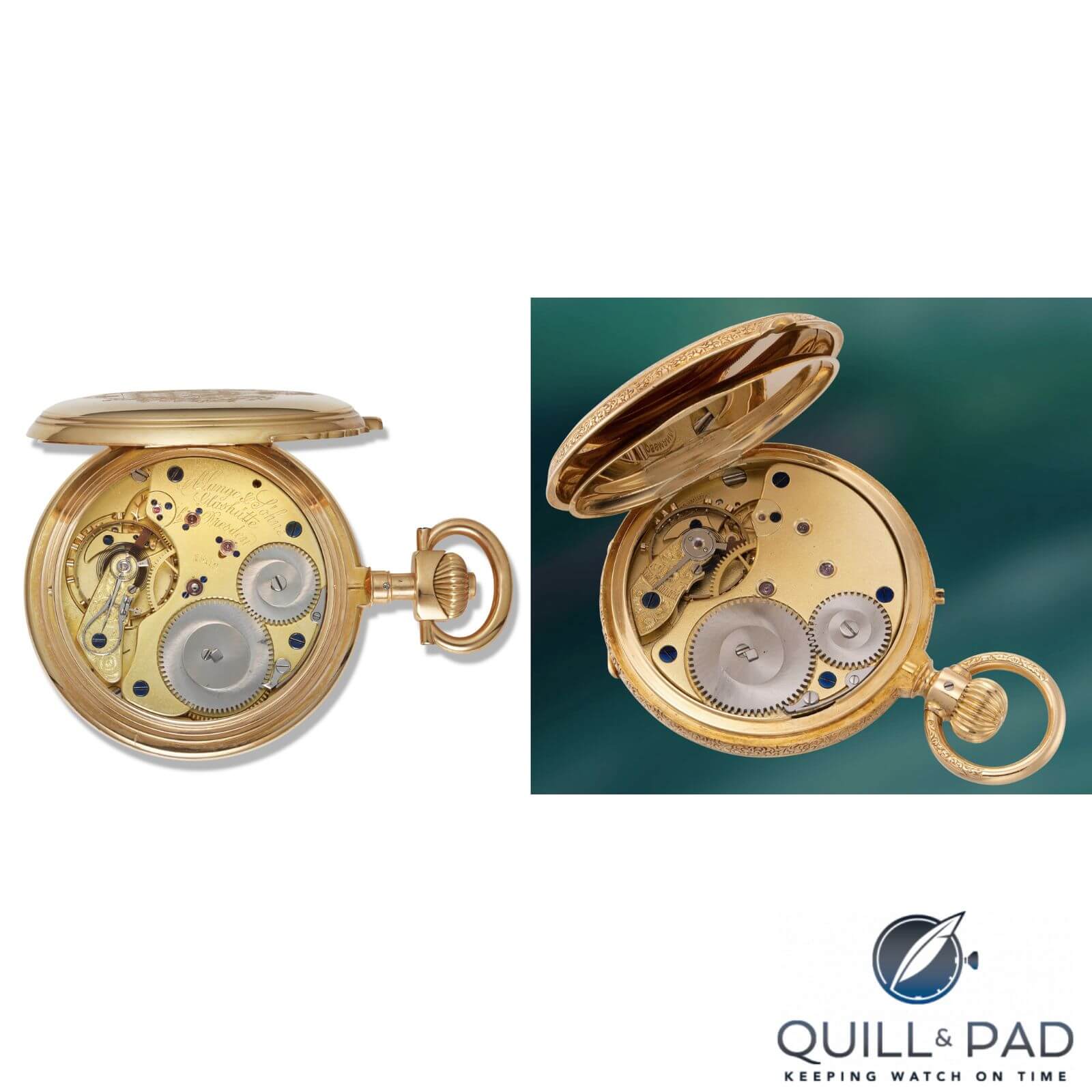
The genesis of Glashütte’s watchmaking industry is inextricably linked to Ferdinand Adolf Lange. His entrepreneurial vision and establishment of a watchmaking school laid the foundation for an entire ecosystem of horological enterprises. Moritz Grossmann, founded in 1854, emerged within this environment, with historical records suggesting a path that, in many ways, followed the pioneering footsteps of Lange’s own endeavors. Surviving pocket watches from the 19th century often showcase similarities in their base caliber technology and overall aesthetic, reflecting this shared origin. The image comparing a circa 1882 A. Lange & Söhne pocket watch movement (No. 15119) with a circa 1875 Moritz Grossmann pocket watch movement (No. 6126) vividly illustrates this shared era and technological foundation, underscoring the close historical ties.
However, the modern iterations of these brands have diverged, with Moritz Grossmann, re-established in 2008 and launching its first watches in 2010, actively pursuing a path that distinguishes it from A. Lange & Söhne. This differentiation is evident in the introduction of watch types not typically found in the latter’s collection, such as skeletonized and open-dial timepieces, watches with inverted calibers, and innovative automatic models featuring unique winding systems.
A Shared Heritage, Divergent Paths
The narrative of modern Glashütte watchmaking often sees A. Lange & Söhne as the trailblazer, having successfully revived its operations in 1990 and releasing its first collection in 1994. Moritz Grossmann, following suit a decade and a half later, has demonstrably drawn inspiration from this pioneering spirit while forging its own identity. Key technical and aesthetic parallels can be observed, yet with distinctive interpretations that highlight Moritz Grossmann’s commitment to its unique horological philosophy.
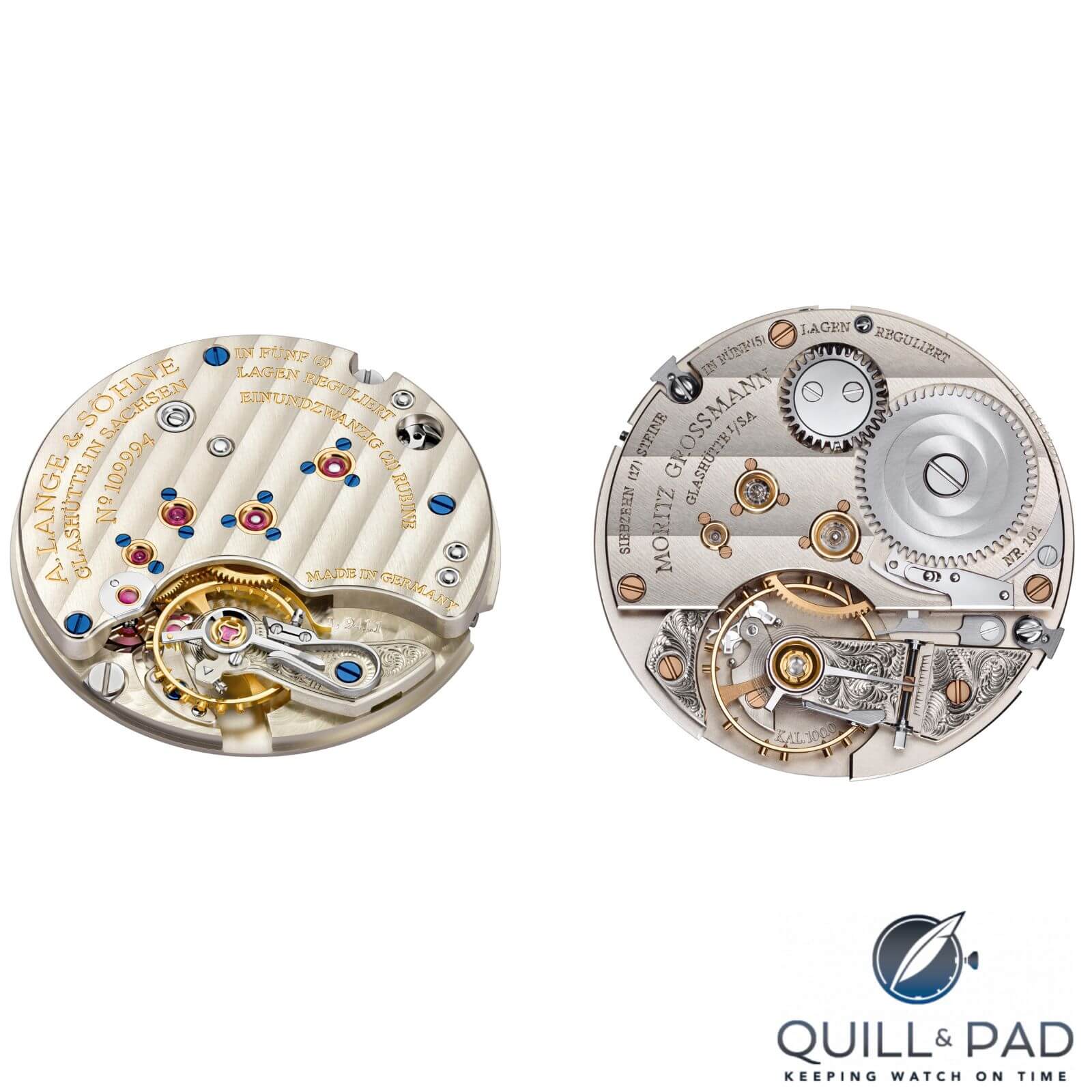
These parallels include the use of nickel silver as the primary material for plates and bridges, a nod to traditional German watchmaking. Both brands feature traditionally engraved balance cocks, though Moritz Grossmann often extends this intricate handcraft to the escapement wheel bridge as well. The use of gold chatons to house the jewels is another shared characteristic, with a subtle difference: A. Lange & Söhne opts for red jewels, adhering to a more traditional aesthetic, while Moritz Grossmann employs colorless jewels, a choice that serves as a distinct marker of its originality.
Furthermore, the structural design of the movement plates reveals both shared lineage and deliberate divergence. Moritz Grossmann utilizes a 2/3 plate construction, characterized by a straight cut, while A. Lange & Söhne employs the more common 3/4 plate, typically featuring a three-arc cut. This architectural choice by Moritz Grossmann harks back to specific 19th-century Glashütte pocket watch designs, though it’s noteworthy that historical Moritz Grossmann pocket watches more frequently adopted the classic Saxon caliber layout that dominated in A. Lange & Söhne movements of the era.
The presence of Glashütte Original, another esteemed neighbor, further accentuates this dynamic of proximity and subtle competition. This cluster of high-end watchmaking houses in such a small geographic area fosters an environment where brands are acutely aware of each other’s innovations and design choices, leading to a sophisticated, albeit unspoken, dialogue that ultimately benefits the discerning collector.
The Enduring Legacy of Carl Moritz Grossmann
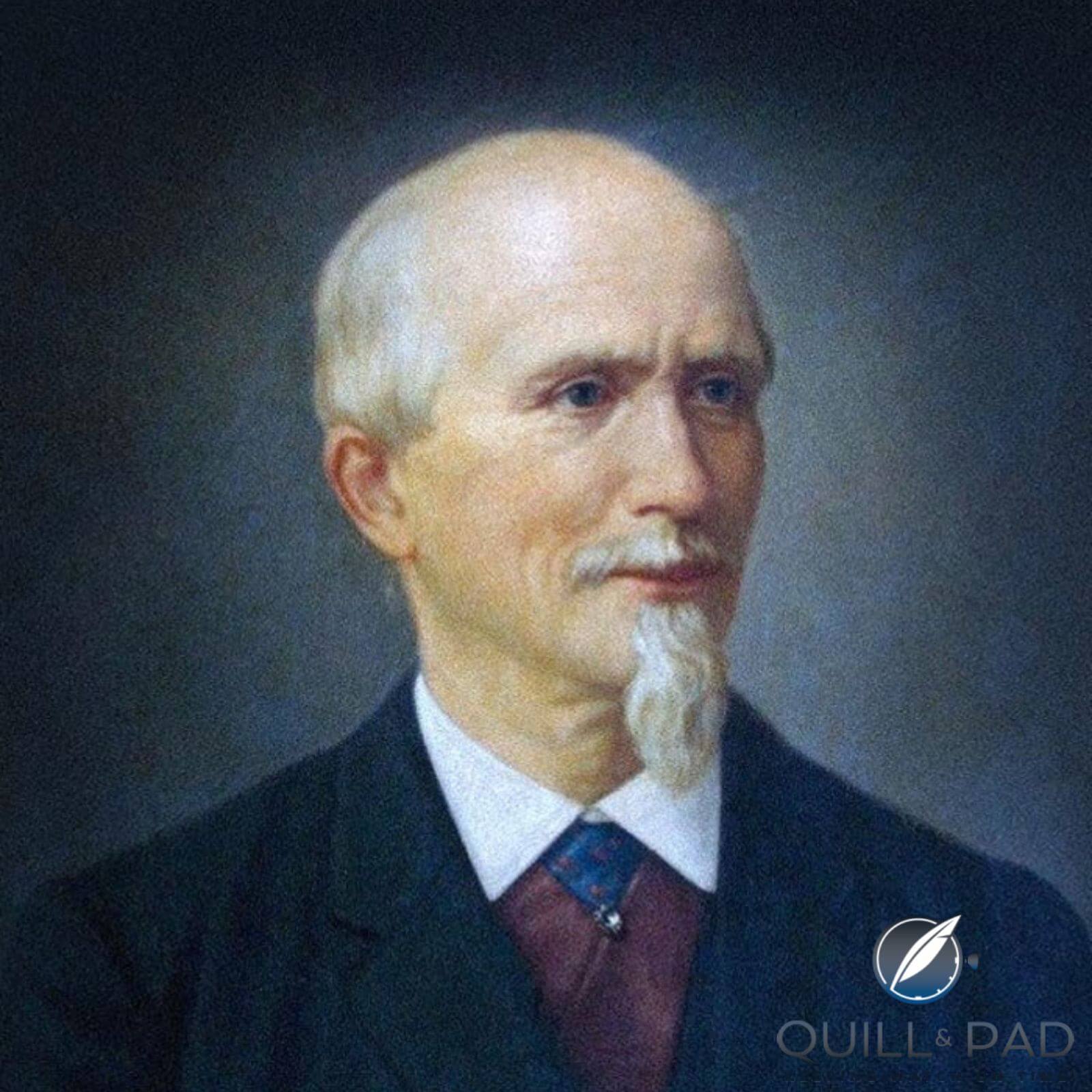
The story of Moritz Grossmann is deeply intertwined with its namesake, Carl Moritz Grossmann (1826–1885). A figure of considerable influence in 19th-century horology, Grossmann was not merely a watchmaker but also an innovator, writer, and educator. In 1854, he founded his own company, which produced not only high-quality pocket watches but also marine chronometers, measuring instruments, and specialized watchmaking tools. His development of the Glashütte seconds pendulum clock established a crucial reference standard for regional watchmakers.
Grossmann’s output was characterized by quality over quantity. Over three decades, his company produced an estimated 8,000 pocket watches, averaging between 250 to 300 pieces annually. This commitment to niche production and exceptional craftsmanship is a philosophy that the modern Moritz Grossmann brand consciously upholds.
Beyond his manufacturing prowess, Grossmann was a prolific writer who significantly shaped horological knowledge. His 1866 essay, "Der freie Ankergang für Uhren" (The Free Lever Escapement for Watches), offered a comprehensive analysis of the Swiss lever escapement, a cornerstone of modern watchmaking. In his 1880 treatise, "Ueber die Konstruktion einer einfachen, aber mechanisch vollkommenen Uhr" (On the Construction of Simple, Yet Mechanically Perfect Watches), he detailed techniques that would become synonymous with Glashütte watches. His dedication to the craft extended to education, culminating in his founding of the German School of Watchmaking in Glashütte in 1878, an institution vital for nurturing skilled artisans and preserving the town’s reputation as a global watchmaking hub.
A Timeline of Innovation and Refinement
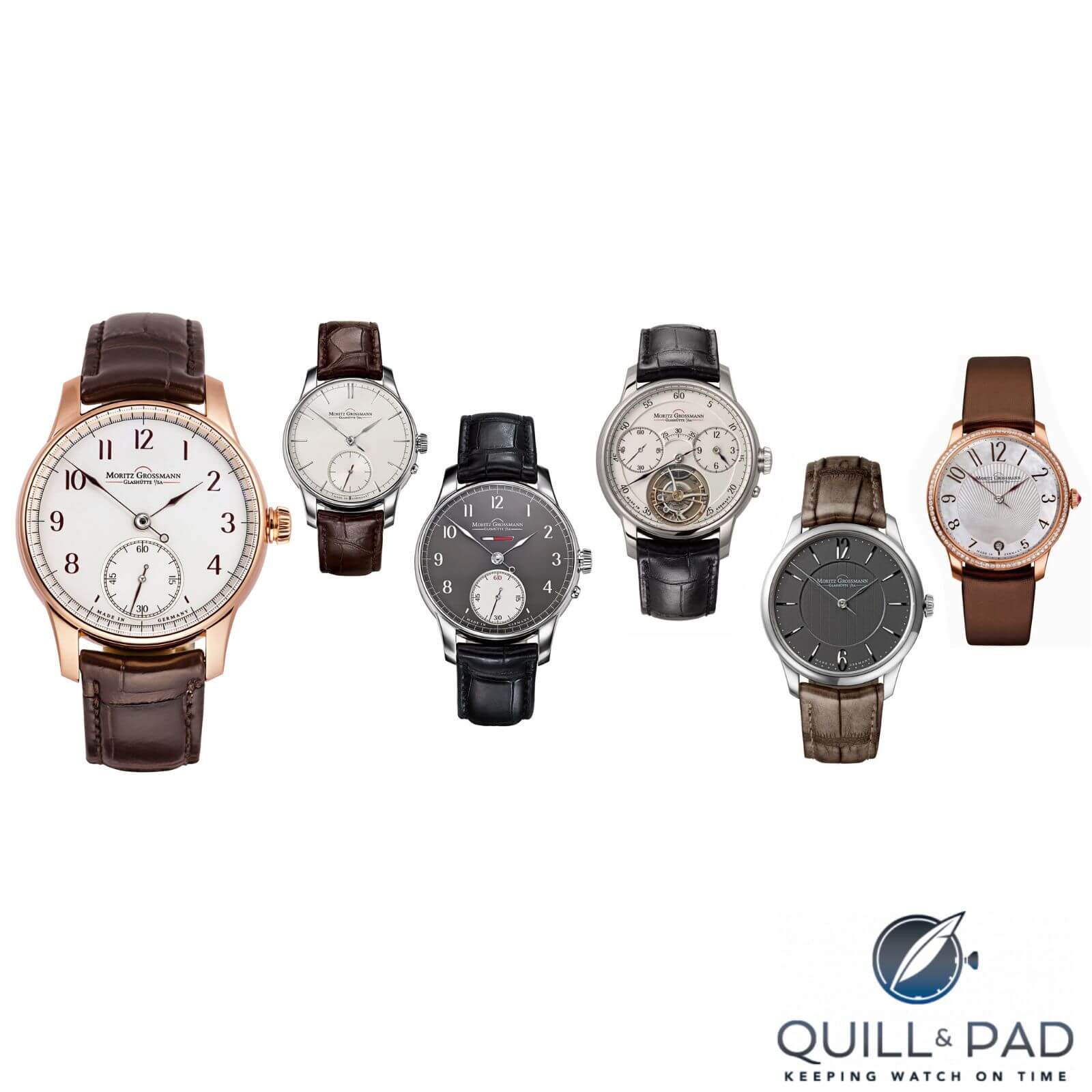
The contemporary journey of Moritz Grossmann’s wristwatch collection commenced in 2008 with the founding of Grossmann Uhren GmbH. The brand’s inaugural timepiece, the Benu, debuted in 2010, powered by the Caliber 100.0. This movement, much like the early calibers of A. Lange & Söhne, was designed to embody the brand’s core horological identity.
The subsequent years have witnessed a steady stream of significant releases, each showcasing a distinct facet of the brand’s evolving design and technical capabilities.
- 2010-2015: The initial phase saw the introduction of the Benu (2010), embodying traditionalism and restraint. This was followed by the Atum (2013), presenting a contemporary classic style, and the Benu Power Reserve (2013) with discreet additional indications. The Benu Tourbillon (2013) marked a unique approach to complex mechanics, while the Tefnut (2015) and Tefnut Lady (2015) introduced a refined two-hand dress watch and the brand’s first women’s timepiece, respectively.
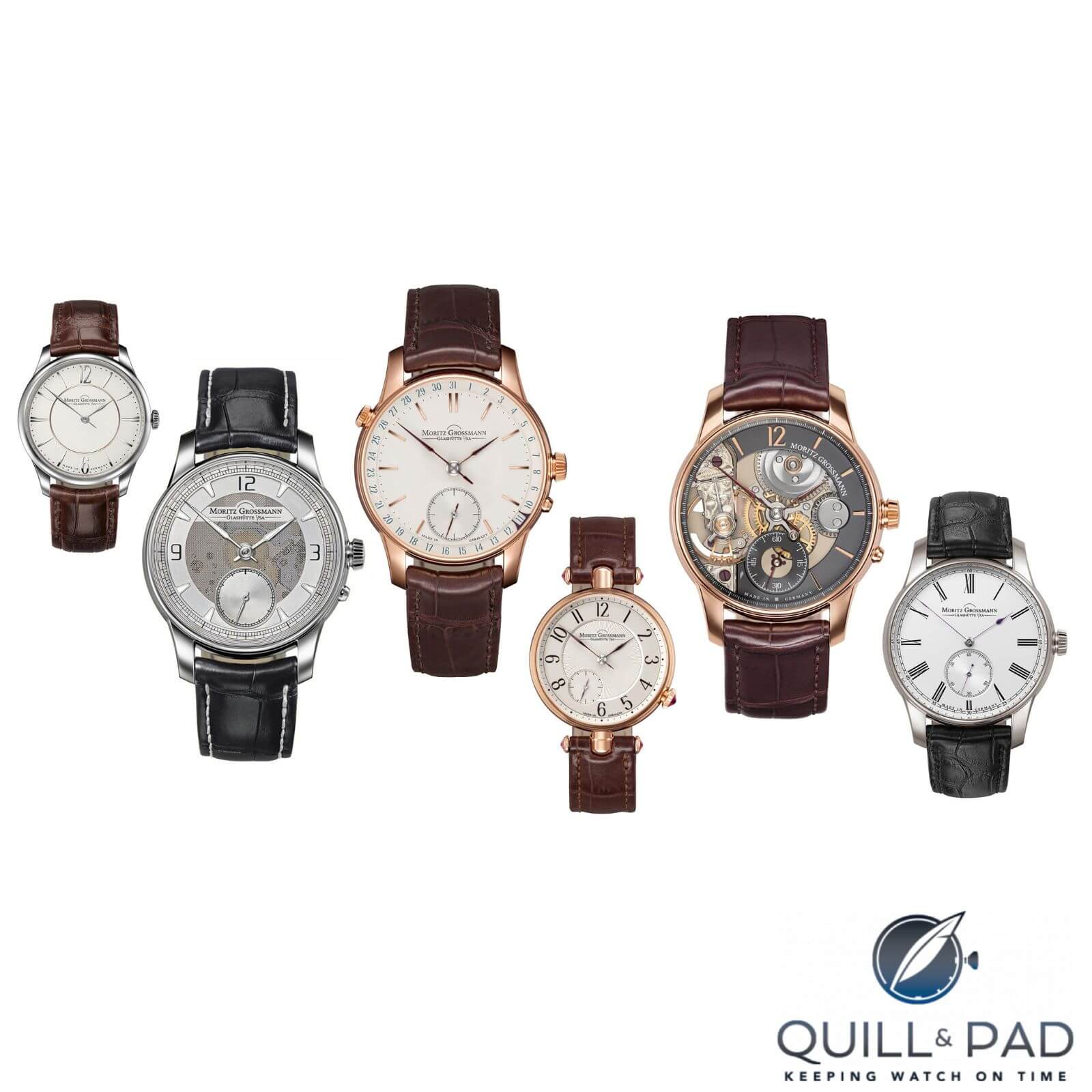
- 2016-2019: This period saw further exploration in materials and design. The Tefnut Pure (2016) introduced steel watches with new calibers and finishes. The Atum Pure M “Mesh Dial” (2016) offered a steel watch with a unique dial. The Atum Date (2017) featured an in-house developed date mechanism with bi-directional setting. The Tefnut Twist (2017) incorporated the brand’s “strap winder” feature. The groundbreaking Backpage (2018) presented a reversed caliber and openworked dial, and the Atum Hamatic (2019) debuted as the brand’s first automatic watch with a novel pedometric winding system.
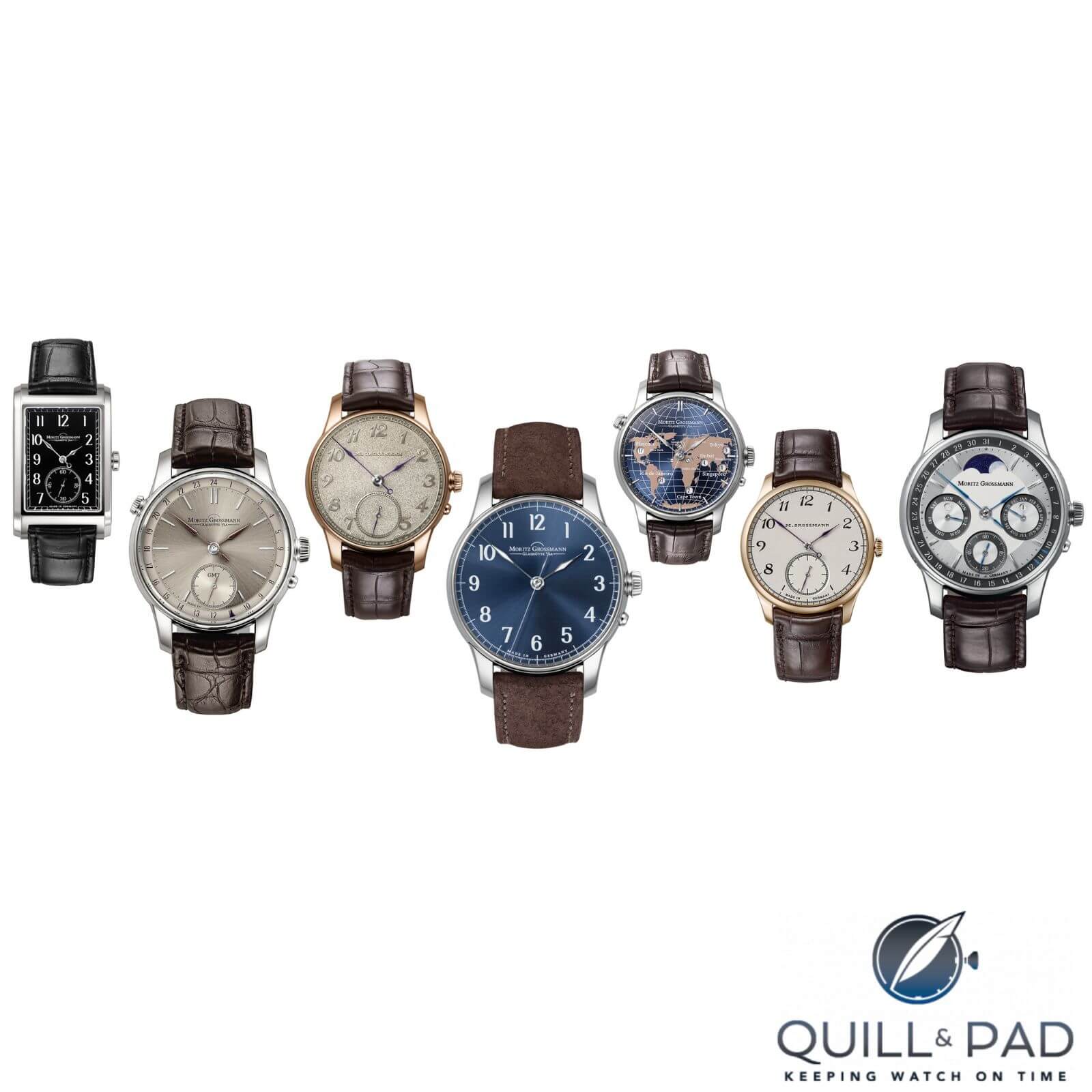
- 2019-2025: The most recent releases demonstrate continued innovation. The Corner Stone (2019) was the first rectangular watch with a shaped caliber. The Atum GMT (2019) provided a practical complication for travelers. The Tremblage (2021) introduced a dial with an engraved, textured nickel silver finish. The Central Second (2021) featured the brand’s first central seconds hand. The Universalzeit (2022) offered a unique interpretation of world time display. The Tefnut Silver-plated by Friction (2023) utilized a rare antique dial decoration technique, and the Perpetual Calendar (2025) presented the brand’s distinct take on this complex complication.
This timeline highlights a conscious effort by Moritz Grossmann to explore various watchmaking trends and complications, including skeletonization, tourbillons, GMT functions, and sophisticated calendar mechanisms, while consistently imbuing them with the brand’s signature craftsmanship and aesthetic. Areas yet to be fully explored in the MGr collection, such as chronographs and chiming watches, suggest potential avenues for future development, further broadening the brand’s offering.
The Subtle Art of Distinction: 14 Features that Define Moritz Grossmann
Moritz Grossmann watches are characterized by a collection of meticulously crafted details that, while sometimes subtle, collectively contribute to a unique horological identity. These features elevate the brand’s timepieces beyond mere functional objects, transforming them into objects of admiration and desire.
Particularity #1: The Reflective Core
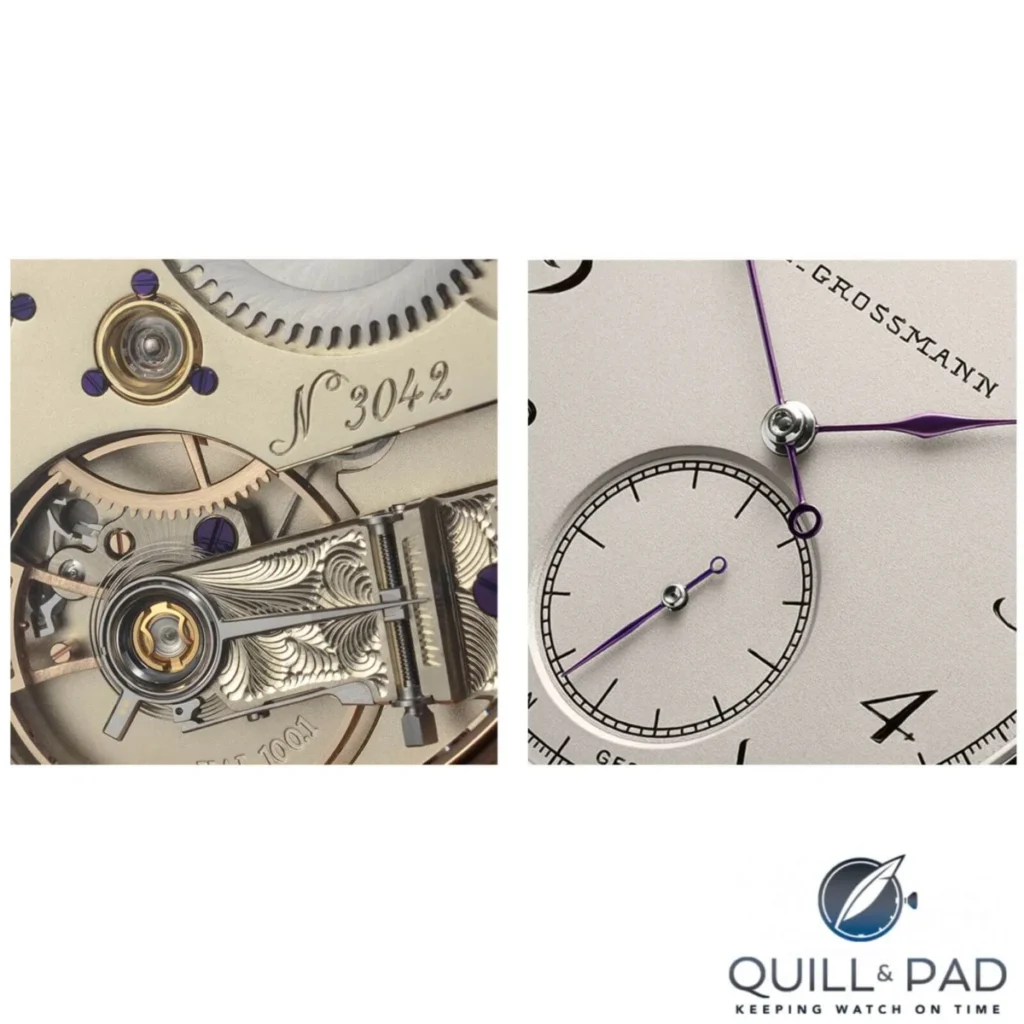
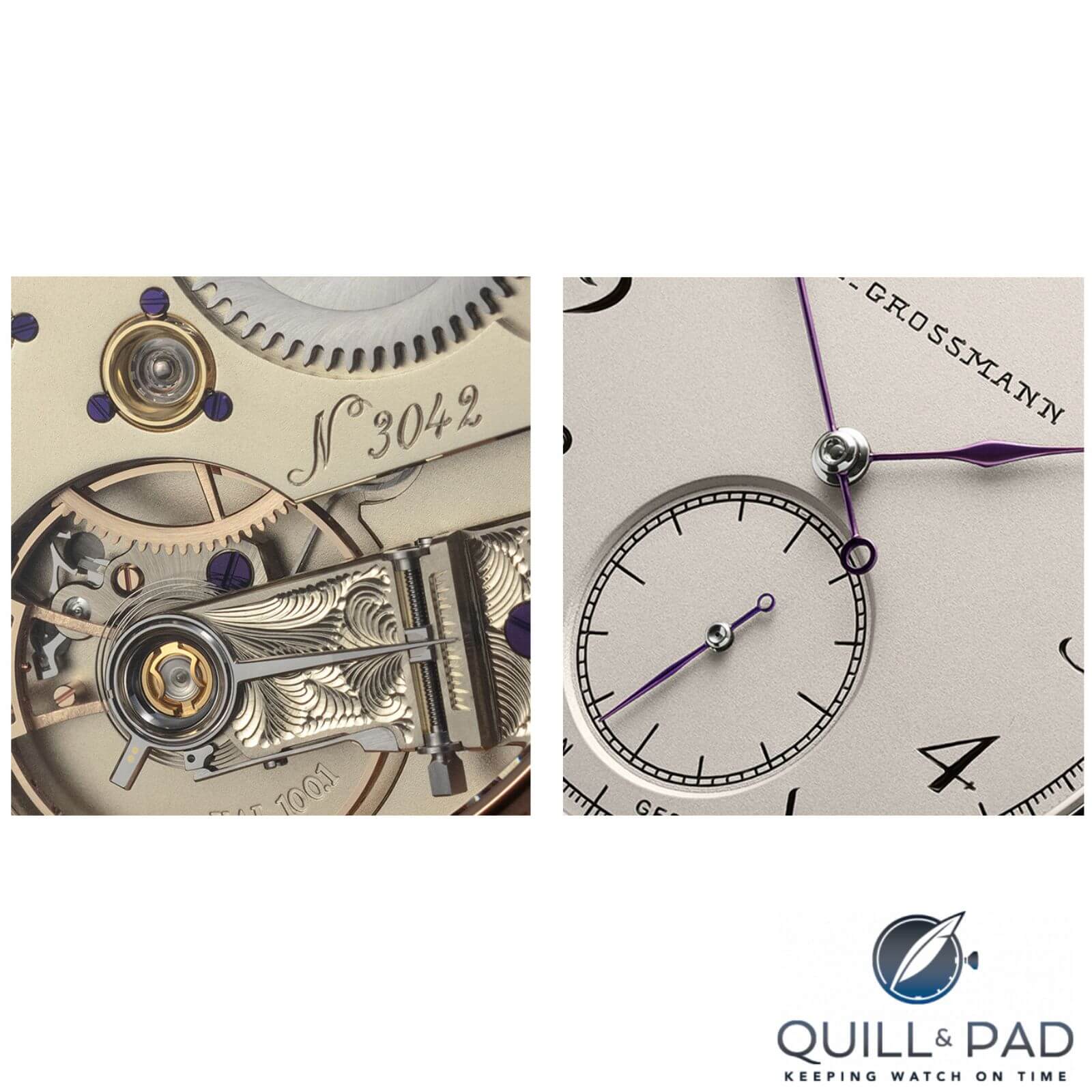
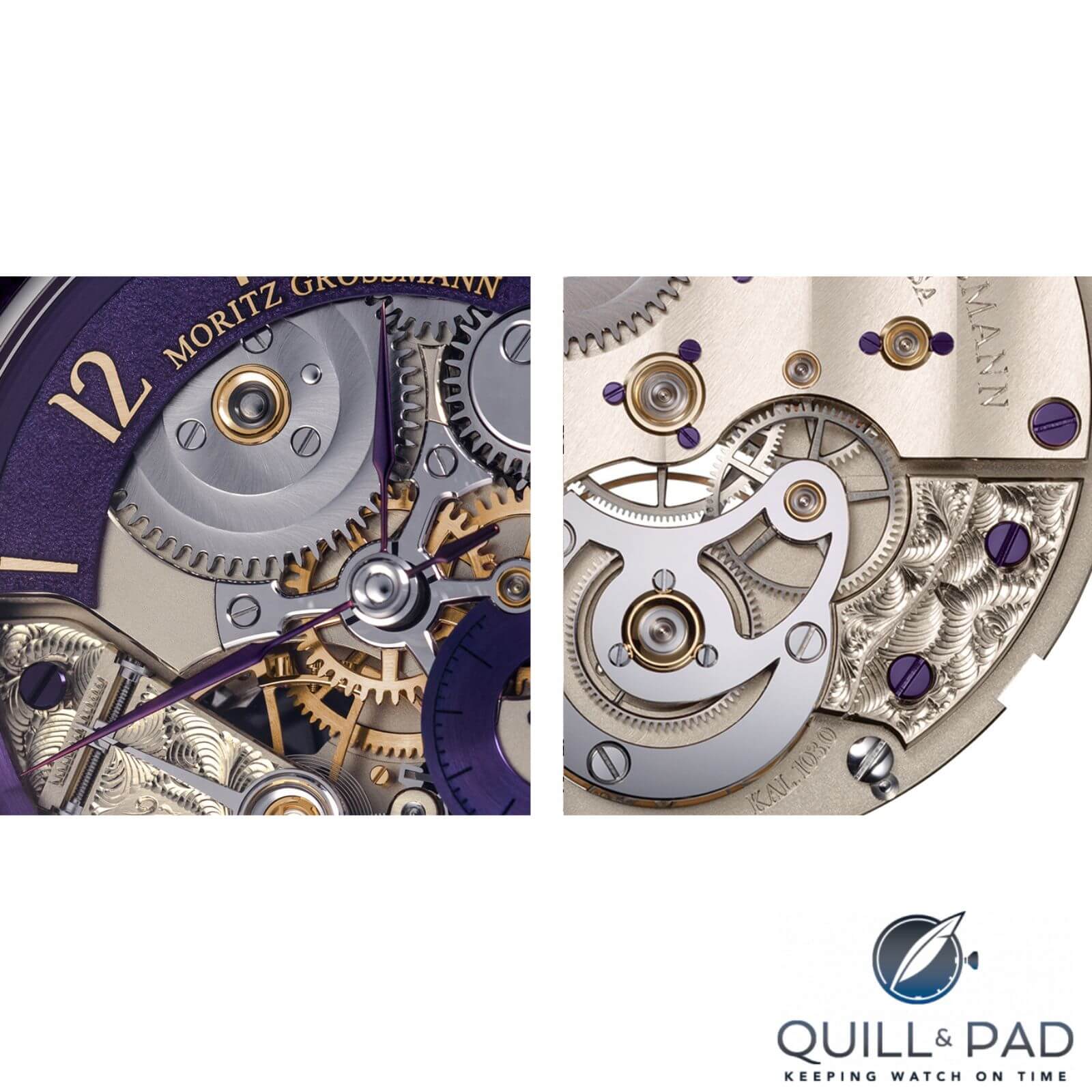
A defining characteristic that immediately captivates is the extraordinary reflectivity emanating from the center of the dial, specifically around the collets of the minute and small seconds hands. These collets feature a concave, mirror-polished internal section that surrounds the cannon pinion shaft. This small yet ingenious detail, mirrored on the chatons of the balance jewel and other movement components, demonstrates a commitment to applying a consistent, high-refinement finish throughout the watch, creating a harmonious and visually striking effect.
Particularity #2: The Unique Hue of Blued Steel
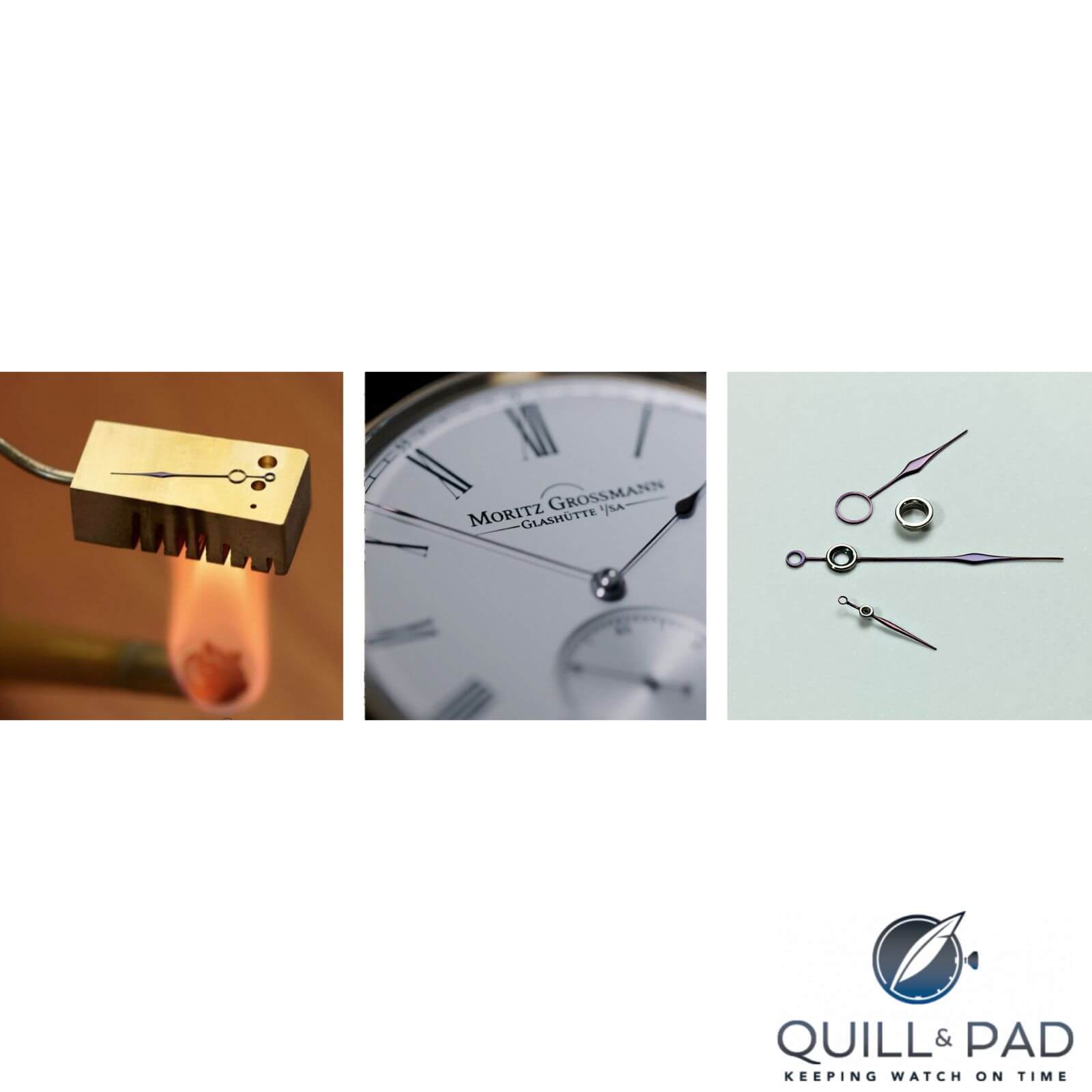
The blued steel components, including hands and screws, in Moritz Grossmann watches possess a distinctive coloration. Instead of the typical cornflower blue, these elements exhibit a deeper, often described as brownish-violet or ripe cherry hue. Achieving this specific color requires precise control over the heating process, a testament to the artisan’s skill and attention to detail.
Particularity #3: Exquisitely Finished Hands
Moritz Grossmann produces some of the most refined hands in modern watchmaking. Each hand is meticulously brushed and polished, particularly at the tips, to achieve a sharp, elegant appearance. While some designs, like the assegai hands on the Hamatic and other models, draw inspiration from historical forms, the brand’s signature hand style features elongated, narrow lozenge shapes, a classic aesthetic that gained prominence in the 1930s. This level of detail in such a critical component significantly enhances the overall perceived quality of the timepiece.
Particularity #4: In-House Developed Pillar-and-Plate Calibers
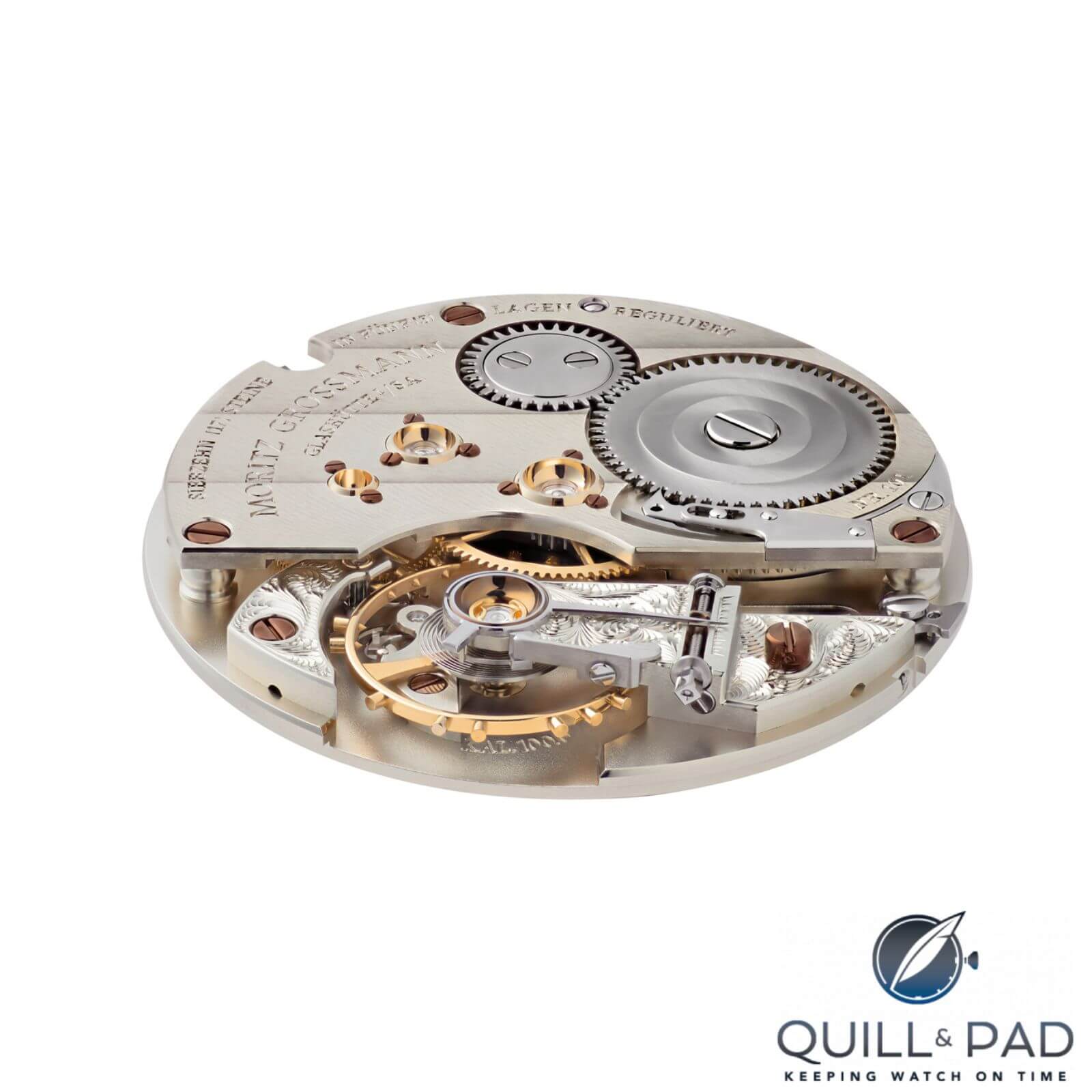
All Moritz Grossmann calibers are developed and produced entirely in-house, ensuring their exclusivity. A significant technical distinction is the use of pillar-and-plate construction, a design rooted in historical German watchmaking. This approach, which predates the more common Lepine bridge-caliber construction, reflects a conscious choice to honor and perpetuate a specific horological heritage.
Particularity #5: The Breguet Overcoil Balance Spring
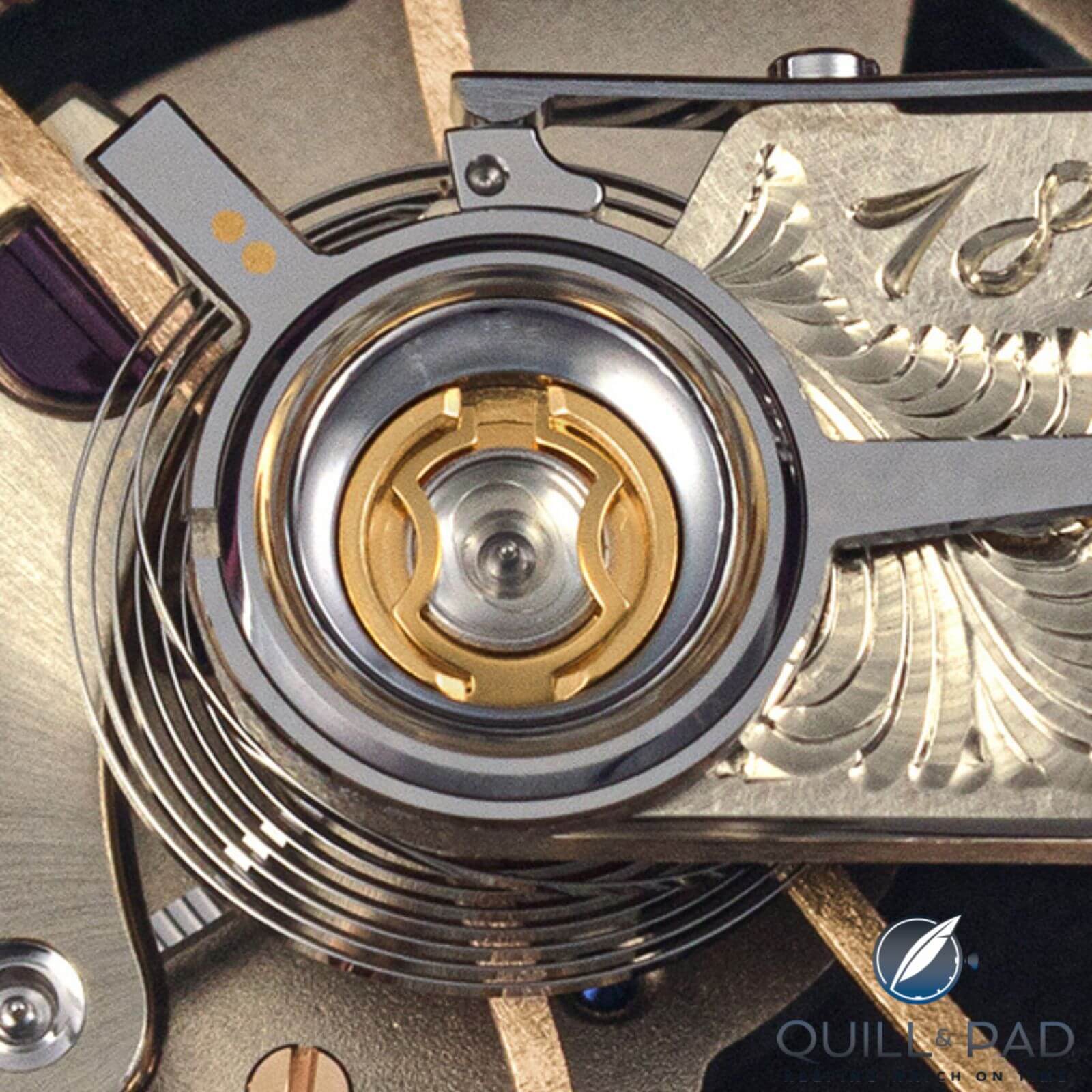
Many Moritz Grossmann calibers are equipped with a balance spring featuring a Breguet overcoil. While considered an expensive and somewhat anachronistic component by some modern watchmakers, its inclusion signifies a commitment to chronometer-quality precision and a respect for traditional horological standards, enhancing the movement’s accuracy and stability.
Particularity #6: The Refined Manual Winding System
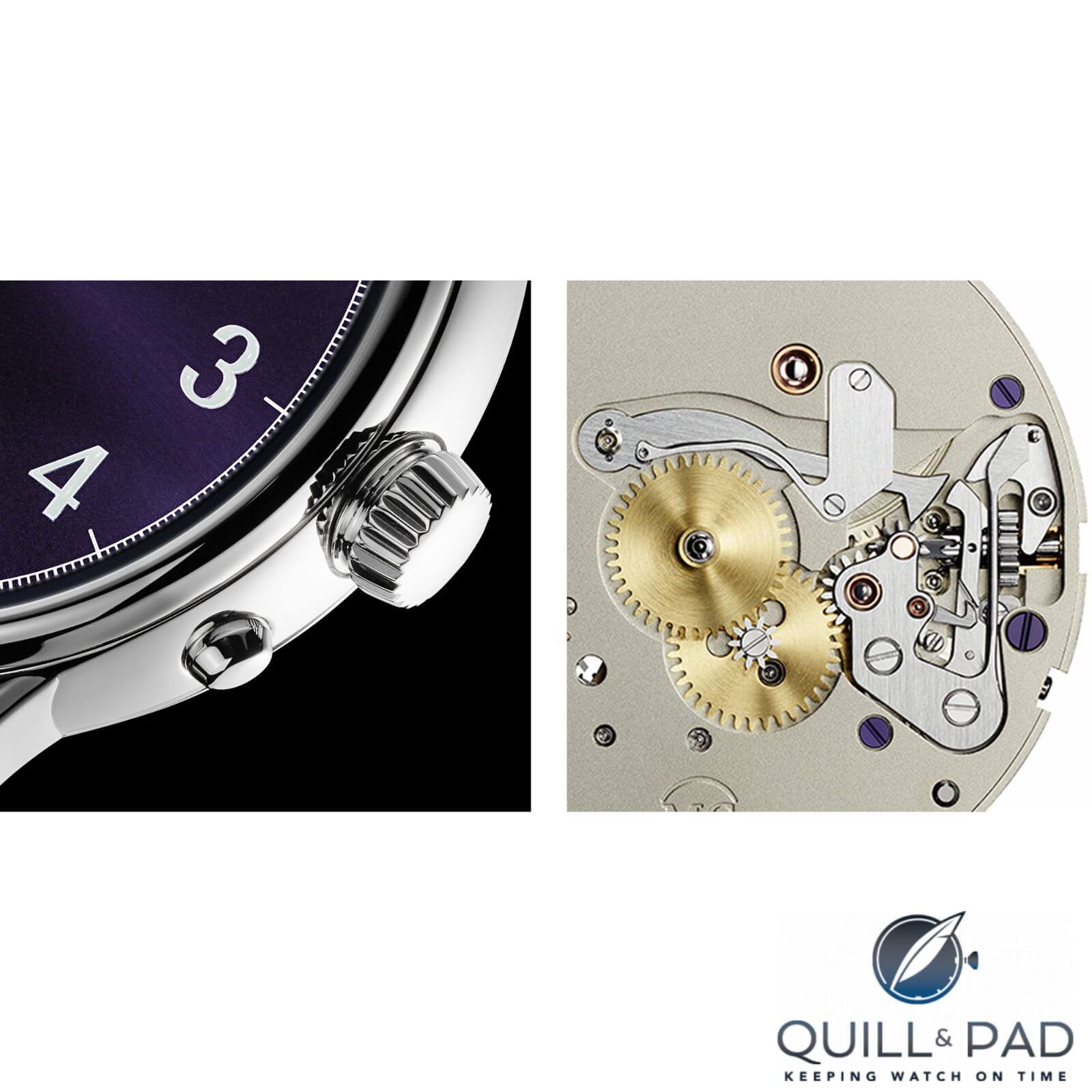
Moritz Grossmann incorporates a sophisticated manual winding system that utilizes a crown and pusher. This system allows for a perfect restart of the movement after precise hand-setting, eliminating the common issue of the minute hand shifting during traditional remontoire systems. The movement stops upon pulling the crown, which then returns to its initial position. Setting the hands and restarting the watch is accomplished by pressing a dedicated pusher, a complex yet user-friendly mechanism designed for perfectionists.
Particularity #7: Diverse Click Designs
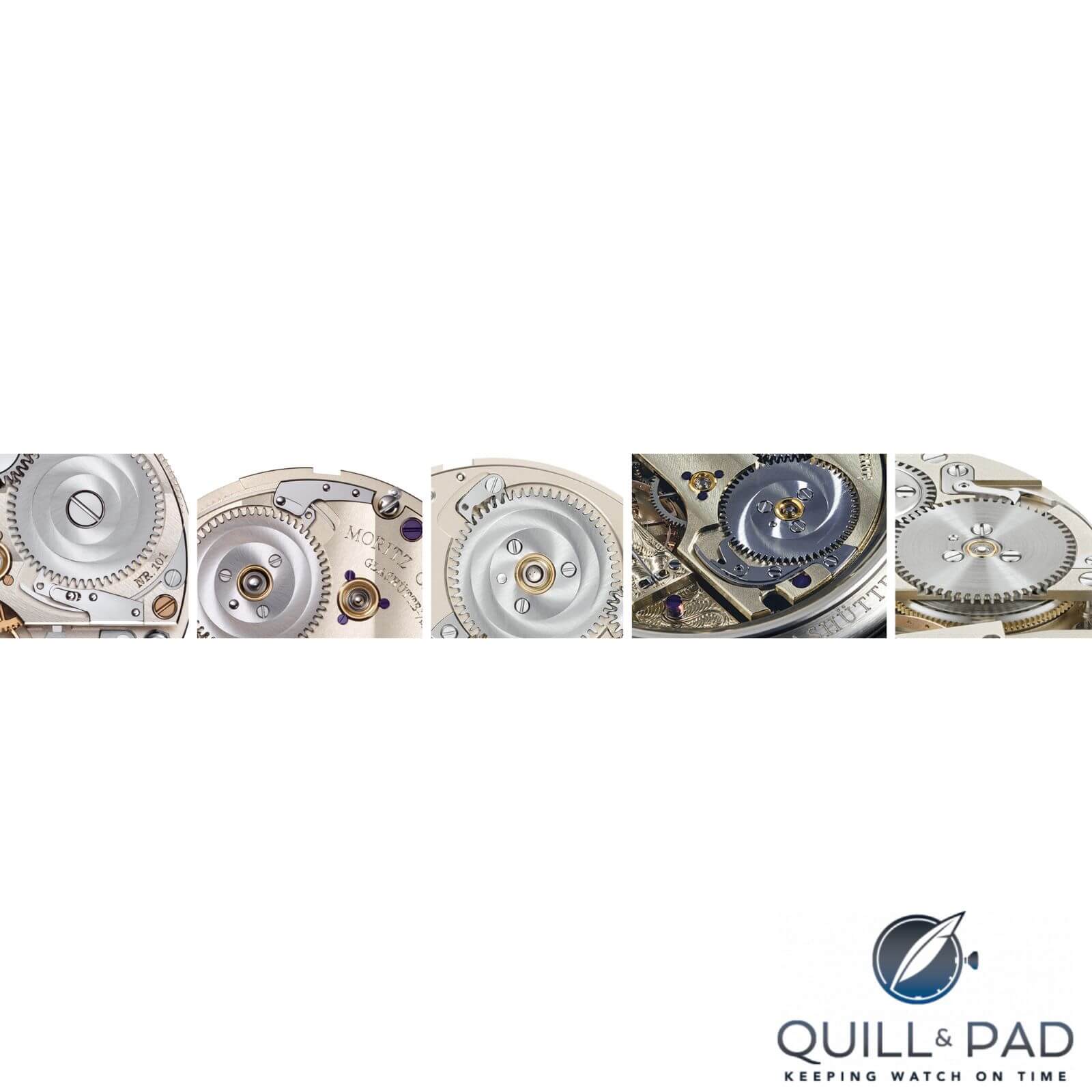
A fascinating aspect of Moritz Grossmann’s movements is the variety of click designs employed across its calibers. The observation of five distinct types suggests a deliberate exploration of different mechanical solutions. The sliding-action ratchet wheel click, found in the original Caliber 100.0, is particularly noteworthy for its elegant function in relieving mainspring tension during winding.
Particularity #8: The Elaborate 3-Band Snailing
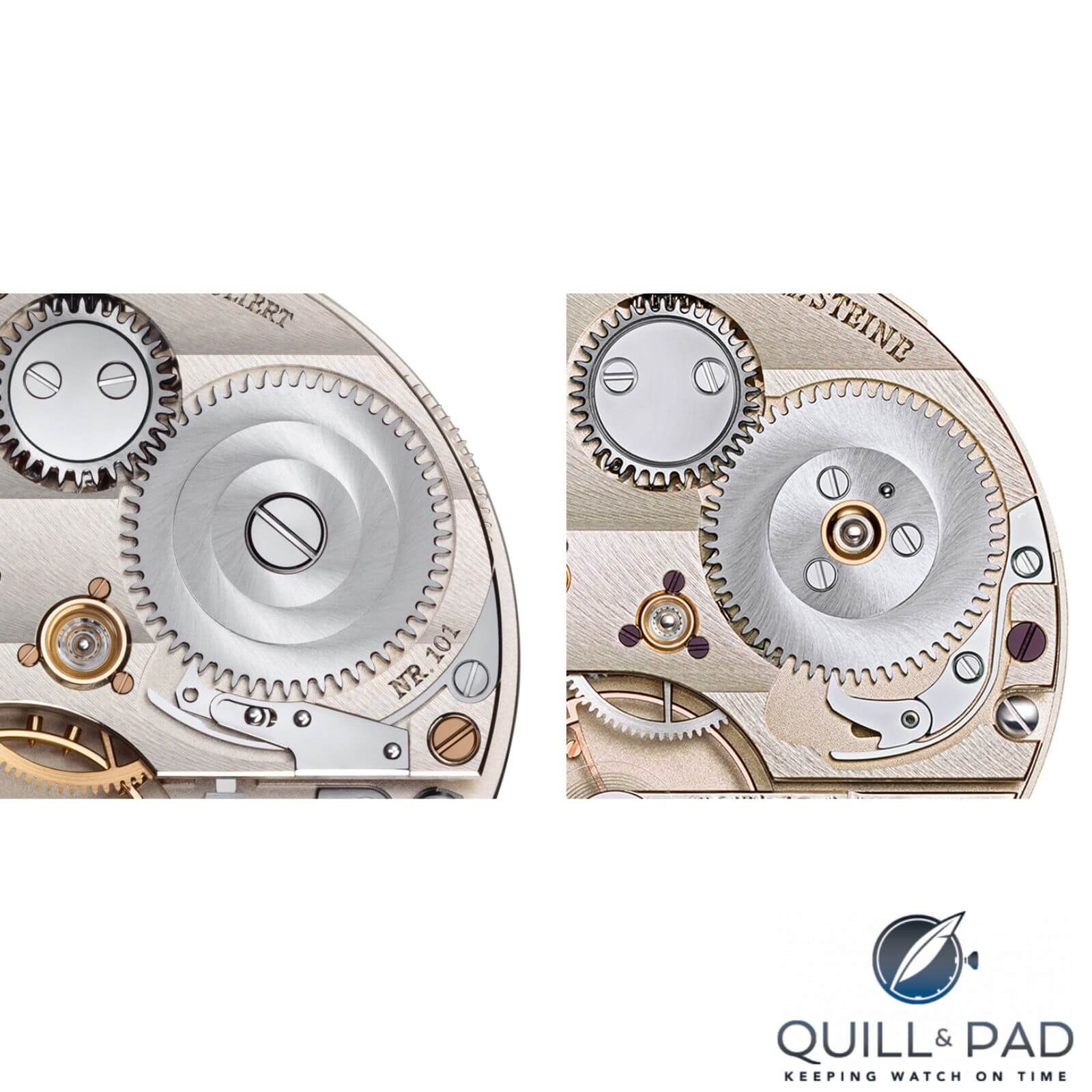
The ratchet wheel of the winding barrel often features a traditional and increasingly rare finishing technique: 3-band snailing. Moritz Grossmann applies this elaborate decoration to components like the ratchet wheels in calibers 100.0, 102.3, and 103.0. While a simpler 2-band snailing is also used in some models, the more intricate version adds a significant visual richness to the movement.
Particularity #9: The Grossmann Micrometer Screw Regulator
Moritz Grossmann watches utilize a unique micrometer screw regulator system for adjusting the hairspring. This system, featuring a long micrometer screw and a non-rotating sliding bolt, allows for precise regulation of the hairspring’s effective length. The brand offers two variations of this regulator, one fully open and another with a semi-open slot, both believed to be based on an invention by Carl Moritz Grossmann himself, as evidenced by its presence in pocket watches dating back to the 1870s.
Particularity #10: Colorless Sapphire Jewels
While many high-quality movements feature red ruby jewels for aesthetic and traditional reasons, Moritz Grossmann opts for colorless sapphire jewels. While technically equivalent in function, this choice distinguishes the brand’s aesthetic and deviates from the conventional expectation of red jewels in a finely finished movement.
Particularity #11: Hand-Engraved Inscriptions
In line with its commitment to traditional craftsmanship, Moritz Grossmann employs hand-engraved inscriptions on its two-thirds mainplates. This deliberate absence of CNC machining adds a distinctive artisanal touch, highlighting the skill of the master engraver and reinforcing the watch’s status as a piece of fine mechanical art.
Particularity #12: Extensive Hand Engraving on Bridges
The balance cock and escapement wheel bridge on most Moritz Grossmann movements, with the exception of the 200-series calibers, feature an elaborate hand-engraved scroll motif. This extensive engraving covers nearly the entire visible surface of these bridges, showcasing a level of decorative artistry rarely seen in modern watchmaking.
Particularity #13: The "Tremblage" Dial Finish
Introduced in 2021, the "tremblage" dial finish is characterized by a chaotic yet uniform textured engraved pattern. Moritz Grossmann’s application of this technique to nickel silver dials is particularly appealing, as the natural patina that develops over time imparts a dramatic and vintage character. This technique, while also used by other brands like A. Lange & Söhne for special series, gains a unique dimension when rendered on MGr’s chosen materials.
Particularity #14: Silver-Plating by Friction
A rare 19th-century decorative technique, silver-plating by friction, is employed by Moritz Grossmann on some of its dials. This method, involving the application of a silver powder mixture, creates a fine matte texture that imparts an airy, warm, and soft aesthetic, reminiscent of an eggshell. This finish provides a beautiful contrast to engraved numerals, inscriptions, and tempered steel hands, resulting in unforgettable color combinations.

The Broader Impact on the Watchmaking Ecosystem
The distinct approach taken by Moritz Grossmann, characterized by its deep respect for historical techniques and its innovative reinterpretations, enriches the broader horological landscape. The brand’s dedication to in-house development, meticulous finishing, and the revival of rare artisanal crafts not only appeals to a discerning clientele but also serves as a benchmark for excellence in modern watchmaking. By consciously diverging from established norms and embracing unique design philosophies, Moritz Grossmann solidifies its position as a brand that offers not just timekeeping instruments, but pieces of mechanical art steeped in tradition and imbued with a singular spirit. This "implied debate" with its contemporaries, therefore, fosters a richer and more diverse offering for enthusiasts worldwide.