The additive manufacturing landscape continues its rapid evolution with significant advancements spanning simulation software, medical implant technology, wound care solutions, construction applications, and educational outreach. This comprehensive roundup highlights key developments from industry leaders and emerging innovators, underscoring the growing impact of 3D printing across diverse sectors.
AMCM and PanOptimization Revolutionize Metal AM Workflow with Physics-Based Simulation Integration
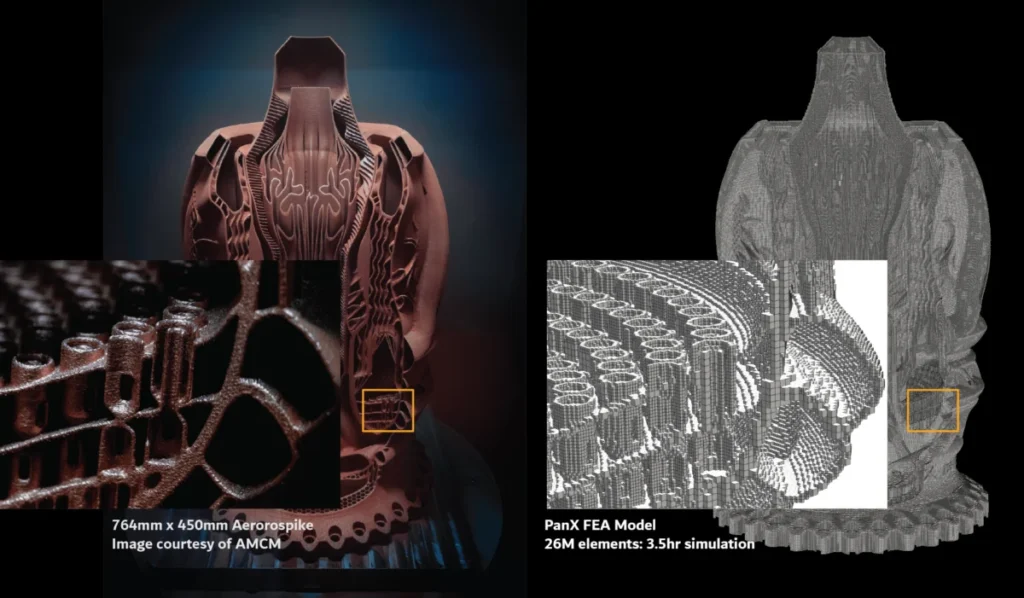
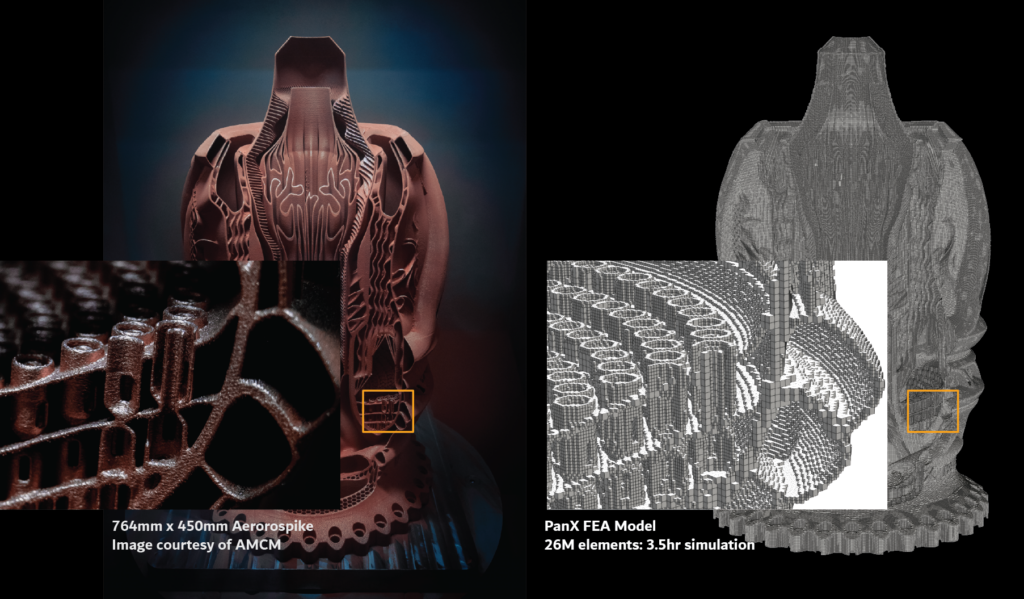
In a pivotal move to enhance the reliability and efficiency of metal additive manufacturing (AM), AMCM, a subsidiary of EOS, has announced a groundbreaking software integration with PanOptimization. This collaboration seamlessly merges PanOptimization’s advanced physics-based simulation capabilities, embodied in its PanX software, with EOSPRINT, the industry-standard build preparation software from EOS. The integration aims to embed sophisticated simulation directly into the machine and part qualification processes, a crucial step as metal AM matures and the industry moves beyond costly trial-and-error methodologies.
The newly integrated workflow begins with an openjz file generated by EOSPRINT. This file, containing critical build information such as part geometry and processing parameters, is then imported into PanX. The EOSPRINT Application Programming Interface (API) facilitates the transfer of additional necessary data, including layer-by-layer processing times, to PanX, enabling highly accurate simulations. Upon completion of the simulation, PanX automatically generates a TIFF image stack and a Smart Fusion Replay file. These outputs are written back into the original openjz file, incorporating crucial information like compensated geometries and optimized laser power settings. This enriched data is then directly integrated into the AMCM printing system, allowing for real-time adjustments and optimizations before and during the build process.
This integration was recently demonstrated on a large-scale M 8K build by AMCM, showcasing its capability to proactively identify and mitigate potential issues like thermal hotspots before they can compromise the integrity of the printed part. Tobias Petzinger, Application Specialist at AMCM GmbH, emphasized the significance of this development for complex, large-format parts. "Especially for the large and complex applications our customers manufacture on the AMCM M 4K and M 8K, thermomechanical simulation is a key tool to counteract overheating and thermally induced distortion," Petzinger stated. "By integrating PanX directly into EOSPRINT, we can seamlessly optimize thermal management and build strategies before production begins." This advancement is expected to significantly reduce build failures, shorten development cycles, and improve the overall quality and predictability of metal AM parts, particularly for demanding applications in aerospace and other high-performance industries where material integrity and dimensional accuracy are paramount.
KLS Martin Achieves Milestone with 500th Lithoz 3D-Printed Bioceramic Implant
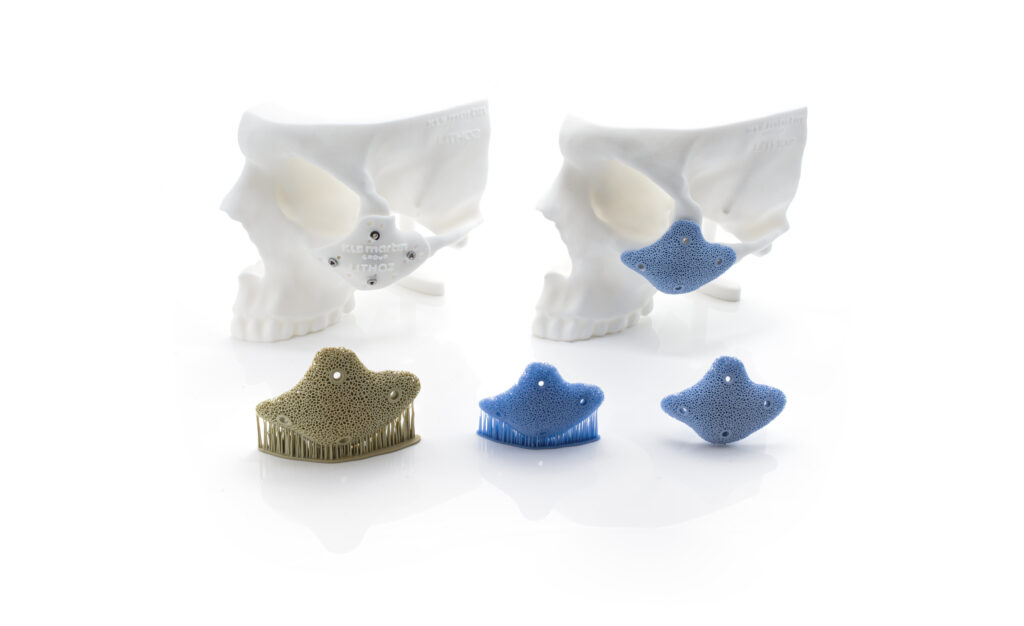
The medical field is witnessing a transformative integration of additive manufacturing, as highlighted by KLS Martin’s significant achievement of delivering its 500th 3D-printed bioceramic implant by the end of the third quarter of 2026. This milestone is made possible through the company’s innovative web-based IPS Gate® platform, which streamlines the planning, ordering, and delivery of Individual Patient Solutions (IPS). The implants in question are fabricated using LithaBone TCP, a calcium phosphate material developed by Lithoz, a leader in ceramic additive manufacturing.
KLS Martin utilizes Lithoz’s Lithography-based Ceramic Manufacturing (LCM) technology to produce patient-specific implant geometries. A key advantage of this process lies in its ability to tailor the porosity of the implants. This controlled porosity is crucial for facilitating the degradation of bone scaffolds and their subsequent replacement by new bone tissue, thereby promoting natural bone regeneration. Beyond the advanced bioceramic materials, KLS Martin also offers innovative fixation solutions. While traditional titanium screws are an option, the company also provides its proprietary SonicWeldRx® system, which employs resorbable polymer pins. When combined with LithaBone TCP implants, this resorbable fixation system can significantly reduce the need for additional surgical interventions for patients, enhancing their recovery and overall treatment experience.
Johannes Homa, CEO of Lithoz, expressed his enthusiasm for this partnership and its implications for the future of regenerative medicine. "Launching LithaBone TCP implants as an official product on IPS Gate® marks a true milestone for bioceramic 3D printing in surgery. What began 12 years ago as a research collaboration with KLS Martin has grown into a proven clinical pathway with scalable solutions," Homa commented. He further elaborated on the broader impact: "Seeing the success KLS Martin is having with our technology, as well as the general global adaptation of LCM in MedTech, shows that resorbable, additively manufactured bone-regenerating solutions are gaining broader clinical acceptance worldwide and demonstrate the growing role of additively manufactured bioceramic solutions in regenerative medicine." The increasing clinical adoption of these custom-printed, biocompatible implants signifies a paradigm shift in personalized medicine, offering improved patient outcomes and more efficient surgical procedures.
UltiMaker and Bioactivx Forge Strategic Partnership for On-Demand 3D Printed Wound Care
In a significant stride towards democratizing advanced medical treatments, Singapore-based medtech startup Bioactivx has partnered with UltiMaker to develop a scalable, on-demand 3D printing solution for regenerative wound care. This collaboration, formalized through a Memorandum of Understanding (MOU), aims to bring Bioactivx’s innovative Bioactiv® Matrix directly to the point of need.
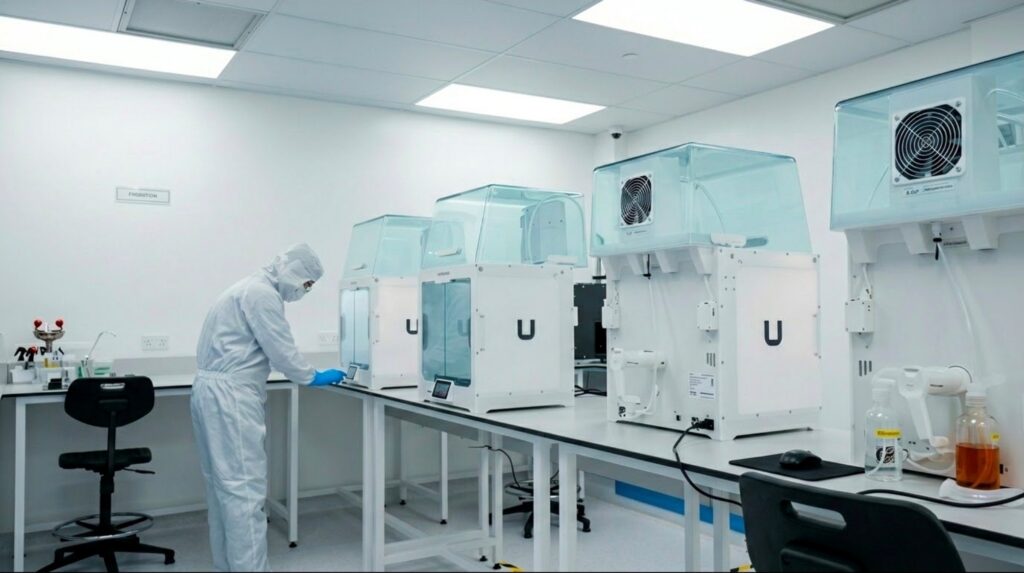
Bioactiv® Matrix is a proprietary synthetic, animal-free regenerative medical solution designed to accelerate wound closure and promote scar-free healing. Bioactivx has developed a comprehensive end-to-end digital manufacturing process, leveraging UltiMaker 3D printers for mass production of this medical-grade product. The company has established a dedicated filament production and cleanroom print farm facility in Singapore, designed to meet stringent medical manufacturing standards. Crucially, both Bioactivx’s digital manufacturing process and the Bioactiv® Matrix itself have achieved ISO 13485 certification and approval from Singapore’s Health Sciences Authority (HSA) for end-use medical implant manufacturing. This dual certification validates that UltiMaker 3D printing systems are capable of producing devices that adhere to rigorous medical-grade manufacturing requirements.
Under the new MOU, UltiMaker and Bioactivx will focus on refining and scaling this on-demand 3D printing solution. The objective is to decentralize the production of regenerative wound care products, making them more accessible and responsive to patient needs. Michiel Alting von Geusau, CEO of UltiMaker, highlighted the broader implications of this partnership: "Bioactivx’s certification and regulatory approval is a powerful proof point for the medical 3D printing industry. It demonstrates that with the right process and quality controls, 3D printing on UltiMaker platforms can meet the exacting standards required for certified, end-use medical devices – not just prototypes," he stated. Von Geusau further added, "This collaboration is about more than one product. It’s a blueprint for how distributed, on-demand 3D printing can transform medical manufacturing – making critical treatments faster to produce and easier to deliver, wherever they’re needed." This initiative represents a significant step towards a future where personalized medical treatments can be produced locally and efficiently, reducing lead times and improving healthcare accessibility globally.
UW-Stout Polytechnic Launches Pioneering 3D Concrete Printing Certificate Program
The construction industry is embracing the disruptive potential of additive manufacturing with the introduction of a new 3D Concrete Printing (3DCP) Certificate program at the University of Wisconsin-Stout Polytechnic. This initiative positions the university as a leader in educating the future workforce for this rapidly evolving sector. Earlier in 2026, UW-Stout Polytechnic acquired advanced 3D concrete printing technology through a partnership with Alquist, a prominent additive construction company, making it one of the first universities in the Midwest to adopt such technology.
The newly established certificate program integrates Alquist’s cutting-edge equipment and curriculum into existing academic majors, including construction management, industrial and product design, and technology education. This program is designed to equip undergraduate students with foundational expertise in 3DCP, while also offering professionals an opportunity to acquire essential new skills in this specialized field. Jennifer Astwood, Professor of Industrial and Product Design and Associate Dean of the College of Arts and Human Sciences, spearheaded the campus 3DCP project. In collaboration with Engineering Professor Monika Herrman, she developed the comprehensive curriculum for the certificate program. Training sessions, facilitated by Alquist instructors, have been conducted to introduce students, faculty, and industry professionals to the capabilities of 3D concrete printing technology.
The program’s relevance and potential impact are underscored by industry perspectives. James Bunkelman, Senior Lecturer and President and CEO of Royal Construction in Eau Claire, who has participated in on-campus 3DCP training, emphasized the critical role of hands-on experience. "For industry and business to have a chance to provide input on how and where this technology fits into our daily business life, we need to be able to see and work with it. Having access to it firsthand at Stout is the easiest way for us to figure out how this may help us," Bunkelman remarked. He further highlighted the industry’s need for innovative solutions: "Labor shortages mean that we have to figure out how to do more with less, and technology like this is a key part of the future of construction labor." The integration of 3DCP technology into academic programs signifies a proactive approach to addressing labor challenges and embracing sustainable, efficient construction methods. This educational initiative is poised to accelerate the adoption of 3D printing in the construction sector, leading to faster build times, reduced material waste, and the potential for novel architectural designs.
Bambu Lab Empowers Students as Educators Through its 2026 School Ambassador Program
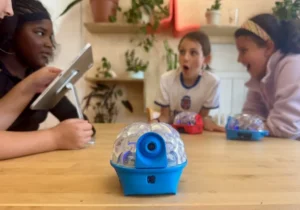
As the academic year commenced in North America, Bambu Lab launched its ambitious year-long 2026 Ambassador Program, a unique initiative that transforms students into educators and advocates for 3D printing technology. This program has selected 50 student ambassadors from schools across 11 U.S. states and three Canadian cities, tasking them with leveraging 3D printing to educate their peers, educators, and communities.
The program garnered significant interest, with nearly 400 applicants ranging from 8th graders to PhD candidates. Supported by Bambu Lab, these ambassadors are equipped with Bambu 3D printers, filament, and program materials. They are empowered to utilize these resources as teaching tools, organizing workshops, classes, demonstrations, and various STEM activities. The ambassadors progress through program tiers based on their event completions and can earn rewards such as new printers or personalized recommendation letters from Bambu Lab founders. The impact of this initiative is already evident, with ambassadors documenting 41 educational events over the summer, reaching an estimated audience of over 30,000 individuals.
Rohan Amin, a 10th grader from Georgia and a Bambu Lab Ambassador, articulated his motivation for joining the program: "I wanted to become a Bambu Lab School Ambassador because 3D printing has become a big part of my own journey with engineering. I started getting more involved with CAD, robotics, and 3D printing, and I really enjoyed being able to take an idea I had in my head, design it on a computer, and then actually hold it in my hands. That experience made me realize how powerful 3D printing can be for students," he shared. Amin’s vision extends beyond his personal experience: "I want other kids to have that same opportunity. I believe 3D printing is going to be a huge part of the future, and I don’t think students should have to wait until college or a job to start learning about it. I want to help more students learn these skills early, become comfortable with designing and building, and eventually find the area of engineering or technology that they are passionate about. If I can help even one student discover that they want to become an engineer because of something they created with a 3D printer, that would make this worth it to me." The 2026 Ambassador Program runs through May 2027, with future opportunities to be announced via Bambu Lab’s social media channels. This program exemplifies a forward-thinking approach to STEM education, fostering a new generation of innovators and makers by democratizing access to advanced manufacturing technologies.