The fundamental human need for mobility is particularly crucial in early childhood, playing a pivotal role in honing physical capabilities, fostering cognitive development, and nurturing independence. However, for children facing certain health conditions, achieving this mobility often hinges on the support of caregivers and the availability of specialized assistive devices. This is where innovative initiatives like MakeGood are making a profound difference, leveraging the power of community and advanced manufacturing technologies to provide vital support.
MakeGood, an organization founded in 2021, has emerged as a beacon of hope for families seeking affordable and customizable mobility solutions for their children. At its core, MakeGood connects families in need with a network of local "makers"—individuals and companies equipped with desktop 3D printers—who can manufacture these essential devices. This decentralized approach bypasses the often lengthy and costly traditional healthcare and durable medical equipment (DME) systems, offering a streamlined and accessible pathway to crucial assistive technology.
The organization’s mission, as articulated by its founder Noam Platt, is "to design high-quality effective assistive technology that anyone can make for themselves." This philosophy of "radical self-reliance" is central to MakeGood’s operation. By making designs openly available and accessible for 3D printing, MakeGood empowers individuals and organizations to become producers of assistive devices, significantly reducing costs and lead times. The entire process is designed to circumvent the bureaucratic hurdles of insurance approvals and lengthy procurement cycles that often plague families seeking such equipment.

A prime example of MakeGood’s impact is the Toddler Mobility Trainer (TMT), a device designed to function as a small, personalized wheelchair for young children. These trainers are specifically engineered to assist children with conditions such as cerebral palsy, spina bifida, or other developmental differences, enabling them to navigate their environment with greater ease and autonomy. The TMT is not merely a functional tool; it is a catalyst for independence, allowing children to explore, interact, and engage with the world around them in a manner that might otherwise be restricted.
The development of the TMT design itself is a testament to collaborative innovation. It originated from a Reddit post by Platt, seeking a 3D printable adaptation of an older, wood-based design. Schuyler Livingston of LINK PBC responded, undertaking the significant effort to redesign the device for modern filament 3D printers. Livingston’s expertise in creating clever assembly methods for large components, printable on standard desktop machines, was instrumental in making the TMT a viable and scalable solution. The design is intended for children aged 1 to 8 years, requiring a minimum 3D printer build volume of 256 x 256 x 256 mm, though larger components can be printed in sections for smaller build platforms.
The Rise of the 3D Printing Maker Network
MakeGood’s network has rapidly expanded since its inception, now boasting over 1,100 makers. This diverse group includes individual hobbyists passionate about 3D printing and full-service manufacturing companies looking to contribute to their communities. The vetting process for these makers is rigorous, ensuring the quality and safety of the devices produced. Potential makers must undergo capability tests, including required print tests and photographic submissions, which allow MakeGood to screen for potential issues like ill-fitting parts or print defects. This meticulous approach ensures that the devices delivered are not only functional but also robust and safe for children.
One notable member of this network is General Pattern Company, a fourth-generation, family-owned business specializing in molding and mold-making. While traditionally focused on industrial manufacturing, General Pattern has a history of integrating additive manufacturing into its operations for applications such as CMM fixturing, part prototyping, and mold tooling. The company’s commitment to community service, a core value, led them to embrace MakeGood’s initiative.

Andrew Fielder, a metrology engineer at General Pattern, discovered MakeGood while researching personal 3D printing projects. Recognizing the alignment between MakeGood’s mission and General Pattern’s philanthropic ethos, he proposed the idea of the company becoming an official manufacturer to CEO Denny Reiland. Reiland, a third-generation owner, immediately embraced the concept. "Any excuse he has to give back to the community he’s all about," Fielder remarked about Reiland’s swift approval, indicating a shared vision for impactful community engagement.
Following Reiland’s endorsement, Fielder completed MakeGood’s vetting process, earning General Pattern the designation of a "vetted maker." This allows Fielder to serve families within approximately a 200-mile radius of Minneapolis. Families submit their requests through the MakeGood portal, where local makers can claim projects and begin production.
The Toddler Mobility Trainer: Design, Production, and Impact
The TMT represents a significant advancement in pediatric mobility. Unlike conventional strollers or carriers, the TMT is designed to be operated by the child, fostering a sense of control and independence. This distinction is crucial for a child’s developmental journey. "At this age, having something a little more age-appropriate makes a big difference to the kids," stated Marcy Krosch, senior vice president of sales at General Pattern.
The TMT is envisioned as a stepping stone towards more advanced mobility devices. As children grow and develop strength, they often transition from the TMT to walkers. The 3D-printed devices play a vital role in this transition by building physical capabilities and nurturing a crucial sense of self-reliance.

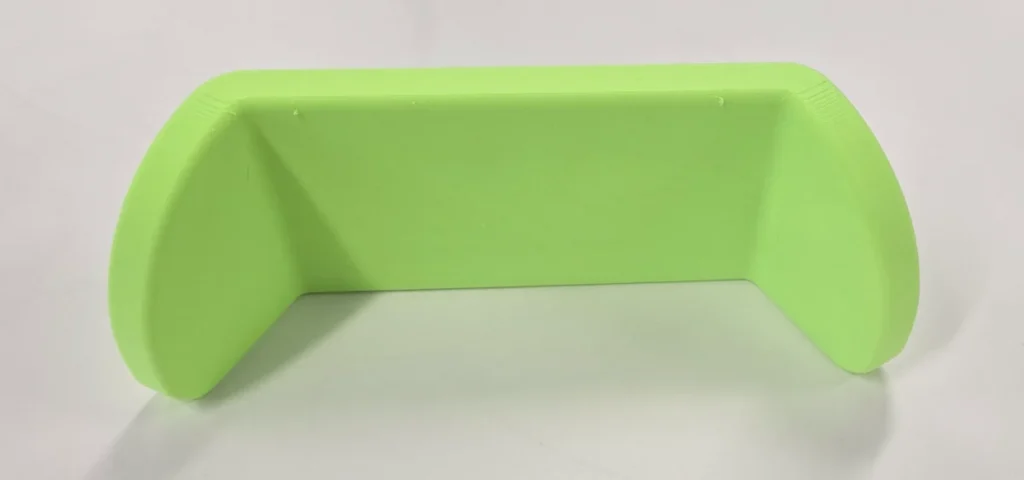
The production of a single TMT is a substantial undertaking, requiring approximately 330 hours of printing time to produce the around 40 structural components, spread across roughly 28 individual print jobs. The primary material used is durable PETG, known for its strength and resilience. For cushioning and other softer components, General Pattern utilizes standard TPU or an innovative active-foaming TPU. This latter material offers versatility, allowing for adjustable durometers based on print temperature, a feature that proved particularly useful for creating comfortable yet supportive seating.
Fielder shared an anecdote about the learning curve with the active-foaming TPU. "The material bonds super well to the build plate. Turns out, unfortunately too well. So I did ruin a build plate in the process," he recounted. However, a simple solution—applying a layer of blue painter’s tape—resolved the adhesion issue. General Pattern has since achieved such positive results with this filament that they now use it for prototyping foam parts for clients who will eventually have them injection molded in mass production.
Beyond the 3D-printed elements, each TMT requires minimal additional hardware: two bearings, two washers, and six bolts. Assembly is a swift process, typically taking about an hour for two individuals. James Meyer, a colleague from General Pattern’s metrology department, collaborates with Fielder on assembly. "The parts dovetail and kind of slide into place, and then as you assemble it further, one component locks in another component," Fielder explained, highlighting the intuitive design of the TMT.
Currently, General Pattern operates five Bambu Lab 3D printers, a popular choice within the MakeGood network due to their reliability and consistency. This standardization among printers contributes to the repeatability of the manufacturing process, allowing makers to focus on print quality rather than design intricacies.

Broader Implications and Future Outlook
The MakeGood initiative and its collaboration with companies like General Pattern carry significant implications for the future of assistive technology provision. By democratizing the manufacturing process, MakeGood is not only addressing immediate needs but also fostering a culture of innovation and community support.
The TMT’s design and production model offer a compelling alternative to traditional systems, which are often criticized for their high costs, long waiting lists, and lack of customization. "Many insurance companies deny families’ mobility devices, or make them wait 5+ years between supplying them with devices," Platt noted. "The TMT is a low-cost effective solution that fills those gaps."
The impact on the children who receive these devices is profound. Beyond the physical benefits of increased mobility, the psychological and social advantages are immense. The ability to participate more fully in activities, coupled with the personalized aesthetic touches that makers often incorporate based on a child’s favorite colors and interests, can transform a child’s experience from one of potential isolation to one of inclusion and confidence. "The kids go from being the ‘other’ to being the coolest one on the playground," Platt emphasized.
The broader implications extend to the 3D printing industry itself, showcasing its potential as a force for social good. "It’s a really good way for both manufacturers and hobbyists alike to be able to do something that’s not only a useful 3D print, but also something that shows the world some other uses of additive manufacturing," Fielder commented.

General Pattern has set a goal to produce one mobility device per month through the MakeGood network, demonstrating a sustainable commitment to the program. Krosch expressed pride in the company’s involvement: "It makes me incredibly proud to be part of this company, and seeing our team committed to making a difference."
The success of MakeGood and its network of makers like General Pattern suggests a transformative future for assistive technology. The combination of open-source design, accessible manufacturing technologies like 3D printing, and a dedicated community network has created a powerful model for addressing unmet needs. As Platt aptly stated, "For the makers, this is a real opportunity to be a true hero to people in their communities." The revolutionary nature of these devices, as reported by parents and clinicians, holds the potential to significantly improve pediatric mobility outcomes for generations to come, fostering independence, enhancing development, and bringing joy and empowerment to children’s lives.