In a significant week for the additive manufacturing (AM) industry, several key developments have emerged, spanning critical areas from quality assurance software and defense sector consolidation to intellectual property disputes and groundbreaking medical applications. These advancements underscore the growing maturity and diverse impact of 3D printing technologies across multiple global sectors.
amsight Partners with AM North to Elevate Certified AM Production Quality
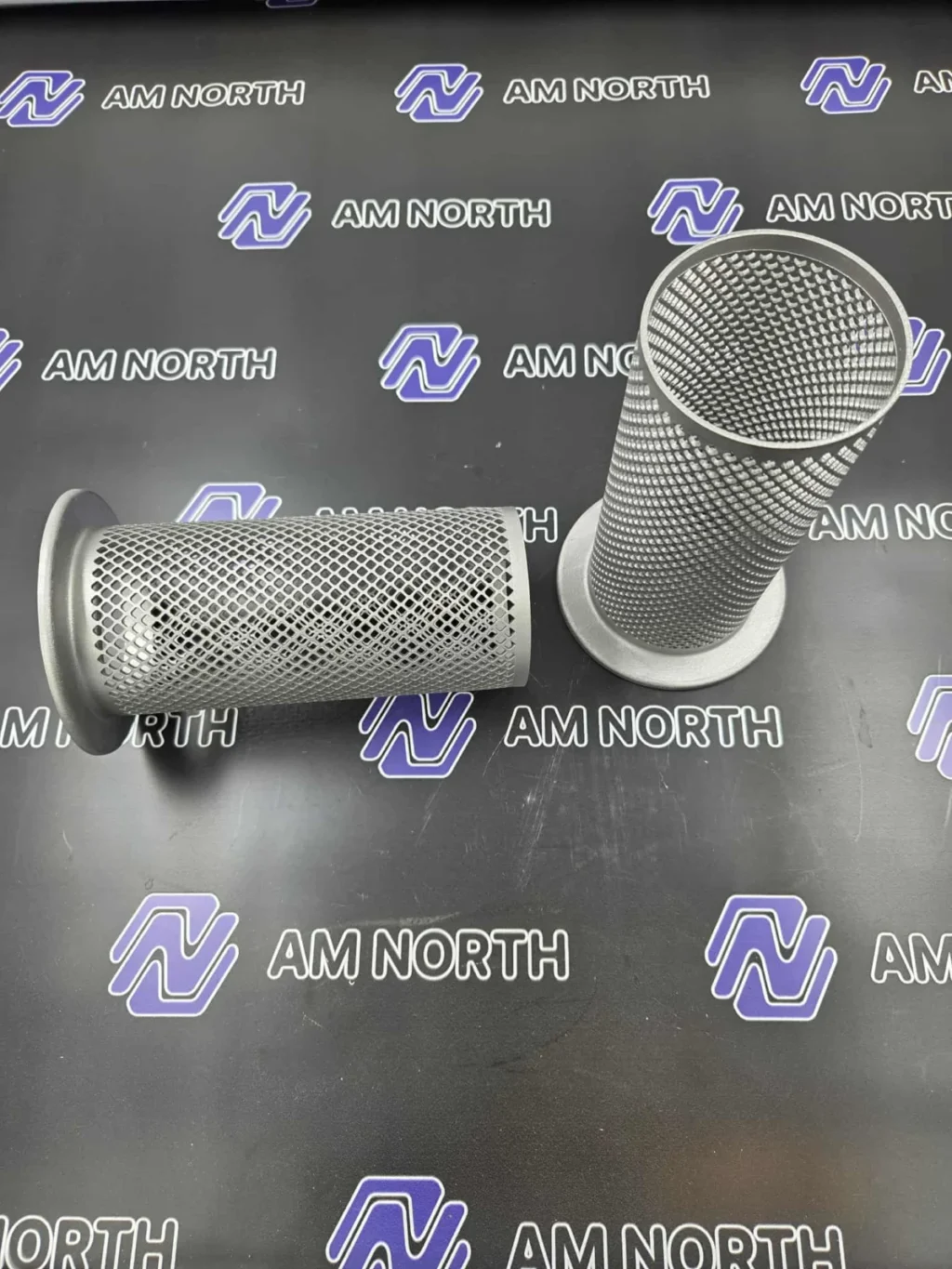
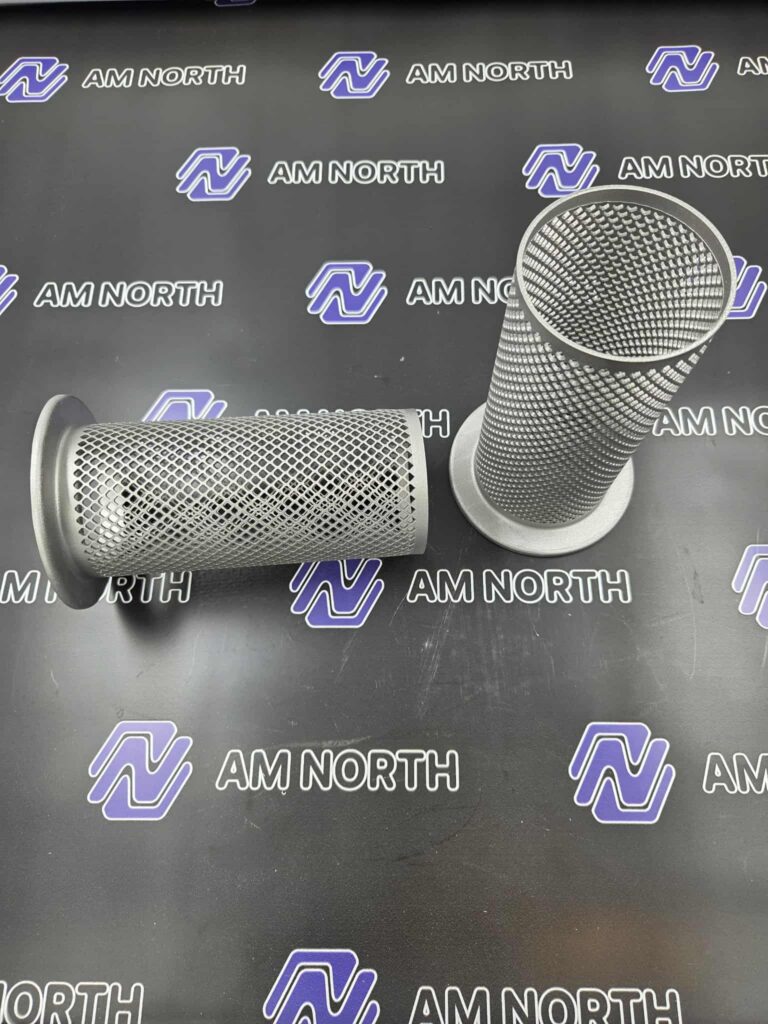
Norwegian additive manufacturing firm AM North has selected amsight, a leading developer of software solutions for data-driven quality assurance and analytics in industrial AM, to enhance its certified production capabilities. This strategic partnership aims to streamline quality management processes, significantly reduce manual documentation efforts, and improve the overall traceability of manufactured parts.
Founded in 2023, AM North has rapidly established itself within the oil and gas supply chain, championing the transition from traditional physical spare part inventories to a hybrid model that incorporates digital warehousing and on-demand 3D printing. As the company seeks to expand its AM expertise into broader industrial markets, the need for robust, certified quality management became paramount. Previously, AM North relied on time-consuming manual documentation, utilizing standard office software like Word and Excel to compile project information into PDF reports. This process was estimated to consume approximately eight hours of dedicated documentation work per project.
The integration of amsight’s software is projected to slash this documentation time to a mere 1.5 to 2 hours per project. This substantial efficiency gain not only frees up valuable resources but also ensures that AM North’s processes are more closely aligned with the stringent expectations of its industrial customers and the rigorous requirements of various certification bodies. amsight’s platform is designed to create a comprehensive digital thread, connecting quality-relevant data across the entire AM workflow. This includes critical stages such as initial planning, build job preparation, real-time machine monitoring, post-processing procedures, thorough inspection protocols, and final reporting.
Tim Wischeropp, CEO of amsight, emphasized the critical need for specialized AM quality evidence software, stating, "AM North shows exactly why production additive manufacturing needs an AM-specific quality evidence software. When customers, auditors, and regulated industries ask for proof, scattered files and manual reports are not enough. amsight helps manufacturers build a digital quality backbone that connects powder, process, machine, and inspection data at part level." This sentiment highlights a growing industry-wide demand for sophisticated digital solutions that can provide irrefutable evidence of quality and compliance in AM. The ability to aggregate and present this data in a standardized, accessible format is becoming a key differentiator for companies operating in regulated environments or serving demanding industrial clients.
The implications of this partnership extend beyond AM North’s operational efficiency. By adopting amsight’s advanced quality assurance tools, AM North is positioning itself as a leader in certified AM production, capable of meeting and exceeding the evolving standards of industries where reliability and traceability are non-negotiable. This move signals a broader trend in the AM sector, where software-driven quality control is no longer a luxury but a fundamental requirement for widespread industrial adoption and integration.
Ondas Inc. to Acquire Aran Defense Division, Bolstering Autonomous Systems Capabilities
Ondas Inc., a prominent international provider of defense and security technologies and autonomous systems, has entered into a definitive agreement to acquire the Aran Defense division of Aran Ltd., an Israeli engineering and manufacturing firm. This acquisition marks a significant strategic move for Ondas, aimed at expanding its manufacturing footprint and strengthening its position within Israel’s sovereign defense industrial base.
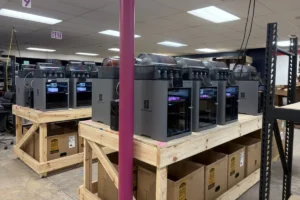
Aran Defense has demonstrated impressive growth in recent years. The division reported revenues of approximately $17 million in 2025, an increase from $12 million in 2024, with projected revenues of around $26 million for the current year. The company operates extensive manufacturing and engineering facilities in Israel, spanning approximately 4,400 square meters. Its integrated capabilities encompass multidisciplinary engineering and in-house production infrastructure, including specialized areas for cabling, CNC turning and milling, electromechanical assembly and integration, rigorous quality assurance, tactical textiles production, warehousing, and additive manufacturing.
The integration of Aran Defense’s capabilities will significantly enhance Ondas’s ability to meet the escalating demand for autonomous defense systems. By adding these multidisciplinary defense engineering and manufacturing operations, Ondas will be better equipped to serve local and international markets, accelerating the development and deployment of its advanced technologies. The acquisition is valued at approximately $33 million, payable in either cash or Ondas common stock. The transaction is anticipated to close during the third quarter of 2026.
Eric Brock, Chairman and CEO of Ondas, articulated the strategic importance of this acquisition: "As demand across our defense businesses continues to grow, expanding localized manufacturing capacity is becoming increasingly important to our ability to execute. Aran Defense will provide us with an established production platform in Israel that can support multiple Ondas businesses and programs, allowing us to industrialize products faster, increase manufacturing scale and respond more efficiently to customer requirements." He further elaborated on the company’s vision, stating, "This is another important step in building Ondas into a vertically integrated defense technology company with the capabilities not only to develop differentiated technologies, but to manufacture and deliver them at scale."
This acquisition is indicative of a broader trend in the defense industry, where companies are increasingly seeking to establish robust, localized manufacturing capabilities to ensure supply chain resilience and responsiveness. For Ondas, the addition of Aran Defense’s expertise and infrastructure represents a strategic leap towards becoming a fully integrated defense technology provider, capable of managing the entire product lifecycle from concept to large-scale deployment. The inclusion of 3D printing within Aran Defense’s existing capabilities further aligns with the strategic goals of both companies, promising to unlock new avenues for innovation and production efficiency in the rapidly evolving defense landscape.
3D Systems Found Guilty of Trade Secret Misappropriation in Landmark Case
In a significant legal development, 3D Systems, a pioneer in the 3D printing industry, has been found guilty of misappropriating trade secrets belonging to Intrepid Automation, a company founded by former 3D Systems employees. The verdict, delivered by a jury following an eight-day trial in the Southern District of California, awarded Intrepid Automation $5.6 million in compensatory damages and an additional $6 million in exemplary damages due to the "willful and malicious" nature of the misappropriation.
Intrepid Automation, established in 2017, specializes in developing automated additive manufacturing solutions designed for high-speed, large-scale production, utilizing multi-projector technology. The company’s five co-founders are all former employees of 3D Systems, bringing with them extensive experience in the field. The legal battle centered on Intrepid’s proprietary large-frame DLP multiprojection Range 3D printer, a technology that was under development at the time of the alleged misappropriation.
Notably, claims initially filed by 3D Systems against Intrepid and its founders were dismissed over a year prior to the trial on summary judgment. Consequently, the jury’s deliberation focused exclusively on Intrepid’s counterclaims of trade secret misappropriation. The trial highlighted the challenges faced by emerging companies when competing with established industry giants, particularly when intellectual property is at stake. 3D Systems, as a publicly traded company with substantial resources and a long history in additive manufacturing, presented a formidable opponent.
The jury’s unanimous verdict underscores the value of Intrepid’s innovations and the integrity of its founders. Jeffrey Catalano, lead trial counsel for Intrepid, commented on the proceedings: "This trial hinged on the testimony of several of Intrepid’s founders, who spoke with passion about the development of their technology. In the end, Intrepid’s innovation shined through. This victory has been a long time coming."

The substantial damages awarded reflect the jury’s assessment of the harm caused by the misappropriation of Intrepid’s trade secrets. The exemplary damages, in particular, signal a strong message regarding the consequences of willful infringement of intellectual property. This case serves as a stark reminder of the importance of protecting proprietary information and the legal recourse available to companies that fall victim to such practices. For Intrepid Automation, this legal victory represents not only financial compensation but also vindication for its innovative work and a crucial step in solidifying its position in the competitive AM market. The implications of this verdict could influence how trade secret disputes are handled within the technology sector, particularly in fast-paced industries like 3D printing.
Novel 3D Printed Ankle Implant Developed to Treat Cartilage Damage
A collaborative effort between researchers at the University of Twente (UT) and Radboud University Medical Center (Radboudumc) in the Netherlands is paving the way for a potentially revolutionary treatment for ankle cartilage damage. The project, operating under the umbrella of HealthTech Nexus—a strategic partnership designed to accelerate healthcare innovations—is developing AMPLANK, a patient-specific, 3D printed implant intended to address damage to the ankle’s cartilage.
Current treatments for severe ankle cartilage damage primarily include ankle fusion (arthrodesis) and total ankle replacement. While effective in managing pain, these procedures are often invasive and can significantly restrict the ankle’s natural range of motion, impacting patients’ mobility and overall quality of life. The AMPLANK implant aims to offer a less invasive and more personalized alternative.
The core innovation of AMPLANK lies in its custom-designed nature. Each implant is meticulously engineered to precisely fit the unique anatomy of the individual patient’s ankle joint. A key advantage of this approach is its potential to integrate seamlessly into the joint without necessitating the removal of healthy bone, a common requirement in traditional joint replacement surgeries. This minimizes surgical invasiveness and preserves more of the patient’s natural skeletal structure.
The research team is currently focused on developing a functional prototype of AMPLANK. Advanced computer simulations will be employed to rigorously evaluate the implant’s biomechanical performance within the ankle joint under various conditions. Following these simulations, the implant will undergo testing in a realistic anatomical setting. If these preclinical evaluations prove successful, the AMPLANK technology holds promise for future application in other joints susceptible to cartilage damage, such as the elbow, wrist, and shoulder.
Athena Jalalian, a researcher at the University of Twente, expressed the team’s motivation: "Ankle cartilage damage can have a major impact on mobility and quality of life. With AMPLANK, we want to offer patients a new treatment option that better matches their anatomy and lifestyle." This patient-centric approach highlights the transformative potential of personalized medicine enabled by advanced manufacturing techniques like 3D printing.
The development of AMPLANK is further supported by contributions from the Fraunhofer Innovation Platform at UT, the Sint Maartenskliniek, and a consortium of industrial partners. This multidisciplinary collaboration underscores the complex and integrated effort required to bring such innovative medical devices from concept to clinical reality. The success of AMPLANK could signify a paradigm shift in the treatment of joint cartilage damage, offering a more conservative and tailored solution that prioritizes patient outcomes and functional recovery. This development exemplifies the growing role of additive manufacturing in creating bespoke medical solutions that address unmet clinical needs.