WASHINGTON – The National Institute of Standards and Technology (NIST) has announced a significant commitment of $46.5 million, earmarked for the establishment of 14 new Manufacturing Extension Partnership (MEP) centers across the United States and its territories. This substantial investment is strategically designed to empower small and medium-sized manufacturers (SMMs) by facilitating their adoption of advanced manufacturing technologies, thereby bolstering the nation’s industrial competitiveness and resilience.
The new funding initiative underscores NIST’s dedication to strengthening the U.S. manufacturing landscape. These additional MEP centers are tasked with a multi-faceted mission: to invigorate manufacturing ecosystems by encouraging the widespread adoption and scaling of advanced technologies, enhance production capacity and capability, foster seamless supply chain integration, and cultivate a robust, skilled manufacturing workforce equipped for the demands of the 21st century.
The Strategic Imperative for Advanced Manufacturing Adoption
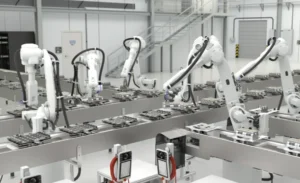
Advanced manufacturing technologies represent the vanguard of industrial innovation, encompassing a broad spectrum of sophisticated tools and methodologies. This includes, but is not limited to, robotics, artificial intelligence (AI), automation, advanced materials, additive manufacturing (3D printing), and biotechnology. These innovations are not merely incremental improvements; they are transformative forces capable of dramatically enhancing efficiency, reducing costs, accelerating product development, and enabling the creation of highly customized and complex products. For instance, the image accompanying this article, depicting the assembly of wire harnesses, illustrates a segment of manufacturing that stands to benefit immensely from automation and AI-driven quality control, leading to higher precision and reduced labor intensity in complex tasks.
The integration of these technologies is no longer a luxury but a necessity for manufacturers striving for global competitiveness. Robotics can perform repetitive or dangerous tasks with greater speed and accuracy, freeing human workers for more complex problem-solving roles. Artificial intelligence offers predictive maintenance, optimizing machinery uptime and reducing unexpected failures, while also revolutionizing supply chain logistics and quality assurance. Additive manufacturing, in particular, allows for rapid prototyping and the production of intricate parts with optimized designs, fundamentally altering product development cycles and enabling localized, on-demand production. Advanced materials, such as composites or smart alloys, unlock new possibilities for product performance and durability across industries ranging from aerospace to medical devices.
Focusing on the Backbone of U.S. Manufacturing: Small and Medium-Sized Enterprises
A critical aspect of this NIST initiative is its deliberate focus on small and medium-sized manufacturers. These firms, often defined as businesses with fewer than 500 employees, form the overwhelming majority—approximately 98 percent—of the U.S. manufacturing base. Despite their numerical dominance, SMMs frequently face significant hurdles in accessing and implementing advanced technologies. These challenges include limited capital for large-scale investments, a lack of in-house expertise, difficulties in navigating complex technological landscapes, and the inherent risks associated with adopting unproven (to them) systems.
Yet, the economic contribution of SMMs is immense. They collectively employ a substantial portion of the manufacturing workforce, drive local economies, and are often critical links in larger supply chains, supplying specialized components and services. Their agility and capacity for innovation are vital, but without support, they risk being left behind in an increasingly competitive global market dominated by large corporations with greater resources. NIST’s targeted funding aims to bridge this gap, ensuring that the economic engine of SMMs remains robust and capable of evolving with technological advancements.
Geographic Expansion: New MEP Centers in Key Regions
The grants will strategically establish new MEP centers in 14 states and territories, ensuring a broad geographic reach that addresses diverse regional manufacturing needs. The selected locations include Alabama, Alaska, Arkansas, California, Georgia, Louisiana, Massachusetts, Missouri, Montana, Ohio, Pennsylvania, Puerto Rico, Utah, and Vermont. This distribution reflects a conscious effort to bolster manufacturing capabilities in areas that may have specific industrial clusters—such as aerospace in California, automotive in Ohio, or specialized manufacturing in Massachusetts—or to provide much-needed support in regions with nascent or underserved manufacturing sectors.
Each new center will serve as a localized hub, providing tailored assistance, expert guidance, and access to resources that help SMMs overcome technological barriers. This localized approach is crucial, as manufacturing challenges and opportunities can vary significantly from one state or territory to another, depending on the predominant industries, workforce availability, and existing infrastructure.
The Enduring Impact of the MEP National Network
This new funding builds upon the established success and extensive reach of the MEP national network, which has been a cornerstone of federal support for U.S. manufacturers for decades. Comprising approximately 1,400 advisors and experts, operating from 475 service locations, and collaborating with over 2,100 partners, the MEP network functions as a comprehensive ecosystem of support. These advisors and experts provide hands-on assistance, helping SMMs diagnose problems, identify technological solutions, optimize processes, improve quality, and enhance overall competitiveness.
Since its inception, the MEP program has consistently demonstrated a remarkable return on investment. Independent studies and reports have frequently highlighted that for every dollar of federal investment, MEP generates a significant economic impact, often leading to billions of dollars in increased sales for clients, cost savings, and the creation or retention of tens of thousands of jobs annually. This proven track record underscores the effectiveness of the MEP model, which combines federal oversight with local, responsive service delivery.
A Chronology of Support and Recent Initiatives
The MEP program, established in 1988 under the Omnibus Trade and Competitiveness Act, was conceived to enhance the productivity and technological capabilities of U.S. manufacturers. Over the decades, its mission has evolved to address changing industrial landscapes, from promoting lean manufacturing principles in the 1990s to today’s focus on digital transformation and advanced technology adoption.
The current $46.5 million pledge is not an isolated event but part of a continuous, strategic effort by NIST to modernize U.S. manufacturing. Just last month, NIST launched a targeted MEP pilot program specifically designed to assist aerospace manufacturers in making greater use of additive manufacturing and to strengthen the domestic supply chain for critical minerals. This pilot project, representing an investment of approximately $20 million over two years, exemplifies NIST’s commitment to addressing specific industry needs and critical supply chain vulnerabilities through the MEP framework. By focusing on critical minerals and additive manufacturing, the pilot aims to reduce reliance on foreign sources, enhance national security, and foster innovation within a strategically vital sector.
These initiatives align with broader national strategies aimed at reinforcing domestic supply chains, particularly in the wake of global disruptions experienced during recent years. The vulnerabilities exposed during the pandemic, for instance, highlighted the urgent need for greater self-sufficiency and resilience in key manufacturing sectors.
Statements and Perspectives on the Investment
While specific statements from officials were not provided in the original text, the announcement logically aligns with the strategic priorities of NIST and the Department of Commerce.
A hypothetical statement from Laurie E. Locascio, Under Secretary of Commerce for Standards and Technology and NIST Director, might emphasize: "This significant investment in our MEP centers is a testament to our unwavering commitment to the strength and future of American manufacturing. By empowering small and medium-sized businesses with access to cutting-edge technologies like AI and advanced robotics, we are not just fostering economic growth; we are building a more resilient, innovative, and globally competitive industrial base. These new centers will serve as vital catalysts for local economies and national prosperity."
Similarly, an imagined response from a representative of a state MEP center, such as the Ohio MEP, could highlight the local impact: "The establishment of a new MEP center in Ohio will be transformative for our local manufacturers. Our small businesses are eager to embrace new technologies, but often lack the resources or expertise to do so effectively. This funding will allow us to expand our reach, offer more tailored programs, and ensure that Ohio remains at the forefront of manufacturing innovation, particularly in sectors like automotive and advanced materials."
Industry analysts would likely view this funding as a timely and necessary intervention. "The persistent challenge for U.S. manufacturing lies in ensuring that technological advancements are not solely the domain of large enterprises," noted one hypothetical industry expert. "This NIST investment directly addresses that gap, providing the critical infrastructure through the MEP network to democratize access to advanced manufacturing. It’s an essential step in maintaining U.S. competitiveness against nations that heavily subsidize their manufacturing sectors."
Broader Implications for U.S. Manufacturing Competitiveness
The implications of this $46.5 million investment extend far beyond the immediate financial allocation. It represents a strategic move with profound long-term impacts on the U.S. manufacturing sector and the broader economy.
- Economic Growth and Innovation: By enabling SMMs to adopt advanced technologies, the initiative is expected to drive increased productivity, foster innovation in product design and processes, and ultimately lead to job creation. These are not just any jobs, but often higher-skilled, higher-paying positions that require a new blend of technical and problem-solving abilities.
- Supply Chain Resilience: Strengthening SMMs inherently fortifies domestic supply chains. Many SMMs are specialized component suppliers or service providers, and their technological advancement makes the entire supply chain more robust, less susceptible to external shocks, and more capable of rapid adaptation. This contributes to national security by reducing dependence on potentially unreliable foreign sources for critical goods.
- Workforce Development: The adoption of advanced manufacturing technologies necessitates a skilled workforce. The MEP centers will play a crucial role in advising SMMs on workforce training needs, connecting them with educational institutions, and facilitating programs for reskilling and upskilling employees. This aligns with a national imperative to prepare the American workforce for the jobs of the future, ensuring that human capital keeps pace with technological evolution.
- Global Competitiveness: In a globalized economy where manufacturing prowess is a key determinant of national strength, this investment positions the U.S. to compete more effectively with other industrial powers. By enhancing the capabilities of its diverse manufacturing base, the U.S. can produce higher-quality, more cost-effective, and more innovative products, strengthening its position in international markets.
Looking Ahead: The Future of U.S. Manufacturing
The establishment of these 14 new MEP centers marks a significant milestone in NIST’s ongoing efforts to cultivate a vibrant, technologically advanced manufacturing sector in the United States. It reflects a clear understanding that sustained economic growth, national security, and global leadership are inextricably linked to the strength and adaptability of the nation’s industrial base.
The success of this initiative will hinge not only on the effective deployment of funds but also on the continued collaboration between government agencies, MEP centers, industry, and educational institutions. As advanced manufacturing technologies continue to evolve at a rapid pace, ongoing investment, responsive programs, and a concerted effort to support the crucial small and medium-sized manufacturers will be paramount to ensuring America’s enduring leadership in the global economy. For more detailed information on the MEP program and its initiatives, stakeholders are encouraged to visit the official NIST website.