Foams, ubiquitous in daily life as the ephemeral lather of soap suds, the creamy consistency of shaving cream, the airy texture of whipped toppings, and the stable structure of food emulsions like mayonnaise, have long been a subject of scientific fascination. For many decades, the prevailing scientific consensus held that foams behaved akin to glass, their microscopic components believed to be locked into disordered yet essentially fixed positions, contributing to their apparent stability. This long-standing view, rooted in classical physics, provided a seemingly robust framework for understanding these complex materials. However, groundbreaking new research from the University of Pennsylvania is now challenging this deeply entrenched belief, revealing a surprising dynamism within foams and an even more unexpected mathematical kinship with the sophisticated algorithms powering modern artificial intelligence.
The traditional perception of foams as inert, static structures, once formed, is being fundamentally reevaluated. Engineers at the University of Pennsylvania have unearthed compelling evidence that while foams maintain their macroscopic shape and overall integrity, their internal architecture is far from static; it is, in fact, in a state of continuous, restless motion. This revelation alone marks a significant departure from established theories. What makes this discovery truly remarkable, however, is the subsequent finding that the mathematical principles governing this ceaseless internal motion bear a striking resemblance to those employed in deep learning, the powerful technique used to train today’s advanced AI systems. This convergence of seemingly disparate fields—soft matter physics and artificial intelligence—suggests the existence of a profound, shared organizing principle that may transcend the boundaries of physical, biological, and computational systems, offering a new lens through which to view adaptation and learning across diverse domains. The implications of this work are far-reaching, potentially guiding the development of novel materials capable of autonomously adapting and responding to their environments, and even deepening our understanding of living structures that undergo constant internal reorganization, such as the intricate internal scaffolding of cells.
The Enduring Mystery of Foam Stability: A Historical Perspective
Foams, from a macroscopic perspective, often present as stable, solid-like materials. They can retain their shape under pressure and often exhibit elasticity, springing back after deformation. This apparent stability at the human scale contributed significantly to the long-held "glass-like" analogy. In this view, individual bubbles or particles within the foam were thought to settle into energetically favorable positions, much like a boulder rolling down a hill to rest at the bottom of a valley. Once settled, these components were believed to remain largely stationary, contributing to the foam’s overall structural integrity.
However, at a much smaller, microscopic scale, foams are characterized as "two-phase" materials. This means they are composed of two distinct phases—typically a gas (the bubbles) dispersed within a liquid or solid continuous phase. The interplay between these phases, including surface tension, viscosity, and gravitational forces, dictates the foam’s behavior. Given their relative ease of creation and observation, combined with their remarkably complex mechanical behavior, foams have historically served as invaluable model systems for scientists seeking to understand other dense and dynamic materials, ranging from granular media to, crucially, living cells. The ability to manipulate and observe foam dynamics offered a window into the more intricate processes occurring within biological systems, where structures must continually adapt and reorganize while maintaining overall function.
Classical theories, which dominated scientific thought for decades, conceptualized foam bubbles as entities navigating an "energy landscape." In this framework, bubbles were predicted to move spontaneously towards configurations that minimized their potential energy, eventually settling into stable, low-energy positions. This model effectively explained the perceived long-term stability of many foams, likening it to a system achieving thermodynamic equilibrium. Once formed, the foam was expected to reach a static state where its constituent bubbles were locked into positions of minimal energy, much like a chemical reaction reaching its equilibrium point.
The Unraveling of Traditional Theories: A Mismatch Between Prediction and Reality
Despite the elegance and widespread acceptance of these traditional theories, a subtle but persistent mismatch began to emerge between theoretical predictions and empirical observations of real foam behavior. As early as two decades ago, researchers, including John C. Crocker, Professor in Chemical and Biomolecular Engineering (CBE) and co-senior author of the recent study, started noticing these discrepancies. While foams appeared stable externally, the internal dynamics seemed to defy the expectation of eventual stasis. The bubbles, rather than settling into fixed positions, exhibited a continuous, albeit subtle, rearrangement.
"When we actually looked at the data, the behavior of foams didn’t match what the theory predicted," Crocker noted, highlighting the growing unease within the scientific community. The challenge, however, was not merely identifying the discrepancy but finding the appropriate mathematical and computational tools to accurately describe the observed phenomena. At the time, the existing theoretical frameworks were simply inadequate to capture the continuous, non-equilibrium dynamics that were subtly at play within these seemingly stable materials. The scientific toolkit lacked the sophistication to model systems that constantly change without ever reaching a single, fixed, and universally optimal arrangement. This intellectual void persisted, signaling the need for a radically new approach to understanding foam physics.
A New Lens: Computer Simulations and the Revelation of Constant Motion
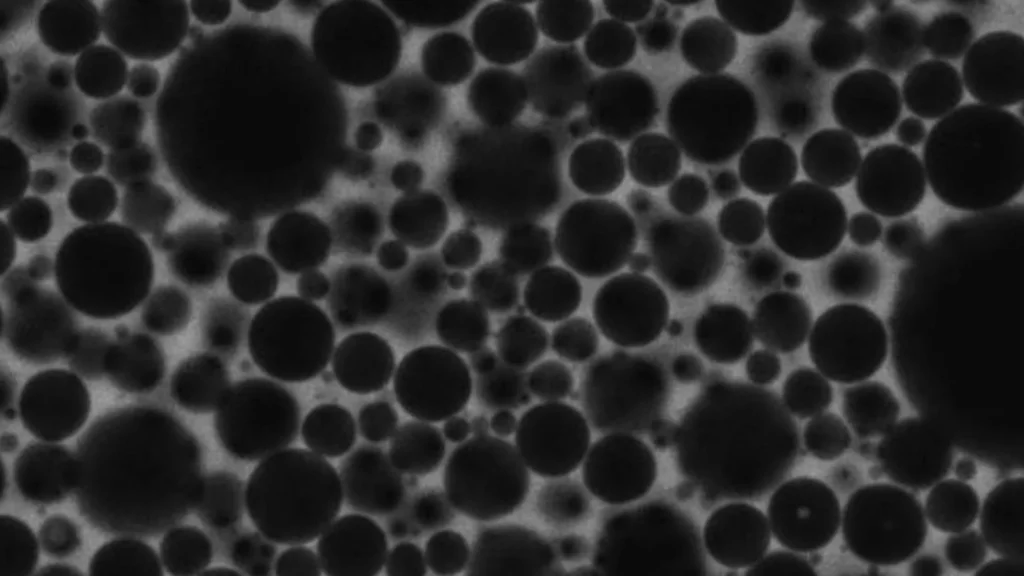
To unravel this enduring puzzle, the University of Pennsylvania team, led by Professors John C. Crocker and Robert Riggleman, embarked on a meticulous computational study. Utilizing advanced computer simulations, they meticulously tracked the individual movements of bubbles within a wet foam. This approach allowed them to observe the microscopic dynamics in unprecedented detail, providing a window into the hidden world of bubble interactions and rearrangements.
The results of their simulations, published in the esteemed Proceedings of the National Academy of Sciences (PNAS), delivered a decisive blow to the long-held "glass-like" paradigm. Contrary to the expectation that bubbles would eventually become stationary once they found their lowest energy configuration, the simulations revealed a persistent and continuous "wandering" of bubbles through a multitude of possible arrangements. These bubbles never truly settled into a single, immutable state; instead, they were in a perpetual state of flux, exploring various configurations within the foam’s structure. This constant internal reorganization, which Crocker aptly described as "bubbles that never settle," was the critical empirical finding that demanded a new theoretical explanation.
The Unexpected Parallel: Deep Learning and the Dynamics of Optimization
The truly astonishing aspect of this discovery emerged when the researchers began to analyze the mathematical description of this incessant bubble motion. They found that this behavior closely mirrored the dynamics of deep learning, the computational technique that has revolutionized artificial intelligence. To understand this connection, it’s essential to briefly delve into how modern AI systems learn.
Deep learning systems, often structured as artificial neural networks, learn by repeatedly adjusting billions of internal numerical "parameters" during a process called training. These parameters, in essence, represent the knowledge or understanding that the AI system has acquired. Early approaches to training AI models often aimed to push these systems towards a single, optimal solution—a specific set of parameters that perfectly minimized error on the training data. The goal was to find the "deepest valley" in an abstract computational landscape, representing the ideal configuration.
However, researchers in AI soon realized a critical limitation of this approach. While finding the absolute minimum error on training data might seem desirable, it often led to a phenomenon known as "overfitting." An overfitted model performs exceptionally well on the data it has already seen but fails miserably when presented with new, unseen information. It becomes too specialized, too rigid, and loses its ability to generalize.
The breakthrough in deep learning came with the understanding that robust AI systems don’t necessarily reside in the absolute deepest "valley" of the error landscape. Instead, they often perform better when their parameters are allowed to fluctuate within "flatter" regions of this landscape, where many different configurations yield similarly good, though not perfectly optimal, results. This continuous adjustment and exploration within a broad, viable solution space allow the AI to maintain flexibility and generalize effectively to new data. The optimization methods used, often variations of gradient descent, guide the system step-by-step towards configurations that reduce error, but the goal is not always to lock into a single, deepest minimum.
Foams and AI: A Shared Mathematical Language
It was precisely this nuanced understanding of deep learning dynamics that provided the missing piece for the foam puzzle. When the Penn team re-examined their foam data through this lens, the mathematical similarity became strikingly clear. Foam bubbles, much like the parameters in a well-trained deep learning model, do not settle into single, deep, and unchangeable positions. Instead, they continuously move and rearrange themselves within broad regions of their own energy landscape where many different bubble configurations are energetically equivalent or very nearly so.
"Foams constantly reorganize themselves," emphasized John C. Crocker. "It’s striking that foams and modern AI systems appear to follow the same mathematical principles. Understanding why that happens is still an open question, but it could reshape how we think about adaptive materials and even living systems."
Robert Riggleman, also a Professor in CBE and co-senior author, further elucidated the parallel: "The key insight was realizing that you don’t actually want to push the system into the deepest possible valley. Keeping it in flatter parts of the landscape, where lots of solutions perform similarly well, turns out to be what allows these models to generalize." This insight, initially derived from optimizing AI systems for better generalization, proved to be the exact mathematical framework needed to describe the continuous, adaptive motion observed within foams. The same mathematics that explains why deep learning models achieve robust performance by not over-specializing also captures the inherent, dynamic flexibility that foams have exhibited all along.
Profound Implications for Science and Engineering
The implications of this convergence extend far beyond the specific study of foams. This research fundamentally challenges the long-held assumptions in a field many believed to be thoroughly understood, proving that even seemingly simple everyday materials can harbor deep, complex, and previously unrecognized behaviors. This alone is a significant contribution, fostering a renewed sense of inquiry into other complex systems.
Advancements in Materials Science: The findings could revolutionize the design and creation of adaptive and responsive materials. Imagine materials that can self-heal, autonomously change shape, or adjust their properties in response to external stimuli. By understanding the underlying mathematical principles that allow foams to continuously reorganize while maintaining overall structure, engineers could develop "smart" materials with inherent flexibility and resilience. This could lead to breakthroughs in areas such as soft robotics, flexible electronics, and even advanced construction materials capable of adapting to environmental shifts.
New Insights into Biological Systems: The connection to living structures is particularly compelling. Crocker’s team is already revisiting the cytoskeleton, the intricate microscopic framework inside cells that provides structural support and plays a crucial role in cell division, movement, and transport. Like foams, the cytoskeleton must continually reorganize itself, dynamically assembling and disassembling, all while preserving the cell’s overall structure and function. This new mathematical framework could offer a powerful tool for better understanding the dynamic processes within cells, potentially shedding light on mechanisms of growth, repair, and even disease progression. Other biological systems, such as protein folding or the dynamics of cell membranes, which also exhibit continuous reorganization, could similarly benefit from this new perspective.
A Broader Understanding of Learning and Adaptation: Perhaps the most profound implication is the suggestion that "learning," in a broad mathematical sense, may be a universal organizing principle. The fact that the same mathematical rules govern the physical dynamics of a simple foam and the complex computational processes of an advanced AI system hints at a deeper, unifying logic across physical, biological, and computational realms. This opens up entirely new avenues of interdisciplinary research, encouraging scientists to explore whether similar mathematical principles are at play in other complex adaptive systems, from ecological networks to the human brain itself. Could the very act of learning, whether by an AI or a biological organism, be fundamentally linked to the ability to navigate and explore complex landscapes of possibilities, avoiding rigid, over-optimized states in favor of flexible, generalizable ones?
The research was conducted at the University of Pennsylvania School of Engineering and Applied Science and received vital support from the National Science Foundation Division of Materials Research (grants 1609525, 1720530). This funding underscores the recognition of the study’s potential impact on fundamental science. Additional co-authors on the groundbreaking paper include Amruthesh Thirumalaiswamy and Clary Rodríguez-Cruz, whose contributions were instrumental in this interdisciplinary endeavor.
In conclusion, the study from the University of Pennsylvania represents a significant paradigm shift, not only for soft matter physics but also for our broader understanding of complex systems. By demonstrating that the everyday foam is not a static, glass-like entity but rather a dynamic, continuously reorganizing material whose behavior can be described by the mathematics of deep learning, the researchers have opened a fascinating new chapter in science. "Why the mathematics of deep learning accurately characterizes foams is a fascinating question," Crocker mused. "It hints that these tools may be useful far outside of their original context, opening the door to entirely new lines of inquiry." This discovery serves as a powerful reminder that even in the most familiar phenomena, there can be hidden depths awaiting exploration, capable of reshaping our fundamental understanding of the universe and the intelligence within it.