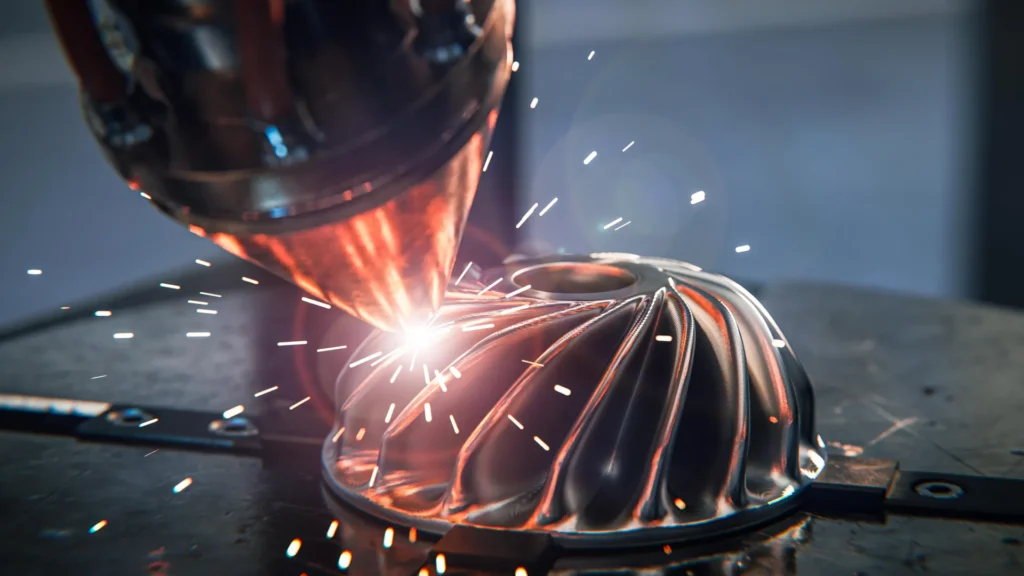
The industrial landscape is currently witnessing a significant shift in the production of high-performance materials, as researchers from Hiroshima University and Mitsubishi Materials Hardmetal Corporation have successfully demonstrated a new additive manufacturing (AM) technique for Tungsten Carbide-Cobalt (WC-Co). This development, published in the International Journal of Refractory Metals and Hard Materials, addresses the long-standing challenges of waste, cost, and geometric complexity associated with one of the world’s hardest industrial alloys. By utilizing a specialized hot-wire laser irradiation process, the team has found a way to deposit this "super-material" with high precision, maintaining its legendary durability while significantly reducing the raw material footprint required for production.
The Vital Role of Tungsten Carbide in Modern Industry
Tungsten carbide-cobalt, often referred to as "cemented carbide" or "hardmetal," is the backbone of the global manufacturing, mining, and construction sectors. Its unique properties stem from its composite nature: hard particles of tungsten carbide (WC) are "cemented" together by a metallic cobalt (Co) binder. This combination results in a material that possesses the extreme hardness of a ceramic and the toughness of a metal, allowing it to withstand the immense pressures and temperatures generated during high-speed machining or deep-earth drilling.
Currently, WC-Co is indispensable for producing cutting tools, end mills, drill bits, and wear-resistant parts for the aerospace and automotive industries. However, the very properties that make it valuable—its resistance to deformation and wear—make it notoriously difficult to process. Traditional manufacturing relies on powder metallurgy, where fine powders are pressed into a "green" body and then sintered at temperatures often exceeding 1,400 degrees Celsius. While effective, this process is energy-intensive and offers limited flexibility in terms of creating complex, customized shapes. Furthermore, because tungsten and cobalt are classified as critical raw materials with volatile pricing and concentrated supply chains, the inherent waste in traditional subtractive manufacturing (shaping a part by grinding away excess material) represents a significant economic burden.
Technical Breakdown: The Hot-Wire Laser Irradiation Process
To overcome these limitations, the research team, led by Assistant Professor Keita Marumoto and Professor Motomichi Yamamoto of Hiroshima University’s Graduate School of Advanced Science and Engineering, explored the potential of Directed Energy Deposition (DED) through a process known as hot-wire laser irradiation.
In this method, a laser beam serves as the heat source, but unlike standard 3D printing techniques that melt a bed of powder, this approach uses a filler wire that is preheated by an electric current before it reaches the laser’s focal point. This preheating is a critical innovation; it allows the material to reach a state of "softness" or partial melting much faster, increasing the deposition rate while requiring significantly less energy from the laser.
The researchers experimented with two primary fabrication configurations to determine the optimal balance of structural integrity and material properties:
- Rod-Leading Method: In this setup, the cemented carbide rod was positioned ahead of the laser beam in the direction of travel. The laser was directed onto the top of the rod to facilitate deposition.
- Laser-Leading Method: Here, the laser preceded the rod, irradiating the interface between the base material (in this case, iron) and the incoming carbide filler.
A pivotal discovery in the study was the realization that "softening" the material was superior to fully melting it. When tungsten carbide is completely liquefied, it often undergoes a chemical transformation known as decarburization, where the carbon atoms separate from the tungsten, forming brittle phases that compromise the tool’s strength. By carefully controlling the heat input, the researchers were able to deposit the carbide while preserving its internal microstructure.
Data and Experimental Results: Achieving 1400 HV Hardness
The primary benchmark for success in this study was the Vickers hardness (HV) of the printed material. For a cemented carbide to be industrially viable, it must typically exhibit a hardness value well above 1,000 HV. The Hiroshima team successfully produced samples with a hardness exceeding 1,400 HV, a figure that rivals parts produced through traditional high-pressure sintering.
The experimental data revealed that the laser-leading method, when combined with a nickel-alloy buffer layer between the iron base and the carbide, produced the most consistent results. This middle layer acted as a thermal and chemical bridge, preventing the migration of iron into the carbide (which would soften the material) and reducing the thermal shock that often leads to cracking in brittle materials.
Temperature control emerged as the most sensitive variable in the process. The team found that they had to maintain a "Goldilocks" temperature range: high enough to melt the cobalt binder (melting point approx. 1,495°C) to ensure a solid bond, but low enough to prevent "grain growth." Grain growth occurs when the microscopic crystals of tungsten carbide merge into larger clumps, a phenomenon that drastically reduces the material’s overall hardness and wear resistance.
Chronology of Development and Collaborative Efforts
The journey toward this breakthrough followed a rigorous timeline of material science exploration:
- Phase 1: Conceptual Modeling: Initial research focused on the feasibility of using laser-based heat sources for refractory metals, identifying the high energy requirements as a primary barrier.
- Phase 2: Hot-Wire Integration: The introduction of the preheated wire system (hot-wire) was developed to bridge the gap between deposition speed and energy efficiency.
- Phase 3: Material Testing (2023-2024): Extensive testing was conducted at Hiroshima University in collaboration with Mitsubishi Materials Hardmetal Corporation. This phase involved testing different "feeding" angles for the carbide rods and analyzing the resulting microscopic structures.
- Phase 4: Optimization and Publication: The researchers refined the process by introducing the nickel-alloy interlayer and fine-tuning the laser-leading approach, culminating in the results published in the International Journal of Refractory Metals and Hard Materials.
Industrial Reactions and Economic Analysis
The implications of this research have resonated throughout the industrial sector. Industry analysts suggest that the ability to 3D print tungsten carbide could lead to a "just-in-time" manufacturing model for specialized tooling.
"Cemented carbides are extremely hard materials used for cutting tool edges and similar applications, but they are made from very expensive raw materials such as tungsten and cobalt, making reduction of material usage highly desirable," noted Keita Marumoto. "By using additive manufacturing, cemented carbide can be deposited only where it is needed, thereby reducing material consumption."
From an economic perspective, the shift to additive manufacturing for WC-Co could reduce the "buy-to-fly" ratio—the mass of raw material purchased compared to the mass of the finished part—from as high as 10:1 in some complex tool designs to nearly 1.1:1. Given that tungsten prices are subject to geopolitical tensions and cobalt is a high-demand component in the battery industry, such efficiency gains are viewed as a strategic necessity by major manufacturers like Mitsubishi Materials.
Broader Impact and Environmental Sustainability
Beyond the immediate cost savings, the Hiroshima study highlights a path toward more sustainable industrial practices. Traditional sintering and grinding are not only wasteful in terms of material but also involve high energy consumption and the use of coolants and lubricants that require specialized disposal.
The AM approach is inherently "greener" because it:
- Reduces Waste: Material is only placed on the functional surfaces of a tool.
- Lowers Energy Footprint: The hot-wire preheating system utilizes electrical resistance, which is more energy-efficient than relying solely on high-wattage industrial lasers.
- Extends Tool Life: The ability to "repair" or "re-clad" worn-out carbide tools rather than discarding them could significantly extend the lifecycle of industrial equipment.
Furthermore, this research opens the door for "functionally graded materials." Manufacturers could theoretically print a tool with a tough, shock-absorbent steel core and a precision-printed tungsten carbide edge, combining the best properties of both materials in a way that is impossible with current molding techniques.
Future Horizons: Challenges and Next Steps
Despite the success of achieving 1400 HV hardness, the researchers acknowledge that the technology is not yet ready for mass-market deployment. The current focus remains on several key areas:
- Cracking Mitigation: Due to the extreme difference in thermal expansion between the carbide and the base metals, microscopic cracks can form during the cooling phase. Future iterations of the process will likely involve controlled cooling chambers or specialized alloy "recipes" to minimize internal stress.
- Geometric Complexity: While the team has successfully printed rods and layers, the next challenge is to print complex geometries, such as internal cooling channels for high-speed drills.
- Scalability: Translating laboratory success into a factory-floor robotic system requires further refinement of the automated wire-feeding mechanisms and real-time sensor monitoring of the melt pool.
"The approach of forming metal materials by softening them rather than fully melting them is novel," Marumoto concluded. "It has the potential to be applied not only to cemented carbides, which were the focus of this study, but also to other materials."
As the research progresses, the collaboration between academic institutions and industrial giants like Mitsubishi Materials is expected to yield the first generation of 3D-printed carbide tools within the next few years. This breakthrough represents more than just a new way to make tools; it is a fundamental shift in how we manipulate the world’s most stubborn materials to meet the demands of 21st-century engineering.