Today’s automated warehouses, critical arteries in the global supply chain, are sophisticated ecosystems where the seamless coordination of mechanical engineering and advanced software engineering dictates efficiency. While the algorithmic prowess of purpose-built autonomous robot fleets often captures headlines, a closer examination reveals that the physical foundation of these operations rests heavily on robust electromechanical systems. At the heart of this intricate machinery lies the humble yet indispensable fractional-horsepower gearmotor, a workhorse quietly powering the vast majority of material handling, movement, and safety functions within these sprawling facilities.
The evolution of modern warehousing has been dramatically accelerated by the twin forces of burgeoning e-commerce and persistent labor shortages. What began as simple mechanization has transformed into a complex dance of robotics, AI, and integrated systems designed to optimize every cubic foot and every second of operation. Industry events like MODEX and ProMat consistently underscore this reliance, showcasing innovations that, while appearing cutting-edge, invariably depend on the fundamental principles of mechanical power transmission. Gearmotors are paramount in a multitude of applications, from the precise navigation of robotic carriers to the relentless flow of conveyor systems, the secure locking of loading docks, and the ergonomic lifting of heavy goods.
The Automated Warehouse Revolution
The digital transformation of retail, particularly the explosive growth of e-commerce over the last two decades, has placed unprecedented demands on logistics and fulfillment centers. Consumers now expect faster delivery times, wider product selections, and flawless order accuracy, pushing warehouses to adopt increasingly sophisticated automation. This shift is not merely about replacing manual labor; it’s about creating intelligent, adaptable systems capable of handling fluctuating demands, diverse product mixes, and increasingly complex operational workflows. The global warehouse automation market, valued at approximately $20 billion in 2022, is projected to exceed $50 billion by 2030, growing at a compound annual growth rate (CAGR) of over 13%. This significant growth trajectory is underpinned by continuous advancements in robotics, artificial intelligence, and, critically, the electromechanical components that enable their physical execution.
Against this backdrop, gearmotors emerge as foundational elements. A gearmotor combines an electric motor with a gearbox (or gear reducer) in a single, integrated unit. This combination is crucial because electric motors typically operate at high speeds and low torque, whereas most industrial applications, especially in material handling, require high torque at lower, more controlled speeds. The gearbox reduces the motor’s output speed while simultaneously increasing its torque, making it ideally suited for driving heavy loads, precise positioning, and sustained operation under varying conditions. The fractional-horsepower designation signifies that these motors typically deliver less than one horsepower, making them compact, energy-efficient, and perfectly scaled for the myriad of tasks within a warehouse, where numerous small, distributed power sources are often more effective than a few large ones.
Driving Autonomous Fleets: AGVs and AMRs
Perhaps the most visible manifestation of warehouse automation is the proliferation of Autonomous Mobile Robots (AMRs) and Automated Guided Vehicles (AGVs). These robots are the logistical backbone, transporting product racks, pallets, and individual items across vast factory floors. Gearmotors are integral to their functionality, powering multiple axes of motion:
- Traversing: Gearmotors drive the wheels or tracks that propel AGVs and AMRs across the warehouse floor, often covering miles each day. Precision gearmotors ensure smooth acceleration, deceleration, and accurate positioning, vital for navigating complex layouts and avoiding collisions.
- Turning in Place: Many robots require the ability to turn sharply or rotate 360 degrees in confined spaces. Specialized gearmotor configurations enable differential steering or omnidirectional movement, providing the agility necessary for dense storage environments.
- Lifting and Manipulating: In some advanced robotic systems, gearmotors are employed to power lifting mechanisms, such as jack screws or scissor lifts, to raise or lower transported items. This capability is crucial for tasks like stacking pallets, picking items from elevated shelves, or interfacing with conveyor systems at different heights. The precise torque control offered by gearmotors ensures stable and safe vertical movement, preventing damage to goods or injury to personnel.
The market for AGVs and AMRs is experiencing exponential growth, with projections indicating a global market size exceeding $10 billion by 2027. This expansion is driven by their ability to significantly reduce operational costs, improve throughput, and enhance safety by taking over repetitive and potentially hazardous tasks from human workers. The reliability and efficiency of the embedded gearmotors are directly linked to the uptime and performance metrics of these robotic fleets.

Streamlining Flow: The Backbone of Conveyor Systems
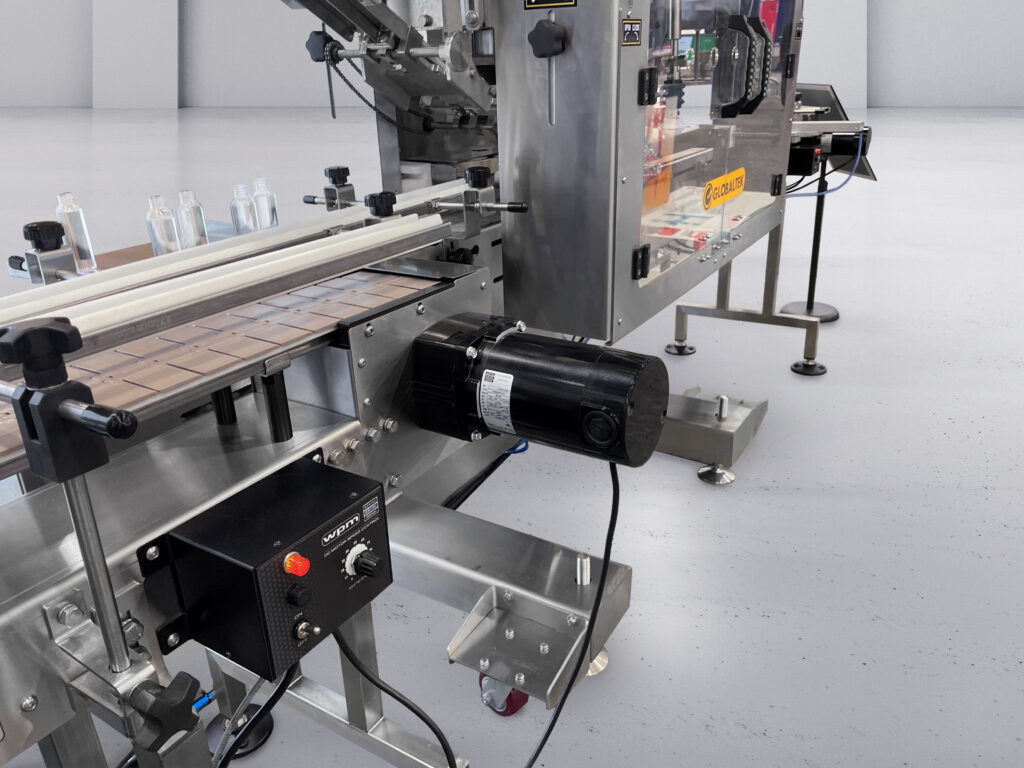
Conveyor systems are the circulatory system of any modern warehouse, moving goods seamlessly between different zones, workstations, and loading docks. Gearmotors are the pulsating heart of these systems, found on virtually every type of conveyor, from traditional belt conveyors to highly adaptable modular and flexible designs.
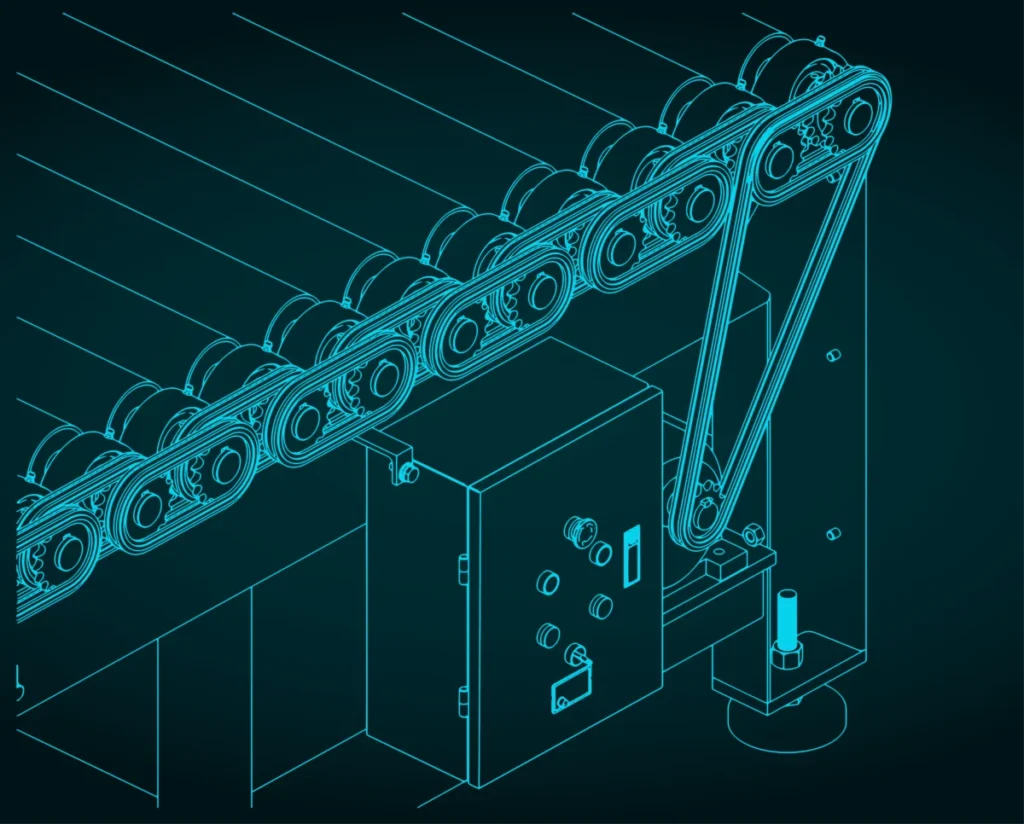
- Accordion-style and Flexible Powered Conveyors: These systems, characterized by their scissor-leg design and powered rollers linked by round belts, are particularly versatile. They can be extended, retracted, and curved to adapt to changing layouts or to interface with flatbed shipping trucks at loading docks, significantly hastening loading and unloading operations. Each section or zone of these conveyors often features its own gearmotor, allowing for segmented control.
- Zone Control: Advanced conveyor systems are frequently broken into distinct zones, each with independent power and control. Sensors detect the presence of boxes or workpieces, activating the gearmotor in a specific zone only when needed. Once an item clears a zone, the motor deactivates, and the next zone powers on in a domino effect. This intelligent zone control minimizes energy consumption, reduces wear and tear, and prevents product accumulation, ensuring a continuous and optimized flow of goods through the facility.
- Energy Efficiency: With increasing focus on sustainability, the energy efficiency of gearmotors in large-scale conveyor operations is a critical consideration. High-efficiency gearmotors, often paired with variable frequency drives, can significantly reduce the overall energy footprint of a warehouse, contributing to lower operational costs and a smaller environmental impact.
Enhancing Safety and Productivity: Dock Equipment and Lifts
Beyond core material movement, gearmotors play a vital role in ensuring safety and improving ergonomics at critical junctures within the warehouse.
- Loading Dock Restraints: At loading docks, where the interface between trucks and the facility presents significant safety risks, gearmotors power locking restraints. These motorized, claw-type mechanisms engage with hardware on trailers, preventing drivers from accidentally pulling away while personnel (on foot or forklift) are still traversing the area. This crucial safety measure helps prevent severe accidents, protecting both workers and equipment. The implementation of such safety features is often mandated by occupational safety regulations, making reliable gearmotor operation non-negotiable.
- Man Lifts and Ergonomic Workpiece Lifts: Gearmotors are also integral to various lifting devices. Man lifts, often equipped with "crow’s nest" buckets, allow operators to safely reach elevated areas for maintenance, inventory management, or order picking. Similarly, ergonomic workpiece lifts feature motorized Z-axis platforms or end-effectors (like pneumatic suction-cup arrays) that enable operators to safely raise and lower heavy or awkwardly shaped items. These devices drastically reduce the physical strain on workers, minimize the risk of musculoskeletal injuries, and improve overall productivity, particularly in assembly settings for large equipment with heavy subsystems.
- Motorized Caster Wheels: For moving extremely heavy workpieces or specialized carts, trolleys, and dollies that are too cumbersome or unsafe to propel manually, motorized caster wheels powered by gearmotors provide an effective solution. These wheels can be integrated into custom carts, offering precise control and significant power assistance, especially beneficial in manufacturing support environments where large components need to be maneuvered accurately.
Precision and Coordination: The Evolution of Control Systems
The sophistication of gearmotor applications in warehousing is matched by the increasing complexity and integration of their control systems. While some applications, like basic dock restraints or simpler lift trucks, operate as self-contained units with straightforward on-off switches and emergency-stop buttons, the broader trend is towards highly integrated, centralized control.
- Standalone Controls: For self-contained units like many lift trucks, simple current-limit controls suffice, directly commanding motor torque for acceleration, speed holding, and direction changes. Fractional-horsepower gearmotor suppliers often offer basic speed controls with on-off and speed-adjustment functions for these less complex applications.
- Integrated OEM Controls: However, for the majority of modern warehouse equipment, Original Equipment Manufacturers (OEMs) design their own control systems or outsource specialized PC boards. This approach allows OEMs to integrate gearmotor controls seamlessly into broader, global control-system functions, rather than managing disparate standalone boards. This centralized design philosophy simplifies architecture, enhances coordination between different pieces of equipment, and often leverages programmable logic controllers (PLCs) or industrial PCs.
- Advanced Coordination: Reconsider the flexible powered conveyors with zone control. These systems demand centralized intelligence to coordinate the activation and deactivation of numerous individual gearmotors along the line. Switches or sensors detect product presence, and a master control system orchestrates the sequential power-on of zones, creating a highly efficient, responsive material flow. This level of coordination often relies on industrial communication protocols such as EtherCAT, PROFINET, or Modbus TCP, enabling real-time data exchange and precise synchronization across the entire network of devices. The rise of Industrial IoT (IIoT) further enhances this, allowing for remote monitoring, predictive maintenance, and data-driven optimization of gearmotor performance.
Navigating Procurement and Supply Chain Complexities
The procurement of gearmotors is a critical process, primarily driven by OEM design engineers and purchasing managers. These professionals, armed with detailed specifications and performance requirements, engage directly with gearmotor suppliers. The selection criteria are rigorous, focusing on factors such as torque output, speed range, efficiency, duty cycle, ingress protection (IP) ratings, size constraints, noise levels, and overall durability to withstand harsh warehouse environments.
Distributors and system integrators play a vital role in bridging the gap between component manufacturers and end-users. They often work with plant engineers and warehouse operations managers to tailor standard equipment or design custom solutions that meet specific site requirements and operational goals. This involves selecting appropriate gearmotors, integrating them into larger systems, and ensuring compatibility with existing infrastructure.
The global supply chain landscape has introduced significant challenges. Recent disruptions, from pandemics to geopolitical events, have highlighted the vulnerability of single-source component strategies. When gearmotors from established manufacturers suddenly become unavailable, even if OEM designs are finalized and engineering specifications are set, purchasing managers embark on urgent hunts for new suppliers. This necessitates rigorous qualification processes to ensure that alternative components meet the stringent performance, reliability, and safety standards required for continuous warehouse operation. Manufacturers like Bodine Electric Co. emphasize the importance of robust supply chains and adaptable engineering to mitigate such risks, often working closely with OEMs to provide custom solutions or alternative configurations.
Broader Implications and Future Outlook
The pervasive integration of gearmotors into warehouse automation carries significant broader implications:
- Economic Impact: Increased automation driven by reliable electromechanical components leads to higher throughput, reduced operational costs, and improved inventory accuracy. This translates into a stronger competitive advantage for businesses and contributes to overall economic productivity.
- Labor Transformation: While automation reduces the need for certain manual tasks, it simultaneously creates new roles requiring different skill sets, such as robotics technicians, automation engineers, and data analysts. The future workforce in warehousing will require continuous upskilling and reskilling.
- Environmental Considerations: The drive for energy-efficient gearmotors, coupled with intelligent control systems, contributes to greener warehouse operations by minimizing power consumption and reducing the carbon footprint of logistics activities.
- Future Trends: The future of warehousing will see even greater integration of AI for predictive maintenance of gearmotors, swarm robotics for highly flexible operations, and advanced human-robot collaboration. Gearmotors will continue to evolve, becoming smarter, more compact, and even more efficient, potentially incorporating integrated sensors and communication capabilities for enhanced IIoT connectivity.
Industry Perspectives
"The evolution of the modern warehouse is intrinsically linked to advancements in electromechanical systems," comments an industry analyst specializing in logistics automation. "While software orchestrates the ballet, it’s the gearmotors that provide the muscle, ensuring every movement is precise, powerful, and reliable. Without these foundational components, the promise of seamless automation would remain an abstract concept."
A representative from a leading gearmotor manufacturer adds, "Our focus has always been on delivering solutions that are not just powerful, but also durable and highly adaptable. We’ve seen the demand shift from basic motorization to highly customized, intelligent gearmotor systems that can communicate and integrate with complex networks. The resilience of these components is paramount when considering the non-stop demands of today’s fulfillment centers."
Terry Auchstetter of Bodine Electric Co., a key insights provider for this domain, underscores the importance of close collaboration between manufacturers and OEMs. "Understanding the specific operational demands of each warehouse application, from high-speed conveyors to precise robotic manipulators, is crucial. This collaboration allows us to engineer gearmotor solutions that not only meet but exceed the rigorous performance and reliability expectations of the industry."
In conclusion, the sophisticated, data-driven automated warehouses of today and tomorrow owe much of their functionality to the often-overlooked gearmotor. These compact yet powerful devices are the unsung heroes, enabling the smooth, efficient, and safe operation of everything from AGVs and conveyor systems to dock restraints and ergonomic lifts. As the demands on global logistics continue to intensify, the continuous innovation and reliable performance of gearmotors will remain absolutely critical to powering the future of warehousing and the broader supply chain.