
A pioneering advancement in materials science from the Massachusetts Institute of Technology (MIT) promises to transform the landscape of biomedical devices and wearable technology with the development of a novel hydrogel that is not only soft, stretchy, and biocompatible but also remarkably breathable. This breakthrough addresses a critical limitation of conventional hydrogels, paving the way for longer-lasting, more comfortable, and highly effective applications ranging from advanced wound dressings and drug delivery systems to next-generation health monitors and contact lenses. The research, detailing a recipe for a hydrogel that is both hydrated and aerated, was published today in the esteemed journal Nature.
The Breakthrough: Aerated Hydrogels for Enhanced Performance
Hydrogels, essentially Jell-O-like substances composed primarily of water (typically 80-90%) and a small percentage of polymer, have long been lauded for their unique properties. Their squishy texture, bio-friendliness, and adhesive qualities have made them indispensable in various medical applications, including wound patches, surgical glues, and encapsulation systems for controlled drug release. They can be adhered to the skin or implanted within the body, providing a versatile platform for interaction with biological tissues. However, a significant drawback has historically plagued these otherwise remarkable materials: their inherent lack of breathability.
Traditional hydrogels, due to their high water content, effectively trap moisture and sweat when worn for extended periods. This accumulation beneath a bandage or patch can lead to skin irritation, maceration, and even bacterial growth, severely limiting their wear time and, crucially, reducing the efficacy of any embedded device or therapeutic agent. For patients requiring long-term adhesion or continuous monitoring, this has presented a persistent challenge, often compromising comfort and treatment outcomes.
The team of engineers at MIT, led by Xuanhe Zhao, the Uncas (1923) and Helen Whitaker Professor of Mechanical Engineering and a professor of civil and environmental engineering, and medical engineering and science, has now engineered a solution. Their innovative hydrogel maintains the desirable characteristics of its conventional counterparts—softness, stretchiness, and robustness—while integrating a sophisticated network of microscopic tunnels designed to facilitate air permeability. This elegant structural modification allows air to pass through the material effectively, mitigating moisture buildup and skin irritation, even under conditions of physical exertion.
In a series of rigorous experiments, volunteers wore wireless heart monitors affixed to their chests with the new breathable hydrogel. These individuals engaged in regular workouts over a 10-day period. Crucially, the volunteers exhibited no signs of skin irritation, and the heart monitors consistently delivered clear, stable readings throughout the study. This compelling evidence underscores the material’s potential to significantly improve the user experience and reliability of hydrogel-based products. Professor Zhao succinctly captured the essence of the innovation, stating, "Water and oxygen are both essential for life. Now that we’ve added air to hydrogels, people can find broad applications."
Understanding Hydrogels: A Foundation in Biomaterials
To appreciate the significance of this MIT breakthrough, it’s essential to understand the fundamental nature and historical context of hydrogels. These polymer networks, cross-linked in the presence of water, form a gel structure that mimics the extracellular matrix found in biological tissues. Their high water content contributes to their biocompatibility, allowing for minimal immune response when interacting with living systems.
The journey of hydrogels dates back to the 1950s with the pioneering work of Otto Wichterle and Drahoslav Lim, who developed hydrophilic polymers for contact lenses. Since then, the field has expanded dramatically, with hydrogels finding applications across numerous sectors:
- Medicine: Wound dressings (e.g., burn treatments, chronic wound care), drug delivery systems (e.g., insulin patches, hormone therapy), tissue engineering scaffolds (e.g., cartilage repair, nerve regeneration), soft implants (e.g., breast implants, joint replacements), and biosensors.
- Agriculture: Water retention in soil, controlled release of fertilizers.
- Personal Care: Diapers, sanitary pads, cosmetic products.
- Food Industry: Thickeners, gelling agents.
The appeal of hydrogels stems from their unique combination of properties:
- Biocompatibility: Their water-rich environment is similar to biological tissues, reducing adverse reactions.
- Flexibility and Softness: They can conform to irregular surfaces and withstand mechanical stress without causing discomfort.
- Adhesiveness: Many hydrogels can stick effectively to skin and other biological surfaces.
- Controlled Release: Their porous structure can be engineered to encapsulate and slowly release active substances, such as drugs, growth factors, or nutrients.
Despite these advantages, the inherent non-breathability of conventional hydrogels has remained a persistent hurdle for applications requiring prolonged contact with the body, particularly in environments prone to moisture and sweat.
The Breathability Conundrum: Past Attempts and Challenges
The challenge of making hydrogels breathable is fundamentally rooted in their composition. As co-lead author Xiao-Yun Yan explains, "Hydrogel is 80 to 90 percent water, similar to Jell-O. And you cannot breathe through Jell-O." Water, while vital for life, is a poor medium for air exchange. This poses a significant problem for long-term dermal contact. When skin is occluded by a non-breathable material, moisture from sweat and transepidermal water loss becomes trapped. This leads to:
- Maceration: Softening and breakdown of skin tissue, making it more susceptible to injury and infection.
- Irritation and Redness: Discomfort, itching, and inflammation.
- Bacterial/Fungal Growth: The warm, moist environment creates an ideal breeding ground for microbes, increasing infection risk, especially in wound care.
- Reduced Adhesion: Trapped moisture can weaken the adhesive bond of the hydrogel to the skin, causing devices to detach or shift.
- Compromised Device Functionality: For sensors, moisture buildup can interfere with electrical signals, leading to inaccurate readings.
Previous attempts to engineer breathable hydrogels primarily pursued two strategies, both of which presented significant trade-offs:
- Puncturing Microscopic Holes: This method involved creating pores or channels throughout the gel. While effective for air permeability in dry environments, these holes quickly clogged with liquid when the hydrogel was placed in a wet environment or came into contact with sweat, rendering them non-breathable. The capillary action of water would draw liquid into the pores, effectively sealing them.
- Mixing with Permeable Polymers: Researchers also explored incorporating polymers like silicone, known for their natural air permeability, into the hydrogel matrix. However, to achieve sufficient air exchange, a substantial amount of these non-water-based polymers had to be added. This approach diluted the hydrogel’s water content, compromising its hydration, flexibility, and often its biocompatibility—key attributes that make hydrogels so valuable in the first place. The delicate balance between hydration and breathability proved elusive.
Professor Zhao’s group at MIT, renowned for its leadership in hydrogel development and application, aimed to overcome these limitations. Their goal was to create a hydrogel that maintained its water-heavy composition while allowing air to pass through freely. "We want to have lots of tiny channels to let air through, while also maintaining lots of water in the gel," Zhao stated, highlighting the perceived impossibility of this task given the scientific understanding at the time.
MIT’s Novel Approach: Viscoelastic Phase Separation
After several years of dedicated investigation, the MIT team uncovered a groundbreaking recipe that allows for air permeability without sacrificing the hydrogel’s essential properties. The key to their innovation lies in a phenomenon called "viscoelastic phase separation." This concept, often observed in the separation of oil and water, describes how different phases of a mixture spontaneously segregate due to their inherent chemical properties.
For their breathable hydrogel, Zhao and his colleagues introduced a very small amount of silica aerogel particles into their standard hydrogel recipe. Silica aerogel particles are essentially "solid-form" air bubbles, known for their hydrophobic (water-repelling) nature. Co-lead author Xiao-Yun Yan likened them to "boba beads," explaining that "The particles are made of silica, which is hydrophobic, meaning that water does not want to leak through them, so they are very stable in water."
When these hydrophobic silica particles were mixed into the water-rich hydrogel solution, the principle of viscoelastic phase separation took effect. The water molecules, driven by their strong intermolecular attraction, preferentially aggregated with each other, effectively "squeezing" the less abundant silica particles into interconnected, narrow tunnels. This dynamic interaction, evolving over several hours, led to the formation of a robust, silica-skinned network of channels, analogous to "air-permeable highways within the hydrated hydrogel," as described by co-lead author Shucong Li. These tunnels, formed by the strategic arrangement of silica particles, provided dedicated pathways for air to flow through the otherwise water-dense material.
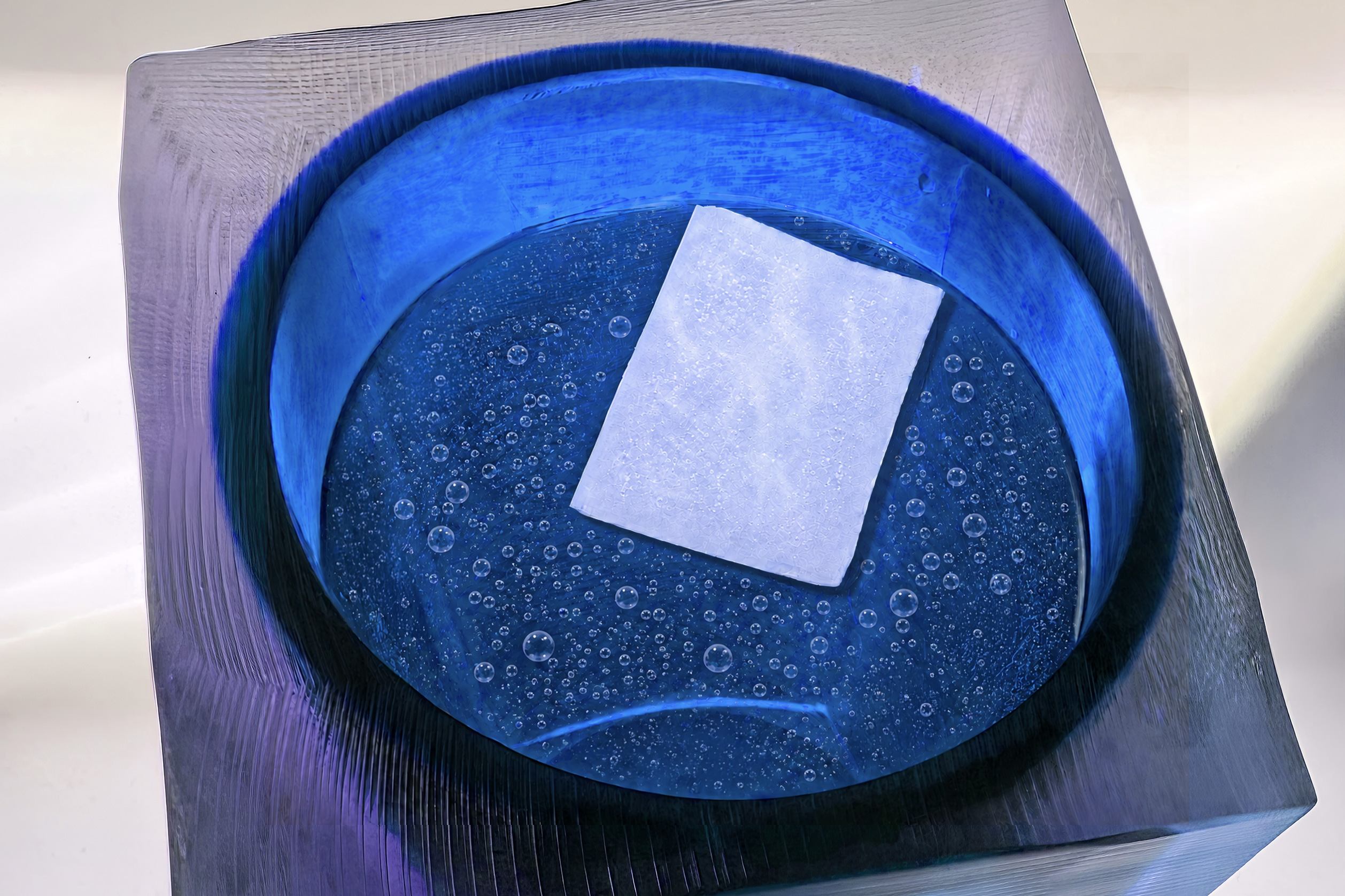
Once this intricate network of air channels was established, the researchers proceeded to cross-link the mixture, a chemical process that permanently locks the polymer network and its newly formed breathable structure in place. This "freezing" of the gel ensures the stability and durability of the air pathways, even under mechanical stress. The visual evidence of this phenomenon was striking: the new breathable hydrogel, filled with air tunnels, floated on water, whereas its conventional, non-breathable counterpart sank, clearly demonstrating the successful integration of air pockets.
Rigorous Testing and Promising Results
The MIT team subjected their novel aerated hydrogel to a comprehensive battery of tests to validate its breathability, mechanical integrity, and biological compatibility. These experiments confirmed that the new material retained the desirable characteristics of conventional hydrogels while introducing the crucial element of air permeability.
One of the most compelling demonstrations involved human volunteers participating in real-world scenarios. Wireless electrocardiogram (ECG) monitors were attached to the chests of several volunteers using the breathable hydrogel adhesive. These individuals then engaged in 20-minute exercise sessions. For comparison, the volunteers also wore monitors affixed with conventional, commercially available hydrogel adhesives. The results were stark: the breathable hydrogel consistently maintained a strong and stable ECG signal, crucial for accurate health monitoring, while the conventional gel exhibited significant signal fluctuations, likely due to moisture interference and compromised adhesion.
Extending this, another cohort of volunteers wore the breathable hydrogel and ECG monitor for a continuous period of 10 days. This long-term study aimed to assess the material’s durability, sustained breathability, and impact on skin health over an extended wear period. The findings were remarkably positive. Li reported, "We reliably saw that after 10 days, the quality of the ECG signal is still pretty good, and after you take off the monitor, there were no noticeable blisters or redness on the skin. This indicates healthy skin conditions." This absence of skin irritation or maceration after prolonged wear represents a significant leap forward for hydrogel-based wearable technology.
Beyond biological interaction, the mechanical robustness of the aerated hydrogel was also thoroughly tested. The material was subjected to 10,000 cycles of stretching and compression, simulating the repetitive strains experienced by the body during daily activities (e.g., chest movements from breathing and heartbeat). Even after this intense mechanical fatigue, the hydrogel retained its intricate network of air channels, maintaining its breathability. Li confirmed the material’s resilience: "After 10,000 cycles, there was less than a 5 percent drop in oxygen permeability. That matters, because even with your heartbeat, your chest continuously undergoes small strains. So we have to make sure this gel is durable for such daily activity." This robust performance ensures that the benefits of breathability are not transient but can endure the demands of real-world use.
Broader Applications and Future Potential
The development of this breathable hydrogel represents a significant technological platform with the potential to catalyze innovation across numerous fields. Professor Zhao emphasized this broader impact, stating, "We’ve discovered that this process can create these air-permeable hydrogels, and we demonstrate one application. But we think there can be very broad applications. This is a technology platform."
The immediate and most impactful applications include:
- Advanced Wound Dressings: For chronic wounds (e.g., diabetic ulcers, pressure sores) that require long-term coverage, breathable hydrogels could dramatically reduce the risk of infection, accelerate healing by maintaining a healthy microenvironment, and improve patient comfort by preventing skin maceration. This could lead to fewer dressing changes and better clinical outcomes.
- Enhanced Drug Delivery Systems: Patches designed for transdermal drug delivery could be worn for extended periods, ensuring consistent medication release without skin irritation. This is particularly relevant for pain management, hormone therapy, or vaccines, where sustained and controlled delivery is critical.
- Improved Implants and Medical Devices: For internal implants, such as neural interfaces or biosensors, better integration with surrounding tissues and reduced foreign body response could be achieved if the material allows for greater gas exchange. This could lead to more stable and functional long-term implants.
- Next-Generation Wearable Health Monitors: The successful demonstration with ECG monitors highlights the potential for a new era of comfortable, long-term wearable sensors. This includes continuous glucose monitors, biometric trackers for athletes, smart patches for remote patient monitoring, and even advanced prosthetics that require direct skin contact. Enhanced breathability ensures signal integrity and user compliance.
- Comfortable Contact Lenses: The cornea requires a constant supply of oxygen. Breathable hydrogels could lead to contact lenses that provide superior oxygen permeability, reducing dryness, discomfort, and the risk of corneal hypoxia, thereby enabling longer and healthier wear times.
- Cosmetic Face Masks: For extended-wear cosmetic or therapeutic face masks, breathability could prevent skin congestion and enhance the efficacy of active ingredients by maintaining skin health.
Beyond these direct applications, the fundamental principle of viscoelastic phase separation as a method for creating air-permeable hydrogels opens new avenues for materials scientists and engineers. It provides a blueprint for designing other multifunctional soft materials with tailored gas exchange properties, potentially influencing fields like soft robotics, bio-actuators, and even environmental sensing. The global market for hydrogels, already substantial and growing, is poised for significant disruption and expansion with the introduction of this highly versatile and performant material.
Expert Perspectives and Industry Outlook
The publication of this research in Nature signals its high scientific impact and potential for broad adoption. Industry experts are expected to take keen interest in this development. The medical device sector, constantly seeking to improve patient comfort and device longevity, will likely explore licensing and further development. Pharmaceutical companies may see opportunities for novel drug delivery platforms. Consumer electronics giants involved in wearable technology could leverage this innovation to create more comfortable and reliable products, enhancing user experience and data accuracy.
The path from laboratory breakthrough to widespread commercial product typically involves extensive clinical trials, regulatory approvals (such as from the FDA in the United States), and scaling up manufacturing processes. However, the fundamental nature of this innovation, addressing a long-standing challenge with a robust and reproducible method, suggests a strong potential for successful translation. The initial human trials demonstrating comfort and efficacy are particularly encouraging for accelerating this process.
This work, carried out in part through the advanced facilities of MIT.nano, underscores the importance of institutional support and collaborative research. Funding for this groundbreaking study was provided by a consortium of prestigious organizations, including the MIT Hatsopoulos Faculty Fellowship, the Uncas and Helen Whitaker Professorship, a HEALS seed grant, the National Institutes of Health, the National Science Foundation, and the Department of Defense Congressionally Directed Medical Research Programs. These acknowledgements highlight the multidisciplinary and significant investment required to achieve such a transformative scientific advance. The development of breathable hydrogels stands as a testament to human ingenuity in overcoming material limitations to improve health, comfort, and technological capabilities.