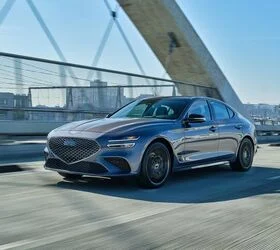
The Genesis G70, long lauded as one of the more engaging and spirited compact sports sedans available, is reportedly poised to discontinue its potent twin-turbo V6 engine option for the 2027 model year. This significant shift, if confirmed, marks the potential end of an era for a powertrain that has been central to the G70’s appeal, offering buyers a compelling step up in performance and a direct challenge to established luxury performance stalwarts. While Genesis has yet to issue an official statement regarding the 2027 G70 lineup, information gleaned from the U.S. Environmental Protection Agency’s (EPA) FuelEconomy.gov database strongly suggests this powertrain change.
EPA Data Signals Powertrain Shift
FuelEconomy.gov, a crucial resource for consumers and industry observers alike, recently updated its listings to include efficiency figures for the forthcoming 2027 Genesis model range. A comprehensive search for the 2027 Genesis G70 within this database exclusively returns information pertaining to the four-cylinder engine variant. The conspicuous absence of any mention of the V6 option has led to widespread speculation that this beloved engine will not be carried over into the next model year for the G70.
It is important to note that the FuelEconomy.gov database, while generally reliable, is not always fully exhaustive. As the article itself points out, the flagship G90 sedan is entirely absent from the current listings, and the recently unveiled GV90 SUV also remains unlisted. This incompleteness means that while the absence of the V6 from the G70’s profile is a strong indicator, it should be treated as a significant signal rather than an absolute, incontrovertible confirmation until Genesis makes an official announcement.
What Buyers Stand to Lose
The current standard engine for the Genesis G70 is a turbocharged four-cylinder that delivers a respectable 300 horsepower and 311 pound-feet of torque. These figures are more than adequate for spirited driving and position the G70 competitively within its segment. However, the optional 3.3-liter twin-turbo V6 engine significantly elevates the G70’s performance credentials. This powerhouse churns out a more robust 365 horsepower and 376 pound-feet of torque.
This considerable power differential is not merely a number on a spec sheet; it directly translates into a more dynamic and exhilarating driving experience. The V6-equipped G70 has historically been a formidable contender, capable of going toe-to-toe with performance-oriented models such as the BMW 3 Series and the Audi S5. By potentially removing the V6, Genesis appears to be sidelining the G70 in these high-stakes performance comparisons, leaving it to compete primarily with its four-cylinder offering against rivals that often feature more potent standard or optional powertrains. This decision could impact the G70’s perception among driving enthusiasts who prioritize raw power and acceleration.
Broader Powertrain Strategy and Market Positioning
The apparent discontinuation of the V6 in the G70 does not necessarily signify a complete retreat from six-cylinder powerplants for Genesis or its parent company, Hyundai Motor Group. Evidence suggests a more nuanced strategy centered on the evolution of its engine offerings. The 3.3-liter twin-turbo V6 engine, while celebrated, is an older design. Genesis continues to offer a twin-turbo V6 in other models, albeit an updated and more powerful 3.5-liter unit. This newer engine produces 375 horsepower and 391 pound-feet of torque and is found in the similarly sized GV70 SUV, the midsize G80 sedan, and the GV80 SUV.
Furthermore, Genesis has introduced even more potent iterations of its V6, including a version that pairs the twin-turbo V6 with an electric supercharger for an impressive 409 horsepower and 405 pound-feet of torque. This advanced powertrain is available in the upscale GV80 Coupe and the flagship G90 sedan. This tiered approach indicates that Genesis is not abandoning its commitment to powerful, refined engines but rather is rationalizing its powertrain portfolio by phasing out older units and prioritizing newer, more efficient, and more powerful technologies across its lineup. The G70, being one of the earlier models to adopt the V6, appears to be the last in line to transition away from the 3.3-liter unit.
Sales Performance and Future Outlook
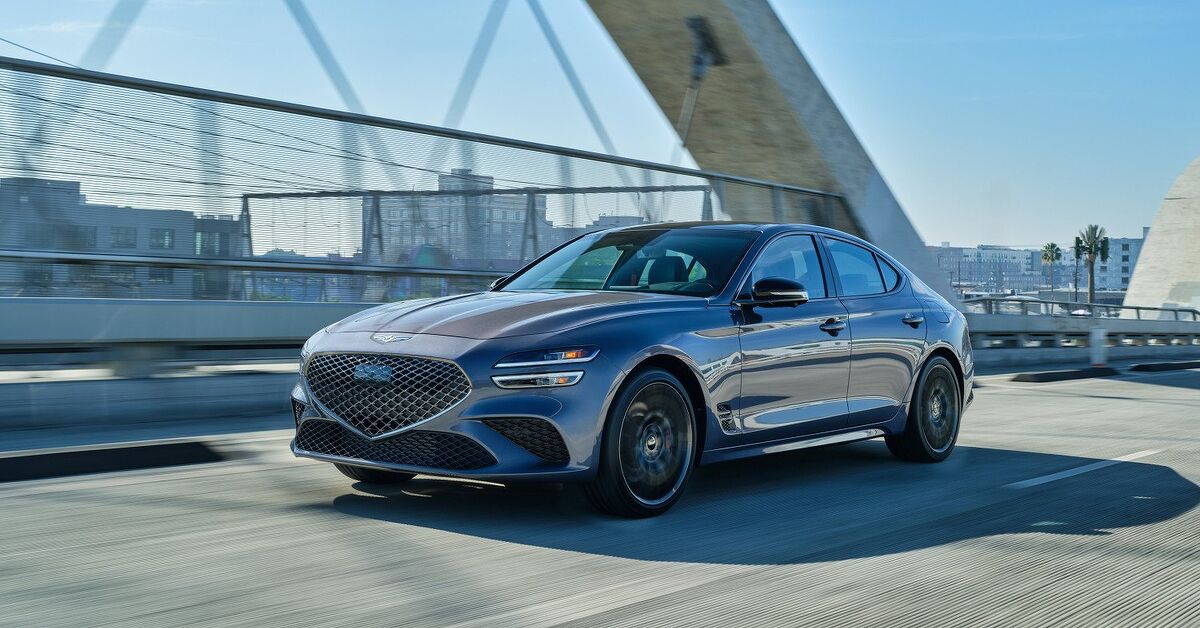
Despite the potential loss of its most powerful engine option, the Genesis G70 continues to demonstrate robust sales figures, suggesting its appeal extends beyond outright horsepower. Through July of the current year, the G70 has sold 6,653 units. This performance places it as the third-bestselling model in the Genesis lineup, trailing only the GV80 and GV70 SUVs. Notably, its sales volume is roughly triple that of the next best-selling Genesis sedan, the G80, and its year-over-year sales have shown a slight increase.
Automakers typically do not discontinue models that are performing well in the market, especially not without a clear successor or strategic pivot. This sustained sales momentum makes the outright discontinuation of the G70 seem unlikely. Instead, the powertrain change points towards a different narrative: the G70 is nearing the end of its current generation. Having debuted in 2017, the G70 is approaching its tenth anniversary on the market with only a single mid-cycle refresh.
Rumors and industry reports from earlier this year suggested that a next-generation G70 could be revealed in the near future, possibly even within the current calendar year. If this is indeed the strategic plan, then the decision to carry the current G70 forward with only the four-cylinder engine for the remainder of its production cycle, leading up to the debut of its successor, becomes more logical. This approach allows Genesis to maintain a presence in the sports sedan segment while its redesigned model undergoes its final development and testing phases. The focus then shifts from the current car’s performance ceiling to the anticipation of its next iteration.
Historical Context and Market Evolution
The Genesis G70 emerged onto the luxury sedan scene in 2017, aiming to disrupt the established order dominated by German manufacturers. From its inception, the G70 was designed to offer a compelling blend of luxury, technology, and, crucially, driving dynamics. The introduction of the twin-turbo V6 engine was a pivotal moment, allowing Genesis to directly challenge the performance benchmarks set by the likes of BMW and Audi. This powertrain choice underscored Genesis’s ambition to be recognized not just as a purveyor of comfortable and well-equipped sedans, but also as a manufacturer capable of delivering genuine driving enjoyment.
The compact luxury sports sedan segment has always been a fiercely competitive arena. Buyers in this segment often seek a vehicle that can seamlessly transition from daily commuting duties to more engaging weekend drives. The G70, particularly with its V6 option, has consistently delivered on this promise, earning critical acclaim for its sharp handling, responsive steering, and potent acceleration. Its success has contributed significantly to establishing the Genesis brand as a credible player in the premium automotive market, moving beyond its initial perception as a value-oriented alternative.
The automotive industry is currently navigating a significant transition towards electrification and more stringent emissions regulations. Many manufacturers are re-evaluating their engine lineups, often prioritizing smaller displacement, turbocharged engines and progressively phasing out larger, less efficient powertrains. This industry-wide trend, driven by consumer demand for fuel efficiency and evolving governmental mandates, likely plays a substantial role in Genesis’s decision-making process regarding the G70’s powertrain. The potential discontinuation of the 3.3-liter V6 can be viewed as part of this broader industry evolution, as automakers streamline their offerings and invest in future technologies.
Implications for Competitors and Consumers
The removal of the V6 option from the G70’s offerings could create an opening for competitors to further solidify their positions in the performance-oriented segment. Brands like BMW, Audi, and Mercedes-Benz will likely continue to offer potent six-cylinder engines in their respective compact luxury sedans, potentially widening the performance gap. This could influence consumer choice, particularly for buyers who prioritize a higher level of acceleration and engine responsiveness.
However, for consumers who have already secured a V6-equipped G70, the vehicle’s desirability as a used car could see an increase. Enthusiasts who appreciate the driving experience offered by this specific powertrain might seek out pre-owned models. For those in the market for a new G70, the focus will shift to the capabilities of the four-cylinder engine and the overall value proposition of the vehicle, including its design, technology, and luxury appointments. The question will be whether the four-cylinder, despite its respectable output, can adequately fill the void left by the more powerful V6 in the eyes of performance-minded buyers.
The potential discontinuation of the twin-turbo V6 in the Genesis G70 represents a significant development for the model and the brand. While the move may disappoint some enthusiasts, it appears to be a strategic decision within a larger framework of powertrain evolution and model lifecycle management. The G70’s continued sales strength suggests that its appeal is multifaceted, and the brand’s focus on modernizing its engine technology across the entire lineup signals a commitment to long-term competitiveness and innovation in the luxury automotive space. As always, the automotive world awaits official confirmation from Genesis for definitive details on the 2027 G70.