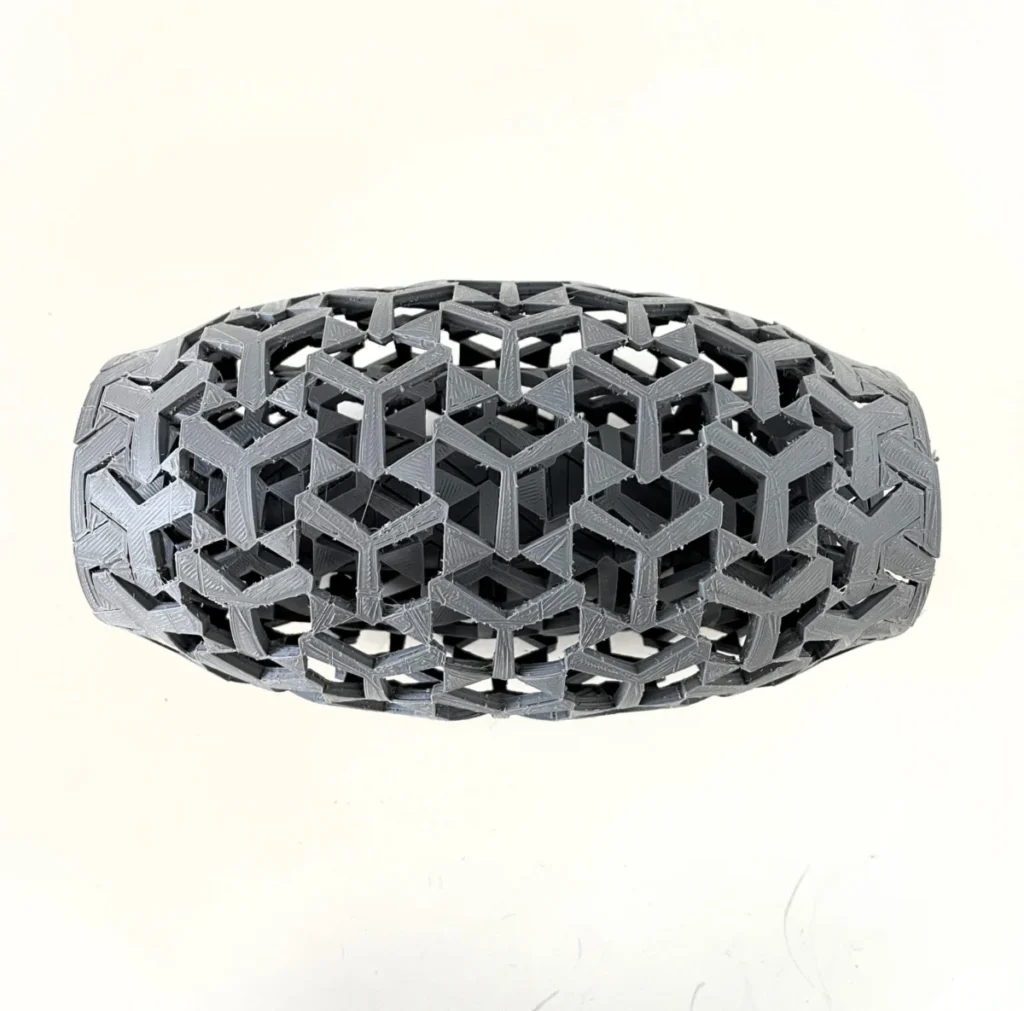
A groundbreaking advancement in additive manufacturing is emerging from the collaborative research efforts of Deakin University and Seoul National University of Science and Technology, promising to redefine the capabilities of 3D printed cylindrical structures. A recent open-access paper published in Progress in Additive Manufacturing, titled "Conformal morphing meta-cylinders 3D printing for mechanical intelligence programming," details a novel approach to creating cylindrical components that can dynamically change their shape and mechanical properties. This innovation, led by researchers Ali Zolfagharian, Moslem Mohammadi, Eui-Hyun Kim, and Keun Park, leverages 3D printing to imbue these structures with a form of "mechanical intelligence," allowing them to perform complex functions without the need for external actuators or complex assembly.
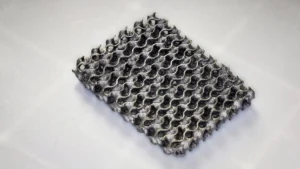
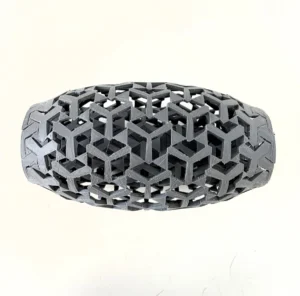
The core of this research lies in the development of "multistable meta-cylinders." These are not merely static printed objects but rather sophisticated compliant mechanisms that can transition between several pre-programmed stable states. The researchers have demonstrated that by carefully controlling design parameters such as cell shape within a lattice structure, wall thickness, and the overall diameter of the cylinder, they can engineer specific mechanical responses. These responses include programmed changes in stiffness, tailored energy absorption capabilities, and the ability to "snap" into different configurations. This level of programmatic control over mechanical behavior is achieved through the precise manipulation of the printed geometry, effectively using morphology as a "mechanical program."
From Bandages to Beyond: A Growing Fascination with Kirigami and Metamaterials
The interest from 3DPrint.com in this development is rooted in a long-standing fascination with the intersection of 3D printing, kirigami-inspired designs, and metamaterials. Kirigami, the Japanese art of paper cutting and folding, offers intricate patterns and structural possibilities that have found surprising applications in advanced engineering. Previously, 3DPrint.com has explored kirigami in contexts ranging from advanced bandages designed for dynamic tissue support to nanoscale fabrication techniques and the development of highly sensitive sensors.
Simultaneously, the field of metamaterials—materials engineered to possess properties not found in naturally occurring substances—has seen significant growth, particularly in conjunction with 3D printing. Metamaterials, often characterized by their carefully designed microstructures, can exhibit extraordinary acoustic, optical, or mechanical behaviors. The ability to 3D print complex metamaterial structures has opened avenues for creating materials with precisely controlled responses to external stimuli.
Furthermore, the recent advancements in 3D printing on curved surfaces, including cylinders, have expanded the design space for additive manufacturing. This technique allows for the creation of new geometries and the integration of functional elements onto existing cylindrical forms, such as medical catheters or other tubular components. The current research on conformal morphing meta-cylinders elegantly combines these distinct but related areas of innovation, presenting a compelling fusion of kirigami-inspired structural design, metamaterial principles, and advanced 3D printing techniques applied to cylindrical geometries.
The Science Behind the Morphing Meta-Cylinders
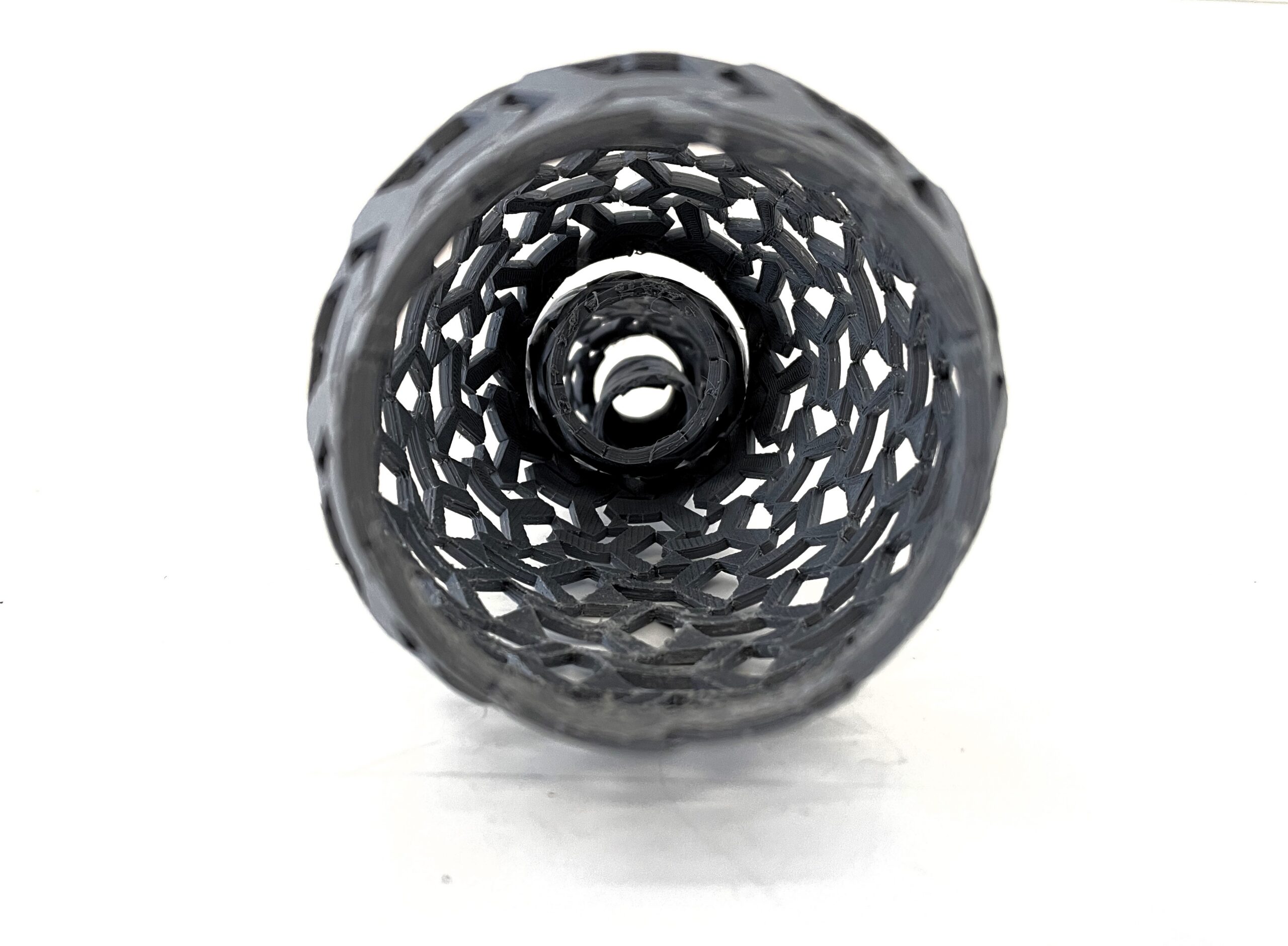
The published paper delves into the intricate details of how these meta-cylinders are engineered. The research team utilized desktop 3D printers equipped with rotary modules, a configuration that allows for non-planar printing onto a rotating shaft. This method offers several advantages, including a reduction in the need for post-printing assembly and the potential to optimize structural integrity while ensuring a very smooth inner surface.
The researchers employed standard design and slicing software, including Rhino with Grasshopper for design, and Cura for slicing, with specific adjustments made to the G-code to enable rotary printing. The printing material of choice for these experiments was ESUN eTPU-95 A, a flexible filament known for its excellent elastic properties, printed at 100% infill to maximize structural integrity.
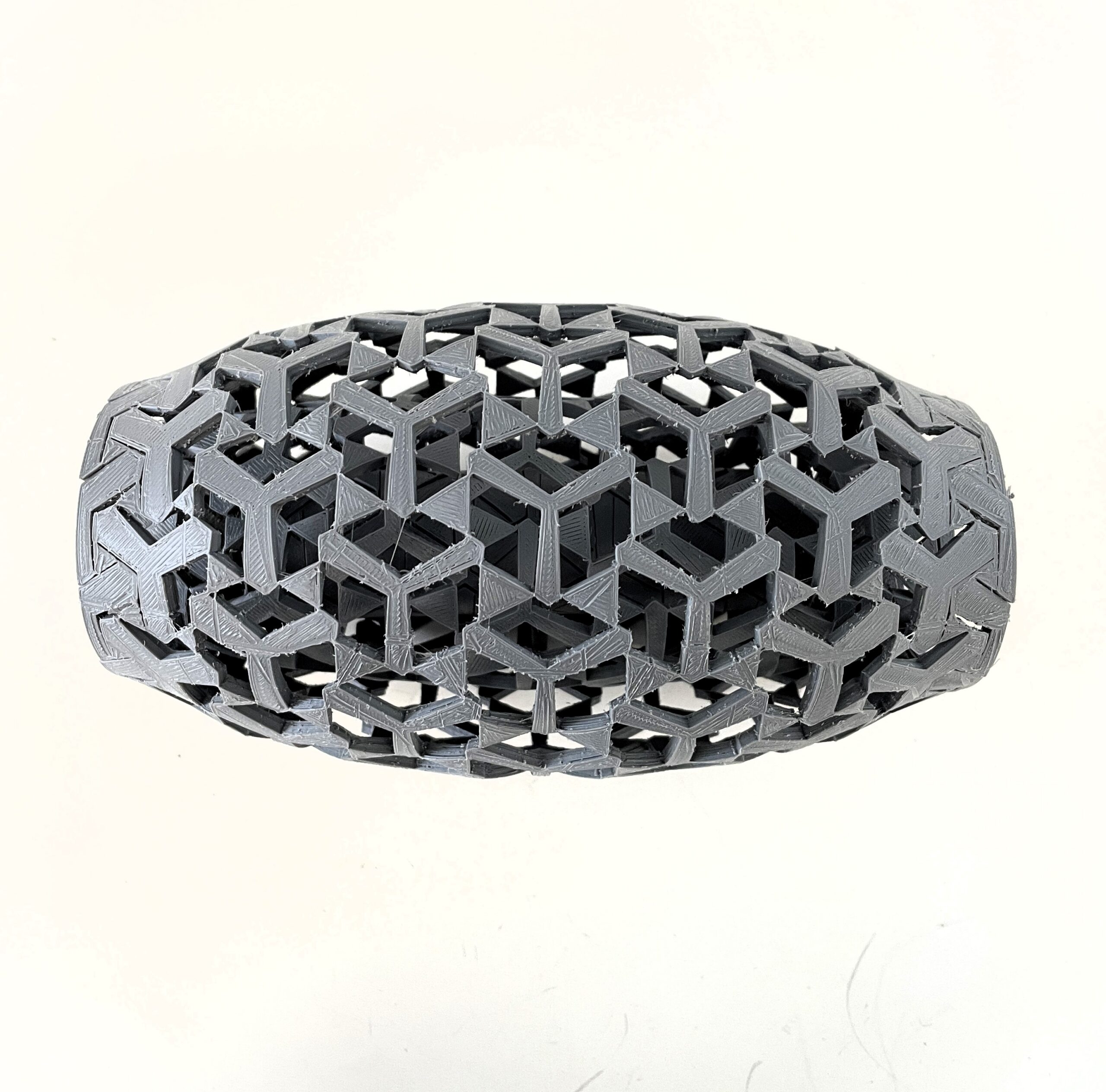
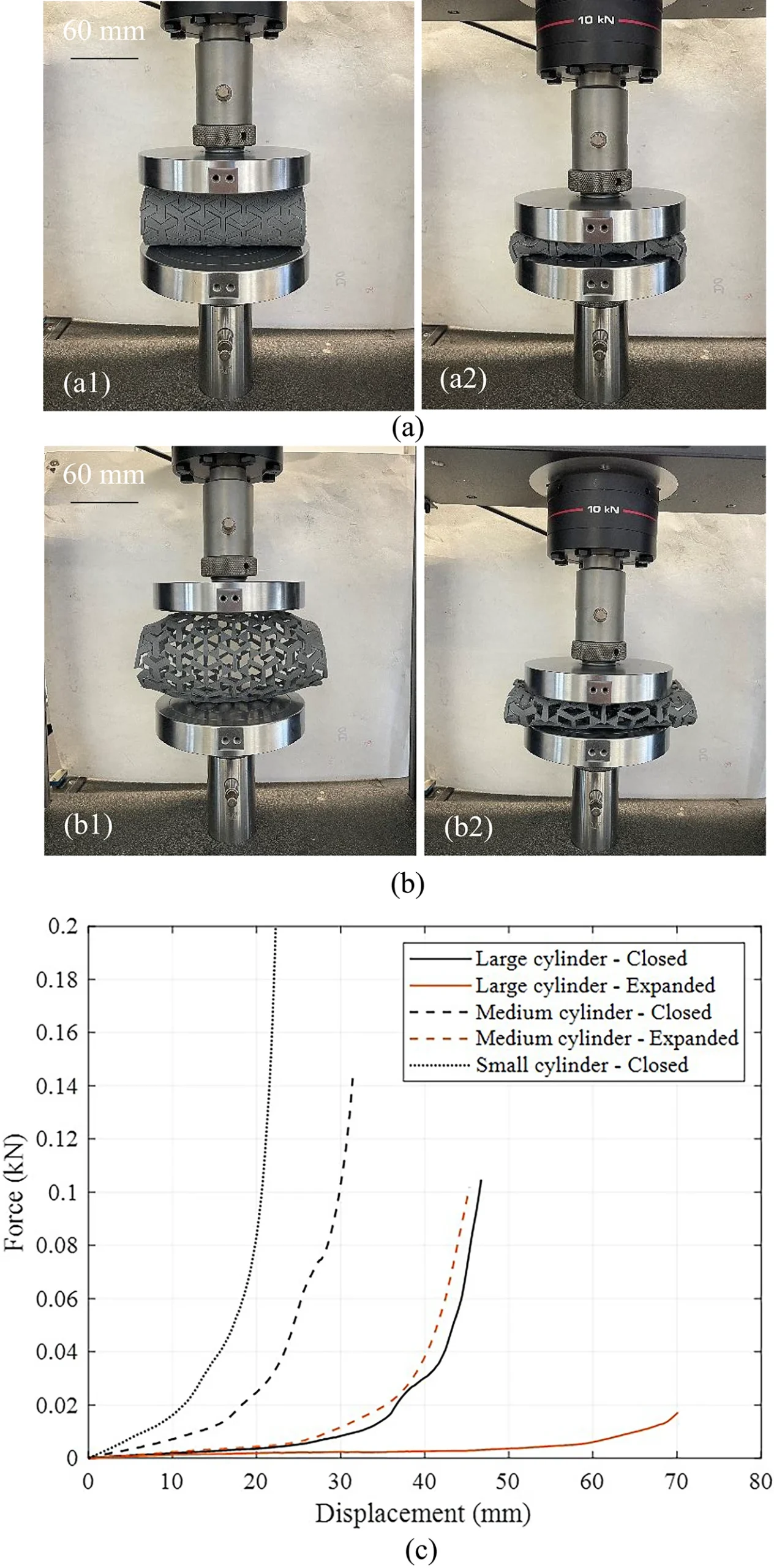
The fundamental principle behind the morphing behavior lies in the design of the internal lattice structure. This lattice, often inspired by kirigami patterns, allows the cylinder to deform in predictable ways. The as-printed state is described as a relatively stiff shell capable of exhibiting pronounced "snap-through" events—sudden transitions between stable states. Upon expansion or under specific loading conditions, the cylinder becomes softer and more compliant.
By combining closed and expanded cylindrical sections, the researchers were able to create assemblies that exhibit sequential "soft-medium-hard" collapse responses. This means that different layers or sections of the cylinder engage and provide resistance at different stages of applied load. This layered mechanical response is crucial for applications requiring progressive energy absorption or controlled deformation.
Implications and Potential Applications
The implications of this research are far-reaching, touching upon diverse fields from biomedical engineering to advanced robotics and impact protection.
- Biomedical Devices: The ability to create tubular structures that can change their stiffness and shape has immediate relevance in medical applications. For instance, stents could be designed to deploy and conform precisely to vascular geometries, offering improved support and reduced risk of migration. Actuators for minimally invasive surgical tools or drug delivery systems could also benefit from these morphing capabilities.
- Robotics and Actuation: The compliant mechanisms developed could serve as novel actuators in soft robotics, enabling robots to interact with their environment more delicately and adaptively. Their ability to change shape and stiffness could allow for more nuanced movements and grasping capabilities.
- Impact Absorption and Damping: The controlled energy absorption properties of these meta-cylinders make them ideal candidates for shock absorbers and damping systems. This could range from advanced helmet liners designed to mitigate head injuries by absorbing impact energy in a staged manner, to protective components for sensitive equipment or vehicles. The concept of a "smart helmet liner that absorbs impacts and snaps with considerable specific impacts" highlights this potential.
- Customizable Components: The research also points towards the possibility of desktop fabrication of highly specialized components. The adaptation of a 3-in-1 Snapmaker 3D printer into a rotary printing system suggests that individuals or small businesses could potentially print custom handlebars for bicycles that offer variable stiffness for comfort or grip, or other bespoke parts tailored to specific needs. This democratization of advanced manufacturing capabilities for niche applications is a significant aspect of the research.
Addressing Design Complexity
While the potential is immense, the researchers acknowledge that the design process itself presents a significant challenge. "The design stuff is rather complicated, and I think that correctly designing the auxetic triangle shapes and defining how they will be built up would be the hard part," the original report noted. Accurately modeling and predicting how geometry, wall thickness, and material properties will interact over time to achieve the desired morphing behavior requires sophisticated computational tools and a deep understanding of the underlying mechanics.
The characteristic bulging of the meta-cylinder’s midsection while its ends remain relatively constrained is a key design feature that enables specific actuator and pump functionalities. However, achieving this precise control and predicting its performance under various conditions demands rigorous simulation and iterative design.
The Future of Adaptive Manufacturing
The ongoing improvements in flexible 3D printing materials, coupled with the increasing sophistication of desktop 3D printers and the expansion of print farms, are paving the way for the widespread adoption of such adaptive manufacturing techniques. This research represents a significant step towards a future where complex, functional components with programmable mechanical intelligence can be fabricated cost-effectively and at scale.
The ability to imbue printed objects with multiple stable states and dynamic response capabilities through geometric programming rather than material composition alone offers a powerful new paradigm in product design and manufacturing. As this technology matures, we can anticipate seeing its integration into a wide array of products, transforming how we interact with the physical world and enhancing the performance and safety of countless applications. The development of a new "vocabulary" of morphing shapes and their application in real-world scenarios promises to unlock significant value across industries.