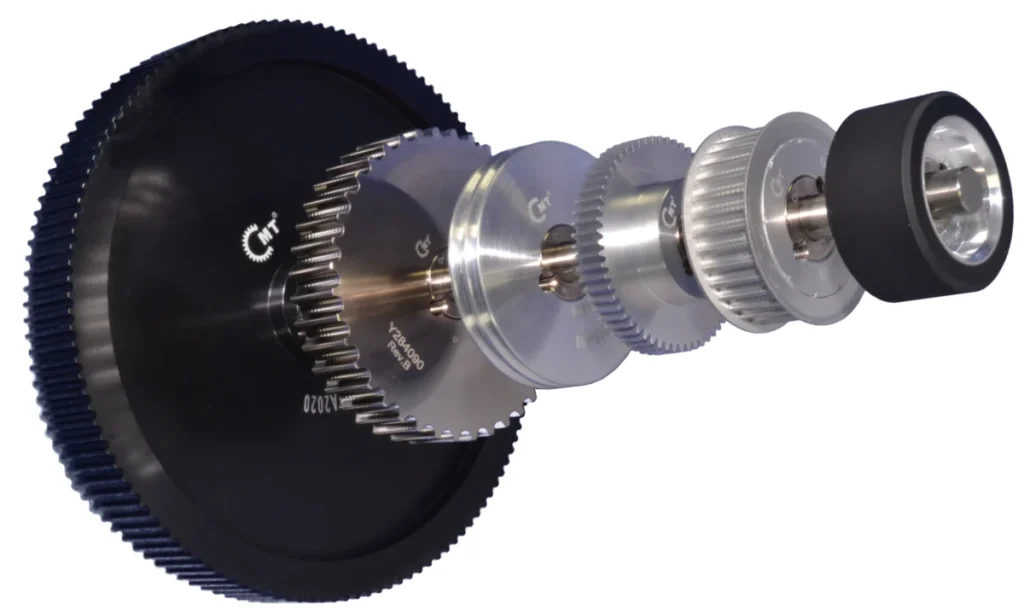
U.S. manufacturer Custom Machine & Tool Co. (CMT), a prominent provider of power transmission and motion control components, has significantly advanced its digital offerings with the launch of an interactive 3D catalog. This new resource, specifically designed for engineers, showcases CMT’s Concentric Maxi Torque keyless bushings and precision timing pulleys, integrating seamlessly into modern design workflows. Built in collaboration with eCATALOG 3Dfindit by CADENAS, a leading digital-parts catalog platform, the new system empowers design engineers and procurement teams with real-time product configuration and immediate access to high-fidelity 3D CAD and engineering data in over 100 formats. This strategic move is poised to dramatically accelerate the design and procurement phases for a wide array of industrial applications, marking a pivotal step in CMT’s commitment to digital transformation and customer-centric innovation within the competitive landscape of mechanical power transmission.
Streamlining the Engineering Workflow: A New Paradigm in Component Specification
The introduction of this interactive 3D catalog represents a significant leap forward from traditional component sourcing methods, which often involved lengthy exchanges of specifications, manual drawing reviews, and custom file requests. In today’s accelerated product development cycles, the efficiency of integrating components directly impacts time-to-market and overall project costs. Engineers can now bypass the time-consuming processes of requesting custom files, making phone calls to sales representatives, or waiting for technical data to be compiled and sent. Instead, they are empowered to directly configure the exact Concentric Maxi Torque keyless bushing or precision timing pulley needed for their specific application and download the corresponding 3D CAD model in mere seconds, directly from the CMT website.
This immediate access to accurate, configurable models allows for rapid iteration and seamless integration into various CAD software environments. The catalog supports over 100 native and neutral file formats, including industry-standard platforms such as Siemens NX, Solid Edge, SOLIDWORKS, Dassault Systèmes Catia, PTC Creo, and Autodesk Inventor. This broad compatibility ensures that engineers, regardless of their preferred CAD ecosystem, can quickly and effortlessly incorporate CMT’s components into their designs. Such a capability fundamentally redesigns how machine axes are conceptualized, prototyped, and brought to production, fostering a more agile and responsive design process. By eliminating potential bottlenecks in the design process, CMT’s new catalog empowers engineers to dedicate more time to innovation, complex problem-solving, and optimizing system performance, rather than being bogged down by administrative tasks related to component sourcing and data conversion.
The Concentric Maxi Torque System: Precision and Performance at the Core
Central to this new digital offering is CMT’s innovative Concentric Maxi Torque system, a technology celebrated for its advanced hub-to-shaft connection capabilities. This proprietary system provides a keyless connection, designed to mount pulleys, gears, sprockets, and various other rotating components with unparalleled ease, precision, and reliability. Traditional keyed connections, while widely used, often present challenges related to concentricity, balance, and potential for fretting corrosion over time. They typically require complex alignment routines during assembly and can lead to backlash, which is undesirable in high-precision motion control applications.
In contrast, the Concentric Maxi Torque system simplifies assembly while ensuring superior concentricity and balance. Its design inherently minimizes runout and wobble, which is particularly advantageous in high-speed or high-precision applications where even minor imbalances can lead to vibration, noise, premature wear, and reduced operational lifespan. The system achieves a robust, interference fit by generating radial clamping pressure, distributing load evenly around the shaft and hub interface. This uniform load distribution enhances torque transmission capability and significantly extends the life of both the shaft and the mounted component.
A defining feature of the Concentric Maxi Torque system is its fully reversible design, making it exceptionally suitable for applications demanding bidirectional motion. This versatility broadens its utility across a diverse range of machinery, from intricate robotics and sensitive laboratory equipment to robust industrial mixers and conveyor systems. The system’s inherent ability to maintain secure attachment without constant adjustments is crucial for applications where machine axes are compact, difficult to access, or impractical to service regularly. For instance, in stepper motor-driven axes paired with belts, commonly found in 3D printers, CNC machines, and automated stages, where space is often at a premium, the Concentric Maxi Torque ensures reliable performance. It effectively prevents eventual misalignment or potential shaft damage that could arise from the loosening or wear associated with traditional fastening methods. This reliability translates directly into reduced downtime, lower maintenance costs, and a more consistent operational performance over the entire lifecycle of the equipment.
The technology behind Concentric Maxi Torque has been widely recognized within the industry for its ability to speed the deployment of high-precision machines. Its robust clamping force and self-centering characteristics mitigate issues like fretting corrosion and stress concentrations often associated with keyed connections, leading to enhanced durability and extended service intervals. These technical advantages make the system an attractive and often indispensable solution for demanding sectors where precision, reliability, and ease of assembly are non-negotiable requirements.

The Evolution of Digital Catalogs and the Strategic CADENAS Partnership
The collaboration with eCATALOG 3Dfindit by CADENAS underscores a broader industry trend towards comprehensive digitalization in engineering and manufacturing. CADENAS, a German-based software and service provider, has established itself as a global leader in providing digital product catalogs and 3D CAD engineering data. Their 3Dfindit platform serves as a comprehensive search engine for CAD parts, offering engineers a vast, manufacturer-verified library of 3D models. The integration of CMT’s extensive product line into this globally recognized platform significantly enhances the visibility and accessibility of their components to a vast international engineering audience.
The journey from antiquated physical product catalogs to sophisticated, interactive 3D configurators reflects the profound changes in how engineers interact with suppliers and procure components. Decades ago, engineers relied heavily on thick printed catalogs, then transitioned to static 2D drawings often sent via fax or mail, followed by the advent of downloadable static 3D models. The current generation of interactive 3D catalogs, exemplified by CMT’s new offering, provides dynamic, real-time configuration capabilities, allowing users to customize parameters and visualize the part before download. This evolution is driven by the increasing complexity of modern machinery, the demand for faster design cycles, and the overarching principles of Industry 4.0, which advocate for seamless digital integration across the entire product lifecycle, from design and simulation to manufacturing and maintenance.
For CMT, leveraging CADENAS’s specialized expertise means not only offering a superior user experience but also ensuring that their product data adheres to the highest standards of accuracy, compatibility, and security. CADENAS’s platform manages the intricate and resource-intensive task of maintaining product data in over 100 native and neutral CAD formats, a challenge that would be prohibitively complex and costly for individual manufacturers to manage effectively in-house. This strategic partnership allows CMT to focus on its core competency—the precision manufacturing of high-quality power transmission and motion control components—while simultaneously providing engineers with cutting-edge digital tools that meet the demands of contemporary design practices.
CMT’s Strategic Vision: Empowering Engineers and Driving Innovation
Custom Machine & Tool Co.’s decision to invest significantly in this advanced interactive catalog is a clear reflection of its strategic vision to remain at the forefront of the power transmission and motion control industry. By prioritizing ease of use, immediate access to critical design data, and broad CAD compatibility, CMT is actively responding to the evolving needs and expectations of the global engineering community. This initiative positions CMT not just as a component supplier, but as a proactive facilitator of efficient and innovative design processes.
A hypothetical spokesperson for Custom Machine & Tool Co., reflecting on this significant launch, might state, "Our enduring goal has always been to empower engineers with the best possible tools and components to bring their most ambitious designs to life. The interactive 3D catalog for our Concentric Maxi Torque system is a powerful testament to this commitment. In an era where speed, precision, and digital integration dictate success, providing instant access to configurable 3D models is no longer merely a luxury but an absolute necessity for competitive advantage. This sophisticated platform not only streamlines the design process for our customers but also fosters greater confidence in the integrity and accuracy of the data engineers are using, ultimately accelerating product development and significantly reducing time-to-market for a diverse range of applications."
This digital transformation aligns seamlessly with CMT’s broader mission to support advancements across critical industrial sectors, including automation, robotics, semiconductor manufacturing, and general industrial equipment. While the new catalog initially focuses on CMT’s extensive in-stock program, featuring the most common sizes and configurations, the Concentric Maxi Torque system itself is extensively utilized across a wide array of highly specialized custom products. This versatility demonstrates the company’s deep engineering prowess and its capability to provide tailored solutions for unique challenges. The interactive catalog, therefore, serves as a powerful and accessible entry point for engineers to explore CMT’s comprehensive capabilities, whether they are seeking standard off-the-shelf components or are initiating discussions on highly specialized custom solutions.
Broader Impact and Implications for the Industry
The implications of implementing such an advanced digital tool extend far beyond individual design projects and the immediate benefits to CMT’s customers. On an industry-wide scale, the widespread adoption of interactive 3D catalogs contributes to several key advancements that are shaping the future of manufacturing and engineering:

- Accelerated Product Development Cycles: By significantly reducing the time spent on sourcing, specifying, and integrating component data, engineers can dedicate more resources to actual design, analysis, and optimization. This results in bringing new products to market faster, providing a critical competitive advantage in rapidly evolving sectors like advanced robotics, semiconductor equipment manufacturing, and industrial automation.
- Improved Design Accuracy and Reduced Errors: Direct access to manufacturer-verified, dynamically configurable 3D models virtually eliminates the risk of design errors stemming from incorrect dimensions, outdated specifications, or incompatible file formats. This enhanced accuracy translates directly to fewer costly physical prototypes, reduced rework during the manufacturing phase, and a higher probability of first-pass success.
- Enhanced Global Collaboration and Supply Chain Efficiency: Digital catalogs facilitate seamless collaboration among distributed design teams located in different geographical regions. Standardized, accessible data formats enable engineers worldwide to integrate components into their designs without communication barriers or conversion issues, thereby streamlining global supply chain interactions.
- Foundational Support for Digital Twin Initiatives: The availability of high-fidelity, parametric 3D models is foundational for developing digital twins – virtual representations of physical assets. These digital twins are increasingly vital for advanced simulation, predictive maintenance, remote monitoring, and optimizing operational performance throughout a product’s entire lifecycle.
- Democratization of Engineering Resources: Smaller engineering firms, innovative startups, and individual designers, who may lack extensive in-house resources for developing and maintaining vast component libraries, gain access to the same high-quality, manufacturer-verified data as larger corporations. This levels the playing field, fosters greater innovation across the entire engineering ecosystem, and allows for more agile development processes.
An independent industry analyst, commenting hypothetically on similar trends, might observe, "The strategic shift towards intelligent, interactive digital catalogs is no longer an option but a non-negotiable step for any component manufacturer aiming to thrive in the complex and interconnected Industry 4.0 era. Companies like Custom Machine & Tool Co., by proactively partnering with specialized platforms like CADENAS, are not just offering convenience; they are embedding themselves deeper into the digital fabric of their customers’ operations. This forward-thinking move not only strengthens brand loyalty and expands market reach but, more importantly, drives innovation across the entire design and manufacturing supply chain."
The enhanced accessibility to CMT’s product models empowers engineers to work faster and with significantly greater confidence in their design data. This confidence is critical when designing complex systems where every component must perform flawlessly and integrate perfectly. The ability to visualize, configure, and virtually test component integration before committing to physical prototypes translates into substantial savings in time, resources, and significantly mitigates technical and financial risks.
Practical Applications and Featured Technologies
The Concentric Maxi Torque system, now made exponentially more accessible through the new 3D catalog, finds critical application across numerous demanding industries. In the highly sensitive sector of semiconductor manufacturing, for example, wafer-handling machines require exceptionally precise, stable, and repeatable motion control. As highlighted by previous industry coverage, a specially designed clamping belt-pulley and bushing assembly from CMT can maximize performance in such critical environments. Here, the keyless design ensures minimal runout and consistent, backlash-free torque transmission, which is absolutely vital for the delicate and accurate movement of valuable silicon wafers, preventing contamination or damage.
Beyond semiconductors, the system is indispensable in:
- Robotics: For articulated joints, robotic arms, and end-effectors where precise, backlash-free motion, high rigidity, and compact, lightweight designs are essential for dynamic performance.
- Automation Equipment: In complex conveyor systems, high-speed packaging machinery, automated assembly lines, and material handling systems where high reliability, consistent performance, and ease of maintenance are highly valued.
- Medical Devices and Laboratory Equipment: Where sterile environments, precise, repeatable movements, and long-term reliability are paramount for patient safety and experimental accuracy.
- Printing and Converting Machinery: For rollers, drums, and shafts requiring consistent tension, smooth operation, and quick changeovers to maintain product quality and operational efficiency.
- Machine Tools: In various axes and spindle drives where high accuracy, rigidity, and the ability to transmit significant torque without slippage are critical for machining precision.
The featured applications and examples underscore the versatility, robust performance, and critical importance of CMT’s offerings in modern industrial contexts. The new interactive 3D catalog will allow engineers in these diverse sectors to rapidly prototype, iterate, and integrate these advanced components into their next-generation designs, pushing the boundaries of what is possible in motion control and power transmission technology.
Looking Ahead: The Future of Digital Engineering
As the global manufacturing landscape continues its rapid digital transformation, driven by advancements in AI, IoT, and advanced analytics, the importance of initiatives like CMT’s interactive 3D catalog will only grow. The overarching trend is towards even greater automation of design processes, deeper integration with advanced simulation and virtual commissioning tools, and the creation of comprehensive digital twins that span the entire product lifecycle. CMT’s proactive adoption of this cutting-edge technology strategically positions it well to meet these future demands, solidifying its role as a forward-thinking partner for engineers and manufacturers worldwide.
Engineers seeking to explore CMT’s extensive product range and leverage these advanced digital tools immediately can visit the company’s dedicated online CAD configurator. Further comprehensive details on Custom Machine & Tool Co. and its full portfolio of power transmission and motion control components are readily available on their official website, www.cmtco.com. This launch is not merely an update to a product catalog; it is a strategic investment in the future of engineering design and a clear signal of CMT’s unwavering dedication to supporting its customers in an increasingly digital and interconnected industrial world.