As the manufacturing sector continues its relentless march towards greater automation, a wave of sophisticated new technologies is emerging, poised to redefine the capabilities of industrial robots. These innovations are not merely incremental improvements; they represent a fundamental shift towards enhancing robotic dexterity, elevating process control to unprecedented levels, and automating tasks that have historically proven challenging to execute with consistent precision. From advanced tactile sensing and seamlessly integrated collaborative robot (cobot) grippers to highly automated tape application systems and real-time weld guidance solutions, these cutting-edge products are meticulously engineered to foster more intuitive robot interaction, streamline integration processes, and dramatically increase the reliability of critical production workflows. This evolution is crucial for industries striving for higher quality, greater efficiency, and adaptability in an increasingly complex global market.
The Quest for Enhanced Dexterity and Intelligence: Robotiq’s Tactile Innovation
A significant leap forward in robotic intelligence and manipulation comes from Robotiq, a pioneer in flexible robotic tooling. The company has unveiled its TSF-85 tactile sensor fingertips, specifically designed for its widely adopted 2F-85 Adaptive Gripper. This innovation introduces real-time touch feedback, a critical component for advancing physical AI, industrial automation, and even humanoid robotics applications. The integration of tactile sensing is a game-changer, moving robots beyond mere positional accuracy to a realm where they can "feel" their environment and interact with objects with human-like sensitivity.
The TSF-85 fingertips incorporate a sophisticated 4-by-7 static taxel grid, meticulously engineered to monitor force distribution across the contact surface and detect minute micro-slips at an impressive rate of 1,000 hertz. This high-frequency data allows robots to react instantaneously to changes in grip. Complementing this, an integrated inertial measurement unit (IMU) provides vital additional information regarding the finger’s orientation and contact dynamics. Collectively, these sensors empower robots to accurately identify the geometry of the contact area and, crucially, to detect the precise moment an object begins to slip from their grasp. This capability significantly refines grasping techniques and enhances overall manipulation, making robots more adept at handling delicate, irregularly shaped, or slippery items.
The design ensures that these new fingertips preserve the gripper’s inherent pinch and encompassing grip capabilities, maintaining the versatility that has made the 2F-85 a staple in industrial settings. Furthermore, their seamless integration with existing systems is facilitated through standard RS-485 communication and a convenient USB conversion board, minimizing implementation hurdles for current users. With over 23,000 of its grippers already deployed worldwide, Robotiq’s move into advanced tactile feedback underscores a strategic vision for more intelligent and adaptable automation.
Industry experts widely acknowledge that tactile sensing is a cornerstone for the next generation of robotics. Dr. Elena Petrova, a lead researcher in AI and haptics, commented, "The ability for a robot to ‘feel’ what it’s touching opens up entirely new paradigms for automation. It transitions robots from purely deterministic machines to adaptive, context-aware agents. This is indispensable for tasks requiring fine motor skills, assembly of intricate components, or safe interaction in unpredictable environments, laying crucial groundwork for true physical AI." The market for robotic sensors, including tactile sensors, is projected to grow significantly, driven by the increasing demand for advanced manipulation and human-robot collaboration in sectors ranging from electronics manufacturing to healthcare.

Democratizing Collaboration: Festo’s Integrated Cobot Gripper
The burgeoning field of collaborative robotics, or cobots, is characterized by its emphasis on safety, ease of use, and the ability to work alongside human operators. Festo, a global leader in automation technology, has further simplified the integration and deployment of cobots with its introduction of the HPPH two-finger pneumatic parallel gripper. This compact and highly integrated gripper is specifically designed for collaborative robot applications, addressing common challenges associated with external components and complex wiring.
The HPPH gripper innovatively incorporates its pneumatic control valve, position sensors, and electrical interface directly into its compact body. This ingenious design significantly reduces the need for external components, minimizes wiring complexity, and drastically simplifies installation requirements, thereby lowering the barrier to entry for cobot users, particularly small and medium-sized enterprises (SMEs). The cobot market has witnessed exponential growth, with global market revenue projected to reach billions in the coming years, driven by the need for flexible automation and solutions to labor shortages. Simplified integration, such as that offered by Festo, is a key enabler of this expansion.
Weighing in at a mere 1.5 pounds, the HPPH gripper is engineered to preserve the crucial payload capacity of smaller cobots, allowing them to handle heavier workpieces or carry additional tools. It boasts a maximum opening of 16 millimeters and is capable of handling objects weighing up to 2.2 pounds, making it suitable for a wide array of light assembly and material handling tasks. For enhanced diagnostic capabilities and remote configuration, an IO-Link version is also available, providing advanced connectivity in smart manufacturing environments.
Crucially, the HPPH gripper was developed in strict accordance with ISO/TS 15066, the technical specification for collaborative robot safety. When utilized with specified gripper fingers, it provides a force-limited collaborative mode of 140 newtons, ensuring safe interaction between the robot and human workers. Its versatility makes it ideal for diverse applications, including precise part handling in electronics manufacturing, subassembly operations in the automotive industry, critical processes in semiconductor fabrication, intricate part insertion and removal tasks, and efficient tray-to-tray transfers. Festo’s proactive approach in integrating critical functionalities reflects a broader industry trend towards more streamlined and user-friendly robotic components, accelerating the adoption of cobots across various industrial landscapes.
Automating Intricate Processes: Innovative Automation’s RoboTape System
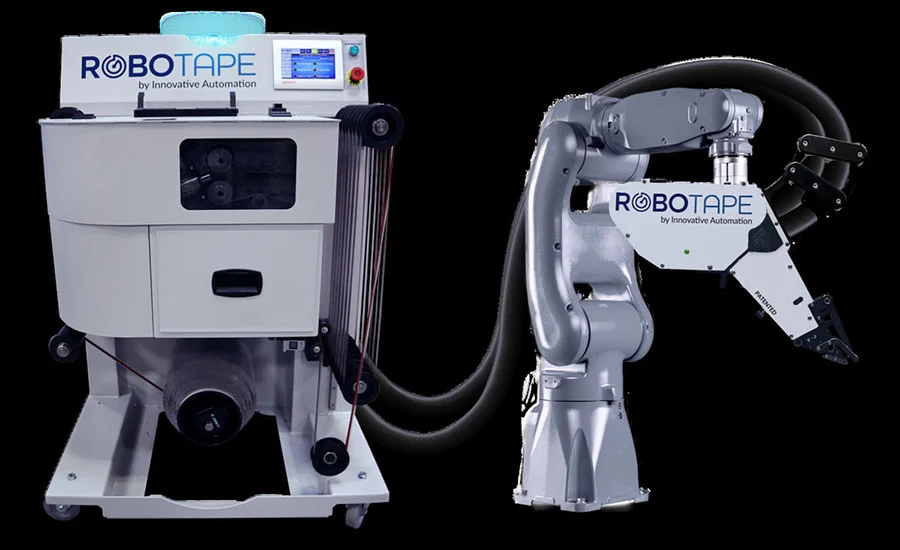
Beyond simple gripping, the automation of complex and repetitive assembly tasks is paramount for achieving consistent quality and high throughput. Innovative Automation Inc. has introduced the RoboTape system, a groundbreaking solution designed to automate the high-volume application of foam, felt, and various attachment adhesive tapes. This system addresses a common bottleneck in manufacturing, where manual tape application can be slow, inconsistent, and prone to error.

The RoboTape system distinguishes itself through its combination of a compact applicator and an advanced continuous material-feed system. This intelligent design allows the applicator to precisely follow intricate paths, including sharp corners, smooth curves, and complex 3D profiles, while simultaneously cutting the tape to the exact required length. This level of precision and adaptability is crucial for industries such as automotive, appliance manufacturing, and electronics, where adhesive tapes are used for sealing, damping, and fastening components.
The applicator’s versatility is further enhanced by its mounting options: it can be seamlessly integrated onto industrial robots, collaborative robots, or deployed in fixed configurations where external automation presents the part to the system. This flexibility ensures its applicability across a wide spectrum of production environments. Capable of application speeds reaching up to 300 millimeters per second, RoboTape significantly outperforms manual processes, contributing to substantial gains in production efficiency.
To minimize interruptions and maximize uptime, the material-management system supports "hot swapping" of tape spools. This innovative feature allows operators to replace empty spools while upstream equipment continues operating, eliminating costly pauses in production. Furthermore, the system automates the removal and collection of scrap liner into a centralized bin, reducing manual intervention and maintaining a cleaner work environment. Additional features such as splice detection, automatic rejection of faulty tape, real-time spool-level monitoring, and comprehensive data collection capabilities ensure robust process control and quality assurance. RoboTape’s design facilitates its integration into existing production lines or its incorporation into entirely new manufacturing cells, offering a scalable solution for optimizing tape application processes and ensuring consistent quality in high-volume production. The global industrial tape market, valued at over $60 billion, consistently demands more efficient and precise application methods, making RoboTape a timely and relevant innovation.
Real-Time Precision in Critical Manufacturing: SinceVision’s Welding Sensor
In high-stakes manufacturing, particularly within emerging sectors like electric vehicle (EV) battery production, precision and quality control are not merely desirable; they are critical for safety, performance, and market competitiveness. Shenzhen SinceVision Technology Co. Ltd. addresses this imperative with its SD33-85 laser displacement sensor, engineered to provide closed-loop Z-axis feedback for the laser welding of square aluminum shell battery cells. This technology is vital for mitigating inconsistencies that can arise from part tolerances, minor gaps, and thermal expansion during the intricate top-cover welding process of battery modules.
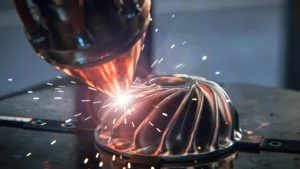
Traditional welding processes often rely on preprogrammed paths, which can be insufficient to compensate for real-time variations in the workpiece. SinceVision’s system, however, continuously measures the workpiece’s surface and dynamically adjusts the welding position as conditions change. This adaptive capability ensures that the laser focal point remains optimally positioned, crucial for achieving strong, hermetic, and defect-free welds. The sensor operates at an impressive 3-kilohertz sampling rate, providing a new measurement approximately every 0.03 millimeter at typical welding speeds. This ultra-high-speed feedback loop is essential for maintaining precision during rapid manufacturing operations.
The SD33-85 sensor boasts exceptional 10-micron repeatability, a testament to its advanced engineering. It leverages BSI-CMOS technology with a built-in amplifier, ensuring reliable and high-resolution data acquisition. Durability and protection in harsh industrial environments are guaranteed by its IP67 rating and robust ESD shielding. For seamless integration into existing control architectures, the sensor communicates through both RS-485 and analog outputs, compatible with common Programmable Logic Controllers (PLCs). Its remarkably compact housing, measuring just 60-by-50-by-22 millimeters, is a key design feature, allowing it to fit into existing welding heads without requiring costly mechanical redesigns. This plug-and-play capability accelerates deployment and minimizes disruption for manufacturers. As the demand for EV batteries surges, with projections for the global EV battery market to exceed $200 billion by 2030, technologies like SinceVision’s sensor become indispensable for scaling production while maintaining the highest quality and safety standards.

Broader Implications for Industry 4.0 and Beyond
The convergence of these distinct yet complementary robotic innovations signals a pivotal moment for the manufacturing industry, collectively pushing the boundaries of what automated systems can achieve. These advancements are not isolated; they are integral components of the broader Industry 4.0 paradigm, characterized by smart factories, interconnected systems, and data-driven decision-making.
The tactile sensors from Robotiq move us closer to "lights-out" manufacturing in complex assembly, where robots can perform intricate tasks with a level of dexterity and adaptability previously confined to human operators. This has profound implications for industries struggling with labor shortages and for tasks requiring delicate handling or precise fitting. The ability of robots to "feel" opens doors to unstructured environments and more dynamic, adaptive processes, moving beyond rigid, pre-programmed movements.
Festo’s simplified cobot gripper democratizes advanced automation, making collaborative robots more accessible and easier to integrate for a wider range of businesses, particularly SMEs. By reducing complexity and enhancing safety, these grippers accelerate the adoption of human-robot collaboration, fostering hybrid workforces where humans and robots augment each other’s strengths. This directly contributes to increased flexibility, higher productivity, and improved ergonomic conditions for human workers.
Innovative Automation’s RoboTape system tackles a specific yet pervasive challenge in assembly, demonstrating how automation can be applied to highly specialized, intricate processes to achieve superior consistency and efficiency. Such solutions are critical for maintaining product quality in high-volume production, reducing material waste, and optimizing throughput in competitive markets.
Finally, SinceVision’s laser displacement sensor exemplifies the critical role of real-time adaptive control in modern manufacturing, especially for high-value, safety-critical components like EV batteries. Its ability to compensate for real-world variations ensures unwavering quality and reliability, which are paramount in industries where even microscopic defects can have significant consequences. This capability is instrumental in scaling up production of complex products while adhering to stringent quality benchmarks, vital for the global transition to sustainable technologies.
Collectively, these technologies represent a concerted effort to address the pressing demands of modern manufacturing: the need for higher precision, greater flexibility, enhanced productivity, and resilient supply chains. They enable manufacturers to produce more complex products with fewer defects, adapt quickly to market changes, and optimize their labor resources. Experts predict that the global industrial automation market, already valued in hundreds of billions, will continue its robust growth, fueled by such innovations. These developments underscore a clear trend: the future of manufacturing lies in intelligent, adaptive, and highly integrated robotic systems that continually expand the realm of automated possibility, ushering in an era of unprecedented industrial capability.