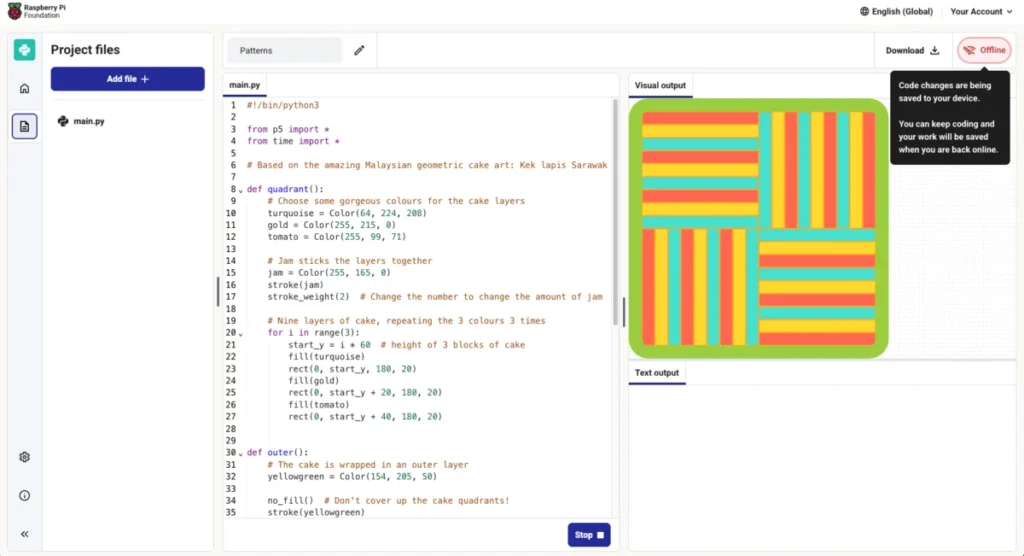
The Raspberry Pi Foundation has announced a significant update to its free, browser-based Code Editor, introducing robust offline capabilities designed to ensure educational continuity in environments with unstable internet connectivity. This development marks a pivotal shift in the Foundation’s approach to educational technology, moving toward a "resilience-first" model that acknowledges the diverse and often challenging infrastructure realities faced by students and educators worldwide. By utilizing advanced web technologies such as service workers, the Code Editor now allows users to continue writing, running, and managing code even when their internet connection is severed. This update ensures that if a connection fails during a lesson or a project, the user experience remains uninterrupted, and the work remains protected even if the browser page is reloaded.
Addressing the Reality of Global Connectivity
The impetus for this update stems from extensive field research conducted by the Raspberry Pi Foundation in several key regions, including India, Kenya, and South Africa. These studies were designed to identify the specific barriers preventing students from engaging effectively with digital literacy programs. While the digital divide is often discussed in terms of absolute access to hardware, the Foundation’s research highlighted a more nuanced issue: the reliability of the connection itself.
In many rural areas, internet access is not only expensive but also prone to frequent outages. However, the research revealed that connectivity issues are not exclusive to remote locations. In metropolitan areas of South Africa, for instance, "load-shedding"—the practice of scheduled rolling blackouts to prevent a total collapse of the power grid—frequently disrupts both electricity and the telecommunications infrastructure that relies on it. Similarly, in India and Kenya, "brownouts" and fluctuating bandwidth can make traditional online learning tools nearly impossible to use consistently.
The problem also extends to the classroom environment in developed nations. A typical school computing lab might feature 30 or more learners attempting to access the same Wi-Fi access point simultaneously. This surge in demand often leads to localized network congestion, resulting in dropped connections and lost progress. By making the Code Editor resilient to these interruptions, the Foundation is addressing a universal challenge that affects everyone from a student in a rural Kenyan village to a participant in a high-density urban Code Club.

Technical Architecture and the Role of Service Workers
The transition from a purely online tool to a resilient, offline-capable application was made possible through the implementation of service workers. In technical terms, a service worker is a script that a browser runs in the background, separate from the web page, opening the door to features that don’t need a web page or user interaction.
When a user first visits the Raspberry Pi Code Editor while online, the service worker automatically intercepts the network requests and stores the essential files—HTML, CSS, JavaScript, and the core coding environment—in the browser’s local cache. This process happens seamlessly in the background. Once these assets are cached, the service worker acts as a local proxy. If the network connection is lost, the browser no longer attempts to fetch files from a remote server; instead, the service worker retrieves them from the local cache.
This architecture is particularly effective because the Code Editor was already designed to run code locally on the user’s device rather than on a remote server. By combining local code execution with cached application assets, the Foundation has created a tool that maintains full functionality in an offline state. When the device eventually reconnects to the internet, the service worker automatically updates the cache to ensure the user has the latest version of the editor without requiring a manual update.
Chronology of Development and Strategic Funding
The development of the Code Editor’s offline support is part of a broader, multi-year strategy by the Raspberry Pi Foundation to modernize its digital learning tools.
- Initial Launch (2022-2023): The Foundation launched the beta version of its web-based Code Editor to provide a more streamlined, accessible alternative to complex Integrated Development Environments (IDEs).
- Field Research Phase (Early 2023): Teams conducted on-the-ground assessments in Sub-Saharan Africa and South Asia to understand the limitations of the current toolset in low-resource environments.
- Drafting EdTech Principles (Mid-2023): The Foundation published its "Draft Principles for Safe and Responsible Education Technology," which explicitly committed to designing for diverse needs and not assuming constant internet connectivity.
- Development and Integration (Late 2023): Developers integrated service worker technology into the Editor, focusing on "graceful degradation"—the ability of a system to maintain at least partial functionality when some of its components fail.
- Official Rollout (August 2024): The offline update was pushed to the production environment, accompanied by a call for feedback from the global community.
This work was made possible through significant financial backing from Cisco. The partnership highlights a growing trend of corporate social responsibility (CSR) initiatives focusing on "inclusive digital transformation," ensuring that the benefits of the digital economy are accessible to those in infrastructure-poor regions.

Impact on Educators and the "Homework Gap"
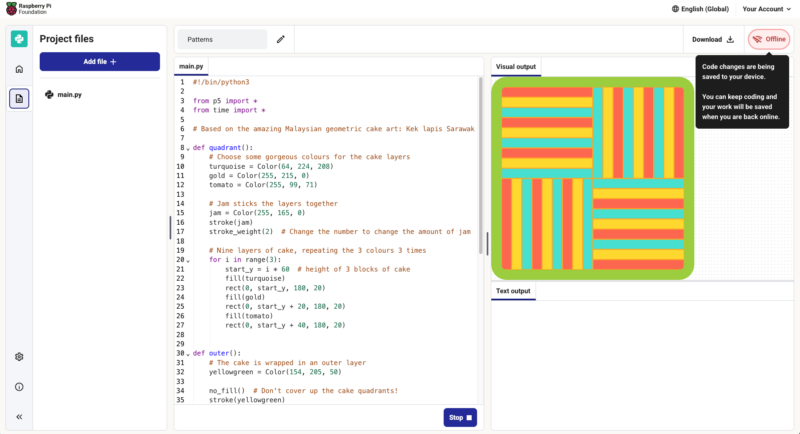
For educators, the update significantly reduces the "classroom management tax" associated with technical failures. Previously, a single dropped connection could lead to a student losing 20 to 30 minutes of work, requiring the teacher to intervene and troubleshoot rather than focus on pedagogical goals. With the new update, the Editor displays a discreet message indicating the offline status, but the student can continue their task.
The update also addresses the "homework gap"—the difficulty students face when they have high-speed internet at school but no reliable connection at home. By allowing the Editor to be loaded once at school and used later at home on patchy mobile data or in a completely offline environment, the Foundation is lowering the barrier to entry for independent study.
Supporting Data: The Global Context of Internet Reliability
Data from the International Telecommunication Union (ITU) suggests that while 67% of the world’s population is now online, the quality of that connection varies wildly. In many developing economies, the cost of 1GB of mobile data can represent a significant percentage of average monthly income, making persistent online presence a luxury.
Furthermore, a 2023 report on global internet quality indicated that users in parts of Africa and Southeast Asia experience "micro-outages" (disconnections lasting less than 60 seconds) at a rate five times higher than users in North America. While these micro-outages might not interrupt a simple web search, they are fatal to web applications that require constant "heartbeat" connections to a server to save data. The Raspberry Pi Foundation’s move to a client-side, cached model effectively mitigates the impact of these micro-outages.
Analysis of Implications for the EdTech Industry
The move by Raspberry Pi may signal a broader shift in the Educational Technology (EdTech) sector. For the past decade, the industry has trended toward "Cloud-First" models, which offer ease of updates and data collection but require high-bandwidth, always-on connections. However, as EdTech providers look toward emerging markets for growth, the limitations of the Cloud-First model are becoming apparent.
By prioritizing offline resilience, Raspberry Pi is setting a standard for "inclusive design." This approach suggests that software should not be built for the "ideal user" with a fiber-optic connection, but for the "real-world user" who may be dealing with aging hardware, congested Wi-Fi, and intermittent power. This philosophy aligns with the growing movement of "Low-Tech" or "Permacomputing," which advocates for software that is efficient, durable, and less reliant on external infrastructure.
Current Limitations and Future Roadmap
Despite the significant progress, the Raspberry Pi Foundation noted that the Code Editor is not yet a "full offline app" in the traditional sense. Currently, users must be online to initially load the Editor and to access certain external resources or project instructions that are hosted on separate servers. Additionally, while projects are saved locally in the browser’s storage, syncing those projects across different devices still requires a brief internet connection.
The Foundation has expressed a commitment to extending these offline capabilities. Future updates may include the ability to download "offline project packs" that include all necessary instructions and assets for a specific curriculum, further reducing the need for any connectivity during the learning process.
Conclusion and Call for Community Feedback
The Raspberry Pi Foundation’s update to its Code Editor is more than a technical patch; it is a statement of intent regarding the future of global digital education. By acknowledging and engineering for the failures of global infrastructure, the Foundation is ensuring that the path to learning computer science is not blocked by a lack of bandwidth.
Educators and learners are encouraged to test the new functionality and provide feedback through the Foundation’s official channels. As the tool continues to evolve, the emphasis will remain on creating a seamless experience where, as the Foundation puts it, "it should feel like nothing went wrong," even when the world’s digital infrastructure fails to deliver. This commitment to resilience ensures that the next generation of programmers, regardless of their geographic or economic location, has the tools they need to succeed in an increasingly digital world.