The European Space Agency (ESA) is undertaking an extraordinary sterilization process for a critical component of its upcoming ExoMars Rosalind Franklin rover mission: a massive 35-meter diameter parachute, destined to be the largest ever deployed on the Red Planet. This meticulous sterilization, conducted within ESA’s Life Support and Physical Sciences Laboratory at ESTEC in the Netherlands, underscores the paramount importance of planetary protection, ensuring that Earth microbes do not contaminate Mars, a potential cradle of past or present life. The ExoMars mission, slated for a 2028 launch, aims to conduct an unprecedented search for biosignatures beneath the Martian surface, a scientific endeavor that demands an equally unprecedented level of cleanliness for its hardware.
H2: The Monumental Task of Sterilizing a Giant Parachute
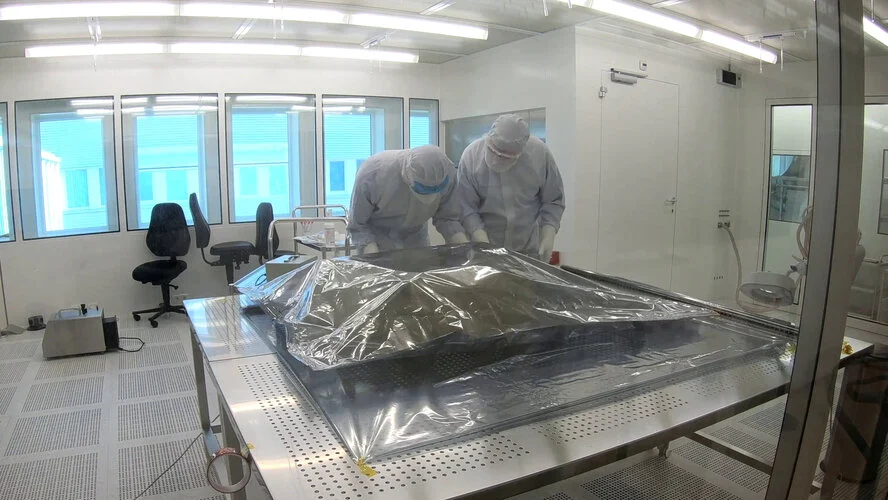
Albert Haldemann, ESA’s chief engineer for Mars missions, elaborated on the intricate procedures involved. The parachute, a marvel of engineering crafted from a blend of nylon and Kevlar fabrics and weighing a substantial 74 kilograms, is currently encased in a specialized donut-shaped bag. Its destination is a highly specialized dry-heat sterilizer oven, where it will undergo a rigorous baking process. The objective is to render the parachute at least 10,000 times cleaner than a typical smartphone, a stark illustration of the extreme cleanliness required for interplanetary missions.
The sterilization process is not merely a matter of wiping down surfaces. It involves a multi-faceted approach to eradicate any potential microbial hitchhikers that may have accumulated during the parachute’s terrestrial journey. The oven, located within ESA’s advanced Life Support and Physical Sciences Laboratory, is designed to expose the parachute to precisely controlled high temperatures for an extended duration. This thermal treatment is crucial for inactivating and eliminating any dormant or active microorganisms that could pose a threat to the scientific integrity of the ExoMars mission or, more critically, to the Martian environment itself.
H2: A Fortress of Cleanliness: The Cleanroom Environment
The sterilization takes place within a meticulously controlled cleanroom environment. Air within these specialized chambers undergoes a continuous, two-stage filtration process, capturing even the smallest airborne particles. Furthermore, personnel entering the cleanroom must adhere to stringent protocols, donning more elaborate protective gear than a surgical team before passing through an air shower. This air shower acts as a final decontamination step, blasting away any residual contaminants before individuals can proceed into the pristine workspace. This layered approach to contamination control is vital for maintaining the ultra-high cleanliness standards demanded by planetary protection guidelines.
H2: The Parachute’s Pivotal Role in Martian Entry, Descent, and Landing (EDL)
The 35-meter parachute is not just an exceptionally clean piece of equipment; it is a critical instrument for the ExoMars Rosalind Franklin rover’s survival. Upon reaching Mars in 2028, the rover will embark on a perilous six-minute descent through the planet’s thin atmosphere. This atmospheric entry is one of the most challenging phases of any Mars mission. The parachute’s primary function is to dramatically slow the rover’s descent, reducing its velocity from thousands of kilometers per hour to a manageable speed before other landing systems take over.
The sheer scale of this parachute is a testament to the engineering challenges of landing a substantial payload on Mars. Its 35-meter diameter is unprecedented, making it the largest parachute ever conceived for flight beyond Earth. This colossal size is necessary to generate sufficient drag in Mars’ tenuous atmosphere, which is less than 1% the density of Earth’s at sea level. Without this massive canopy, the rover would likely impact the Martian surface at a destructive velocity. The successful deployment and function of this parachute are thus indispensable for a safe landing, paving the way for the rover to begin its groundbreaking scientific investigations.
H2: ExoMars Rosalind Franklin: A Quest for Life Beneath the Surface
The ExoMars Rosalind Franklin rover mission is more than just a technological achievement; it represents a significant leap in humanity’s quest to answer one of the most profound questions: are we alone in the universe? Scheduled to launch in 2028, the rover will undertake a journey of over 25 months to reach the Red Planet. Once on Mars, its primary objective will be to search for signs of past or present life by drilling beneath the Martian surface.
Unlike previous Mars missions that primarily examined the surface, Rosalind Franklin is equipped with a sophisticated drill capable of extracting samples from depths of up to two meters. This depth is crucial because the Martian surface is constantly bombarded by harmful ultraviolet and cosmic radiation, which would likely destroy any delicate organic molecules or biosignatures. By accessing samples from below the surface, the rover has a much greater chance of finding evidence of life, should it have ever existed or, incredibly, still exist. The rover’s suite of advanced scientific instruments will then analyze these samples for organic compounds and other indicators of biological activity.
H2: The Imperative of Planetary Protection: Preventing Forward Contamination
The very essence of the ExoMars mission – the search for life – necessitates an uncompromising commitment to planetary protection. This scientific discipline is dedicated to preventing the biological contamination of celestial bodies by terrestrial life and vice versa. In the context of ExoMars, the primary concern is "forward contamination," the unintentional introduction of Earth microbes to Mars.
The presence of terrestrial microbes on Mars could have catastrophic implications for the scientific mission. If these hardy organisms survive the rigors of space travel and the Martian environment, they could potentially thrive and mimic Martian life, leading to a false positive result. This would not only compromise the scientific findings but also raise ethical questions about human impact on another celestial body. As the article states, "Any terrestrial microbes hardy enough to survive the ride through space could interfere with the investigation by causing ‘forward contamination’ and triggering a false positive." This highlights the critical need for sterilization procedures that go far beyond standard space hardware requirements.
H2: International Mandates and Ethical Considerations
The stringent sterilization protocols for ExoMars are not merely a matter of scientific prudence but are also mandated by international agreements. The Committee on Space Research (COSPAR) establishes guidelines for planetary protection that are widely adopted by spacefaring nations. These guidelines are designed to protect both the scientific value of celestial bodies and their potential to harbor indigenous life, as well as to safeguard Earth from any extraterrestrial biological materials that might be returned.
"Protecting the Martian environment from ourselves, in accordance with international planetary protection measures, is as important as protecting the mission itself," the article emphasizes. This dual responsibility underscores the ethical dimensions of space exploration. As humanity ventures further into the cosmos, it carries a profound responsibility to act as a responsible steward of the universe, ensuring that our exploration does not inadvertently destroy or contaminate potential extraterrestrial ecosystems. The meticulous sterilization of the ExoMars parachute is a tangible manifestation of this commitment.
H2: A Timeline of Sterilization and Mission Preparations
The sterilization process for the ExoMars Rosalind Franklin rover’s parachute is a culmination of years of planning and technological development.
- Early Mission Planning and Design: The initial concepts for the ExoMars mission, including the requirement for a large parachute, were established in the early 2000s. Engineers began considering the challenges of EDL for a rover of Rosalind Franklin’s mass.
- Parachute Development and Testing: The development of the 35-meter parachute involved extensive design, material selection, and rigorous testing on Earth. This included wind tunnel simulations and drop tests to validate its aerodynamic performance and structural integrity.
- Sterilization Protocol Development: Concurrently, ESA and its partners worked on defining and refining the stringent sterilization protocols required to meet planetary protection standards. This involved extensive research into the efficacy of various sterilization methods, including dry heat, and the development of specialized equipment like the sterilizer oven.
- Cleanroom Infrastructure: The Life Support and Physical Sciences Laboratory at ESTEC was equipped and maintained to the highest cleanroom standards to facilitate these sensitive operations.
- Current Sterilization Phase: The current phase involves the actual baking of the parachute within the specialized oven, a critical step performed under strict observation and control.
- Integration with Rover and Launch Vehicle: Following successful sterilization and quality checks, the parachute will be integrated with the rest of the landing system and the Rosalind Franklin rover. This entire assembly will then be integrated with the launch vehicle.
- 2028 Launch Window: The mission is targeted for a launch window in 2028, after which the rover will embark on its interplanetary journey.
- Mars Landing and Surface Operations: Upon arrival at Mars, the parachute will play its vital role during the EDL sequence, followed by the rover’s extensive surface operations to search for signs of life.
H2: Supporting Data and Technological Advancements
The scale of the ExoMars parachute is a significant engineering feat in itself. While specific details on the exact temperature and duration of the sterilization bake are proprietary, the requirement for a 10,000-fold reduction in microbial count is a common benchmark for missions venturing to potentially habitable celestial bodies. For comparison, the Mars Science Laboratory (MSL) mission, which carried the Curiosity rover, had less stringent planetary protection requirements as it was not specifically designed to search for life in the same way. However, even MSL underwent significant cleaning and sterilization procedures.
The materials used – nylon and Kevlar – are chosen for their strength, durability, and ability to withstand the extreme conditions of atmospheric entry. Nylon provides flexibility and shock absorption, while Kevlar offers exceptional tensile strength, crucial for resisting the immense forces generated during deployment. The development of such a large parachute also reflects advancements in textile engineering and manufacturing precision required for space applications.
H2: Broader Impact and Implications for Future Exploration
The rigorous sterilization of the ExoMars Rosalind Franklin rover’s parachute is more than a technical necessity; it sets a precedent for future deep space exploration. As humanity increasingly targets celestial bodies with the potential for life, such as icy moons in the outer solar system, the demands for planetary protection will only grow. The technologies and protocols developed for ExoMars will be invaluable for these future endeavors.
The success of this sterilization process reinforces ESA’s commitment to responsible space exploration. It highlights the agency’s dedication to scientific integrity and its understanding of the profound ethical responsibilities that accompany humanity’s expansion into the cosmos. The ExoMars mission, with its focus on finding evidence of life, is a bold step forward, and the meticulous preparation of its components, down to the last microbe, is a testament to the meticulous planning and scientific rigor that underpins such ambitious undertakings. The data gathered by Rosalind Franklin, free from the taint of terrestrial contamination, has the potential to reshape our understanding of life in the universe.