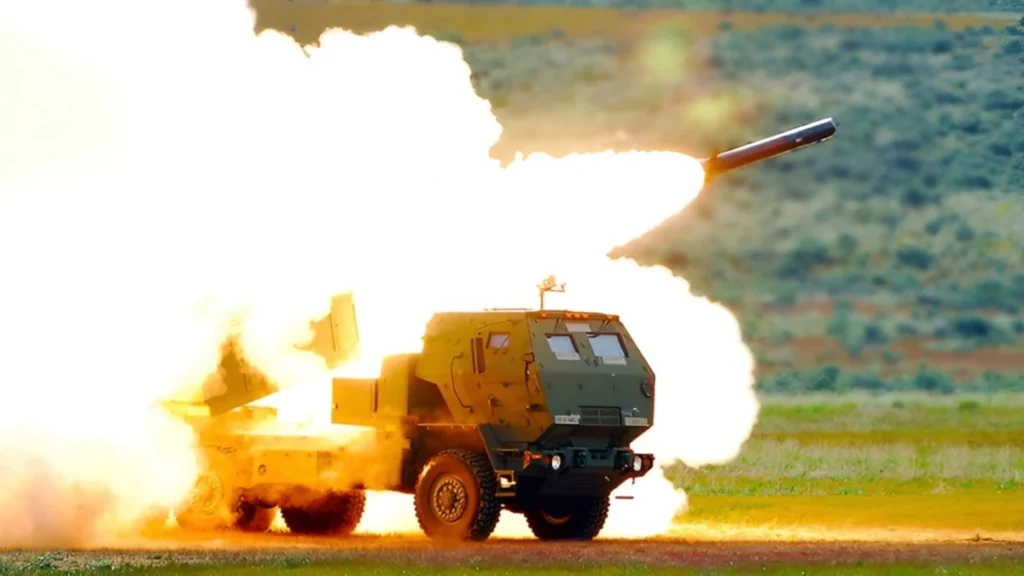
Lockheed Martin has successfully completed a second flight test of its new Joint Reduced Range Rocket (JR3), marking a significant stride toward a more economical and efficient training regimen for U.S. Army rocket artillery crews. This latest evaluation, conducted at the sprawling Yuma Proving Ground in Arizona, saw multiple JR3 rounds fired from a High Mobility Artillery Rocket System (HIMARS) launcher, providing critical data on the rocket’s performance across various parameters. Engineers meticulously assessed the rounds’ range, trajectory, and accuracy, crucial metrics for any precision fire system, even one designed primarily for training. A key innovation tested during this flight was the rockets’ marking payloads, which offer crews a visible indication of where the training rounds impact, allowing for immediate and tangible assessment during live-fire exercises. This capability is vital for providing real-time feedback, enhancing the learning experience, and ensuring crews can accurately gauge their performance without the need for costly and complex instrumentation systems often required for combat rounds.
Addressing the High Cost of Readiness: The Training Dilemma
The development of the JR3 directly addresses a pervasive and practical challenge faced by military units operating sophisticated artillery systems like the HIMARS and the M270 Multiple Launch Rocket System (MLRS). Maintaining a high state of readiness demands frequent live-fire practice, an essential component for honing crew proficiency, tactical decision-making, and overall unit cohesion. However, the financial burden associated with training using combat-standard ammunition, such as the Guided Multiple Launch Rocket System (GMLRS) rounds, is substantial. A single GMLRS rocket can cost upwards of $150,000, and with units requiring multiple firings to achieve and maintain proficiency, these expenses can quickly escalate into prohibitive sums, placing immense pressure on training budgets. This financial constraint often limits the frequency and volume of live-fire drills, potentially impacting the overall readiness of artillery crews. The U.S. Army, like many modern armed forces, operates under stringent budget considerations while simultaneously facing an increasingly complex global security landscape that necessitates peak operational readiness. Therefore, finding cost-effective solutions that do not compromise the quality of training is a top priority.
The JR3 Solution: Innovation in Design and Logistics
Lockheed Martin engineered the JR3 with affordability and high-volume training in mind. A cornerstone of its design is the innovative 24-round launch pod. This represents a significant departure from the standard 6-round GMLRS pod, allowing for a quadruple increase in the number of rounds available per exercise before a reload is required. This larger load translates directly into more "trigger time" for crews, enabling them to practice firing procedures repeatedly and gain invaluable experience within the constraints of live-fire ranges. The ability to conduct more repetitions during a single training window is paramount for skill development, muscle memory, and refining operational protocols, all while adhering to the inherent range restrictions that limit where live rockets can safely fly.
The rocket itself leverages mature motor technology, a strategic choice that contributes to its overall affordability and reliability. By integrating proven propulsion systems, Lockheed Martin has reduced development risks and costs associated with entirely new designs. This mature motor is paired with an adaptable payload section, which further simplifies the training round and keeps manufacturing costs down. This elegant combination of established technology and intelligent design allows the JR3 to deliver essential training capabilities without the advanced guidance systems and warheads that drive up the cost of combat munitions.
Dave Griser, vice president of Lockheed Martin Precision Fires Rockets, underscored the dual objectives of the JR3 program. "Our new training round offers a scalable, very affordable solution," Griser stated, highlighting the company’s commitment to delivering value. He further emphasized that the 24-round pod directly addresses the Army’s persistent demand for greater training volume, ensuring that proficiency can be achieved and maintained without sacrificing performance or the critical realism of live-fire drills. This focus on both cost and training volume reflects a deep understanding of the Army’s operational needs and fiscal realities.
Reusability: A Pillar of Sustainable Training
Beyond the immediate cost savings per round, a crucial element driving the JR3’s design is its emphasis on reusability. The launch pod itself has been engineered to be reloaded. After firing, crews can replenish its launch tubes, allowing the same hardware to support multiple training events. This reusable architecture is poised to be as impactful as the rocket’s lower unit cost. In current operations, a standard GMLRS launch pod is typically a single-use item, discarded after its six rockets are expended. The ability to reload the JR3 pod significantly reduces the logistical footprint and the material consumption associated with live-fire exercises. This translates into substantial long-term savings in procurement, transportation, and disposal costs, contributing to a more sustainable and environmentally conscious training methodology.
Moreover, this design philosophy ensures that the JR3 remains fully compatible with the existing HIMARS and M270 launchers already in service with Army units worldwide. This seamless integration means that crews can train with the new reduced-range rounds without requiring any modifications to their launch platforms or transitioning to separate, dedicated training systems. This "plug-and-play" capability minimizes additional acquisition costs for the Army and simplifies the logistical burden of introducing new training ordnance, ensuring a smooth transition and rapid adoption into training curricula.
Development Timeline and Future Prospects
Lockheed Martin’s journey with the JR3 has been marked by a systematic and data-driven testing approach. The first flight test, successfully completed earlier in its development cycle, was crucial for establishing the system’s foundational flight characteristics and validating its basic aerodynamic performance. The recent second evaluation, as detailed, built upon this initial success by collecting further data from multiple rounds launched from a HIMARS, allowing for a more comprehensive assessment of accuracy, consistency, and the functionality of the marking payloads.
The development trajectory for the JR3 continues with another flight test strategically planned for later this year. This upcoming event will be instrumental for engineers to continue evaluating the rocket’s performance across an expanding envelope of conditions and scenarios, progressively refining its design and ensuring it meets all operational requirements. Each test phase provides invaluable data that feeds back into the development process, ensuring that the final product is robust, reliable, and optimally suited for its intended training purpose.
Beyond its immediate role as a training system, Lockheed Martin also envisions a broader potential for the JR3 technology. The underlying architecture, particularly its emphasis on affordability and simplicity, could pave the way for future efforts involving inexpensive rockets produced in much larger quantities. This forward-looking perspective aligns with evolving military doctrines that increasingly consider "affordable mass" as a critical component of modern defense strategies.
One pertinent example is the U.S. Army’s Direct Support Fires Technology (DSFT) initiative. This forward-thinking program specifically focuses on the development and procurement of mass-produced, low-cost rockets designed for direct-fire missions. The JR3’s core design principles – leveraging mature technology for affordability and high-volume production – could offer a valuable pathway or technological foundation for future DSFT-aligned systems, potentially bridging the gap between training and combat applications for certain mission profiles.
Strategic Implications for Army Readiness
While the potential for future combat applications exists, the immediate and primary purpose of the JR3 remains firmly rooted in its role as a training system. Its design, however, profoundly reflects the U.S. Army’s growing interest and imperative to extract more usable rounds and maximize training value from increasingly constrained training budgets. In an era where geopolitical tensions are high and the demand for rapidly deployable and highly proficient forces is paramount, ensuring that every training dollar yields maximum return is critical.
The successful validation of the JR3’s design through ongoing tests, particularly highlighting the efficacy of its 24-round reusable pod, could solidify its position as one of the system’s most significant advantages. This innovative approach promises to dramatically increase the "trigger time" for artillery crews, allowing them to achieve higher levels of proficiency and confidence. Simultaneously, by reducing the quantity of expensive, single-use hardware consumed during each exercise, the JR3 offers a tangible pathway to significant cost savings, improved logistical efficiency, and a more sustainable training paradigm for the U.S. Army’s precision fire assets. This initiative underscores a fundamental shift towards smarter, more resource-efficient methods of ensuring that the nation’s artillery forces remain at the peak of their operational readiness.