A landmark collaboration has been established between 3D Systems, a global leader in additive manufacturing solutions, and the U.S. Department of Energy’s Savannah River National Laboratory (SRNL) to pioneer advanced 3D-printing technologies. This strategic partnership, formalized through a Cooperative Research and Development Agreement (CRADA), aims to develop cutting-edge materials and processes crucial for applications spanning nuclear energy, critical national infrastructure, and national security. Centered at SRNL’s state-of-the-art Advanced Manufacturing Collaborative (AMC) in South Carolina, the initiative seeks to push the boundaries of additive manufacturing, enabling the creation of components capable of operating under the most extreme conditions.
The Genesis of a Strategic Partnership: Unpacking the CRADA Mechanism
The Cooperative Research and Development Agreement (CRADA) serves as the foundational mechanism for this ambitious partnership. CRADAs are vital tools that enable federal laboratories, such as SRNL, to work with private industry, universities, and other organizations on research and development projects. These agreements facilitate the transfer of technology from national laboratories to the private sector, accelerating innovation and bringing new products and services to market while allowing the private entity to retain intellectual property rights stemming from the collaboration. This particular CRADA underscores a shared commitment to leveraging advanced manufacturing for national strategic interests, blending 3D Systems’ commercial expertise in additive manufacturing with SRNL’s deep scientific knowledge and unique facilities for nuclear and materials research.
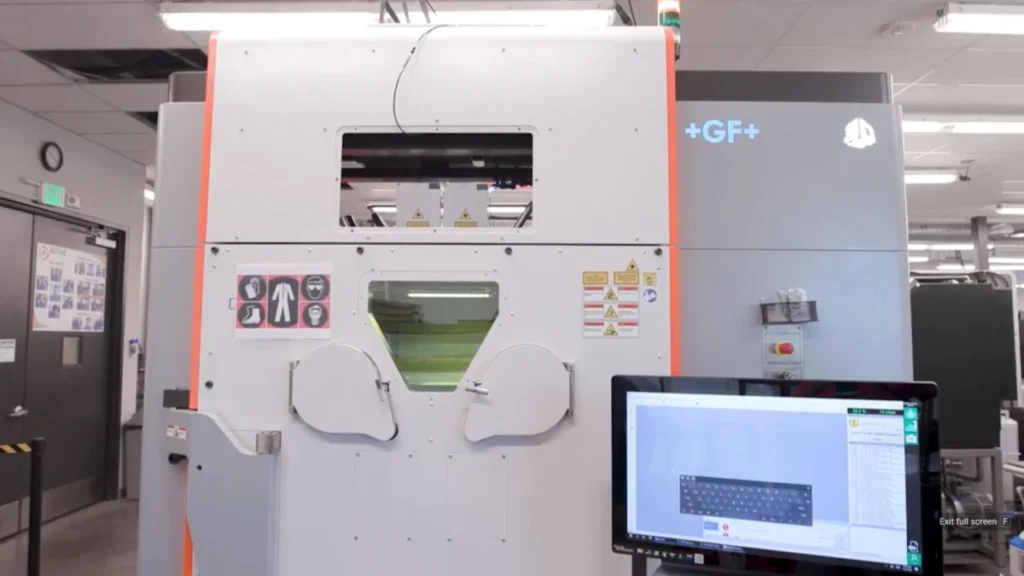
The choice of SRNL’s Advanced Manufacturing Collaborative (AMC) as the operational hub is particularly significant. The AMC is a cutting-edge facility designed to foster collaboration between government, academia, and industry, focusing on advanced manufacturing techniques, materials science, and robotics. Its infrastructure is specifically tailored to handle sensitive research and development, including projects with national security implications, making it an ideal environment for tackling the complex challenges inherent in nuclear-grade component production. The installation of 3D Systems equipment at the AMC, coupled with facility upgrades and the deployment of additive manufacturing specialists, provides a robust foundation for moving research from conceptualization to scalable production.
Addressing Grand Challenges: Nuclear Energy and National Security
The primary impetus behind this partnership stems from the increasingly demanding requirements of modern energy systems and national security applications. Components used in advanced nuclear reactors, for instance, must withstand unprecedented levels of extreme temperatures, intense radiation exposure, and significant mechanical loads over prolonged periods. Simultaneously, these components often require highly intricate and complex geometries to optimize performance – a challenge that conventional manufacturing techniques struggle to meet efficiently or at all.
For the nuclear energy sector, the implications are profound. As nations, including the United States, pivot towards a new generation of nuclear power – encompassing advanced reactors and Small Modular Reactors (SMRs) – the need for innovative manufacturing solutions becomes paramount. These next-generation reactors promise enhanced safety, greater efficiency, and a smaller environmental footprint, but their successful deployment hinges on the ability to produce components with superior performance characteristics and reliability. Additive manufacturing offers a transformative pathway, allowing engineers to design and produce parts with internal cooling channels, optimized flow paths, and integrated functionalities that are impossible to achieve with traditional casting, forging, or machining methods. This leap in design freedom can lead to more compact, efficient, and safer reactor designs.
Beyond energy, the partnership’s focus extends to critical infrastructure and national security. This encompasses a broad range of applications where component reliability, material performance under extreme stress, and the ability to rapidly iterate and produce specialized parts are non-negotiable. From components for defense systems to specialized parts for critical infrastructure, the ability to rapidly develop and deploy advanced materials and manufacturing processes holds significant strategic value, enhancing both operational capabilities and resilience against unforeseen disruptions.
Technological Frontiers: Materials, Processes, and Artificial Intelligence
The core of the collaboration involves pioneering new materials, manufacturing equipment, and intelligent process optimization tools. Researchers will specifically target:
- High-Temperature Nickel-Based Superalloys: These alloys are crucial for applications requiring exceptional strength and stability at elevated temperatures, such as in heat exchangers and reactor internals. Developing additive manufacturing processes for these materials is challenging due to their complex microstructures and susceptibility to defects during rapid cooling and solidification. The partnership aims to optimize these processes to achieve desired mechanical properties and defect-free parts, critical for the integrity of nuclear systems operating at several hundred degrees Celsius.
- Radiation-Tolerant Materials: The nuclear environment presents a unique challenge: materials must not only withstand high temperatures and pressures but also resist degradation from neutron bombardment and other forms of radiation. This phenomenon, known as radiation embrittlement or swelling, can significantly shorten the lifespan of components. The collaboration will investigate novel material compositions and additive manufacturing techniques to produce parts that exhibit superior radiation tolerance, extending the operational life and safety margins of advanced nuclear systems.
- Advanced Manufacturing Equipment: The partnership will not only utilize existing advanced additive manufacturing systems but also explore the development of next-generation equipment tailored for high-performance materials and demanding applications. This could involve optimizing laser parameters, improving atmospheric control within printing chambers, and integrating in-situ monitoring capabilities to ensure consistent quality.
- Artificial Intelligence (AI) and Machine Learning (ML) Tools: A significant aspect of the project involves integrating AI and ML for process optimization. These tools will enable real-time monitoring of manufacturing parameters, predictive analytics for defect detection, and intelligent adjustments to printing processes during production. By analyzing vast datasets generated during printing, AI can identify optimal process parameters, reduce trial-and-error iterations, and ensure repeatability and consistency, which are paramount for safety-critical nuclear components. This intelligent automation promises to accelerate development cycles and enhance overall manufacturing efficiency and quality control.
- Scalable Production Processes: A key objective is to transition additive manufacturing from a laboratory curiosity to a repeatable industrial process. This involves developing methodologies for qualifying materials and processes, establishing robust quality assurance protocols, and demonstrating the ability to produce components at production-relevant scales, ensuring that the technology can meet future industrial demand.
Revolutionizing Nuclear Component Manufacturing
The direct applications of this advanced manufacturing capability are diverse and critical for next-generation nuclear systems. Specific components identified for investigation include:
- Heat Exchangers with Intricate Internal Cooling Channels: Traditional manufacturing struggles to create the complex, tortuous internal geometries necessary for highly efficient heat transfer. Additive manufacturing allows for the design and production of optimized channels that significantly enhance thermal performance, leading to more compact and efficient heat exchange systems within reactors.
- Reactor Internals: These components operate directly within the reactor core, experiencing extreme radiation and temperature. Additive manufacturing offers the potential to consolidate multiple parts into single, complex structures, reducing weld points (which are often weak points) and improving overall structural integrity and performance.
- Pumps and Valves: Critical for fluid control and safety systems, these components can benefit from design optimization through AM, leading to reduced weight, improved flow dynamics, and enhanced reliability. The ability to customize geometries for specific operational environments can lead to significant performance gains.
The advantages offered by additive manufacturing extend beyond mere geometric complexity. The technology inherently reduces material waste by building parts layer-by-layer, which is a significant environmental and economic benefit, especially when working with expensive or scarce high-performance alloys. Furthermore, the freedom to design components without the constraints of traditional manufacturing methods allows engineers to innovate more freely, optimizing parts for their exact operating environment rather than compromising based on manufacturing limitations.
The Broader Economic and Strategic Imperative: Domestic Manufacturing and Supply Chain Resilience
The partnership holds significant implications for the broader U.S. industrial landscape and national strategic goals. The United States is actively investing in the development and deployment of advanced reactors and Small Modular Reactors (SMRs) as part of its strategy to decarbonize the energy sector, enhance energy security, and regain leadership in nuclear technology. However, a robust domestic manufacturing capacity and resilient supply chain are essential to realize these ambitions.
Recent global events, from pandemics to geopolitical tensions, have exposed the vulnerabilities of extended international supply chains. Relying on foreign sources for critical components, especially for strategic sectors like nuclear energy and national security, poses significant risks. By developing advanced additive manufacturing capabilities domestically, the U.S. can:
- Strengthen National Competitiveness: Foster an ecosystem of innovation and manufacturing excellence, positioning U.S. industry at the forefront of advanced manufacturing.
- Enhance Energy Independence: Ensure the timely and reliable supply of components for its nuclear energy fleet, reducing reliance on external suppliers.
- Improve National Security: Provide the capability to rapidly produce specialized parts for defense and critical infrastructure, responding agilely to evolving threats and needs.
- Reduce Lead Times and Costs: Localized and agile manufacturing can significantly shorten development and production cycles, leading to faster deployment of new technologies and potentially lower overall costs.
This initiative is not just about making individual parts; it’s about building a foundational capability that will underpin future generations of U.S. energy and defense technologies, creating a more secure and resilient industrial base.
Market Landscape: The Resurgence of Nuclear and Growth of Additive Manufacturing
The timing of this agreement is particularly pertinent, aligning with a global resurgence of interest in nuclear energy as a clean, reliable power source to combat climate change and ensure energy security. According to the International Energy Agency (IEA), global small modular reactor (SMR) capacity could reach approximately 40 gigawatts (GW) by 2050 under current policies, with a potential surge to as much as 120 GW under an accelerated scenario driven by stronger climate action and supportive government policies. This projected growth signifies a massive market opportunity for innovative manufacturing solutions.
The broader additive manufacturing market itself is experiencing exponential growth. Valued at approximately $15.3 billion in 2022, the global additive manufacturing market is projected to reach over $76 billion by 2030, growing at a compound annual growth rate (CAGR) of over 20%. This growth is largely driven by increasing adoption in high-value industries like aerospace, automotive, medical, and increasingly, energy. However, the nuclear sector has traditionally been more conservative due to stringent regulatory requirements and the need for absolute reliability. This partnership aims to bridge that gap, providing the rigorous research and validation necessary to qualify additive manufacturing for nuclear applications.
The successful integration of additive manufacturing into the nuclear supply chain requires not only technological breakthroughs but also the development of new regulatory frameworks and industry standards. This collaboration, by producing robust data and proven methodologies, will play a crucial role in informing and accelerating the establishment of these essential frameworks, paving the way for broader adoption across the nuclear industry.
Cultivating Expertise: The Workforce Development Dimension
Beyond the immediate technological and strategic objectives, the partnership also emphasizes workforce development. Researchers, engineers, and technicians involved in the collaboration will gain invaluable hands-on experience with advanced additive manufacturing systems, materials science, and AI/ML tools. This exposure will create a pipeline of highly skilled personnel trained in technologies that are rapidly becoming indispensable across critical sectors such as nuclear, aerospace, defense, and broader energy industries.
The demand for skilled professionals in advanced manufacturing significantly outpaces supply. By investing in training and practical experience, this initiative addresses a critical national need, ensuring that the U.S. possesses the human capital required to sustain its leadership in these strategically vital fields. This focus on human capital is as important as the technological advancements, as a skilled workforce is the ultimate enabler of innovation and industrial capability.
Leadership Perspectives and Industry Resonance
Jeff Graves, president and CEO of 3D Systems, underscored the significance of the agreement, stating, "This agreement demonstrates the impact and importance of high-quality 3D printing materials and technologies on key industrial markets, particularly energy and national security." His statement highlights 3D Systems’ commitment to applying its deep expertise in advanced additive manufacturing to solve some of the nation’s most pressing challenges.
SRNL echoed this sentiment, emphasizing that the collaboration is designed to bolster U.S. manufacturing competitiveness while simultaneously accelerating the development and widespread adoption of additive manufacturing technologies. This reflects a broader understanding within government and industry that technological leadership is inextricably linked to manufacturing prowess. The partnership is a clear signal that both entities view advanced additive manufacturing not merely as an incremental improvement but as a fundamental shift in how critical components will be designed, produced, and deployed in the future.
Looking Ahead: From Laboratory to Industrial Scale
The ultimate ambition of the 3D Systems-SRNL partnership extends far beyond the production of individual components in a laboratory setting. The overarching goal is to cultivate a comprehensive ecosystem encompassing advanced materials, sophisticated machinery, intelligent software, and unparalleled manufacturing expertise. This integrated approach is designed to propel additive manufacturing from its current state of advanced research into a realm of repeatable, reliable, and scalable industrial production.
By systematically addressing challenges in material science, process control, and qualification, the collaboration aims to establish robust methodologies that will enable the consistent manufacturing of high-performance components. This vision includes developing rigorous testing protocols, establishing industry standards, and creating certified production pathways that meet the exacting demands of the nuclear and national security sectors. The success of this partnership will not only enable the next generation of nuclear energy systems but also set a precedent for how advanced manufacturing can be strategically deployed to secure national interests and drive technological progress across multiple critical industries.