Artificial intelligence is already playing a major role in helping cosmologists study the universe. Now, new research suggests a machine learning technique called transfer learning could make the search for new physics much faster and less expensive. However, the study also uncovered a surprising downside: AI can sometimes become so dependent on what it has already learned that it struggles to recognize something truly new. This dual revelation, published in the Journal of Cosmology and Astroparticle Physics (JCAP), highlights both the immense promise and the inherent challenges of integrating advanced AI into the vanguard of scientific discovery.
The Enduring Mysteries of the Cosmos and the Quest for New Physics
The universe, in its vastness and complexity, presents an endless frontier for scientific inquiry. For decades, cosmologists have relied on the Standard Model of Cosmology, widely known as Lambda-CDM (ΛCDM), to explain the universe’s evolution and structure. This model, which posits a universe composed of dark energy (Λ) driving accelerated expansion, cold dark matter (CDM) forming the gravitational scaffolding for galaxies, and ordinary baryonic matter, has been remarkably successful. It accurately describes phenomena from the cosmic microwave background (CMB) radiation – the afterglow of the Big Bang – to the large-scale distribution of galaxies across billions of light-years. Parameters like the Hubble constant (H₀), which measures the universe’s expansion rate, and σ₈, which quantifies the clustering of matter, have been precisely constrained by observations.
However, despite its triumphs, ΛCDM is not considered the final word. A growing body of evidence, particularly from recent high-precision astronomical observations, has begun to reveal subtle tensions and discrepancies that hint at physics beyond the standard model. One of the most prominent is the "Hubble tension," a persistent disagreement between the expansion rate derived from local measurements of supernovae and that inferred from the early universe’s CMB. Similarly, the "S8 tension" refers to a discrepancy in the measurement of matter clustering, with some probes suggesting a less clumpy universe than predicted by the CMB. These inconsistencies, while small, are statistically significant enough to compel scientists to investigate alternative theories.
The search for new physics extends to understanding fundamental constituents and forces. For instance, while neutrinos are known to have mass, the exact sum of their masses remains a mystery, and their gravitational influence could subtly alter cosmic structure. Theories of modified gravity propose alternatives to Einstein’s general relativity on cosmic scales, potentially explaining the accelerating expansion without invoking dark energy or offering a different explanation for structure formation. Evolving dark energy models suggest that the mysterious force accelerating the universe might not be constant but changes over cosmic time.
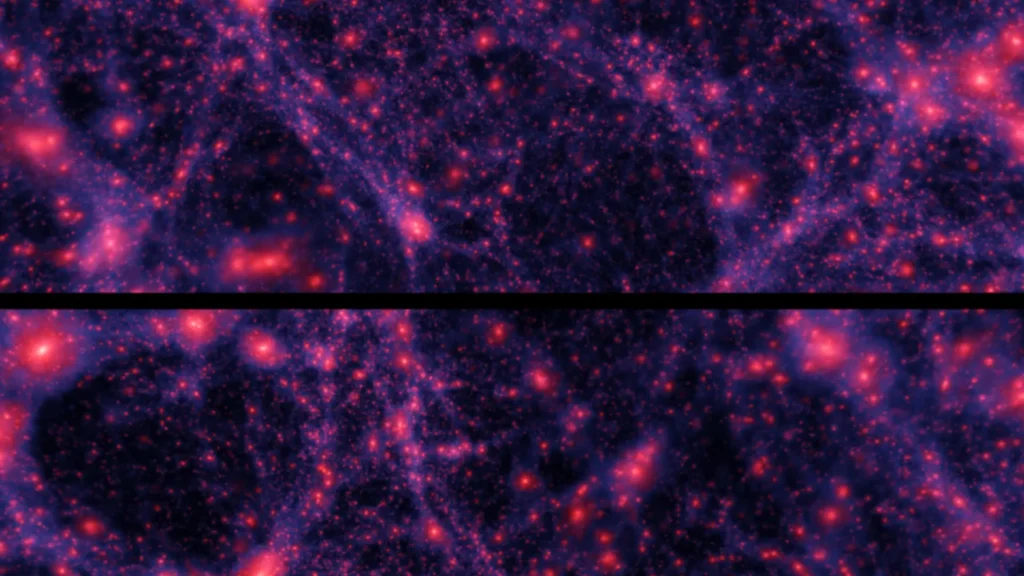
Exploring these profound possibilities requires a monumental effort. Researchers must generate enormous numbers of detailed computer simulations, each representing a virtual universe constructed under different physical assumptions. These simulations are not mere calculations; they are complex numerical models that evolve particles and fields over billions of years, tracking the formation of galaxies, clusters, and the intricate cosmic web. The computational cost associated with producing these highly sophisticated simulations is staggering, often demanding access to supercomputing facilities and thousands of CPU hours for a single run, making the exploration of the vast parameter space of new physics theories exceedingly slow and expensive.
The Promise of Transfer Learning: A Shortcut to Cosmic Understanding
Recognizing this computational bottleneck, researchers have increasingly turned to artificial intelligence, and specifically machine learning, as a potential accelerator for scientific discovery. The study published in JCAP by Veena Krishnaraj, Adrian E. Bayer, Christian Kragh Jespersen, and Peter Melchior, focused on whether a technique called transfer learning could make this process more efficient.
Transfer learning is a powerful paradigm within machine learning where a model, having been trained on one task, is re-purposed or fine-tuned for a second, related task. Instead of training a neural network from scratch on every new, complex problem, transfer learning allows the AI to leverage previously acquired knowledge. The research team applied this concept to cosmological simulations. Their strategy involved an initial "pretraining" phase where a neural network was first trained on simpler, less computationally expensive simulations based purely on the well-understood ΛCDM model. This initial training provided the AI with a foundational understanding of how cosmic structures evolve under standard physics.
As Adrian Bayer, a cosmologist at the Flatiron Institute and Princeton University and co-author of the study, explains, "It’s basically a shortcut. Usually, people train the AI directly on the most computationally expensive simulations. What we do instead is first use simpler and less expensive ΛCDM simulations to give the AI an idea of what’s happening, and only afterward move to the more complex models." He likens the approach to human learning: "You first read a basic book to get an idea of the knowledge, and then move to the really complicated book." This intuitive analogy underscores the efficiency gain: building expertise incrementally rather than attempting to grasp the most intricate details immediately.
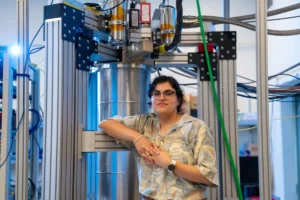
Veena Krishnaraj, the first author of the paper and an undergraduate student at Princeton University, further elaborates that this strategy prevents the AI from having to "digest everything at once." By providing a structured learning path, the AI can build a robust internal representation of cosmic evolution, which then serves as a powerful starting point for understanding deviations from the standard model.
The results of this innovative approach were remarkably positive. The study demonstrated that in some cases, employing transfer learning reduced the number of expensive simulations required to train the AI by more than a factor of ten. This substantial reduction in computational resources and time translates directly into accelerated research, allowing scientists to explore a wider range of new physics theories and parameter spaces with unprecedented speed. For a field grappling with petabytes of data from current and upcoming surveys, such efficiency gains are not just beneficial; they are transformative.
The Unexpected Hurdle: When Prior Knowledge Becomes a Problem
While the efficiency gains of transfer learning were striking, the study also brought to light a less obvious, yet critical, challenge known as "negative transfer." This phenomenon occurs when prior knowledge, instead of aiding learning, actually hinders it.
Returning to Bayer’s textbook analogy, imagine a medical student who has extensively studied common diseases. If they then encounter a rare disease whose symptoms closely mimic those of a common condition, their existing knowledge, while generally helpful, might inadvertently lead them to misdiagnose the rare condition. The familiar patterns could bias their interpretation, preventing them from recognizing the truly novel aspects.
The same issue can arise in AI systems, especially when searching for subtle signatures of new physics. The researchers observed that in certain scenarios, the observational signatures predicted by theories beyond ΛCDM closely resembled patterns that the AI had already strongly associated with the standard cosmological model. When faced with such ambiguous data, the pretrained neural network, instead of identifying the novel physics, tended to interpret the unfamiliar information through the lens of what it already "knew," making it harder to recognize genuinely new effects.
A specific example emerged from simulations that included massive neutrinos. Neutrinos, while extremely light, possess mass and interact gravitationally, influencing the large-scale structure of the universe by suppressing the growth of small-scale matter fluctuations. However, some of these subtle observational signatures linked to neutrino mass closely resemble changes associated with an existing ΛCDM parameter called σ₈. As mentioned earlier, σ₈ measures how strongly matter clusters throughout the universe. An increase in neutrino mass can mimic a decrease in σ₈, or vice versa, creating a "degeneracy" where different physical causes produce similar observational effects.
Because of this inherent physical similarity, the neural network, having been extensively pretrained on ΛCDM simulations, initially struggled to distinguish between the effects of massive neutrinos and variations in σ₈. As Krishnaraj notes, "The negative transfer is not random. It is driven by underlying physical degeneracies in the model." In essence, the universe itself can present ambiguities where distinct physical processes yield very similar observable outcomes, making it challenging for even a sophisticated AI to correctly identify the responsible parameter without explicit guidance or careful architectural design. "So this is something we need to be aware of and try to mitigate," she concludes, emphasizing the need for ongoing research into how to overcome such biases.
Broader Implications and the Future of AI in Cosmology
The findings of this study resonate beyond the specific domain of cosmology, highlighting both the immense potential and critical limitations of applying advanced AI concepts, particularly "foundation models" or large pretrained models, to scientific discovery. These approaches are broadly similar in spirit to the techniques behind modern generative AI systems and large language models that demonstrate impressive capabilities by leveraging vast amounts of pre-existing data. Just as a large language model can generate coherent text based on patterns learned from billions of words, a pre-trained cosmological AI can efficiently process new simulations based on its learned understanding of cosmic structure.
The paper’s conclusion succinctly captures this dichotomy: pretraining can indeed speed up inference, "but may also hinder learning new physics." This underscores a fundamental challenge in using AI for scientific exploration: how to balance efficiency with the capacity for true novelty detection. If an AI is too strongly biased by what it already knows, it risks overlooking groundbreaking discoveries that deviate significantly from established paradigms. This raises questions about the philosophical implications of AI-driven science: can an algorithm truly "discover" something entirely unanticipated, or will it always be constrained by the conceptual framework it was trained within?
So far, the transfer learning approach has only been rigorously tested using simulations. The next crucial step will be to apply these trained AI models to real astronomical observations. This transition from idealized simulated data to noisy, incomplete, and often biased real-world data presents its own set of significant challenges. Real observations are subject to instrumental effects, atmospheric distortions, foreground contamination, and systematic errors that are not perfectly replicated in simulations. Developing robust methods to bridge this "simulation-to-reality gap" will be vital for the practical implementation of these AI tools.
Despite these challenges, the research team firmly believes that transfer learning, and AI more broadly, could become an indispensable tool for upcoming cosmological surveys. Projects like the Dark Energy Survey (DES), the Euclid mission, the Vera C. Rubin Observatory’s Legacy Survey of Space and Time (LSST), and the Nancy Grace Roman Space Telescope are poised to collect unprecedented amounts of high-precision data about the universe in the years ahead. These surveys will generate exabytes of information, far exceeding the capacity for human analysis alone. AI will be crucial for sifting through these massive datasets, identifying subtle patterns, detecting anomalies, and extracting the cosmological parameters that will either confirm the ΛCDM model or decisively point towards new physics.
Mitigating negative transfer will require ongoing research. Potential strategies include developing AI architectures that are more robust to degeneracies, incorporating "explainable AI" (XAI) techniques to understand why the AI makes certain classifications, or designing training regimens that explicitly emphasize novelty detection rather than merely pattern matching. For instance, researchers might employ adversarial training, where the AI is deliberately challenged with data designed to expose its biases, forcing it to learn more nuanced distinctions.
Ultimately, the advent of AI in cosmology heralds a new era of scientific discovery. By dramatically accelerating the analysis of complex simulations and potentially vast observational datasets, AI empowers cosmologists to explore the universe with unparalleled speed and precision. However, as this study wisely cautions, the power of AI must be wielded with a nuanced understanding of its inherent biases and limitations. The human element—the critical thinking, the capacity for truly novel insight, and the awareness of potential pitfalls—remains indispensable in guiding AI towards uncovering the universe’s deepest secrets. The paper, "Transfer Learning Beyond the Standard Model" by Veena Krishnaraj, Adrian E. Bayer, Christian Kragh Jespersen, and Peter Melchior, is now available in JSTAT.