A groundbreaking study emanating from the University of Washington is poised to recalibrate the methodologies astronomers employ in their quest for dark matter, suggesting a more circumspect, but ultimately more potent, avenue of investigation. The research indicates that numerous enigmatic irregularities observed within stellar streams—long, narrow trails of stars orbiting galaxies—might not be exclusively attributed to the gravitational influence of dark matter. Instead, the intrinsic gravitational landscape of the host galaxy itself can generate a significant portion of these features, potentially mimicking the very signals scientists hoped to identify as evidence of dark matter. This pivotal finding promises to equip researchers with enhanced discernment, enabling them to distinguish genuine signatures of dark matter from misleading galactic "noise."
The Persistent Enigma of Dark Matter
The universe, as we perceive it, is largely composed of constituents that remain entirely unseen and unquantified by conventional means. Dark matter, an elusive substance, is theorized to constitute approximately 27% of the universe’s total mass-energy density, dwarfing the ordinary baryonic matter (which forms stars, planets, and ourselves) that accounts for only about 5%. Its existence is inferred solely through its gravitational effects on visible matter, radiation, and the large-scale structure of the cosmos.
The concept of dark matter dates back to the 1930s when Swiss astronomer Fritz Zwicky observed discrepancies in the velocities of galaxies within the Coma Cluster. He noted that the cluster’s visible mass was insufficient to prevent the galaxies from flying apart, implying a significant amount of unseen "dark matter." Decades later, in the 1970s, American astronomer Vera Rubin provided compelling evidence for dark matter by studying the rotation curves of spiral galaxies. She found that stars on the outer edges of galaxies were orbiting at speeds inconsistent with the visible matter distribution, requiring an invisible, massive halo extending far beyond the visible disk to hold the galaxies together. This "missing mass problem" became a cornerstone of modern cosmology, leading to the development of the Lambda-CDM (Lambda-Cold Dark Matter) cosmological model, which describes a universe dominated by dark energy and cold dark matter.
Despite decades of intensive research, the fundamental nature of dark matter remains one of the most profound mysteries in astrophysics. Scientists have proposed various candidates, ranging from Weakly Interacting Massive Particles (WIMPs) and axions to sterile neutrinos, but none have been definitively detected. The search for dark matter has thus branched into multiple approaches, including direct detection experiments seeking interactions between dark matter particles and detectors on Earth, indirect detection searching for annihilation or decay products of dark matter in space, and collider experiments attempting to produce dark matter particles.
Stellar Streams: Cosmic Probes of Gravity
Our own Milky Way galaxy, when viewed from a vast distance, presents an image of stately order, with the majority of its stellar population concentrated within a broad, rotating disk. However, the expansive region enveloping the galactic disk is far more intricate, a dynamic environment teeming with various structures. Among the most intriguing of these are stellar streams—elongated, narrow ribbons of stars that traverse the galactic halo, tracing orbital paths around the central galaxy.
The formation of a stellar stream is a testament to the powerful gravitational forces at play within a galactic system. These streams originate when smaller agglomerations of stars, such as a globular cluster or a dwarf satellite galaxy, venture too close to the gravitational well of a much larger host galaxy. Over eons, the host galaxy’s immense tidal forces exert a differential gravitational pull, stretching and tearing apart the smaller stellar system. This process gradually disperses its constituent stars along its orbital trajectory, forming a characteristic elongated stream. A prime example is the Sagittarius Stream, a vast structure resulting from the tidal disruption of the Sagittarius Dwarf Spheroidal Galaxy as it orbits the Milky Way. Other notable streams include the Orphan Stream and the Helmi Stream, each offering clues about the Milky Way’s accretion history.
Astronomers are particularly drawn to stellar streams due to their exceptional sensitivity as tracers of the surrounding gravitational environment. Their delicate, elongated forms make them highly susceptible to even minute variations in gravitational fields. Any perturbation, no matter how subtle, can leave discernible imprints on their shape, density, and kinematics. This inherent characteristic has led scientists to regard stellar streams as potential "detectors" for dark matter. The prevailing hypothesis has been that small, dense concentrations of dark matter, often referred to as subhalos—remnants of the hierarchical structure formation predicted by the Lambda-CDM model—could gravitationally interact with stellar streams as they journey through the Milky Way’s dark matter halo. If a dark matter clump were to pass sufficiently close to a stellar stream, its gravitational influence could theoretically induce observable disturbances, such as gaps, kinks, bends, or other structural irregularities within the stream.
At first glance, this strategy appeared to offer an ideal methodology for detecting something that, by definition, cannot be observed directly. By searching for the distinctive gravitational "fingerprints" left behind on these sensitive cosmic tracers, scientists hoped to indirectly confirm the presence and distribution of dark matter subhalos. However, a fundamental scientific challenge remained: what if other cosmic phenomena, unrelated to dark matter, could produce similar gravitational fingerprints? This critical question formed the impetus for the recent investigation undertaken by researchers at the University of Washington.
The University of Washington Study: A Galactic Self-Portrait
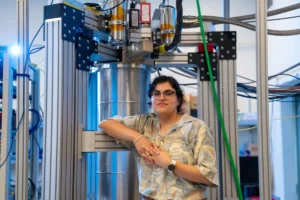
The new study, spearheaded by lead author Arpit Arora, a UW postdoctoral scholar in astronomy, and co-authored by Nora Shipp, a UW assistant professor of astronomy, set out to meticulously investigate the role of the host galaxy itself in shaping stellar streams, distinct from the influence of hypothetical dark matter clumps. To achieve this, the research team employed sophisticated N-body simulations, a computational technique used in physics to model the dynamics of particles under the influence of physical forces, in this case, gravity.
The astronomers constructed four virtual Milky Way-sized galaxies, meticulously designed to replicate the gravitational environment of our own galaxy. Crucially, these simulated galaxies were populated without any dark matter subhalos—the very structures previously thought to be the primary cause of stream irregularities. This design allowed the researchers to isolate and quantify the effects attributable solely to the host galaxy’s inherent gravitational field. Into these simulated galactic environments, the team then introduced an impressive number of approximately 15,000 simulated stellar streams. These virtual streams were then allowed to evolve over a simulated period of five billion years, mimicking the vast timescales over which real cosmic structures interact and transform.
The results of these extensive simulations were remarkably striking and challenged long-held assumptions. Even in the complete absence of dark matter subhalos, the vast majority of the simulated streams developed significant and diverse irregular structures. The researchers cataloged a wide array of disturbances: bends, wiggles, kinks, gaps, branches, spurs, and clumps. In some extreme cases, entire streams were observed to be completely disrupted by the complex gravitational environment of their host galaxies.
"Dark matter makes up most of the mass in the universe and forms the scaffolding that galaxies grow on, but we still don’t know what it is," remarked Nora Shipp. "The Milky Way is one of the best laboratories we have for figuring that out, and stellar streams are one of the sharpest tools inside it." The findings from their simulations highlight the intricate dance between stellar streams and the galactic potential field.
Unpacking the Irregularities: The Galaxy’s Own Hand
The primary cause of these widespread irregularities, as identified by the University of Washington team, was the intricate and often uneven gravitational structure of the galaxies themselves. In each simulated galaxy, the distribution of stars, gas, and even the host galaxy’s own dark matter halo was not perfectly smooth or uniform. Instead, they were spread somewhat unevenly across the disk, creating regions of greater and lesser density. These density variations—analogous to the spiral arms, giant molecular clouds, and other substructures observed in real galaxies—mimic the complex composition and gravitational landscape of a galaxy like the Milky Way.
As the simulated stellar streams traversed these non-uniform gravitational fields, they were subjected to varying tidal forces. When a stream passed through a denser region of space, it experienced a stronger gravitational tug, causing it to bend, stretch, or compress. Conversely, passage through less dense regions might lead to different forms of perturbation. This dynamic interaction between the stream and the irregular gravitational potential of the host galaxy’s disk and halo proved sufficient to induce the wide range of structural variations observed.
Arpit Arora, reflecting on the findings, admitted that while he had anticipated some degree of irregularity imparted by the host galaxies, the sheer prevalence and diversity of these features caught him by surprise. "In our simulations, the host galaxies alone caused the same kinds of irregularities that we observe in real stellar streams," Arora stated. "Now that we can predict what the host galaxy does on its own, we can start isolating the part that dark matter is responsible for." This realization is crucial: the long-held assumption that stellar streams are naturally thin and smooth, and that any deviation from this smoothness must be externally caused by dark matter subhalos, is now being critically re-evaluated. "We found that almost all of the streams had some sort of structural variation," Arora emphasized. "So this idea that streams are naturally thin and smooth wasn’t really necessarily true."
Implications for Dark Matter Detection Strategies
The profound implications of this study are twofold. On one hand, it necessitates a more cautious interpretation of observed stellar stream anomalies. What might have previously been flagged as a potential dark matter signature now requires careful scrutiny to determine if it is merely a consequence of the host galaxy’s own gravitational dynamics. This adds a layer of complexity to the analytical process, demanding more sophisticated models to disentangle the various gravitational influences.
On the other hand, and perhaps more importantly, this research paves the way for a potentially more powerful and precise method of dark matter detection. By providing a baseline understanding of what the host galaxy alone can do to stellar streams, scientists can now develop more refined filters to subtract these intrinsic galactic effects. Once these "self-induced" irregularities are accounted for, any remaining anomalies that cannot be explained by the host galaxy’s influence would stand out much more clearly as genuine candidates for dark matter interactions. This "null hypothesis" approach—understanding the baseline before attributing anomalies to new phenomena—is a cornerstone of robust scientific inquiry.
The study underscores the critical importance of high-resolution observational data, such as that provided by the European Space Agency’s Gaia mission, which has meticulously mapped the positions and motions of billions of stars in the Milky Way. Such data, combined with advanced simulations like those from the University of Washington, will be essential for comparing theoretical predictions with real-world observations. Future telescopes and astronomical surveys will also play a vital role in extending this research to other galaxies and uncovering more stellar streams.
The Broader Landscape of Dark Matter Research
The University of Washington study represents a significant refinement in one specific avenue of dark matter research, but it exists within a much broader, multifaceted effort to unveil the nature of this mysterious substance. Scientists continue to pursue various complementary strategies:
- Direct Detection Experiments: These experiments, often located deep underground to shield them from cosmic rays, aim to directly detect the faint recoil of an atomic nucleus if a dark matter particle (like a WIMP) were to collide with it. Examples include the LUX-ZEPLIN (LZ) experiment in South Dakota and XENONnT in Italy, which use large detectors filled with liquid xenon.
- Indirect Detection Experiments: These searches look for the products of dark matter annihilation or decay in space. If dark matter particles collide and destroy each other, they might produce detectable particles like gamma rays, neutrinos, or antimatter. Telescopes like the Fermi Gamma-ray Space Telescope and neutrino observatories like IceCube search for these signals in regions expected to be rich in dark matter, such as the galactic center or dwarf galaxies.
- Collider Production: Particle accelerators like the Large Hadron Collider (LHC) at CERN attempt to produce dark matter particles in high-energy collisions. If dark matter particles are created, they would escape the detectors unseen, leaving a signature of "missing energy."
- Axion Searches: Axions are another prominent dark matter candidate, much lighter than WIMPs. Experiments like ADMX (Axion Dark Matter eXperiment) attempt to detect axions by looking for their conversion into photons in strong magnetic fields.
Each of these approaches targets different theoretical properties of dark matter, and a definitive detection could come from any one of them, or a combination. The University of Washington study, by sharpening the tools used in gravitational detection via stellar streams, enhances the overall precision of the dark matter hunt, bringing us closer to understanding the universe’s most elusive component.
Expert Reactions and Future Directions
The findings are likely to be met with a mix of cautious optimism and renewed determination within the astrophysical community. While they introduce a new layer of complexity, they also offer a clearer path forward. The ability to model and subtract the galaxy’s intrinsic effects means that the search for dark matter subhalos within stellar streams can become more targeted and less prone to false positives.
Future research will undoubtedly involve running more detailed simulations, exploring a wider range of galactic parameters, and incorporating additional astrophysical phenomena that could influence stellar streams. The comparison of these advanced simulations with the ever-growing observational datasets from missions like Gaia will be paramount. This iterative process of simulation, observation, and refinement is fundamental to scientific progress.
Ultimately, this study reinforces the notion that the universe is far more intricate than often assumed, and that unraveling its mysteries requires ever-increasing sophistication in both theoretical modeling and observational techniques. As Nora Shipp aptly noted, "The Milky Way is one of the best laboratories we have for figuring that out, and stellar streams are one of the sharpest tools inside it." With this new understanding, that sharp tool has become even more precise, offering astronomers a robust pathway to discern the subtle whispers of dark matter amidst the louder symphony of galactic dynamics. The quest for dark matter continues, now with a refined map to guide its explorers.