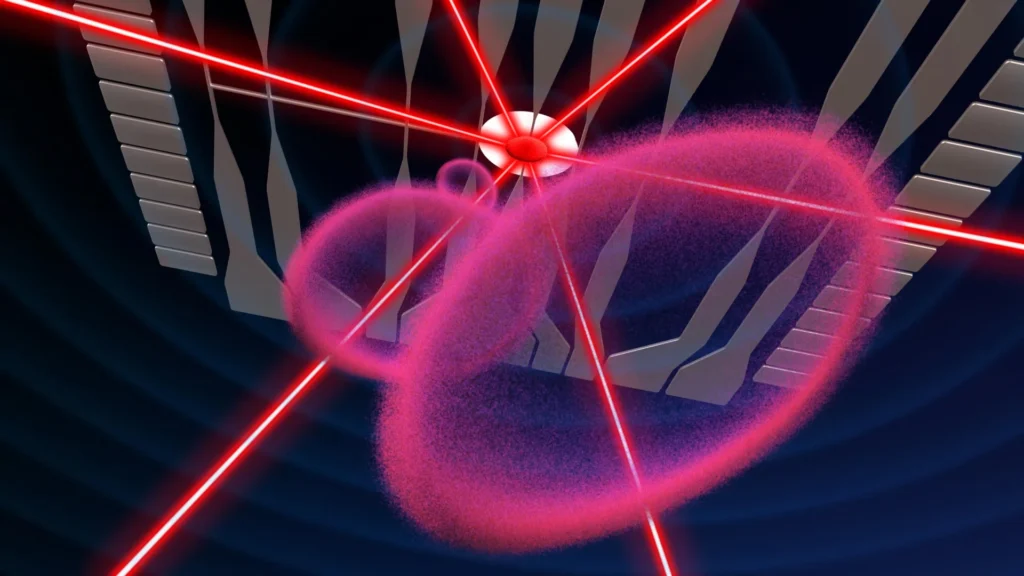
The return to full operational status for the Cold Atom Lab (CAL), following its latest and most significant hardware upgrade, marks a pivotal moment in space-based quantum research. This sophisticated scientific instrument, approximately the size of a mini-refrigerator, serves as an orbiting laboratory designed to cool atoms to temperatures mere billionths of a degree above absolute zero – a feat enabling scientists to observe and manipulate matter in ways impossible under Earth’s gravitational pull. Its unique capabilities promise to unlock deeper insights into the quantum universe and pave the way for a new generation of quantum technologies.
Unveiling the Quantum Realm: Matter at its Most Fundamental
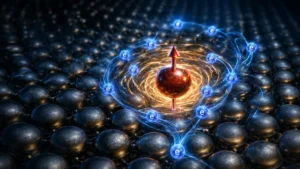
Quantum science delves into the perplexing behavior of matter and energy at the smallest possible scales, encompassing atoms, electrons, and fundamental particles of light. While classical physics often pictures atoms as discrete, billiard-ball-like entities, the quantum world reveals a far stranger reality. At these microscopic dimensions, particles can exhibit wave-like properties, exist in multiple locations simultaneously through superposition, and even tunnel through seemingly impenetrable barriers. Understanding these counter-intuitive phenomena is crucial for unraveling the universe’s deepest secrets and harnessing them for technological advancements.
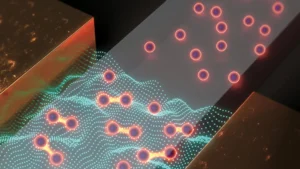
The primary objective of CAL is to explore these quantum phenomena by creating and studying Bose-Einstein condensates (BECs). These unique states of matter, predicted independently by Satyendra Nath Bose and Albert Einstein in the 1920s, were first experimentally realized in laboratories on Earth in 1995, earning Eric Cornell, Carl Wieman, and Wolfgang Ketterle the Nobel Prize in Physics in 2001. A BEC forms when a gas of bosons (a type of subatomic particle) is cooled to extremely low temperatures, causing the individual atoms to lose their distinct identities and coalesce into a single quantum state, behaving as one giant "matter wave." This collective behavior allows physicists to study quantum mechanics on a macroscopic scale, offering an unprecedented window into the fundamental properties of matter.
The Significance of Absolute Zero and Microgravity
The concept of absolute zero, equivalent to approximately minus 459.67 degrees Fahrenheit (minus 273.15 degrees Celsius), represents the theoretical lowest possible temperature where atomic motion ceases. Reaching temperatures just above this extreme is paramount for creating BECs. At these ultracold conditions, the kinetic energy of atoms is so low that their wave-like properties become dominant over their particle-like characteristics.
On Earth, creating and sustaining BECs presents significant challenges due to gravity. The gravitational force constantly pulls the ultracold atomic clouds downwards, limiting their observation time to mere milliseconds and restricting their size. This "gravitational sag" also makes it difficult to achieve the lowest possible temperatures, as atoms cannot be held in a trap indefinitely without interacting with the trap’s walls, which introduces heat.
This is where the International Space Station’s microgravity environment offers a profound advantage. By effectively eliminating the pull of gravity, CAL can:
- Extend Observation Times: Ultracold atomic clouds can be held and studied for several seconds, or even minutes, significantly longer than on Earth. This extended observation window allows researchers to probe subtle quantum effects and interactions that would otherwise be obscured.
- Achieve Colder Temperatures: Without the need to constantly fight gravity, atoms can be cooled to even lower temperatures, closer to absolute zero, unlocking new quantum states and phenomena.
- Form Larger BECs: Microgravity allows for the creation of larger, more diffuse BECs. Larger BECs exhibit more pronounced quantum effects and are easier to manipulate and measure, providing richer data.
- Minimize Perturbations: The absence of gravity reduces the influence of external forces, leading to purer quantum states and more precise measurements.
As Jason Williams, project scientist for Cold Atom Lab at NASA’s Jet Propulsion Laboratory (JPL) in Southern California, which built the facility, explained, "At the coldest temperatures, matter behaves drastically different from anything we have experienced. The wavelike nature of matter dominates, and ultracold matter can behave in ways that are not only unexpected, but that also enable extremely precise measurements of time, gravity, and motion. The lab has lots of tools – especially with this latest upgrade – to let us probe the nature of the universe."
Engineering a Quantum Laboratory in Orbit
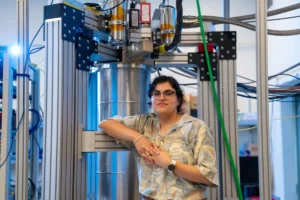
The Cold Atom Lab is a marvel of miniaturized engineering. What would typically be a room-sized atomic physics laboratory on Earth, complete with an array of lasers, optical equipment, vacuum chambers, and magnetic traps, has been meticulously compressed into a compact system that fits within a single experiment rack aboard the ISS. This remarkable feat was achieved by JPL engineers, who designed, built, and now operate the facility remotely from Earth, a testament to their ingenuity and precision.
The operational sequence for generating ultracold atoms in CAL involves several critical steps:
- Atom Source: The process begins by heating strips of rubidium or potassium metal to temperatures as high as 750 degrees Fahrenheit (400 degrees Celsius). This vaporization creates a gas of atoms inside an ultra-high vacuum chamber, crucial for preventing collisions with other particles that would disrupt the delicate quantum states.
- Laser Cooling: Researchers then use precisely tuned lasers to bombard the atoms. The photons from the lasers are absorbed and re-emitted by the atoms, effectively "slowing them down" by reducing their kinetic energy. This process, known as Doppler cooling, dramatically lowers the temperature of the atomic gas.
- Magnetic Trapping: Following laser cooling, magnetic fields are employed to trap the atoms and keep them confined within a specific region. These magnetic fields create a "magnetic bottle" that prevents the ultracold atoms from dispersing.
- Evaporative Cooling: Additional cooling techniques, often involving the gradual lowering of the magnetic trap’s strength, allow the most energetic atoms to escape. This "evaporative cooling" further reduces the average energy of the remaining atoms, bringing the atomic cloud to a near standstill and bringing them to the critical temperature required for BEC formation.
- Observation in Microgravity: Once the BEC is formed, the magnetic trap can be switched off, allowing the matter wave to expand freely without gravitational interference. This extended "free-fall" time in microgravity is crucial for observing the BEC’s properties, interactions, and evolution, enabling scientists to maximize the amount of time it can be studied.
A History of Upgrades and the Latest Enhancement
The Cold Atom Lab was first installed on the International Space Station in 2018, marking a significant milestone as the first facility to create Bose-Einstein condensates in orbit. Since its initial deployment, CAL has been continuously refined and upgraded, reflecting NASA’s commitment to pushing the boundaries of space-based quantum research. The latest enhancement, which arrived at the space station on April 11 aboard a Commercial Resupply Services mission, represents the fourth major upgrade to the facility.
This latest iteration of CAL includes several significant improvements:
- Redesigned Science Module: A completely new version of the central science module, housing the core instruments, was installed. This new module expands the range and complexity of experiments scientists can perform.
- Advanced Magnetic Trap: One of the most critical upgrades is a redesigned magnetic trap. This new trap offers enhanced control over the shape and density of the quantum gas clouds, providing researchers with unprecedented opportunities to investigate the subtle properties and behavior of ultracold atoms. This improved manipulation capability is vital for advanced studies of quantum interference and entanglement.
- Improved Atom Sources: Engineers also introduced redesigned metal atom sources, which are more efficient and reliable in generating the rubidium and potassium gas clouds used in the experiments. This ensures a consistent supply of atoms for ongoing research.
These upgrades are not merely incremental; they fundamentally expand CAL’s scientific reach. Kamal Oudrhiri, project manager of Cold Atom Lab at JPL, underscored this point, stating, "It’s the closest thing we have to controlling the boundary of the quantum world. This new upgrade pushes that boundary even further." He further emphasized that the new hardware "demonstrates NASA’s ability to maintain U.S. leadership in space-based quantum technologies while maturing future quantum instruments, such as matter-wave interferometers for fundamental physics missions, positioning, navigation, timing, and gravity sensing of Earth, the Moon, and beyond."
Pioneering Quantum 2.0: Expert Perspectives
The scientific community views CAL as a vanguard in the field of quantum technology. Ethan Elliott, deputy project scientist for Cold Atom Lab at JPL, highlighted the historical context and future promise: "In the previous century, there was a quantum revolution that led to lasers, cellphones, and MRIs for medical imaging. We’re performing quantum 2.0 – direct manipulation of large quantum states – and we hope for similar gains in quantum tech by advancing this science in orbit."
This "Quantum 2.0" paradigm refers to moving beyond simply understanding quantum mechanics to actively engineering and controlling quantum states for specific applications. CAL’s ability to precisely manipulate BECs in a pristine microgravity environment is a critical step in this direction. The facility currently supports five international research teams, reflecting a global collaborative effort to harness these new capabilities. These teams are studying a wide array of fundamental physics questions, from the nature of quantum phase transitions to the exploration of exotic quantum phenomena.
Broader Impact and Future Implications
The research conducted on CAL has profound implications, extending far beyond fundamental physics. It serves as a vital testbed for developing next-generation quantum instruments that could revolutionize various aspects of technology and exploration:
- Ultra-Precise Navigation and Timing (PNT): Quantum sensors, such as matter-wave interferometers, promise to deliver unprecedented accuracy in navigation and timing. Future space missions, especially those venturing into deep space or operating autonomously, could benefit immensely from quantum-enhanced atomic clocks and inertial measurement units that are orders of magnitude more stable and precise than current technologies. This could also enhance terrestrial applications like GPS resilience and global synchronization.
- Advanced Sensing for Earth Science: The ability to precisely measure tiny variations in gravity using quantum sensors could revolutionize Earth observation. For instance, these instruments could provide highly accurate data for monitoring changes in ice sheets, groundwater levels, and ocean currents, offering critical insights into climate change and natural resource management.
- Fundamental Physics Missions: CAL’s work directly informs the development of instruments for future missions aimed at probing fundamental forces, such as the search for gravitational waves or tests of Einstein’s theory of relativity with extreme precision. The prolonged coherence of matter waves in microgravity is ideal for such experiments.
- Deep Space Exploration: Quantum sensors could enable new capabilities for navigating to distant celestial bodies, performing highly sensitive measurements of planetary atmospheres and magnetic fields, and even detecting faint gravitational anomalies. This would empower more ambitious and scientifically rich exploration missions to the Moon, Mars, and beyond.
- Quantum Computing Foundations: While CAL itself is not a quantum computer, the ability to create, control, and understand large, coherent quantum states like BECs is foundational for the development of quantum computing architectures. Insights gained from CAL could contribute to designing more robust and scalable quantum processors.
The Cold Atom Lab is managed by Caltech in Pasadena, while NASA’s Jet Propulsion Laboratory designed, built, and operates the facility. The project receives sponsorship from the Biological and Physical Sciences (BPS) division within NASA’s Science Mission Directorate in Washington. The BPS division plays a crucial role in supporting scientific discovery by leveraging the unique conditions of space to conduct experiments that are simply not feasible on Earth. By studying biological and physical processes in extreme environments like microgravity, researchers gain invaluable knowledge that not only helps humans travel farther and remain in space longer but also yields tangible benefits for life on Earth, from advanced materials to new medical technologies.
In essence, CAL is not just a laboratory; it is a bridge to a future where the enigmatic laws of the quantum world are not only understood but actively harnessed. Its continued operation and enhancement underscore NASA’s long-term vision for maintaining leadership in cutting-edge space science and leveraging the unique environment of the International Space Station as a crucible for discovery and innovation. The insights gleaned from ultracold atoms in orbit promise to redefine our understanding of the cosmos and catalyze a new era of technological advancement.