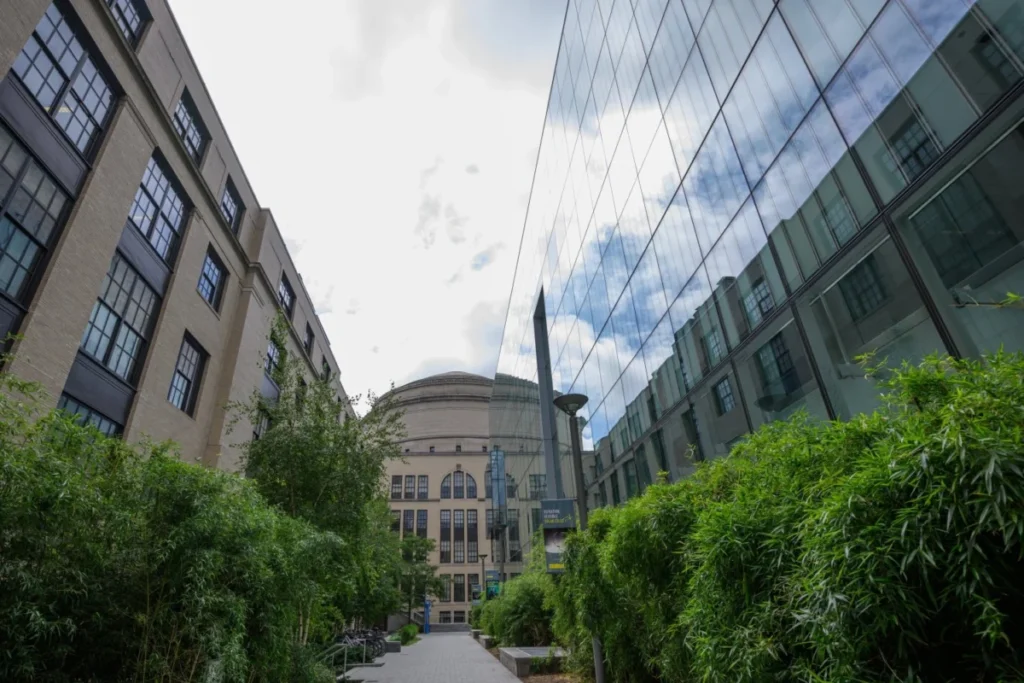
The Massachusetts Institute of Technology (MIT) has officially unveiled the MIT Quantum Initiative (QMIT) Postdoctoral Fellowship program, a strategic endeavor designed to empower early-career researchers to explore the uncharted territories of quantum science. Supported by a significant grant from the Gordon and Betty Moore Foundation, this program is positioned to become a cornerstone of MIT’s broader strategy to maintain global leadership in quantum information science and engineering. By providing a structured environment for interdisciplinary collaboration, the fellowship aims to bridge the gap between fundamental physics and transformative applications in fields as diverse as drug discovery, climate modeling, and national security.
The launch of this fellowship marks a pivotal moment for QMIT, which was established as a strategic institute-wide initiative in December 2025. The program recognizes that the next wave of breakthroughs in quantum technology is unlikely to emerge from a single silo of expertise. Instead, the initiative seeks to recruit scholars who can navigate the intersection of quantum mechanics and other scientific domains, such as artificial intelligence, biology, and materials science. This holistic approach reflects a growing consensus in the scientific community that the "second quantum revolution" will be defined by the integration of quantum systems into the broader technological and industrial landscape.
The Strategic Partnership with the Gordon and Betty Moore Foundation
The financial and visionary backing of the Gordon and Betty Moore Foundation is central to the fellowship’s mission. Founded by Intel co-founder Gordon Moore and his wife Betty, the foundation has a long-standing history of supporting "path-breaking" scientific research that traditional funding sources might overlook. In the context of quantum science, the foundation’s involvement underscores the importance of basic research in driving long-term technological progress.
The grant provided to QMIT is specifically tailored to foster high-risk, high-reward research. By funding postdoctoral positions, the foundation is investing in the "human capital" of the quantum sector. Postdoctoral researchers are often the primary drivers of experimental and theoretical innovation in university laboratories. However, they frequently face pressure to adhere to narrow research agendas defined by existing grants. The QMIT Fellowship removes these constraints, offering scholars the intellectual freedom to pursue original ideas that cross departmental boundaries.
This partnership also aligns with the foundation’s broader goals of environmental conservation and patient care improvement. For example, quantum sensing and simulation have the potential to revolutionize our understanding of chemical catalysts for carbon sequestration or the molecular mechanisms of disease—areas that have been central to the Moore Foundation’s philanthropic efforts for decades.
Timeline and Chronology of the MIT Quantum Initiative
The establishment of the QMIT Fellowship is the latest milestone in a rapidly accelerating timeline of quantum development at MIT. To understand the significance of this program, it is necessary to look at the institutional trajectory:
- December 2025: MIT officially launches the MIT Quantum Initiative (QMIT). This strategic initiative was designed to unify the Institute’s disparate quantum research efforts, which were previously spread across more than a dozen departments and laboratories.
- Early 2026: QMIT establishes its core faculty leadership, appointing Danna Freedman, the Frederick George Keyes Professor of Chemistry, as the faculty director.
- Mid-2026: The Gordon and Betty Moore Foundation grant is finalized, providing the necessary resources to design and launch the postdoctoral fellowship program.
- Late 2026: The inaugural cohort of QMIT Fellows is selected and begins their appointments. These researchers are embedded into various labs across the MIT campus.
- Fall 2026: Applications are scheduled to open for the second cohort of fellows, signaling the program’s transition into a permanent fixture of the MIT research ecosystem.
This timeline demonstrates MIT’s commitment to rapid scaling. By moving from the initiative’s launch to the deployment of a major fellowship program in less than a year, the Institute is signaling its intent to stay ahead of the global competition for quantum talent.
Interdisciplinary Pillars and Research Focus Areas
The QMIT Fellowship is structured around five core pillars of quantum research, yet it encourages applicants to propose projects that transcend these categories. The fellowship’s design assumes that the most significant advancements will occur at the "edges" of these fields.
1. Quantum Computing and Algorithms
While much of the current focus in the industry is on building larger hardware, QMIT fellows will explore the theoretical foundations of quantum advantage. This includes developing new algorithms that can run on "noisy" near-term quantum devices and exploring the intersection of quantum computing with machine learning and artificial intelligence.
2. Quantum Sensing and Precision Measurement
Quantum sensors leverage the extreme sensitivity of quantum states to external environments. Fellows in this area may work on developing sensors for detecting elusive dark matter particles, improving the precision of GPS-independent navigation, or creating non-invasive biological imaging tools that can observe individual molecules within a living cell.
3. Quantum Materials
The discovery of materials that exhibit quantum phenomena at room temperature is a "holy grail" of modern physics. QMIT researchers are investigating topological insulators, superconductors, and 2D materials that could serve as the building blocks for future quantum computers and energy-efficient electronics.
4. Quantum Simulation
Quantum simulators allow scientists to model complex systems that are impossible to calculate with classical computers. This has profound implications for chemistry and biology, where simulating the behavior of large molecules could lead to the development of new fertilizers or life-saving pharmaceuticals.
5. Quantum Networks and Communication
As quantum computers become a reality, the need for a "quantum internet" to connect them becomes paramount. Fellows will work on quantum repeaters, entanglement distribution, and secure communication protocols that are theoretically immune to hacking.
The MIT Ecosystem: A Collaborative Network
A defining feature of the QMIT Fellowship is the access it provides to MIT’s unparalleled research infrastructure. Fellows are not confined to a single lab; instead, they are encouraged to collaborate with researchers across a network of world-class facilities.
Key institutions within this ecosystem include the Research Laboratory of Electronics (RLE), which has been a pioneer in quantum optics and atomic physics for decades. Fellows will also have opportunities to engage with the MIT Lincoln Laboratory, a Department of Defense Federally Funded Research and Development Center (FFRDC) that specializes in advanced technology development and prototyping. This connection is particularly valuable for fellows interested in the practical deployment and national security implications of quantum technology.
Furthermore, the MIT-Harvard Center for Ultracold Atoms (CUA) provides a unique collaborative bridge between two of the world’s leading research universities. By participating in this ecosystem, QMIT Fellows gain exposure to both fundamental academic research and the engineering challenges associated with scaling quantum systems for industrial use.
Analysis of Global Implications and the "Quantum Race"
The launch of the QMIT Fellowship comes at a time of intense global competition in quantum technology. Governments and private corporations worldwide are investing billions of dollars into what is often called the "Quantum Race." The United States, through the National Quantum Initiative Act, has prioritized the development of a "quantum-ready" workforce.
The MIT program addresses a critical bottleneck in this race: the shortage of highly skilled researchers who can work across disciplines. While there are many physicists who understand quantum mechanics and many engineers who understand system design, there are few "bilingual" experts who can navigate both worlds. By specifically targeting interdisciplinary research, MIT is producing a new class of scientific leaders who are uniquely equipped to lead R&D departments in both academia and the private sector.
From an economic perspective, the success of these fellows could have long-term impacts on the global market. Analysts predict that the quantum technology market could exceed $100 billion by the 2030s, provided that the industry can overcome current technical hurdles. The QMIT Fellowship is an investment in the intellectual breakthroughs required to clear those hurdles.
Official Perspectives on the Fellowship’s Mission
Leadership at MIT has emphasized that the fellowship is as much about people as it is about physics. Anantha Chandrakasan, MIT Provost and the Vannevar Bush Professor of Electrical Engineering and Computer Science, noted that the program is a vital tool for talent acquisition. He highlighted that the ideas generated by these fellows will likely shape the future of the entire field, reinforcing MIT’s role as an incubator for global innovation.
Danna Freedman, the faculty director of QMIT, underscored the necessity of "new perspectives." She pointed out that the most exciting breakthroughs often occur when a researcher applies a concept from one field—such as synthetic chemistry—to a problem in another, like quantum bit (qubit) coherence. This cross-pollination is the core philosophy of the fellowship.
Ian Waitz, MIT’s vice president for research, framed the program in terms of transformative potential. He suggested that quantum research is on the verge of making the "impossible possible," and that the fellowship is a direct investment in the creative minds who will realize that potential in ways we cannot yet fully foresee.
Future Outlook and Application Cycles
As the inaugural QMIT Fellows begin their work in 2026, the global scientific community will be watching closely. The success of the program will likely be measured by the fellows’ ability to publish high-impact research, secure follow-on funding, and eventually transition into leadership roles in the burgeoning quantum industry.
QMIT has already announced plans to sustain this momentum. The application cycle for the fall 2026 cohort is expected to be highly competitive, drawing interest from the world’s top PhD graduates in physics, chemistry, materials science, and engineering. By establishing a recurring cycle of fellowships, MIT is ensuring a steady pipeline of innovation that will continue to push the boundaries of what is possible in the quantum realm.
In the coming years, the work of these fellows may lead to the first practical quantum computers that can outperform classical supercomputers in real-world tasks, or to sensors that can detect the earliest stages of disease at the molecular level. While the technical challenges remain significant, the MIT Quantum Initiative is betting that the combination of interdisciplinary collaboration and elite talent will provide the key to unlocking the full power of the quantum world.