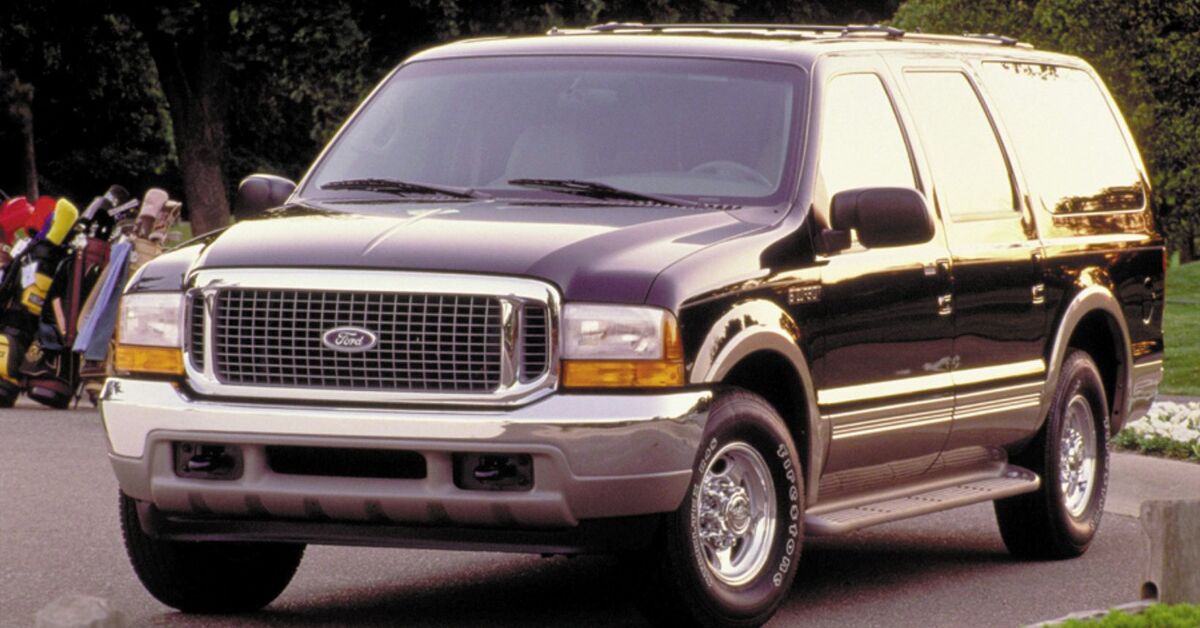
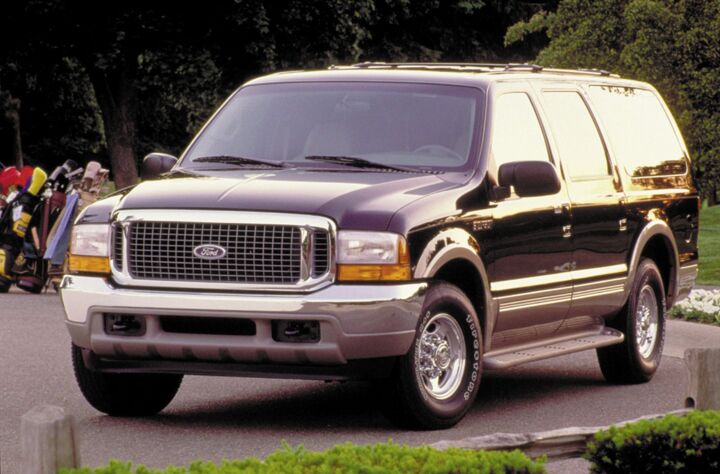
The debate surrounding the safest first vehicle for a newly licensed teenager has ignited a passionate discussion, drawing parallels to an automotive arms race where sheer mass is increasingly viewed as the ultimate arbiter of safety. While some parents opt for larger, heavier vehicles like old Ford F-150 trucks or the Ford Excursion, believing their substantial curb weight offers superior protection in a collision, a significant counterargument posits that this strategy creates its own set of hazards, particularly when wielded by inexperienced drivers. This escalating trend, amplified by social media discourse, raises critical questions about the evolving definition of automotive safety and the potential unintended consequences of prioritizing vehicle size over driver skill and modern safety technologies.
The Logic of Mass: A Parent’s Perspective
The underlying principle driving the choice of a large, heavy vehicle for a teen driver is fundamentally rooted in physics: in a crash, greater mass generally translates to a greater ability to absorb impact energy. This "mass wins crashes" mentality suggests that a heavier vehicle will push a lighter one around, thus shielding its occupants from more severe forces. For parents concerned about the inherent risks of novice driving, handing their teenager the keys to a vehicle that can withstand significant impacts might seem like a rational, albeit blunt, approach to mitigating potential harm. This perspective is often reinforced by anecdotal evidence and a perception that larger vehicles are inherently more robust and forgiving.
However, this logic is being increasingly challenged by automotive safety experts and consumer advocacy groups. The concern is not just about the vehicle’s ability to withstand a crash, but also about the driver’s capacity to control such a large and heavy machine, especially during emergency maneuvers or in adverse conditions. A vehicle weighing upwards of 6,000 pounds, with a high center of gravity, can be significantly more difficult to handle, brake, and steer for a driver with limited experience, potentially leading to situations where the vehicle itself becomes a hazard.
The Arms Race Mentality: From Neighborhood to Highway
The social media post that brought this issue to the forefront highlighted the escalating nature of this trend. When one family adopts the "bigger is better" philosophy for their teen driver, it prompts a reactive response from others. The initial decision to equip a young driver with a substantial vehicle can be perceived by neighbors and peers as a necessary precaution. This, in turn, can lead to an unspoken competition, an "arms race" where the size and weight of vehicles driven by teenagers steadily increase.
This phenomenon mirrors historical patterns in automotive design and consumer preference, where features that were once considered optional or niche gradually become standard, and where perceived advantages in one area lead to a demand for more extreme versions. The current trend suggests a shift away from prioritizing advanced engineering and safety systems towards a more primitive, yet seemingly effective, strategy: brute force.
Historical Precedents: Safety Through Engineering, Not Just Mass
It’s important to note that the pursuit of automotive safety has not always been solely dependent on vehicle mass. In the past, automotive engineers focused on innovative designs and integrated safety features to protect occupants. The early 1970s, for instance, saw the emergence of "safety car" concepts that, while often stylistically challenged, incorporated groundbreaking safety technologies.
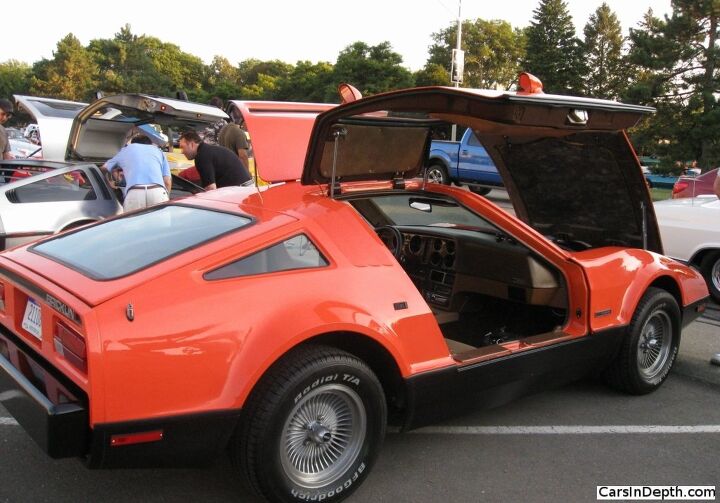
One notable example is Malcolm Bricklin’s SV-1 (Safety Vehicle One). Launched in 1974, the SV-1 was designed from the ground up with safety as its paramount concern. It featured robust 10-mph bumpers, a built-in roll cage for structural integrity, an isolated fuel tank to reduce fire risk, and unique gullwing doors designed to prevent opening into oncoming traffic. The vehicle’s designer, Herb Grasse, who had previously worked at Ford, managed to imbue the SV-1 with a distinctive, albeit polarizing, aesthetic. While the SV-1 ultimately faced commercial challenges, it represented a significant early attempt to prioritize occupant protection through intelligent design rather than sheer size.
The Evolution of "Safe" Family Cars: A Shift in Priorities
For decades, the definition of a "safe" family car in affluent suburban communities often centered around established European brands known for their robust construction and safety features. Vehicles like boxy Mercedes-Benz sedans, Volvo 245DL wagons, and later models such as the Mercedes E-Class and Volvo 850 were popular choices, with owners believing their comparatively modest, yet well-engineered, vehicles offered superior protection compared to larger, domestic "land yachts." This era emphasized a blend of comfort, durability, and an implied level of safety derived from solid engineering.
However, this paradigm appears to be shifting. The current trend suggests a departure from relying on sophisticated safety systems and refined engineering, moving towards a more elemental approach: the "caveman approach" of simply making the vehicle larger and heavier. This shift is evident in the increasing size of SUVs and the continued popularity of large pickup trucks, even for drivers who may not require their full utility.
The Logical Endpoint: A Semi-Truck as the Ultimate Family Wagon?
Extending the "bigger is better" logic to its extreme, the article humorously posits a semi-trailer truck as the ultimate protective family vehicle. Volvo, a manufacturer known for its commitment to safety, already produces the VNL tractor, which could serve as a foundation for such a vehicle. The article envisions the VNL’s already aerodynamically refined European-designed cabin, engineered for efficiency, as the forward section of this hypothetical ultimate family wagon.
The VNL’s interior, described as "posh" despite its potentially plastic wood trim, offers a comfortable driving environment. The article playfully notes that navigating grocery store parking lots or urban streets in such a behemoth would present significant challenges, even with an automatic transmission controlled by a simple stalk, making it theoretically easier to operate than a manual transmission sports car but far more unwieldy in practice.
The Practical Realities of Vehicle Size and Control
The enclosed body of a semi-trailer truck, with its multiple rows of forward-facing seats, could indeed accommodate a large number of passengers, exceeding the capacity of many contemporary full-size SUVs. The article suggests a configuration with two large front seats, a second row of captain’s chairs with a walkway to the rear, and a third row capable of seating up to four occupants. This arrangement, while illustrative of the "mass" argument, highlights the practical limitations and inherent dangers of such a vehicle for everyday family use, particularly for inexperienced drivers.
An Off-Ramp from the Escalation: Data-Driven Safety Recommendations
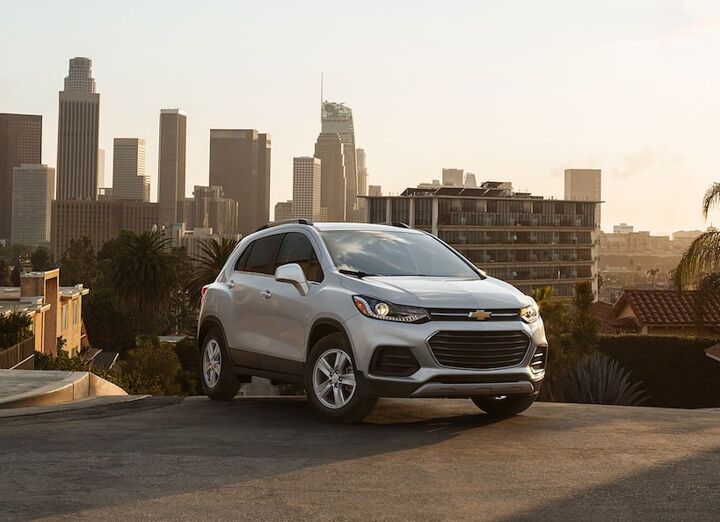
Fortunately, the escalating trend towards larger vehicles as the sole determinant of safety for young drivers is not the only path forward. Organizations like the Insurance Institute for Highway Safety (IIHS) and Consumer Reports provide valuable resources and recommendations for safe vehicles for teenagers. These lists often prioritize vehicles with a curb weight above 2,750 pounds – a threshold that acknowledges the importance of mass without advocating for extreme sizes – coupled with excellent small-overlap crash test ratings and the availability of standard automatic emergency braking (AEB) systems.
The IIHS and Consumer Reports also highlight that safe and reliable used vehicles can be acquired for under $5,000. This underscores the fact that mass is not the sole, nor necessarily the most effective, metric for ensuring teen driver safety. Modern safety technologies, robust structural integrity, and advanced driver-assistance systems play a crucial role in accident prevention and mitigation.
The Broader Implications: A Call for Informed Choices
The discussion surrounding the ideal first car for a teenager reveals a complex interplay of parental concerns, evolving automotive trends, and the fundamental principles of physics and engineering. While the desire to protect one’s child is understandable, the uncritical adoption of "bigger is better" as the primary safety strategy for novice drivers carries significant risks.
The escalation of vehicle size driven by this philosophy has broader implications for road safety. Larger, heavier vehicles can pose a greater threat to other road users, particularly pedestrians, cyclists, and occupants of smaller vehicles. Furthermore, the increased difficulty in controlling these vehicles can lead to accidents that might have been avoided with a more appropriately sized and equipped vehicle, driven by a more experienced operator.
The push for increasingly massive vehicles for young drivers also diverts attention and resources from proven safety solutions. Investing in driver education, promoting the adoption of vehicles equipped with advanced safety features like AEB, and adhering to established safety guidelines from organizations like the IIHS offer a more responsible and effective approach to ensuring the well-being of teenage drivers and the wider community.
The conversation initiated by the viral social media post serves as a crucial reminder that automotive safety is a multifaceted issue. It requires a balanced consideration of vehicle attributes, driver capabilities, and the ever-evolving landscape of automotive technology. The pursuit of safety for our most vulnerable drivers should be guided by data, informed analysis, and a commitment to holistic safety strategies, rather than succumbing to a potentially perilous arms race on our roadways. Before making any used vehicle purchase, it is imperative for consumers to run the VIN or license plate to check for any open recalls, ensuring that the vehicle is in optimal condition and meets current safety standards. Mass alone is not the sole determinant of safety, and a comprehensive approach is always the most prudent path.