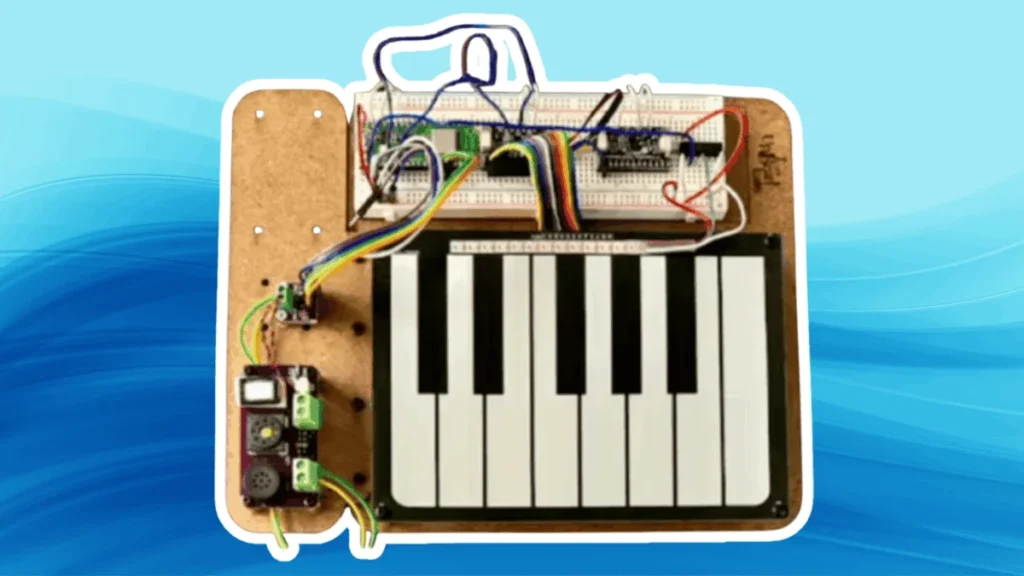
The evolution of musical instrument design has increasingly moved from the hands of large-scale manufacturers into the workshops of independent makers, a transition exemplified by the work of Sridhar Rajagopal. Known for his contributions to the maker community through ProtoStax and the Dr. Wattson Energy Monitoring Board, Rajagopal has spent several years refining a DIY capacitive touch piano synthesizer and MIDI keyboard. This project, which began as a rudimentary experiment involving copper foil and jumper wires, has matured into a sophisticated, 3-octave electronic instrument featuring a custom-designed Printed Circuit Board (PCB), addressable RGB LEDs, and integrated amplification. The journey of this instrument provides a blueprint for how hobbyists can navigate the complex path from a basic concept to a professional-grade hardware product.
The Genesis of Capacitive Sensing in Music
Capacitive sensing technology, the core mechanism of Rajagopal’s piano, operates on the principle of detecting changes in electrical capacitance. In a typical setup, a sensor acts as one plate of a capacitor, and the human finger acts as the other. When a user approaches or touches the sensor, the capacitance increases, a change that can be measured by a microcontroller. In the early stages of Rajagopal’s project, this was achieved using simple strips of copper foil tape.
The initial prototype served as a proof of concept, demonstrating that a microcontroller like an Arduino could reliably interpret these changes in capacitance as musical notes. While functionally successful, these early iterations were plagued by the common issues of "breadboarded" electronics: fragile connections, electromagnetic interference, and a lack of tactile consistency. However, the move from these "scrappy" beginnings toward a more permanent solution highlights a significant trend in the maker movement—the democratization of high-precision electronic manufacturing.
Technical Evolution: From Breadboards to Custom PCBs
The transition from copper foil to a custom PCB represents a critical milestone in the development of the touch piano. A PCB provides a stable, noise-reduced environment for sensitive capacitive signals, which is essential for an instrument intended for performance. In his presentation at Maker Faire Bay Area, Rajagopal detailed the iterative design process required to optimize the key layout.
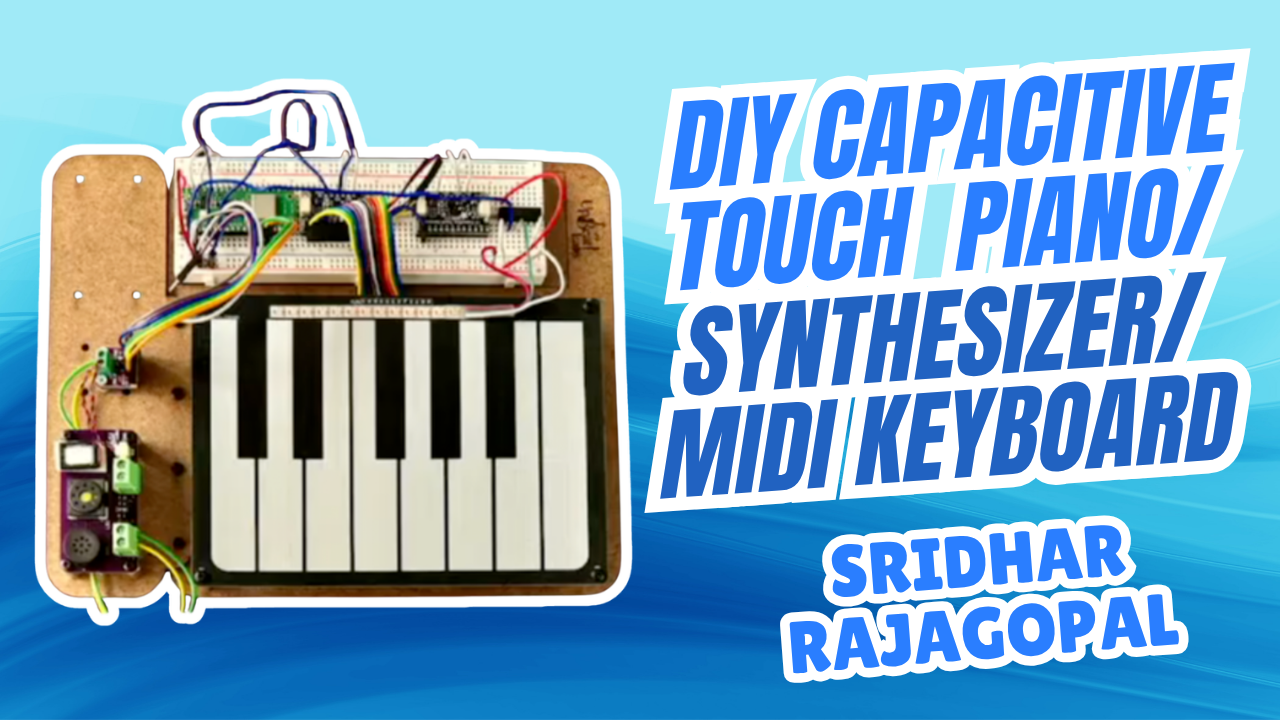
The final iteration of the instrument features three octaves of capacitive keys integrated directly into the PCB surface. This design choice eliminates the need for mechanical switches, reducing the risk of wear and tear while allowing for a sleek, low-profile aesthetic. The integration of the "keys" as conductive pads on the board required careful consideration of trace routing and ground planes to prevent "ghosting" or accidental triggers from adjacent keys.
Beyond the input method, the hardware includes several advanced features:
- Addressable RGB LEDs: Each key is paired with an LED that provides visual feedback. These lights can be programmed to indicate active notes, scales, or even visual patterns synchronized with the music.
- Onboard Amplification: Unlike many MIDI controllers that require an external computer or module to produce sound, this device includes an integrated amplifier and speaker, making it a standalone synthesizer.
- USB MIDI Support: By utilizing microcontrollers with native USB capabilities, the piano can function as a standard MIDI controller, allowing it to interface with Digital Audio Workstations (DAWs) like Ableton Live, Logic Pro, or FL Studio.
The Maker Faire Context and the Growth of DIY Hardware
The presentation of this project at Maker Faire Bay Area 2025 serves as a testament to the enduring relevance of the "Maker" ethos. Maker Faire, often described as the "Greatest Show (and Tell) on Earth," provides a platform for engineers, artists, and hobbyists to share their processes. Rajagopal’s talk was not merely a demonstration of a finished product but a masterclass in the iterative nature of engineering.
The maker movement has seen a significant shift over the last decade. Where once projects were limited by what could be hand-soldered on a protoboard, modern makers now have access to professional-grade tools. Software like KiCad and EasyEDA, combined with low-cost PCB fabrication services in Shenzhen and elsewhere, have allowed individuals to produce hardware that rivals commercial products in both quality and complexity. Rajagopal’s piano is a prime example of this "Maker-to-Market" potential, where a personal passion project adopts the standards of industrial design.
Chronology of Development
The development of the DIY Touch Piano can be categorized into four distinct phases:

Phase 1: The Copper Tape Era (Inception)
The project began with basic experiments in capacitive sensing. Using an Arduino Uno and the CapacitiveSensor library, Rajagopal mapped copper foil strips to MIDI notes. This phase focused on latency reduction and the basic logic of note-on/note-off commands.
Phase 2: Structural Refinement
As the project grew, the need for a more rigid structure became apparent. This stage involved the use of laser-cut acrylic or 3D-printed enclosures to hold the copper tape in place. It was during this period that the integration of LEDs began, providing a visual dimension to the auditory output.
Phase 3: The First PCB Prototypes
The jump to PCB design allowed for the integration of the capacitive pads directly into the hardware. Early PCB versions focused on a single octave to test the sensitivity of different pad shapes and sizes. Rajagopal experimented with different soldermask thicknesses, as the coating on the PCB acts as a dielectric between the finger and the copper pad.
Phase 4: The Full-Scale Synthesizer
The current iteration, showcased in 2025, represents the culmination of these efforts. It is a multi-octave, polyphonic instrument with a refined user interface. The move to a more powerful microcontroller allowed for more complex synthesis algorithms and smoother LED transitions.
Broader Implications for Music and Education
The implications of Rajagopal’s work extend beyond the hobbyist community. Instruments like the capacitive touch piano are increasingly used in educational settings to teach the fundamentals of STEM (Science, Technology, Engineering, and Mathematics). By building their own instruments, students learn about physics (capacitance), computer science (coding MIDI protocols), and electrical engineering (circuit design).

Furthermore, the project challenges the traditional boundaries of musical instrument manufacturing. Commercial synthesizers with similar features often cost hundreds or thousands of dollars. A DIY approach, while requiring a significant investment in time and learning, allows for a high degree of customization at a fraction of the cost. It also encourages "expressive interfaces"—instruments that do not rely on the traditional piano-key mechanism, potentially opening new avenues for musical expression.
Future Prospects: Physical Interfaces for Music
Looking forward to Maker Faire Bay Area 2026, Sridhar Rajagopal is scheduled to present a follow-up talk titled "Physical Interfaces for Music." This upcoming presentation is expected to delve deeper into the ergonomics and haptics of electronic instruments. While capacitive touch offers a seamless interface, it lacks the tactile "travel" of a mechanical key. The next frontier for makers like Rajagopal involves finding ways to reintroduce haptic feedback or using alternative sensors like Time-of-Flight (ToF) or pressure-sensitive resistors (FSRs) to add velocity sensitivity to the playing experience.
The integration of Artificial Intelligence (AI) in the design process is another area of potential growth. AI-driven routing in PCB design and AI-assisted sound synthesis are becoming more accessible, potentially allowing for even more complex instruments to be developed by solo creators.
Conclusion
Sridhar Rajagopal’s journey from copper foil to a custom PCB is a microcosm of the modern hardware revolution. It illustrates a transition from curiosity-driven play to disciplined engineering. By sharing the technical hurdles and the design choices made along the way, Rajagopal provides the community with more than just a musical instrument; he provides a roadmap for innovation. As the tools for creation continue to improve, the gap between the professional engineer and the dedicated maker continues to shrink, promising a future where the next great musical innovation might just come from a strip of copper tape and a curious mind.