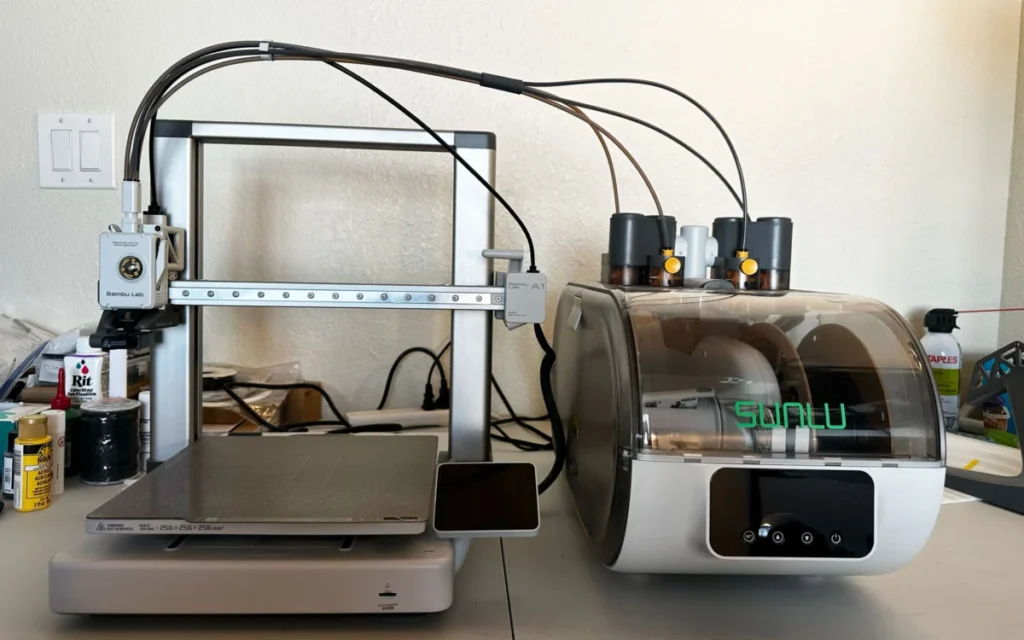
The landscape of consumer-grade 3D printing has undergone a radical transformation over the last several years, shifting from a hobbyist-led endeavor of self-assembled machines to a more streamlined, "plug-and-play" ecosystem. Central to this evolution has been the emergence of multi-material systems, such as the Bambu Lab Automatic Material System (AMS). While Bambu Lab’s AMS Lite revolutionized the accessibility of multi-color printing for the A1 and A1 Mini series, its open-air design left a critical gap in filament management: moisture control. Sunlu, a veteran manufacturer in the 3D printing filament and accessory market, has addressed this specific vulnerability with the introduction of the Sunlu AMS Lite Filament Heater. Priced at approximately $130, this specialized unit represents a significant development in integrated hardware, designed specifically to enclose and dry filament while it remains loaded in the AMS Lite system.
The Critical Importance of Filament Moisture Management
To understand the market necessity of the Sunlu AMS Lite Heater, one must first consider the hygroscopic nature of 3D printing thermoplastics. Materials such as Polylactic Acid (PLA), Polyethylene Terephthalate Glycol (PETG), Thermoplastic Polyurethane (TPU), and especially engineering-grade filaments like Nylon (PA) and Polycarbonate (PC), act as sponges for atmospheric moisture. When moisture-laden filament is fed through a 3D printer’s hot end, the water trapped within the polymer rapidly vaporizes. This micro-explosion of steam leads to several common printing defects, including "stringing" or "oozing," poor layer adhesion, surface pitting, and an overall reduction in the structural integrity of the final part.
Traditionally, users have relied on standalone filament drying boxes or even modified food dehydrators to prepare their materials. However, these solutions often require a "dry-then-print" workflow, where the filament is dried for several hours before being moved to the printer. In humid environments, the filament can begin re-absorbing moisture almost immediately upon exposure to the air. The Sunlu AMS Lite Heater addresses this by providing an active, heated enclosure that maintains a dry environment before and during the printing process, effectively creating a "dry-while-print" ecosystem for the Bambu Lab A1 series.
Technical Specifications and Design Integration
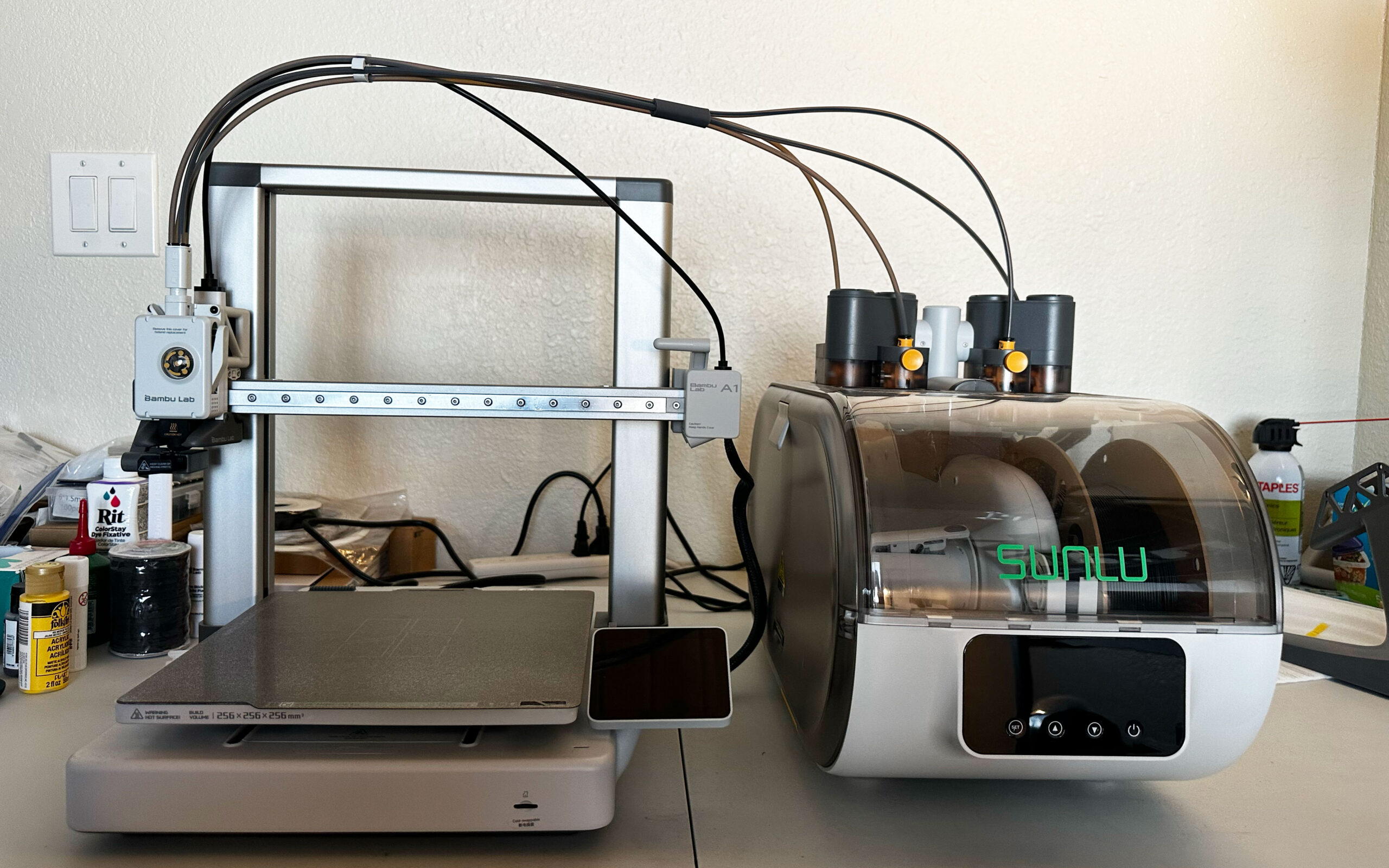
The Sunlu AMS Lite Heater is not a standalone drying box in the traditional sense; rather, it is a hardware modification kit that integrates directly with the existing Bambu Lab AMS Lite hardware. The unit operates within a temperature range of 35°C to 70°C, providing sufficient heat to dry even the more stubborn engineering filaments. It features a digital interface that allows users to monitor and set humidity targets between 25% and 50%.
A standout feature of the device is its library of six preset modes. These presets are tailored to the specific thermal requirements of common materials:
- PLA: Low-temperature drying to prevent spool deformation.
- PETG: Mid-range heat to combat its high hygroscopy.
- TPU: Specialized heating for flexible materials.
- ABS/PA/PC: High-temperature settings (reaching up to 70°C) required to drive moisture out of dense, technical polymers.
The unit also includes a customizable timer, which defaults to six hours of active heating. A significant functional detail is the device’s automated maintenance mode: once the initial timer expires, the heater will automatically reactivate if the internal humidity rises above 50%, ensuring the filament remains in a "ready-to-print" state even during long periods of inactivity.
Assembly Chronology and Installation Logistics
The installation of the Sunlu AMS Lite Heater is a process that may initially appear daunting to the casual user, as it requires the partial disassembly of the Bambu Lab AMS Lite. The "split and squish" method involves separating the two main halves of the AMS Lite—the components that hold and drive the four filament spools—and mounting them to the sides of the Sunlu heating unit.

The assembly process generally follows this chronology:
- Preparation: Users must remove the four spool-holding arms from the original AMS Lite stand.
- Hardware Transfer: The internal electronics and drive motors of the AMS Lite are retained, but the central support structure is replaced by the Sunlu heater.
- Wiring: The integration requires plugging in two internal wires that bridge the connection between the heater and the AMS hardware.
- Enclosure Sealing: The final step involves securing the outer plastic covers and doors, which transform the open-air AMS Lite into a fully enclosed, four-spool dry box.
Despite the complexity of splitting the original hardware, the integration is remarkably elegant. The AMS Lite continues to receive its power and data instructions directly from the Bambu Lab printer via the standard 4-pin cable, while the Sunlu heater utilizes its own dedicated power source. This allows the heater to remain active and maintain low humidity even when the 3D printer itself is powered off.
Operational Performance and User Experience
In practical application, the Sunlu AMS Lite Heater maintains a professional and unobtrusive presence in a workshop environment. The unit is reported to be quiet during operation, with the internal fans producing a low hum that does not interfere with office tasks. Furthermore, the thermal insulation of the unit is efficient; while the exterior becomes warm to the touch, it does not radiate excessive heat into the surrounding room, nor does it pose a significant burn risk to the user.
However, the transition from an open system to an enclosed one introduces new spatial considerations. Because the Sunlu unit encloses the spools, it utilizes large doors that fold downward to allow for filament loading. This design requires a wider footprint on the workbench than the original AMS Lite. Users with limited space may find the short length of the stock Bambu Lab PTFE (Teflon) tubes to be a constraint. If the heater is placed too close to the printer, the doors may be difficult to open, often requiring the user to rotate the entire assembly to access the spools facing the machine.

Material Compatibility and Safety Constraints
While the Sunlu AMS Lite Heater offers a significant upgrade in material protection, it introduces a specific logistical challenge regarding multi-material printing. In the original AMS Lite, four different materials could be loaded and swapped seamlessly because they were all at ambient temperature. In the Sunlu enclosed heater, all four spools share the same heated atmosphere.
This shared environment creates a "lowest common denominator" temperature constraint. For example, if a user loads both PLA and PETG, they must be cautious. Drying PETG typically requires a temperature near 65°C. However, PLA has a low glass transition temperature; exposing a PLA spool to 65°C for an extended period could cause the filament to soften, deform, or even fuse together on the spool, rendering it unusable. Consequently, the heater is most effective when the AMS is loaded with four spools of the same material or materials with similar thermal drying profiles.
Market Impact and Regional Necessity
The value proposition of the $130 Sunlu AMS Lite Heater depends heavily on the user’s geographic location and the types of projects they undertake. In regions with naturally low humidity, such as the American Southwest or high-altitude areas, the performance gains on standard PLA prints may be negligible. In these environments, the unit serves more as an organized storage solution and a dust shield.
Conversely, for users in high-humidity coastal regions—such as the San Francisco Bay Area, the Gulf Coast, or Southeast Asia—the device is a transformative tool. In these climates, even PLA can degrade within days of being opened. For professionals and enthusiasts working with Nylon or Polycarbonate, an active heater is not merely an accessory but a necessity for achieving successful prints.

Conclusion and Broader Implications
The Sunlu AMS Lite Filament Heater represents a maturing of the 3D printing accessory market. Rather than offering a generic, one-size-fits-all solution, Sunlu has developed a bespoke piece of hardware that respects the engineering of the Bambu Lab ecosystem while solving its most glaring omission.
While the installation requires a degree of mechanical comfort and the shared-heat chamber necessitates careful material management, the benefits of the system are clear. It provides a streamlined, space-efficient way to ensure filament remains in peak condition, reducing print failures and improving surface quality. As 3D printing continues to move toward the professional desktop, integrated solutions like the Sunlu AMS Lite Heater will likely become standard components of the modern maker’s workflow, bridging the gap between hobbyist experimentation and industrial-grade reliability.