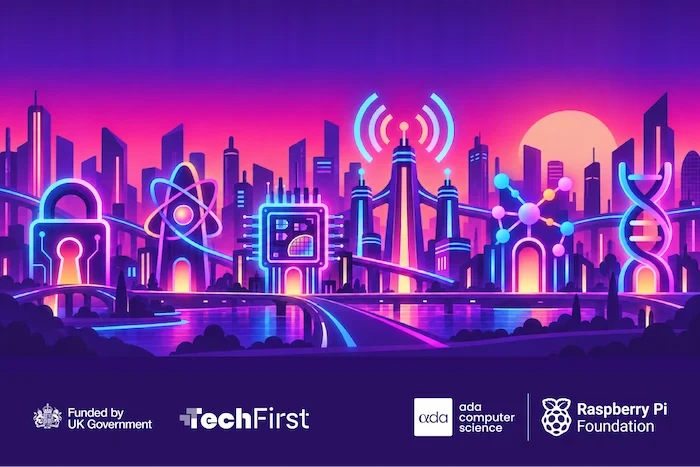
The United Kingdom government has officially unveiled TechFirst, a comprehensive £187 million investment strategy designed to revolutionize technical education and secure the nation’s position as a global leader in emerging technologies. At the heart of this initiative is a strategic partnership with the Raspberry Pi Foundation and the University of Cambridge to expand Ada Computer Science, a free online learning platform. This collaboration aims to provide high-quality education in "frontier technologies" to more than one million secondary school students, aged 11 to 18, over the next three years. By integrating advanced computing concepts into the national curriculum framework, the program seeks to bridge the widening skills gap in the UK’s technology sector and ensure that the next generation of workers is equipped for a rapidly evolving digital economy.
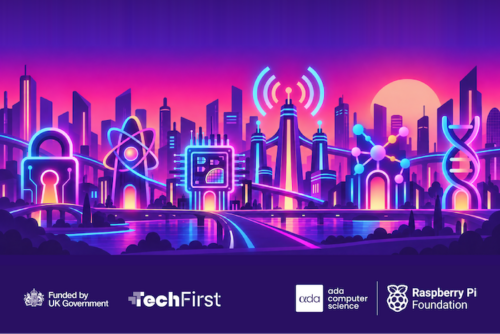
The TechFirst initiative represents a multi-tiered approach to workforce development, offering support not only to school-aged children but also to university researchers and professionals seeking to transition into the technology industry. Backed by a coalition of major tech employers, the program is specifically tailored to address six critical areas of innovation: artificial intelligence (AI), cybersecurity, quantum computing, engineering biology, semiconductors, and advanced connectivity technologies. These sectors have been identified by the Department for Digital, Culture, Media and Sport (DCMS) as the primary drivers of future economic growth and national security.
The Evolution of Ada Computer Science
The expansion of the Ada Computer Science platform is a cornerstone of the TechFirst "schools strand." Originally developed as a collaboration between the Raspberry Pi Foundation and the University of Cambridge, the platform was initially designed to support students aged 14 to 19, primarily those studying for GCSE and A-Level qualifications. Under the new TechFirst funding model, the platform’s scope has been significantly broadened to include students as young as 11.
This expansion is critical for early intervention in STEM education. By introducing 11- to 14-year-olds to complex computing concepts, the government hopes to foster a sustained interest in technology before students make their final elective subject choices in later secondary school years. The new curriculum materials added to the platform are designed to be cumulative, allowing a student to begin with foundational logic and coding and progress through to sophisticated topics like machine learning and quantum cryptography by the time they reach 19.
The platform remains entirely free for all UK teachers and students, a move intended to democratize access to elite-level resources. This is particularly relevant for schools in underprivileged areas that may lack the specialized staff or budget to develop their own frontier tech curricula.
The Six Pillars of Frontier Technology
The TechFirst initiative focuses on six specific "frontier technologies" that are expected to define the global economy by 2030. The curriculum expansion on Ada Computer Science will provide specific modules for each:
- Artificial Intelligence (AI): Beyond basic coding, students will learn the ethics of AI, the mechanics of large language models, and the practical applications of machine learning in industries ranging from healthcare to finance.
- Cybersecurity: As digital threats become more sophisticated, the program emphasizes defensive programming, network security, and the psychological aspects of social engineering, preparing students for one of the most high-demand job markets in the UK.
- Quantum Computing: While traditionally reserved for postgraduate study, TechFirst introduces the fundamental principles of quantum mechanics and qubits to secondary students, demystifying a field that will soon revolutionize data processing and encryption.
- Engineering Biology: This intersection of biology and engineering teaches students how to design and construct new biological parts and systems, a field vital for the future of sustainable fuels and advanced medicine.
- Semiconductors: Given the global reliance on microchips, the program covers the design and manufacturing processes of semiconductors, aiming to bolster the UK’s domestic hardware expertise.
- Advanced Connectivity: This pillar focuses on the infrastructure of the future, including 6G technology, the Internet of Things (IoT), and the satellite communications required for a hyper-connected world.
Regional Implementation and Hands-on Learning
To complement the digital resources provided by the Ada platform, the DCMS is funding a network of Regional Delivery Partners. These partners are tasked with bringing practical, hands-on technology activities directly into classrooms across the UK. The goal is to move beyond theoretical knowledge and provide students with tangible experiences, such as programming physical hardware, simulating cyber-defense scenarios, and experimenting with AI tools.
This regional approach is designed to address geographical disparities in tech education. Historically, tech opportunities have been concentrated in London and the "Golden Triangle" (London, Oxford, Cambridge). By deploying Regional Delivery Partners, TechFirst aims to stimulate interest in tech careers in post-industrial regions and rural communities, contributing to the government’s broader "levelling up" agenda.
The hands-on component also serves to connect students with local employers. By participating in workshops led by industry professionals, students gain insight into the day-to-day realities of tech careers, helping to break down stereotypes about who can succeed in the sector.
Addressing the National Skills Gap: Economic and Social Context
The UK’s technology sector is currently valued at over $1 trillion, making it the third-largest in the world behind the United States and China. However, industry reports consistently highlight a critical shortage of skilled workers. According to data from the UK’s digital skills council, nearly half of all UK businesses struggle with a lack of basic digital skills among their employees, and the gap is even more pronounced in specialist fields like AI and cybersecurity.
The TechFirst initiative is a direct response to this economic reality. By investing £187 million into the talent pipeline, the government is attempting to future-proof the workforce. Projections suggest that the AI sector alone could contribute an additional £12 billion to the UK economy by 2030, provided there is a sufficient supply of qualified professionals to fill emerging roles.
Beyond the economic imperative, there is a significant social dimension to the program. The Raspberry Pi Foundation has emphasized that understanding frontier technologies is not just about career preparation; it is about "agency and power." In a world where algorithms influence everything from news consumption to job applications, a foundational understanding of how these systems work is essential for informed citizenship. By providing free, high-quality education, TechFirst seeks to ensure that the ability to navigate and shape the digital world is not a privilege reserved for the wealthy.
Strategic Chronology and Future Rollout
The rollout of the TechFirst content on the Ada Computer Science platform is scheduled to occur in several distinct phases to ensure that teachers have adequate time to integrate the new materials into their lesson plans.
- Phase 1 (Current): The release of foundational materials for the 11–14 age group, focusing on core computing principles and an introduction to AI and cybersecurity.
- Phase 2 (2025): The introduction of advanced modules in quantum computing and engineering biology for older secondary students, alongside the deployment of the first wave of Regional Delivery Partners.
- Phase 3 (2026): Full integration of semiconductor and advanced connectivity curricula, with the platform expected to reach its target of one million active student users.
The University of Cambridge will play a continuous role in this timeline, providing academic oversight and ensuring that the content remains scientifically rigorous and pedagogically sound. The Raspberry Pi Foundation will manage the technical infrastructure of the platform, utilizing its experience in scaling educational tools globally to ensure that Ada Computer Science can handle the massive influx of new users.
Analysis of Implications for the UK Tech Sector
The TechFirst initiative marks a significant shift in how the UK approaches computer science education. For over a decade, the focus was on transitioning from "ICT" (Information and Communication Technology), which emphasized using software like word processors, to "Computer Science," which emphasized coding and computational thinking. TechFirst represents the next evolution: moving from general coding to specialized "frontier" knowledge.
This shift is not without challenges. The success of the program will depend heavily on the support provided to teachers. Many secondary school computer science teachers do not have specialized training in quantum computing or engineering biology. To address this, the Ada platform includes specific resources for educators, including lesson plans, automated marking tools, and professional development modules.
Furthermore, the involvement of major tech employers suggests a move toward a more "vocational" style of secondary education, where the curriculum is closely aligned with the immediate needs of the industry. While this increases employability, it also requires a careful balance to ensure that students receive a broad, resilient education that will serve them even if specific technologies become obsolete.
As the UK navigates its post-Brexit economic landscape, the TechFirst partnership stands as a major bet on human capital. By investing in the digital literacy of one million young people, the government is attempting to create a self-sustaining ecosystem of innovation that could define the British economy for decades to come. The coming three years will be a critical test of whether a centralized, platform-based approach to education can effectively keep pace with the fastest-moving sectors of human ingenuity.